


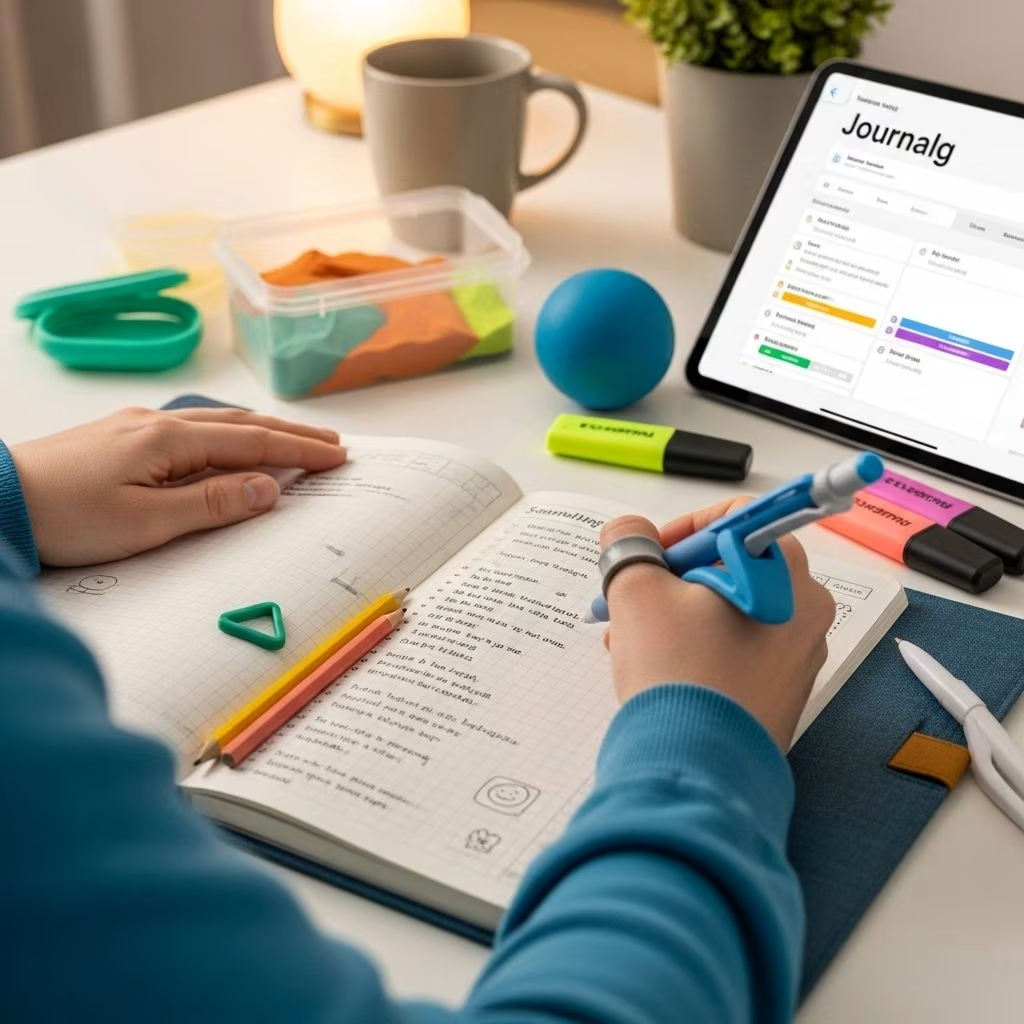
Journaling offers profound benefits for mental health, self-reflection, and personal growth. However, for individuals with dysgraphia or physical limitations that affect writing, traditional journaling methods can present significant challenges. This comprehensive guide explores adaptive strategies and innovative approaches that make journaling accessible and enjoyable for everyone, regardless of their writing abilities.
Understanding Dysgraphia and Its Impact on Writing
Dysgraphia is a learning disability that affects the physical act of writing and written expression. It encompasses both motor weaknesses that impact the mechanics of writing and cognitive challenges with organizing thoughts on paper. Individuals with dysgraphia may experience consistent difficulty with letter formation, spacing, and maintaining proper size and alignment of text.
The condition manifests in various ways, including trouble holding writing utensils correctly, writing fatigue that leads to hand cramps or pain, and difficulty translating thoughts into written words. Many people with dysgraphia have a significant gap between their verbal communication skills and their written expression abilities, which can be particularly frustrating when attempting to maintain a journal.
Physical limitations that affect writing can include conditions such as arthritis, Parkinson’s disease, stroke recovery, spinal cord injuries, or other motor impairments. These conditions may cause tremors, reduced fine motor control, limited range of motion, or chronic pain that makes traditional writing methods challenging or impossible.
Benefits of Journaling Despite Writing Challenges
Despite the obstacles presented by dysgraphia or physical limitations, journaling remains an invaluable practice for personal development and well-being. Regular journaling can improve mental health by providing an outlet for emotional expression, reducing stress and anxiety, and helping individuals process complex feelings and experiences.
For those with writing challenges, journaling can serve as a therapeutic tool that builds confidence and self-awareness. The act of recording thoughts and experiences, regardless of the method used, helps develop cognitive organization skills and provides a sense of accomplishment. Additionally, maintaining a journal creates a personal historical record that can be meaningful for reflection and growth over time.
The key is finding methods that work within individual limitations while preserving the core benefits of regular self-expression and reflection.
Adaptive Journaling Techniques and Strategies
Multisensory Approaches
One of the most effective strategies for individuals with dysgraphia involves incorporating multisensory techniques that engage multiple learning channels simultaneously. These approaches can make the writing process more memorable and less frustrating.
Try writing letters in sand, shaving cream, or finger paint to engage tactile senses while forming letters. Use textured paper or writing surfaces that provide additional sensory feedback. Practice letter formation through air writing or tracing letters on different surfaces before transferring to paper.
For those with limited hand mobility, consider using larger writing surfaces that allow for bigger movements, which can be easier to control than fine motor skills required for small writing.
Structured Writing Frameworks
Many individuals with dysgraphia benefit from highly structured approaches to writing that reduce the cognitive load of organizing thoughts. Implement simple frameworks such as:
Daily Prompt Structure: Use consistent daily prompts like “Today I felt…”, “Something I learned was…”, and “Tomorrow I want to…” This structure reduces decision fatigue and provides a clear framework for expression.
Bullet Journaling Adaptations: Simplify traditional bullet journaling by using basic symbols and short phrases instead of lengthy prose. Use dots for tasks, dashes for notes, and exclamation points for important events.
Timeline Journaling: Create simple timelines of daily events using minimal words and basic symbols to represent activities and emotions throughout the day.
Breaking Down the Writing Process
For individuals who become overwhelmed by the prospect of writing, break the journaling process into smaller, manageable steps. Start by brainstorming ideas verbally or mentally before writing. Use graphic organizers or simple outlines to organize thoughts. Write in short bursts with frequent breaks to prevent fatigue.
Consider the “speak first” approach where individuals record their thoughts verbally and then use the recording as a guide for writing, reducing the pressure of simultaneous thinking and writing.
Assistive Technology Solutions for Digital Journaling
Modern technology offers numerous solutions that can make journaling more accessible for individuals with writing challenges. These tools can significantly reduce physical demands while maintaining the benefits of regular journaling practice.
Speech-to-Text Technology
Voice recognition software has become increasingly sophisticated and accessible. Most smartphones, tablets, and computers now include built-in speech-to-text capabilities that can convert spoken words into written text with remarkable accuracy.
Popular options include Dragon NaturallySpeaking for comprehensive dictation needs, Google Voice Typing for simple text entry, and built-in dictation features on iOS and Android devices. These tools allow individuals to “write” their journals by speaking, which can be particularly beneficial for those with severe motor limitations or dysgraphia.
Alternative Input Devices
For individuals with physical limitations affecting traditional keyboard or pen use, alternative input devices can provide new pathways to written expression. Eye-tracking systems allow users to type by looking at letters on a screen. Switch-activated devices enable single-switch access to computers and tablets. Large-key keyboards or ergonomic keyboards can reduce strain and improve accuracy for those with limited dexterity.
Touchscreen devices with customizable interfaces can be adapted to individual needs, with options for larger buttons, simplified layouts, or gesture-based input methods.
Specialized Journaling Applications
Several applications have been specifically designed with accessibility in mind. These often include features such as customizable text size, high contrast modes, simplified interfaces, and integration with assistive technologies. Some apps offer templates and prompts specifically designed for individuals with learning differences or physical limitations.
Physical Accommodations and Environmental Setup
Creating an optimal physical environment for journaling can significantly impact success for individuals with writing challenges. The right setup can reduce fatigue, improve comfort, and enhance the overall journaling experience.
Seating and Positioning
Proper seating and body positioning are crucial for reducing physical strain during writing activities. Ensure that feet are flat on the floor or on a footrest, with thighs parallel to the ground. The writing surface should be at elbow height when arms are relaxed at the sides. Consider using a slanted writing board or book stand to angle the writing surface, which can reduce neck strain and improve visibility.
For individuals with significant mobility limitations, adaptive seating options such as specialized cushions, back supports, or wheelchair accessories may be necessary to maintain proper positioning during writing activities.
Writing Tools and Grips
The choice of writing instrument can make a substantial difference in comfort and legibility. Larger diameter pens or pencils may be easier to grip for those with limited fine motor control. Weighted pens can help individuals with tremors achieve better control, while ergonomic grips can reduce the effort required to hold writing tools.
Pencil grips come in various designs to accommodate different needs, including triangular grips that promote proper finger placement, cushioned grips that reduce pressure points, and adaptive grips designed for individuals with specific physical limitations.
Paper and Surface Modifications
The paper used for journaling can be adapted to support writing success. Raised line paper provides tactile feedback for maintaining proper letter placement and spacing. Graph paper can help with letter sizing and spacing consistency. Heavy-weight paper reduces the likelihood of ink bleeding through, which can be particularly important when using adaptive writing tools.
Non-slip mats under paper can prevent sliding during writing, while paper positioning guides can help maintain proper alignment and reduce the need to constantly readjust materials.
Alternative Journaling Formats and Creative Approaches
Traditional written journaling is just one approach to maintaining a personal record of thoughts and experiences. Many alternative formats can be equally meaningful while accommodating various physical and cognitive limitations.
Visual Journaling
Visual journaling incorporates drawings, sketches, collages, or photographs to supplement or replace written text. This approach can be particularly appealing to individuals who struggle with traditional writing but have maintained visual-spatial skills.
Simple drawings, doodles, or symbols can represent emotions, events, or ideas. Photo journaling using smartphone cameras allows individuals to capture moments and experiences without requiring written description. Collage journaling using magazines, printed images, or digital tools can create meaningful visual representations of thoughts and feelings.
Audio Journaling
Recording audio journals eliminates the physical demands of writing entirely while maintaining the reflective and expressive benefits of journaling. Modern smartphones make audio recording simple and accessible, with options for organizing recordings by date, topic, or mood.
Audio journaling can be particularly effective for individuals who are more comfortable with verbal expression than written communication. Recordings can be transcribed later if desired, or maintained in audio format as a spoken diary.
Hybrid Approaches
Many successful adaptive journaling strategies combine multiple formats and techniques. For example, an individual might use voice recording to brainstorm ideas, simple drawings to represent key concepts, and brief written phrases or single words to capture essential thoughts.
Template-based journaling can provide structure while reducing writing demands. Pre-designed forms with specific prompts and spaces for short responses can guide reflection while minimizing the writing required.
Building Writing Strength and Endurance Over Time
While accommodations and adaptive strategies are essential, gradually building writing strength and endurance can also improve long-term journaling success. This should be approached carefully and in consultation with occupational therapists or other healthcare providers when possible.
Progressive Exercises
Fine motor exercises can help strengthen the small muscles used in writing. Simple activities such as squeezing stress balls, manipulating therapy putty, or practicing finger exercises can improve dexterity and control over time.
Larger motor activities that strengthen core and shoulder stability can also support writing endurance. Push-ups, planks, wheelbarrow walking, and hanging from monkey bars all contribute to the proximal stability needed for fine motor control.
Gradual Expansion
Begin with very short journaling sessions and gradually increase duration as comfort and endurance improve. Start with single sentences or brief bullet points, and slowly work toward longer entries as skills develop.
Focus on consistency rather than length, aiming for daily practice even if entries are very brief. Regular practice helps maintain and gradually improve writing skills while establishing a sustainable journaling habit.
Celebrating Progress
Recognize and celebrate improvements in writing comfort, duration, or legibility, regardless of how small they may seem. Progress for individuals with dysgraphia or physical limitations may be gradual and incremental, making it important to acknowledge all forward movement.
Keep samples of early writing attempts to compare with later efforts, providing concrete evidence of improvement over time.
Frequently Asked Questions (FAQs)
Q: Can children with dysgraphia benefit from journaling?
A: Absolutely. Journaling can help children with dysgraphia develop writing skills while building confidence in expression. Start with simple formats like drawing journals or single-sentence entries, and use adaptive tools as needed.
Q: What if I can’t afford expensive assistive technology?
A: Many effective adaptations are low-cost or free. Use built-in speech-to-text on smartphones, create simple pencil grips with foam tubing, or try free journaling apps with accessibility features. Focus on environmental modifications and alternative formats first.
Q: How often should someone with writing challenges attempt to journal?
A: Consistency is more important than frequency. Start with what feels manageable, even if it’s just a few words every few days. Gradually increase frequency as comfort and skills develop, but avoid creating pressure that leads to avoidance.
Q: Are there specific times of day that work best for adaptive journaling?
A: Choose times when energy levels are highest and fine motor control is at its best. For many people, this is earlier in the day before fatigue sets in. However, individual patterns vary, so experiment to find optimal times.
Q: Can journaling actually help improve writing skills for people with dysgraphia?
A: Yes, regular practice through journaling can help improve writing skills over time, especially when combined with proper instruction and adaptive strategies. The key is making the practice enjoyable and sustainable rather than frustrating.
Q: What should I do if I become frustrated or overwhelmed while journaling?
A: Take breaks when needed and remember that journaling should be beneficial, not stressful. Consider switching to alternative formats temporarily, shortening entries, or seeking support from occupational therapists or learning specialists.
References
- https://childmind.org/article/understanding-dysgraphia/
- https://www.understood.org/en/articles/8-expert-tips-on-helping-your-child-with-dysgraphia
- https://www.occupationaltherapy.com/articles/dysgraphia-101-introduction-and-strategies-5327
- https://my.clevelandclinic.org/health/diseases/23294-dysgraphia
- https://pmc.ncbi.nlm.nih.gov/articles/PMC9600430/
- https://lagrange.libguides.com/c.php?g=1257920&p=9224092
- https://pmc.ncbi.nlm.nih.gov/articles/PMC7082241/
- https://robinmcevoy.com/writing-disabilities-dysgraphia-getting-thoughts-onto-paper/
- https://www.readingrockets.org/topics/learning-disabilities/articles/dysgraphia-more-just-bad-handwriting
- https://www.wtamu.edu/academics/college-education-social-sciences/department-education/special-programs/center-learning-disabilities/resources/learning-disabilities-writing.html


