


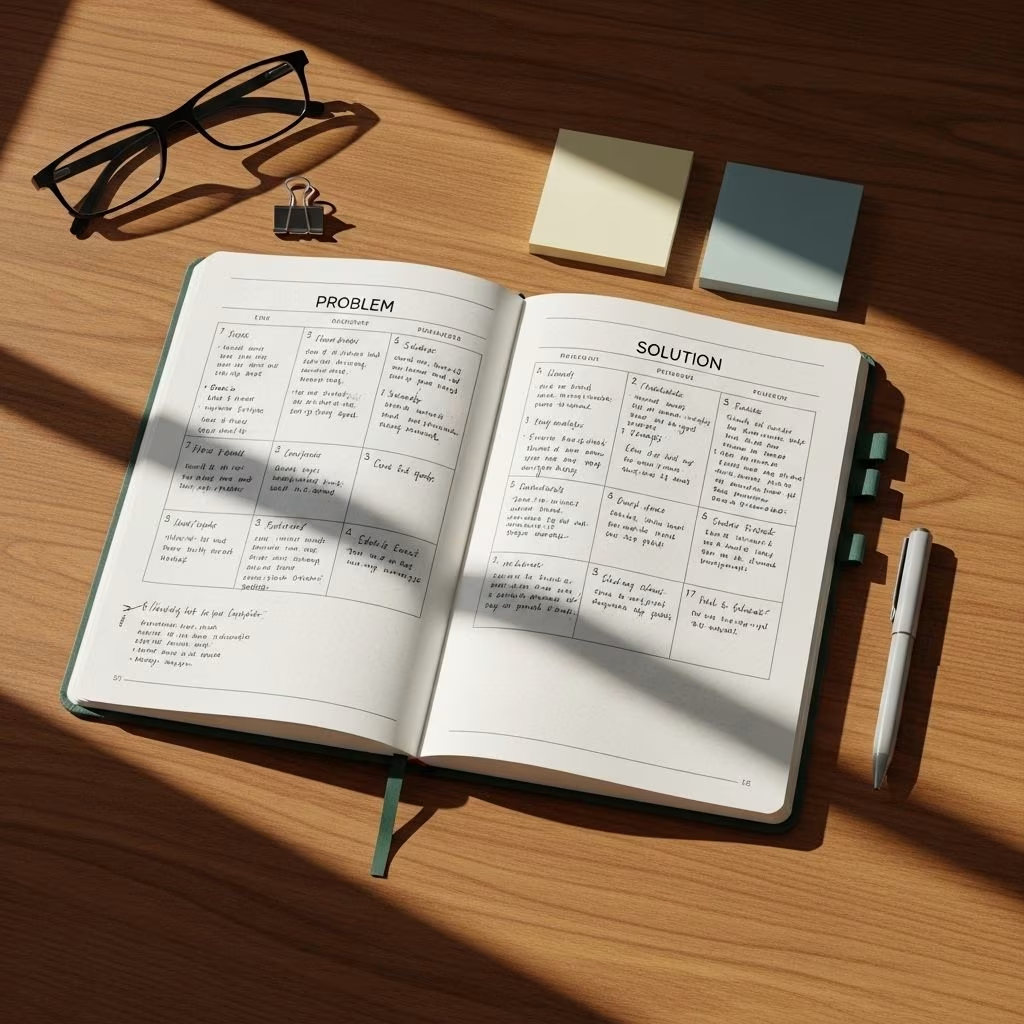
Life is filled with challenges—both big and small—that can leave us feeling overwhelmed. How we process these issues impacts our mental health, decision-making, and personal growth. Problem-solution grid journaling is a structured yet flexible method for breaking down problems, organizing thoughts, and developing actionable solutions. This article explores this innovative approach, its benefits, practical steps, and expert tips for integrating it into your daily routine.
What Is Problem-Solution Journaling?
Problem-solution journaling is a reflective writing practice aimed at identifying specific issues, analyzing their root causes, and brainstorming actionable solutions. Unlike traditional journaling, which may involve free-form writing about daily events, problem-solution journaling is goal-oriented. It encourages you to clarify your thoughts, reduce stress, and take proactive steps toward personal growth and resolution.
This technique is especially valuable because it transforms abstract worries into concrete plans. By writing down problems and potential solutions, you engage both your analytical and creative faculties, often leading to greater clarity and reduced anxiety.
The Grid Method in Journaling
Grid journaling involves dividing your page into a series of boxes or sections—hence the term “grid.” Each box can serve as a mini-canvas for a specific aspect of your problem or solution, making the process visual and organized. The grid format provides structure, reduces overwhelm, and encourages experimentation. You can adapt the grid to your needs—use columns for problems and rows for solutions, or create a matrix for different aspects of an issue.
While grid journaling is often associated with artistic or creative endeavors, it is equally effective for problem-solving. The structured layout allows for side-by-side comparison of issues and their potential remedies, providing clarity that unstructured writing might not achieve.
Benefits of Problem-Solution Grid Journaling
Emotional and Psychological Advantages
- Reduces Stress and Anxiety: Writing about stressors helps process emotions, leading to relief and a calmer mind.
- Enhances Self-Awareness: Regular practice helps you recognize emotional triggers and behavioral patterns.
- Promotes Emotional Resilience: Over time, journaling fosters a growth mindset, helping you bounce back from setbacks.
- Boosts Emotional Intelligence: Reflecting on your reactions and solutions improves empathy and communication skills.
Cognitive and Practical Perks
- Improves Problem-Solving Skills: The grid format breaks complex issues into manageable parts, encouraging systematic analysis.
- Enhances Goal Achievement: Writing down solutions increases the likelihood of taking action and achieving goals.
- Supports Memory and Focus: The act of writing helps organize thoughts, freeing up mental space for new ideas.
- Encourages Experimentation: The grid’s compartmentalization allows you to try different approaches in each box, fostering creative solutions.
How to Start Problem-Solution Grid Journaling
Step-by-Step Guide
- Choose Your Journal: Use a notebook or dot-grid journal for easy grid creation.
- Draw Your Grid: Divide the page into boxes. You might have two columns (Problem, Solution) or multiple boxes for different aspects of the issue.
- Identify the Problem: Clearly state the issue you’re facing in the first box.
- Analyze the Issue: Use additional boxes to explore causes, your feelings, and the impact.
- Brainstorm Solutions: List possible solutions in the next set of boxes, no matter how unconventional.
- Evaluate and Select: Weigh the pros and cons of each solution. Select the most feasible option.
- Plan Action Steps: Break down the chosen solution into actionable steps, assigning tasks to each grid box.
- Reflect and Revise: Revisit your grid regularly. Update it as you gain new insights or as the situation evolves.
Sample Problem-Solution Grid Layout
| Problem | Causes | Feelings | Possible Solutions | Action Steps |
|---|---|---|---|---|
| Work-related stress | Unrealistic deadlines, communication issues | Anxious, overwhelmed | Prioritize tasks, delegate, schedule breaks | Create a task list, talk to supervisor, set daily boundaries |
Real-Life Applications & Case Studies
Problem-solution grid journaling is adaptable to a wide range of personal and professional issues:
Personal Life
- Relationship Challenges: Map out misunderstandings, possible causes, and communication strategies.
- Health Goals: Track habits, obstacles, and incremental changes.
- Financial Planning: Outline spending patterns, areas for improvement, and budgeting tactics.
Professional Life
- Career Development: Identify skills gaps, potential growth opportunities, and learning resources.
- Project Management: Break down project obstacles, assign solutions, and track progress.
These examples demonstrate how grid journaling can be tailored to specific needs, providing clarity and accountability.
Tips from Experts and Advanced Techniques
Best Practices
- Consistency: Journal regularly to build the habit and track progress over time.
- Non-Judgment: Write without self-criticism. The process is about exploration, not perfection.
- Visual Elements: Use color coding, stickers, or sketches to make the grid more engaging and memorable.
- Combine with Prompts: Use journaling prompts to overcome writer’s block and deepen reflection. Examples: “What is the real issue here?” or “What’s one small step I can take today?”
Advanced Variations
- Multi-Day Grids: Extend the grid over several pages or days to monitor progress.
- Themed Grids: Create themed journals for specific areas (e.g., gratitude, stress, goals).
- Digital Grid Journaling: Use apps or digital notebooks for flexibility and portability.
Frequently Asked Questions (FAQs)
Q: Can problem-solution grid journaling help with anxiety?
A: Yes, structured journaling helps organize worries, identify patterns, and create actionable plans, which can reduce anxiety and promote a sense of control.
Q: How often should I use this method?
A: Consistency is key. Daily or weekly use is ideal, but even occasional practice during stressful periods can be beneficial.
Q: Does it matter what kind of journal I use?
A: Any notebook will work, but dot-grid or grid-style journals can make creating grids easier and more visually appealing.
Q: Can I use this for work and personal life?
A: Absolutely. The grid method is versatile and can be tailored to professional projects, personal goals, relationships, and health.
Q: What if I can’t think of any solutions?
A: Start by simply describing the problem. Sometimes, the act of writing generates ideas. You can also revisit the grid later or ask for input from others.
Conclusion
Problem-solution grid journaling is a powerful tool for navigating life’s challenges with clarity and creativity. By breaking down issues into manageable parts and systematically exploring solutions, you reduce stress, enhance self-awareness, and foster personal growth. The grid format adds structure without limiting flexibility, making it accessible to beginners and seasoned journalers alike. Whether you’re facing work stress, relationship issues, or personal goals, grid journaling can help you transform challenges into opportunities for learning and development. Start your grid journal today—your future self will thank you.
References
- https://paintedpaperstudio.com/grid-art-journaling-is-instantly-rewarding/
- https://westcoastdreaming.com/journaling-prompts-for-success/
- https://claritybenefitsolutions.com/resources/clarity-news/the-benefits-of-journaling-for-mental-health-and-stress-relief
- https://positivepsychology.com/benefits-of-journaling/
- https://www.youtube.com/shorts/bIFwag5IhgM
- https://bbhenryart.com/blog/how-to-start-grid-journaling
- https://www.youtube.com/watch?v=rZwywFFFymk
- https://wnba-sfchapter.org/journaling-for-problem-solving/
- https://www.margaretemiller.com/blog/grid-workshop


