


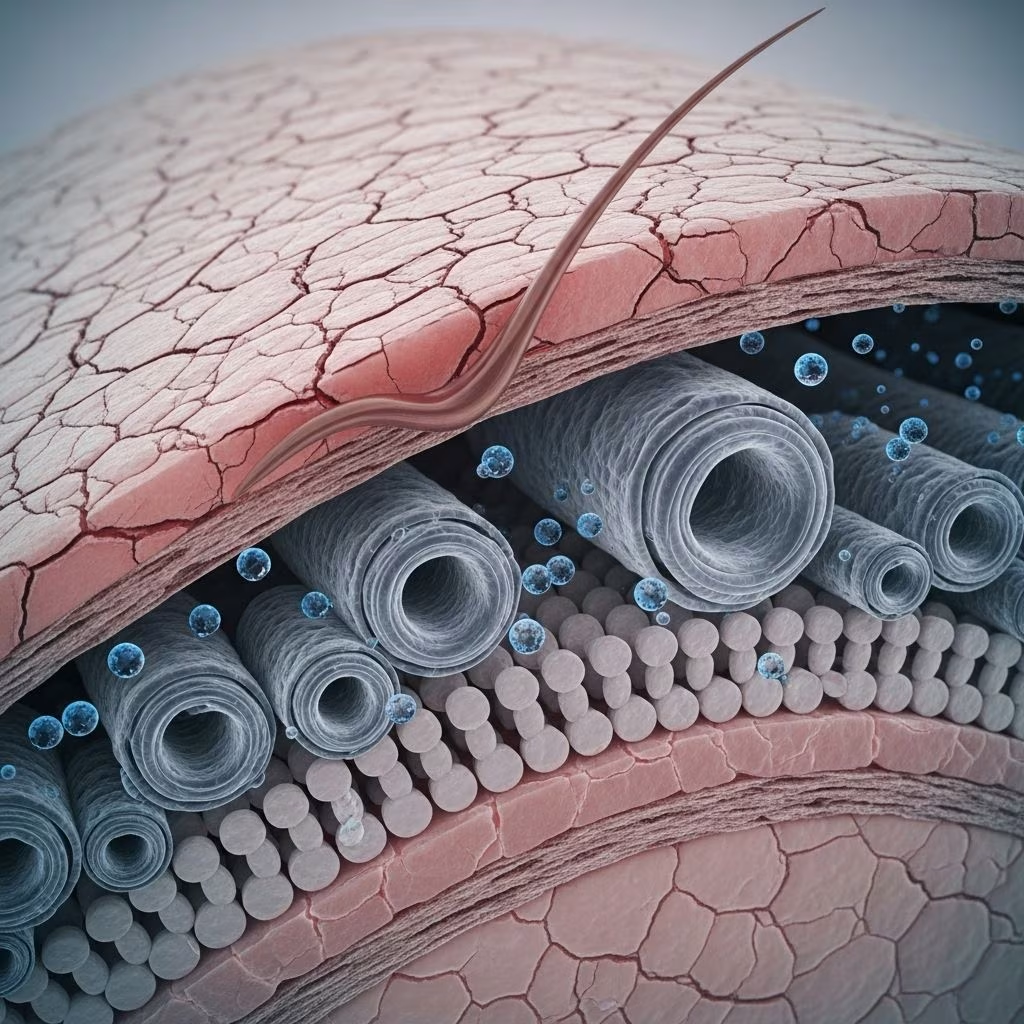
Aquaporins’ Role in Dry Skin Conditions (Xerosis)
Aquaporins are membrane-bound proteins that facilitate the movement of water and small solutes across cell membranes, playing a crucial role in maintaining skin hydration. In the context of dry skin conditions, such as Xerosis, the function of aquaporins is particularly significant. This article delves into the mechanisms by which aquaporins contribute to skin hydration and the implications for managing Xerosis.
Table of Content
- Introduction to Aquaporins
- Aquaporin 3 in Skin Hydration
- Xerosis and Skin Hydration
- Implications for Treatment
- Frequently Asked Questions
Introduction to Aquaporins
Aquaporins are integral to maintaining water balance in cells and tissues throughout the body, including the skin. There are 13 types of aquaporins identified in mammals, each with different transport capabilities and tissue distributions. Aquaporins generally facilitate water transport, but some, known as aquaglyceroporins, also transport small solutes like glycerol and urea.
Aquaporin 3 in Skin Hydration
Aquaporin 3 (AQP3) is the most abundant aquaporin in the skin, particularly in epidermal keratinocytes. It acts as an aquaglyceroporin, facilitating the transport of both water and glycerol into and out of cells. Glycerol is crucial for maintaining skin hydration and elasticity, and AQP3 plays a key role in its distribution within the epidermis.
Studies using AQP3 knockout mice have shown that the absence of AQP3 leads to reduced stratum corneum hydration and glycerol content, which cannot be corrected by high-humidity environments or skin occlusion. This highlights the importance of AQP3 in regulating skin hydration through glycerol transport.
Xerosis and Skin Hydration
Xerosis, or dry skin, is characterized by a lack of moisture in the skin, leading to discomfort and visible scaling. It can be exacerbated by environmental factors, such as low humidity, and is often associated with conditions like eczema or psoriasis. Maintaining adequate skin hydration is essential for preventing and managing Xerosis.
Aquaporins, particularly AQP3, are critical in this context because they help regulate the water gradient across the epidermis. A decrease in AQP3 functionality can disrupt this gradient, leading to increased water loss and reduced skin hydration, which worsens Xerosis.
Implications for Treatment
Understanding the role of aquaporins in skin hydration offers potential avenues for treating dry skin conditions. While traditional treatments focus on moisturizing and occluding the skin, targeting aquaporin function could provide more effective long-term hydration solutions.
For instance, treatments that enhance AQP3 expression or function might improve glycerol transport and retention, thereby enhancing skin hydration. Additionally, products like hyaluronic acid (HA) injectables, which improve dermal hydration, can complement aquaporin-mediated hydration by enhancing overall skin hydration levels.
Current Research and Future Directions
Current research continues to explore the detailed mechanisms of aquaporin function and its impact on skin health. Future studies may focus on developing treatments that modulate aquaporin activity to improve skin hydration and manage conditions like Xerosis more effectively.
Frequently Asked Questions
Q: What is Xerosis?
A: Xerosis, or dry skin, is a condition characterized by a lack of moisture in the skin, leading to dryness, scaling, and discomfort.
Q: How do aquaporins contribute to skin hydration?
A: Aquaporins, particularly AQP3, facilitate the transport of water and glycerol across cell membranes, helping maintain the skin’s water gradient and hydration levels.
Q: Can aquaporins be targeted for treating Xerosis?
A: Yes, understanding aquaporin function offers potential for developing treatments that enhance skin hydration by modulating aquaporin activity.
Q: What other treatments are available for Xerosis?
A: Traditional treatments include moisturizing creams, occlusive dressings, and environmental changes like increasing humidity. Newer treatments like HA injectables may also improve skin hydration.
Conclusion
Aquaporins, especially AQP3, play a crucial role in maintaining skin hydration by facilitating water and glycerol transport. Their dysfunction can exacerbate conditions like Xerosis, highlighting the need for treatments that target aquaporin function to improve skin hydration and manage dry skin effectively.


