


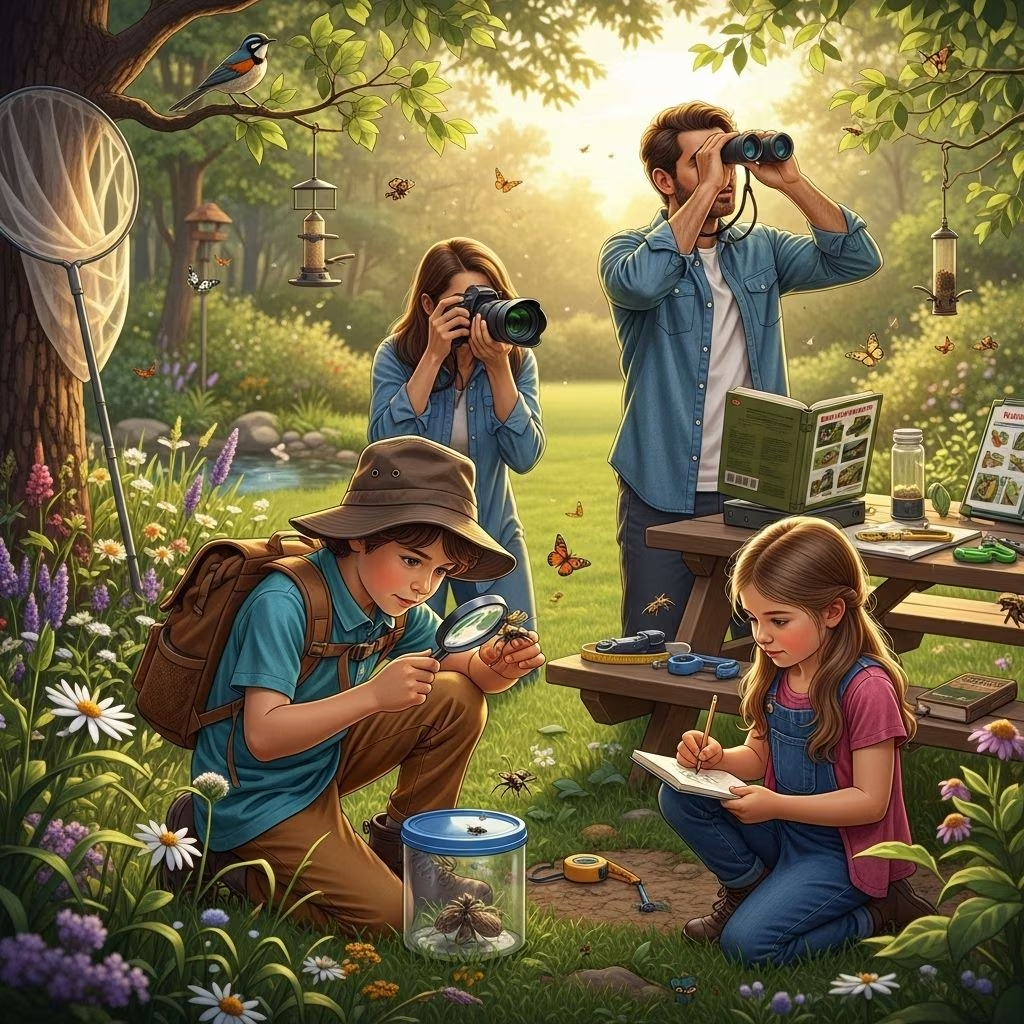
Imagine turning your backyard into a living laboratory where your family becomes a team of scientists discovering the hidden world right outside your door. A backyard BioBlitz transforms ordinary weekends into extraordinary adventures, where every plant, insect, and bird becomes part of an exciting scientific exploration. This citizen science activity connects families with nature while building critical observation skills, fostering environmental awareness, and creating lasting memories through hands-on discovery.
A BioBlitz is an organized effort to identify and catalog as many living species as possible within a specific area and timeframe, typically 24 hours. When adapted for families, this activity becomes a flexible, engaging routine that fits perfectly into weekend schedules. Whether you have a sprawling suburban yard, a small urban garden, or even just a balcony with potted plants, you can conduct meaningful scientific observations that contribute to your family’s understanding of local biodiversity.
Understanding the Backyard BioBlitz Concept
The beauty of a backyard BioBlitz lies in its accessibility and adaptability. Unlike traditional field trips to distant natural areas, your backyard offers consistent access to a familiar ecosystem that changes throughout seasons, providing endless opportunities for discovery. This familiarity becomes an advantage as you develop deeper knowledge of the species that share your space and how they interact with their environment.
A family BioBlitz serves multiple purposes beyond simple species counting. It develops scientific literacy by teaching children and adults alike how to make systematic observations, record data accurately, and think critically about patterns in nature. The activity strengthens family bonds through shared discovery and teamwork while encouraging physical activity and reducing screen time. Additionally, participating families contribute valuable data to citizen science initiatives when they share observations through platforms like iNaturalist, helping scientists track biodiversity changes across regions.
The recurring nature of a weekend BioBlitz routine creates opportunities to observe seasonal changes, track species populations over time, and develop a deep connection with your local environment. You might notice that certain butterflies only appear in summer months, that bird species change with migration patterns, or that different wildflowers bloom throughout spring and fall. These observations transform abstract ecological concepts into concrete, personal experiences.
Essential Preparation and Planning
Success in your family BioBlitz routine begins with thoughtful preparation. Start by defining your study area clearly. If you have a large yard, consider focusing on a specific section each weekend to ensure thorough coverage. For smaller spaces, you might expand your boundaries to include nearby sidewalks, parks, or green spaces within walking distance. The key is choosing an area that your family can comfortably explore within your available time.
Creating a site map adds both structure and excitement to your BioBlitz. Use aerial imaging from Google Earth or Google Maps to capture an image of your survey area, then print it for reference. Encourage children to create their own hand-drawn versions based on the aerial image, marking significant features like trees, flower beds, ponds, or compost areas. Older children can overlay a grid system on their maps, creating coordinates that help precisely mark where different species are found. This mapping activity itself becomes a valuable lesson in spatial awareness and scientific documentation.
Safety considerations deserve attention before venturing outside. Familiarize yourself with common hazards in your region, including poisonous plants like poison ivy, poison oak, or toxic mushrooms. Learn to identify venomous insects and animals that might inhabit your area, understanding that observation from a safe distance protects both your family and the creatures themselves. Establish clear family rules about never touching unfamiliar organisms and always treating wildlife with respect. Depending on your location and season, prepare appropriate protection against sun exposure, ticks, mosquitoes, and other environmental factors.
Gathering Your BioBlitz Toolkit
The right tools make your BioBlitz more efficient, enjoyable, and scientifically valuable. Fortunately, most items are inexpensive and readily available, with many already in your home. Your essential toolkit should include notebooks or field journals for recording observations, pencils or waterproof pens, and plastic bags or small containers with lids for temporarily collecting specimens that require closer examination.
Modern technology dramatically enhances BioBlitz activities. A smartphone becomes your most versatile tool, serving as camera, field guide, and data recorder simultaneously. Several apps transform casual observations into scientific contributions. iNaturalist stands out as the premier platform, allowing you to photograph organisms, receive AI-assisted identification suggestions, and share observations with a global community of naturalists who can confirm or correct identifications. Merlin Bird ID specializes in bird identification through photos or songs, while PictureThis focuses on plant identification. The SEEK app, designed specifically for children, gamifies species discovery and provides age-appropriate information.
Traditional tools remain valuable despite technological advances. Magnifying glasses or hand lenses reveal intricate details invisible to the naked eye, from insect anatomy to leaf structures. Butterfly nets and aquatic nets enable closer examination of flying insects and pond life respectively, though emphasize catch-and-release practices. Field guides specific to your region provide reliable reference information, and many families enjoy comparing digital identifications with traditional book references. A camera separate from your phone offers backup documentation, though phone cameras generally suffice. Consider including measuring tools, collection containers at various sizes, and a small trowel for examining soil-dwelling organisms.
Establishing Your Weekend BioBlitz Routine
Consistency transforms sporadic activities into meaningful routines that build skills and deepen understanding over time. Designate a specific time slot each weekend for your BioBlitz, whether that means Saturday mornings, Sunday afternoons, or flexible windows that accommodate your family’s schedule. Even dedicating just one to two hours weekly yields impressive results over months and seasons.
Begin each session with a brief planning meeting where family members review the previous week’s discoveries and set goals for the current outing. Perhaps you noticed unfamiliar bird calls last time and want to identify the species, or you found interesting insects near the compost pile worth investigating further. Setting specific objectives focuses attention while maintaining flexibility for unexpected discoveries. Consider creating friendly competitions, such as which family member can find the most different plant species or who can photograph the most colorful insects.
Divide roles among family members based on ages and interests. Younger children might focus on collecting leaf samples or counting butterflies, while older children handle photography and species identification apps. Adults can facilitate observations, ensure safety, and help with more complex identifications. Rotating roles across weeks keeps everyone engaged and develops diverse skills. Some families enjoy creating team structures with different focus areas, such as one team surveying plant life while another concentrates on insects and birds.
Weather variations should enhance rather than limit your routine. Rainy weekends reveal entirely different species than sunny days, with certain amphibians, slugs, and moisture-loving insects appearing only in wet conditions. Early morning sessions provide opportunities to observe dew-covered spider webs, active songbirds, and morning-blooming flowers. Evening surveys might reveal moths, bats, and nocturnal pollinators. Seasonal changes create dramatic shifts in species presence, making year-round participation especially rewarding as you document migration patterns, hibernation cycles, and seasonal blooms.
Conducting Systematic Observations
Effective BioBlitz methodology balances systematic coverage with flexible exploration that follows interesting discoveries. Start with a walkthrough of your designated area, noting obvious species and features. Then divide the space into zones for closer examination. Different microhabitats within your yard support distinct communities: shaded areas under trees harbor shade-tolerant plants and moisture-seeking invertebrates, sunny flower beds attract pollinators, soil and leaf litter shelter decomposers and burrowing creatures, water features support aquatic life, and even walls and fences host lichens, mosses, and climbing insects.
Observation techniques vary by organism type. For plants, photograph the entire plant when possible, then capture close-ups of flowers, leaves, bark, and fruit. Note the plant’s height, location, and any distinguishing characteristics. Birds require patient watching, with binoculars enhancing distant observations. Record coloring, size, behavior, and songs or calls. Insects demand gentle handling when necessary, with many identifiable through photography alone. Note where you found them, what they were doing, and any distinctive markings. Mammals leave signs even when not directly observed, including tracks, scat, burrows, and chewed vegetation. Fungi appear in varied forms from mushrooms to shelf fungi on trees, requiring photos of tops, undersides, and surrounding habitat.
Documentation standards ensure your observations provide scientific value. Each finding should include clear photographs from multiple angles showing identifying features, the precise location marked on your map, the date and time of observation, weather conditions, and behavioral notes describing what the organism was doing. Record habitat details such as sun exposure, moisture levels, and nearby plants or structures. For physical specimens collected temporarily, photograph them alongside a ruler for scale reference before releasing them back where found.
Identification and Learning Process
Species identification represents both the challenge and thrill of BioBlitz activities. Begin with app-based suggestions from iNaturalist or similar platforms, which use artificial intelligence to analyze your photos and propose likely matches. These initial suggestions provide starting points rather than definitive answers. Compare the suggested species with your observations, checking whether key characteristics match, the species occurs in your geographic region, and the habitat preferences align with where you found the organism.
Engage the broader citizen science community by sharing observations on iNaturalist, where expert naturalists review submissions and provide confirmed identifications. This interaction teaches critical evaluation skills as you learn why certain identifications are correct or incorrect. Field guides offer additional verification, with regional guides most useful for narrowing possibilities. Online resources including university extension websites, natural history museum databases, and specialized forums provide detailed information about local species.
Accept that some organisms resist easy identification, especially immature specimens, organisms viewed from poor angles, or species requiring microscopic examination of specific features. These mysteries become opportunities for learning patience and recognizing the complexity of biodiversity. Document difficult identifications as thoroughly as possible and revisit them in future sessions when you might find better specimens or develop improved identification skills.
Recording and Analyzing Your Data
Systematic data collection transforms casual observations into valuable scientific records. Create a standardized format for recording each species, whether using a field notebook, digital spreadsheet, or the built-in features of iNaturalist. Essential data fields include common and scientific names, observation date and time, specific location within your study area, number of individuals observed, and life stage or notable behaviors. Weather conditions, temperature, and recent environmental events like rain or wind provide context for understanding species presence and activity.
Organize your accumulated data in ways that reveal patterns and trends. Create species lists categorized by taxonomic groups such as birds, insects, plants, and fungi. Track first and last observation dates for seasonal species, helping you predict when certain organisms will appear. Monitor population changes by noting whether species numbers increase, decrease, or remain stable across observations. Map species distributions within your study area, identifying which zones support the greatest diversity or host rare species.
Regular review sessions, perhaps monthly or seasonally, allow families to step back from individual observations and see larger patterns. Discuss questions that emerge from your data: Why do certain species appear together? How do weather patterns affect species presence? Which areas of your yard support the most biodiversity, and why? These discussions develop scientific thinking skills and deepen ecological understanding.
Seasonal Variations and Year-Round Engagement
The changing seasons provide natural structure for year-round BioBlitz routines, with each season offering unique discovery opportunities. Spring brings migration waves with returning birds, emerging butterflies and bees, budding trees and blooming wildflowers, and amphibians breeding in temporary pools. Your spring sessions might focus on documenting first blooms, tracking migrant arrivals, and identifying early-season insects.
Summer peaks with biodiversity abundance including nesting birds raising young, maximum insect diversity with butterflies, beetles, and countless others, flowering plants attracting diverse pollinators, and active reptiles basking and hunting. Summer BioBlitz sessions can extend into evenings to observe moths, fireflies, and nocturnal animals, while hot afternoons might focus on aquatic life in ponds or streams seeking relief from heat.
Fall transitions bring dramatic changes with migration reversals as birds depart southward, insect lifecycles completing with final generation adults, seeds and fruits developing for winter survival, and fungi flourishing in cooling, moist conditions. Autumn BioBlitz activities might emphasize documenting seed dispersal strategies, identifying mushroom varieties, and noting which species prepare for winter through color changes, food storage, or migration.
Winter reveals hidden aspects of nature as bare trees expose bird nests and insect egg cases, evergreen plants and winter-active animals become obvious, tracks in snow tell stories of nocturnal visitors, and hardy birds gather at feeders. Winter sessions teach observation skills beyond simple species counting, as you interpret signs and traces rather than observing organisms directly.
Engaging Children of Different Ages
Tailoring BioBlitz activities to developmental stages ensures engagement across age ranges. Preschool children thrive with sensory exploration, simple counting games, and colorful discoveries. Focus their attention on large, obvious organisms, encourage gentle touching of appropriate plants and objects, and celebrate each discovery enthusiastically. Simple activities like collecting fallen leaves to compare shapes or watching ants carry food engage their natural curiosity without overwhelming limited attention spans.
Elementary-age children handle more complex tasks including photography assistance, drawing specimens in field journals, and learning to use identification apps with guidance. They benefit from structured challenges like scavenger hunts for specific colors or shapes, competing to find the most different leaf types, and creating nature art from collected specimens. This age group particularly enjoys the gamification aspects of apps like SEEK, which reward discoveries with virtual badges and achievements.
Middle school students develop scientific thinking through hypothesis formation, data recording and basic analysis, and conducting independent research about discovered species. Challenge them to explain ecological relationships they observe, predict where certain species might be found based on habitat preferences, and compare findings across different seasons. They can take leadership roles in teaching younger siblings or planning specific aspects of BioBlitz sessions.
Teenagers and adults engage with citizen science contributions, advanced identification techniques, and exploring specialist areas like bird photography or mycology. Encourage deeper dives into particular taxa that interest them, participation in online naturalist communities, and contributing to scientific understanding through high-quality observations. Older participants might analyze family data for patterns, create presentations about findings, or mentor younger family members.
Maximizing Learning Through Discussion and Reflection
The learning process extends beyond field observations into meaningful discussions that connect discoveries to broader concepts. After each BioBlitz session, gather as a family to review findings, share favorite discoveries, and process the experience together. Use open-ended questions to stimulate thinking: What surprised you today? Did you expect to find more or fewer different species? Why might certain organisms live in specific areas? How do the species we found depend on each other?
Connect observations to ecological principles including food webs and energy flow, habitat requirements and niches, adaptation and evolution, population dynamics, and seasonal cycles. When you observe a caterpillar eating leaves, discuss energy transfer from plants to herbivores to predators. If you find multiple species on one plant, explore the concept of that plant providing habitat, food, and protection to a micro-community.
Encourage children to research specific species that captured their interest, learning about life cycles, geographic ranges, conservation status, and ecological roles. This independent investigation extends learning beyond the BioBlitz itself and develops research skills. Share findings at future family meetings, creating opportunities for teaching and reinforcing learning.
Document your family’s BioBlitz journey through photo albums, nature journals, or digital presentations that track discoveries over time. Reviewing past observations highlights how much you have learned, species changes across seasons, and growth in identification skills. Many families create annual reports summarizing their year in backyard biodiversity, complete with statistics, favorite finds, and goals for the coming year.
Expanding Impact Through Citizen Science
Your family’s observations contribute to scientific understanding when shared through citizen science platforms. iNaturalist submissions become part of a global database used by researchers studying biodiversity patterns, range expansions related to climate change, invasive species spread, and population trends for conservation planning. Understanding that your weekend activity contributes to real science adds purpose and motivation, especially for older children and teenagers.
Research-grade observations on iNaturalist require confirmation by community experts and meet specific quality standards. Strive to create research-grade submissions by taking clear, well-lit photographs showing identifying features, accurately recording observation locations, and providing correct dates. As your identification skills improve, you can help verify other users’ observations, becoming part of the expert community that maintains data quality.
Consider expanding participation beyond your immediate family by organizing neighborhood BioBlitz events, collaborating with local schools or nature centers, participating in specific citizen science projects like City Nature Challenge, and connecting with regional naturalist groups. These expanded activities build community while multiplying scientific impact.
Overcoming Common Challenges
Every family encounters obstacles when establishing new routines. Weather extremes might force cancellations, but flexibility allows you to conduct short observations during weather breaks, focus on weather-resistant organisms like lichens and bark-dwelling insects, or shift to indoor activities like organizing past findings and researching species. The key is maintaining momentum rather than perfect attendance.
Limited biodiversity in urban areas or small spaces might seem discouraging initially, but even concrete environments support surprising diversity. Focus on specialized urban adapters, explore vertical spaces on walls and buildings, investigate soil and mulch for invertebrates, and expand boundaries to include street trees and sidewalk strips. Often, careful observation reveals far more species than initial impressions suggest.
Varying interest levels among family members require accommodation through flexible participation where members join for portions of sessions, rotating leadership roles that play to individual strengths, allowing different focus areas with some tracking birds while others photograph plants, and celebrating individual contributions regardless of size. The goal is shared quality time and learning, not perfect participation by all members.
Identification difficulties plague beginners and experts alike. Accept that some organisms resist identification, focus on learning from successful identifications, build skills gradually starting with obvious, common species, and engage online communities for assistance. Remember that even unidentified observations contribute by documenting biodiversity presence, and mysterious finds often motivate deeper learning.
Frequently Asked Questions
Q: How much time does a family backyard BioBlitz require each weekend?
A: A productive BioBlitz can take anywhere from one to three hours, depending on your family’s schedule and the size of your study area. Even 30-minute sessions yield valuable observations when conducted consistently. The key is regular participation rather than lengthy duration.
Q: Do we need expensive equipment to conduct a backyard BioBlitz?
A: No, the basic tools required are minimal and often already available at home. A smartphone with free apps like iNaturalist, a notebook, and pencil cover essentials. Optional items like magnifying glasses, nets, and field guides enhance the experience but are not necessary to begin.
Q: What if we live in an apartment without a traditional backyard?
A: BioBlitz activities adapt perfectly to apartment living. Survey balcony plants and visitors, explore building grounds or nearby sidewalks, visit local parks or green spaces, and investigate community gardens. Urban environments often surprise participants with their biodiversity, particularly regarding birds, insects, and adaptive plant species.
Q: How do we safely handle insects and other organisms we find?
A: Many observations do not require handling at all. When necessary to examine organisms more closely, use containers rather than bare hands, release organisms quickly in the exact location found, never handle potentially dangerous species, and teach children to always ask before touching anything unfamiliar. Observation from a respectful distance protects both you and wildlife.
Q: Can we conduct BioBlitz activities during winter when fewer species are visible?
A: Absolutely. Winter BioBlitz sessions focus on different aspects of nature including identifying trees by bark and structure, tracking animal signs in snow, observing winter-active birds, locating insect egg cases and overwintering stages, and examining lichens and mosses. Winter observations develop important skills in reading nature’s subtle signs.
Q: How do our observations contribute to scientific research?
A: When you share observations through platforms like iNaturalist, researchers access your data for studies on species distributions, climate change impacts, seasonal timing shifts, and biodiversity patterns. Research-grade observations meeting quality standards become part of permanent scientific databases used globally.
Q: What if we cannot identify something we find?
A: Unidentified finds are common and acceptable. Document them thoroughly with photos and notes, then upload to iNaturalist where community experts can assist with identification. Some organisms remain mysterious, which presents opportunities for learning and future discovery. Focus on the process rather than achieving perfect identification rates.
Q: How can we maintain interest and prevent the routine from becoming boring?
A: Variety sustains engagement. Rotate focus areas within your study area, set different challenges or themes each week, invite friends or extended family to join occasionally, participate in organized events like City Nature Challenge, explore new locations beyond your immediate yard, and celebrate milestones like reaching 100 species observed. The constant changes in nature across seasons provide built-in variety.
References
- https://www.kidsinparks.com/adventure-stories/backyard-bioblitz
- https://budburst.org/storage/statamic/Backyard-BioBlitz-Activity.pdf
- https://www.ctaudubon.org/2021/04/earth-day-backyard-bioblitz-2021-a-great-family-activity/
- https://www.tangledbankstudios.org/sites/default/files/2018-11/2)%20Hosting%20A%20Backyard%20Wilderness%20Bioblitz–Step-by-Step%20Guide.pdf
- https://blog.nature.org/2024/08/25/backyard-bioblitz-how-to-be-a-citizen-scientist-in-your-backyard/
- https://www.nrpa.org/contentassets/af9d76f8183f402dbb2061895221a3c1/2023-nrpa-parks-for-pollinators-bioblitz-toolkit.final.pdf
- https://forum.inaturalist.org/t/tips-for-public-bioblitz-organizers/10598
- https://www.floridamuseum.ufl.edu/educators/resource/backyard-biodiversity-bonanza/
- https://janegoodall.ca/wp-content/uploads/2025/04/BioBlitz-Classroom-Guide.pdf


