


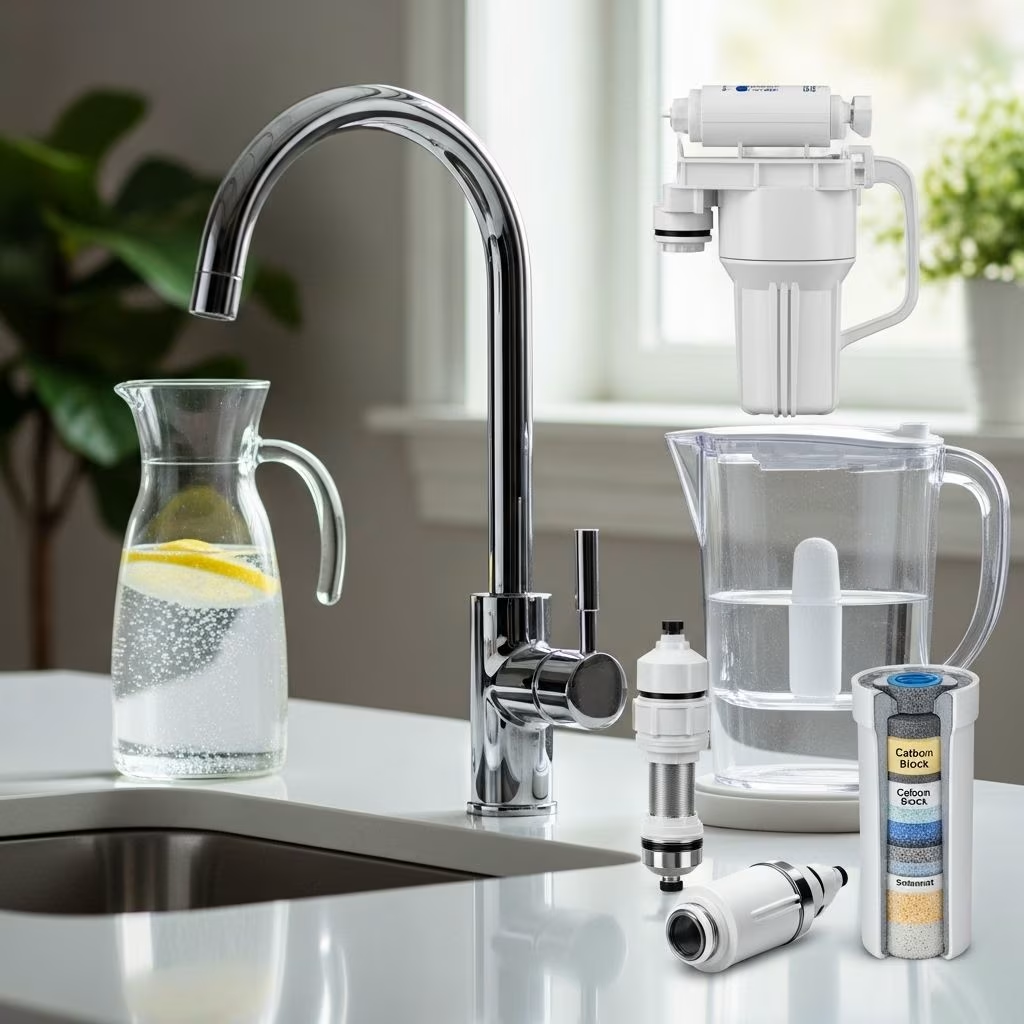
Access to clean, safe water is essential for health, comfort, and peace of mind. With rising concerns over contaminants, taste, and even emerging pollutants, choosing the right water filtration system has never been more important. This detailed guide explores the major types of water filtration technologies, compares their strengths and limitations, and offers practical advice to help you find the best solution for your needs.
Why Filter Your Water?
Many municipal and well water sources contain impurities—ranging from sediment, chlorine, and heavy metals to microbial organisms and pharmaceutical residues. Filtering your water can:
- Improve taste and odor by removing chemicals and organic compounds.
- Reduce health risks by eliminating harmful contaminants like lead, pesticides, and bacteria.
- Protect appliances and plumbing from scale and sediment build-up.
Whether you draw water from a city supply or a private well, filtration helps ensure what you and your family drink, bathe in, and cook with is safer and more pleasant.
Common Water Contaminants
Identifying what’s in your water is the first step in selecting the best filtration system. Some of the most common contaminants include:
- Sediment: Dirt, sand, and rust particles.
- Chlorine and Chloramine: Added for disinfection but often cause bad taste and odor.
- Lead and Heavy Metals: Generally from old pipes or faucets.
- Pesticides and Herbicides: Agricultural runoff can pollute groundwater supplies.
- Microbes: Bacteria, viruses, and cysts can enter from contaminated sources.
- Hardness (Calcium & Magnesium): Causes scale and reduces appliance efficiency.
- Pharmaceuticals and Emerging Pollutants: Increasing concern in urban water supplies.
Testing your water is recommended before investing in a filtration system so you can target specific contaminants.
Types of Water Filtration Systems
There is no universal solution; each filtration system uses distinct mechanisms and is suited to different contaminants. Below are the major types of water filters and how they work:
1. Reverse Osmosis (RO) Systems
RO systems force water through a highly selective semipermeable membrane, removing a wide spectrum of contaminants:
- Effective against: Heavy metals, fluoride, nitrates, salts, bacteria, viruses, pharmaceuticals.
- Often combined with carbon and sediment pre-filters for broader protection.
- Typically installed under sinks or as countertop units; also available for whole-house use.
Advantages: Exceptional purification, effective against most inorganic and organic contaminants.
Drawbacks: Wastes some water, removes beneficial minerals (can be addressed with a remineralization filter), generally slower filtration rate, higher initial and maintenance cost.
Best for: Households wanting comprehensive contaminant removal for drinking and cooking water, especially if water quality is very poor or for immune-compromised individuals.
Popular models: AquaTru (countertop), Waterdrop G3 P800 (tankless under-sink).
2. Activated Carbon Filters
Activated carbon traps and adsorbs chemicals, chlorine, taste/odor compounds, and some pesticides:
- Most common in pitcher, faucet, and under-sink filters.
- Often the first stage in multi-stage systems.
Advantages: Improves taste and odor, affordable and easy to install and replace, good for reducing many common tap water issues.
Drawbacks: Limited efficacy for heavy metals, pathogens, and minerals. Filters must be replaced regularly.
Best for: Improving household tap water taste and minor chemical reduction.
3. Sediment Filters
Mechanical filters physically block larger particles, dirt, and rust from passing through:
- Used as a pre-filter in both whole-house and point-of-use systems.
- Protects finer downstream filters and appliances.
Advantages: Prevents clogging and prolongs lifespan of other filters; simple and low-cost.
Drawbacks: Does not remove chemicals, metals, or microbes.
Best for: Well water with sediment issues or as the first line of defense in a multi-stage system.
4. Ultraviolet (UV) Filters
These utilize UV light to disinfect water by inactivating bacteria, viruses, and protozoa:
- Do not alter taste, odor, or chemical composition of water.
- Frequently paired with other filtration methods for broader protection.
Advantages: Chemical-free disinfection; highly effective against biological contaminants.
Drawbacks: Ineffective against sediments, chemicals, or metals; water must be clear for optimal UV effectiveness.
Best for: Homes with microbial contamination threats, especially from wells or surface sources.
5. Ceramic Filters
Water is filtered through a porous ceramic barrier, filtering out bacteria, protozoa, and particulate matter:
- Often combined with silver or carbon for enhanced performance.
Advantages: Long-lasting, good at removing bacteria and fine sediment.
Drawbacks: Not effective against most chemicals, metals, or viruses.
Best for: Gravity-fed portable systems, off-grid use, and areas with high sediment or bacterial presence.
6. Ion Exchange Filters & Water Softeners
Swap calcium and magnesium for sodium or potassium ions, effectively softening water and reducing scale:
- Primarily for hardness, which affects pipes and appliances.
Advantages: Softens hard water; protects plumbing, extends appliance life.
Drawbacks: Does not address pathogens or most chemicals; adds salt to water.
Best for: Residences with hard water or severe scale issues.
7. Whole House vs. Point-of-Use (POU) Filters
Water filtration solutions are generally divided into two main categories:
- Whole House Systems: Treat all water entering your home—best for general contaminant reduction, protecting plumbing and appliances.
- Point-of-Use (POU) Systems: Installed at a single tap or appliance; best for drinking, cooking, and sometimes bathing water.
Whole house systems commonly combine sediment, carbon, and sometimes UV or other specialized filters, while POU options can be more targeted and cost-effective.
Detailed System Comparison Table
| Filter Type | Best For | Contaminants Removed | Pros | Cons |
|---|---|---|---|---|
| Reverse Osmosis | Comprehensive drinking water purification | Heavy metals, bacteria, viruses, many chemicals | Highly effective, broad-spectrum removal | Removes beneficial minerals, slower, some water waste |
| Activated Carbon | Taste, odor, basic chemical removal | Chlorine, pesticides, VOCs | Affordable, easy replace, improves flavor | Limited for metals/pathogens, frequent changes |
| Sediment | Pre-filtration, well water with debris | Dirt, sand, rust | Protects other filters, cheap, easy | No chemical/pathogen removal |
| UV Disinfection | Microbial contamination | Bacteria, viruses, cysts | No chemicals, highly effective for microbes | No sediment/chemical removal, needs power |
| Ceramic | Portable or off-grid, bacteria/sediment | Bacteria, sediment | Long life, no chemicals | Limited for chemicals/metals |
| Ion Exchange | Hard water/scale | Calcium, magnesium | Softens water, less scale | Adds sodium, doesn’t clean pathogens |
How to Choose the Right Water Filtration System
To decide which system is best for you, follow these steps:
- Test Your Water: Laboratory analysis or home test kits help you pinpoint contaminants.
- Identify Your Goals: Taste/odor improvement, health protection, or protection for appliances?
- Assess Usage Points: Do you want filtration at every tap (whole house), or just for drinking water (POU)?
- Budget Considerations: Include both upfront investment and ongoing filter replacements.
- Maintenance Commitment: Some filters require frequent changing or professional service.
- Certifications: Look for NSF and ANSI certifications that validate manufacturer performance claims.
For newly discovered contaminants or complex needs, multi-stage filters or a combination of systems is often optimal.
Costs and Maintenance Considerations
- Initial Cost: Ranges from $30 for pitcher filters to $1000+ for advanced whole house or tankless RO systems.
- Annual Filter Replacement: Budget between $40-$200, depending on system type and water usage.
- Professional Installation: RO, whole-house, and UV systems may require a plumber or technician.
- Filter Lifespan: Sediment and carbon filters may last 2-6 months; RO membranes and ceramic cartridges can last 1-3 years with proper pre-filtration and maintenance.
Neglected maintenance undermines filtration effectiveness—always follow manufacturer instructions on service intervals and filter changes.
Frequently Asked Questions (FAQs)
Q: Is reverse osmosis the best water purification system?
A: Reverse osmosis is the most comprehensive technology for drinking water, capable of removing a wide range of contaminants. However, it may not always be necessary, especially if your water is already of good quality or if you only wish to improve taste and odor.
Q: Are water pitcher filters effective?
A: Pitcher filters typically use activated carbon to reduce chlorine, some metals, and basic odors/tastes. They’re convenient, but less effective for serious contamination.
Q: What does NSF certification mean?
A: NSF (National Sanitation Foundation) certification ensures the filter meets independent standards for contaminant reduction and safety. Always look for certified systems when prioritizing health and safety.
Q: Can I use multiple filters together?
A: Yes! In fact, most high-performance systems combine methods (e.g., sediment + carbon + RO + UV) to target a broader range of contaminants and provide layers of protection.
Q: How often should filters be replaced?
A: This varies by filter type and usage. Carbon and sediment filters may need replacement every 2-6 months, while RO membranes and UV lamps can last 1-3 years. Always follow product instructions for best results.
Conclusion
Selecting the best water filtration system depends on your unique situation—water quality, contaminant risks, budget, and practical needs. For most comprehensive protection, reverse osmosis systems paired with sediment and carbon filtration are a strong choice, while those primarily seeking taste or odor improvement may benefit from simpler carbon solutions. Whole house systems offer broad coverage for large families or homes with specific water issues, while point-of-use filters provide targeted benefits affordably. Regardless of your decision, prioritizing certified products, regular maintenance, and knowing your water is the key to enjoying clean, healthy drinking water for years to come.
References
- https://www.apecwater.com/blogs/water-quality/six-kinds-of-water-filters-and-their-benefits
- https://waterfilterguru.com/best-water-filters/
- https://filterway.com/blog/post/understanding-the-water-filter-types
- https://www.aquasana.com/info/top-5-types-of-drinking-water-filtration-pd.html
- https://www.waterfiltercomparisons.com
- https://www.cdc.gov/drinking-water/prevention/about-choosing-home-water-filters.html
- https://espwaterproducts.com/pages/water-filtration-systems
- https://www.techgearlab.com/topics/kitchen/best-water-filter


