


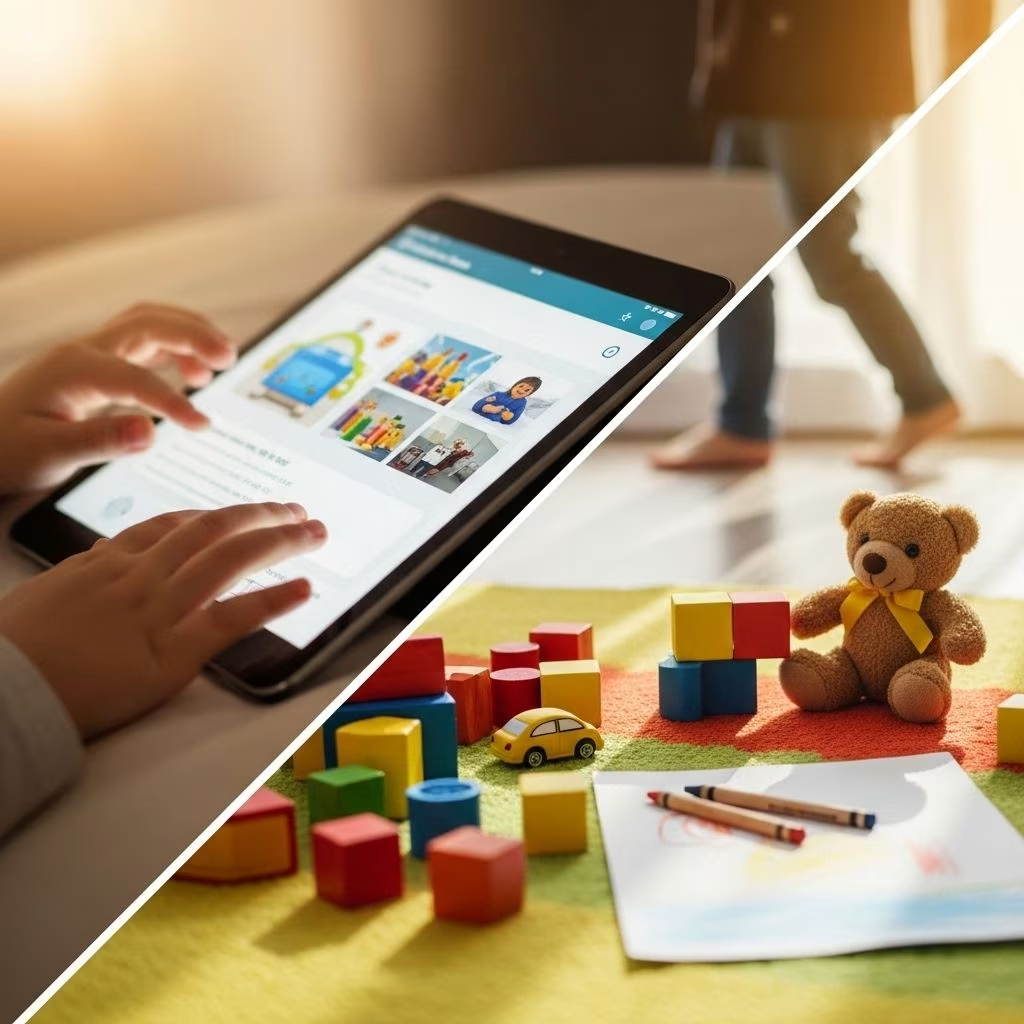
In today’s digital age, parents and educators constantly strive to strike the right balance between leveraging technology for learning and preserving essential real-world play. Screen time can offer engaging educational opportunities, but hands-on play remains fundamental to healthy childhood development. This comprehensive guide offers research-backed insights, practical strategies, and actionable tips to help families and educators foster a well-rounded, balanced learning environment for children.
Introduction
Computers, tablets, and smartphones have become integral to modern childhood, offering instant access to knowledge, creativity tools, and social connections. At the same time, the value of unstructured, hands-on play—where children manipulate, imagine, and interact with the real world—remains undeniable. Research suggests the healthiest development occurs when children experience both: the cognitive stimulation of well-designed digital tools and the embodied learning achieved through tactile, social, and physical play. But how much screen time is too much? When should a child be encouraged to put down the tablet and pick up a puzzle or join a game of tag? This article explores these questions in depth to help families and educators make informed, proactive choices.
Why Balancing Screen Time and Hands-On Play Matters
Understanding how digital and physical experiences shape a child’s growth is the key to creating a nurturing, stimulating environment. While educational technology can individualize learning and foster new skills, excessive screen time risks undermining focus, motor skill development, social awareness, and emotional health.
- Educational screen time can boost digital literacy, visual-spatial skills, and academic confidence when used intentionally and in moderation.
- Hands-on play immerses children in active discovery, creativity, and real-world practice of social-emotional skills.
- Exclusive reliance on either format is not ideal; balanced exposure is crucial for whole-child development.
Developmental Benefits of Hands-On Play
Hands-on, interactive play is foundational to cognitive, physical, and social-emotional growth, especially in early childhood. This type of learning actively engages multiple senses and encourages children to problem-solve, experiment, and collaborate.
- Physical and Motor Skills: Manipulating objects, running, climbing, and building strengthen fine and gross motor skills critical for later academics and health.
- Imagination and Creativity: Unstructured play allows children to invent scenarios, test solutions, and develop creative thinking.
- Social Development: Playing with peers teaches sharing, communication, compromise, and empathy through face-to-face interaction.
- Focus and Attention: Tactile activities and open-ended play can enhance children’s ability to focus for longer periods and see tasks through to completion.
- Emotional Regulation: Real-life play environments support emotional resilience, self-confidence, and self-regulation.
According to Montessori educational philosophy and other child development experts, hands-on exploration is especially crucial between birth and age 6, when the brain is rapidly developing foundational skills and understanding of the world.
Comparison Table: Interactive Play vs. Screen Time
| Aspect | Interactive (Hands-On) Play | Screen Time |
|---|---|---|
| Creativity | Sparks imagination and innovation | Often passive and scripted |
| Physical Development | Builds coordination and motor skills | Usually sedentary |
| Social Interaction | Enhances teamwork and communication | Limited or absent |
| Emotional Intelligence | Encourages empathy and self-regulation | Can lead to overstimulation |
| Learning Style | Tactile, experiential, self-paced | Visual/auditory, less personalized |
Educational Benefits of Screen Time
When high-quality educational content is chosen deliberately and screen use is monitored, technology can support and extend learning in ways that would otherwise be impossible.
- Personalized Learning: Adaptive apps and programs can tailor instruction to a child’s unique level and pace, ensuring that learners are neither bored nor overwhelmed.
- Immediate Feedback and Motivation: Educational games and quizzes provide instant feedback, helping children correct mistakes and stay motivated.
- Skill Development: Visual-spatial reasoning, pattern recognition, and logic skills can be enhanced through interactive digital content, especially for topics like math and science.
- Engagement and Accessibility: Screen-based resources can ignite interest in subjects (such as storytelling, coding, or world geography) that may not be as easily accessible offline.
- Support for Diverse Learners: Visual, auditory, and kinesthetic learners can all benefit from carefully chosen educational apps, and screens can offer special support for children with unique learning needs.
Research suggests that the key to maximizing these benefits is selecting age-appropriate, high-quality educational content and ensuring screen time does not displace essential physical, social, and creative play.
Risks of Excessive Screen Time
While digital learning offers many opportunities, overuse of screens without sufficient offline balancing can have negative consequences on both physical and psychological wellbeing.
- Impeded Physical Development: Long hours spent on a screen mean less time for movement and fine/gross motor activity, leading to potential delays.
- Reduced Social Skills: Excess screen use can displace critical face-to-face social interactions, hindering the development of empathy and communication skills.
- Attention and Behavior Issues: High passive screen exposure is associated with shorter attention spans, impulsivity, and difficulty focusing.
- Impaired Emotional Regulation: Children exposed to overwhelming or fast-paced digital content may experience increased irritability and struggles with self-control.
- Sleep Disturbances: Blue light from screens can disrupt sleep cycles, negatively affecting mood, learning, and overall health.
What the Research Says
Decades of studies support the idea that both sensory-rich play and evidence-based media use support learning, but a child’s age and developmental stage must be carefully considered.
- For children under 2, real-life interaction and exploration remain unmatched in fostering brain connectivity and skill acquisition.
- Preschoolers greatly benefit from active play and social engagement but can supplement their learning with short, supervised educational screen sessions.
- Excess passive screen time is linked to weaker academic performance, especially if it displaces sleep or unstructured play.
- Educational technology that encourages problem-solving, creative storytelling, and critical thinking offers genuine developmental value, particularly for visual or neurodivergent learners.
Child development experts emphasize that lasting learning is most deeply rooted when children can touch, move, and experiment with the real world alongside any digital exploration.
Practical Strategies for Balance
Striking the right balance means integrating both digital and hands-on opportunities thoughtfully. The following strategies can help families and educators navigate screen use while ensuring robust play experiences:
- Create a Structured Routine: Set specific times for educational screen use and non-digital play to establish predictability and healthy boundaries.
- Design Learning Spaces: Arrange home or classroom areas with accessible physical toys, art materials, and building sets to invite hands-on experimentation when off screens.
- Select Quality Over Quantity: Prioritize fewer, well-chosen apps or programs that are interactive, creative, and support your child’s unique needs.
- Model Balanced Behaviors: Children are more likely to emulate adults who themselves engage in device-free activities and demonstrate enthusiasm for reading, outdoor play, and family conversation.
- Link Screen and Offline Experiences: Reinforce digital learning by integrating it with physical activities—such as using a nature documentary to inspire a backyard scavenger hunt or following an art tutorial with real-world materials.
- Engage Together: Co-view and discuss educational content, and participate in child-led play, to deepen learning and support language and critical thinking.
- Observe and Adjust: Watch for signs of overstimulation, frustration, or withdrawal due to screens, and adjust time or content accordingly.
Tips for Parents and Caregivers
- Establish device-free zones and times (such as mealtimes, family outings, and before bed).
- Balance every hour of screen time with at least equal or greater hands-on play and unstructured movement.
- Encourage open-ended active play using blocks, art supplies, puzzles, or nature exploration.
- Select educational content based on age, interests, and alignment with developmental goals.
- Monitor content for interactivity, creativity, and real-world connections. Avoid apps that are mostly passive or entertainment-focused.
- Regularly talk with your child about what they watch, exploring their feelings and reflections.
- Collaborate with teachers and caregivers to maintain consistency in approach at school and home.
Frequently Asked Questions (FAQs)
Q: What is considered a healthy amount of educational screen time for young children?
Leading pediatric organizations recommend children under 2 focus almost exclusively on real-world engagement, with minimal or no screen time except for video-chatting. For preschoolers (ages 2–5), limit screen time to high-quality content and no more than 1 hour per day, supplemented by active, hands-on play. School-age children may have more flexibility if screen use remains purposeful and is balanced with offline activities.
Q: Can screen time support children with special needs?
Yes, carefully chosen educational apps and interactive programs can support repetition, language acquisition, and fine motor skills for neurodivergent children or those with learning differences. Parental oversight and integration with hands-on therapies are crucial.
Q: What are signs my child needs less screen time?
Warning signs include increased irritability, sleep disturbances, lack of interest in play, reluctance to socialize, declining academic performance, or frequent complaints of boredom when not using devices. Consider reducing screen time if you observe any of these behaviors and increase opportunities for real-world connection and movement.
Q: Should hands-on play be structured or unstructured?
Both types have value: Unstructured play fosters creativity, independence, and problem-solving, while structured activities (like board games, puzzles, or guided art projects) can reinforce specific academic or social-emotional skills. A mix of both is ideal for whole-child development.
Q: How can I ensure my child’s screen time is educational?
Preview and select content that is interactive, relevant to your child’s developmental stage, and endorsed by educators or developmental professionals. Engage with your child during screen time, and prompt critical thinking by asking open-ended questions about what they are learning or creating.
Conclusion
Technology and hands-on play each offer powerful benefits for children when integrated thoughtfully into everyday life. By intentionally curating both experiences—prioritizing quality over quantity, supervision over passivity, and real-world engagement above all—families can ensure children thrive cognitively, physically, and emotionally. The goal is not to avoid screens entirely, but to allow them to complement, not replace, the rich discovery that comes only from interacting with the world, oneself, and others.
References
- https://primarymontessori.com/screens-vs-hands-on-learning-whats-best-for-children/
- https://thehood.ae/blog/interactive-play-vs-screen-time-young-children/
- https://bunnyhopkinstoys.com/en-ca/blogs/child-development/screentime-vs-playtime
- https://www.jetlearn.com/blog/10-surprising-benefits-of-screen-time-for-kids-in-learning
- https://pmc.ncbi.nlm.nih.gov/articles/PMC5823000/
- https://www.starshinemontessori.com/striking-the-right-balance-screen-time-vs-playtime-for-preschoolers/
- https://www.naeyc.org/resources/pubs/yc/winter2023/rocking-and-rolling
- https://motherspet.com/blogs/balancing-screen-time-and-hands-on-play-with-educational-toys.html
- https://rdene915.com/2024/05/03/benefits-of-screen-time-for-children/


