


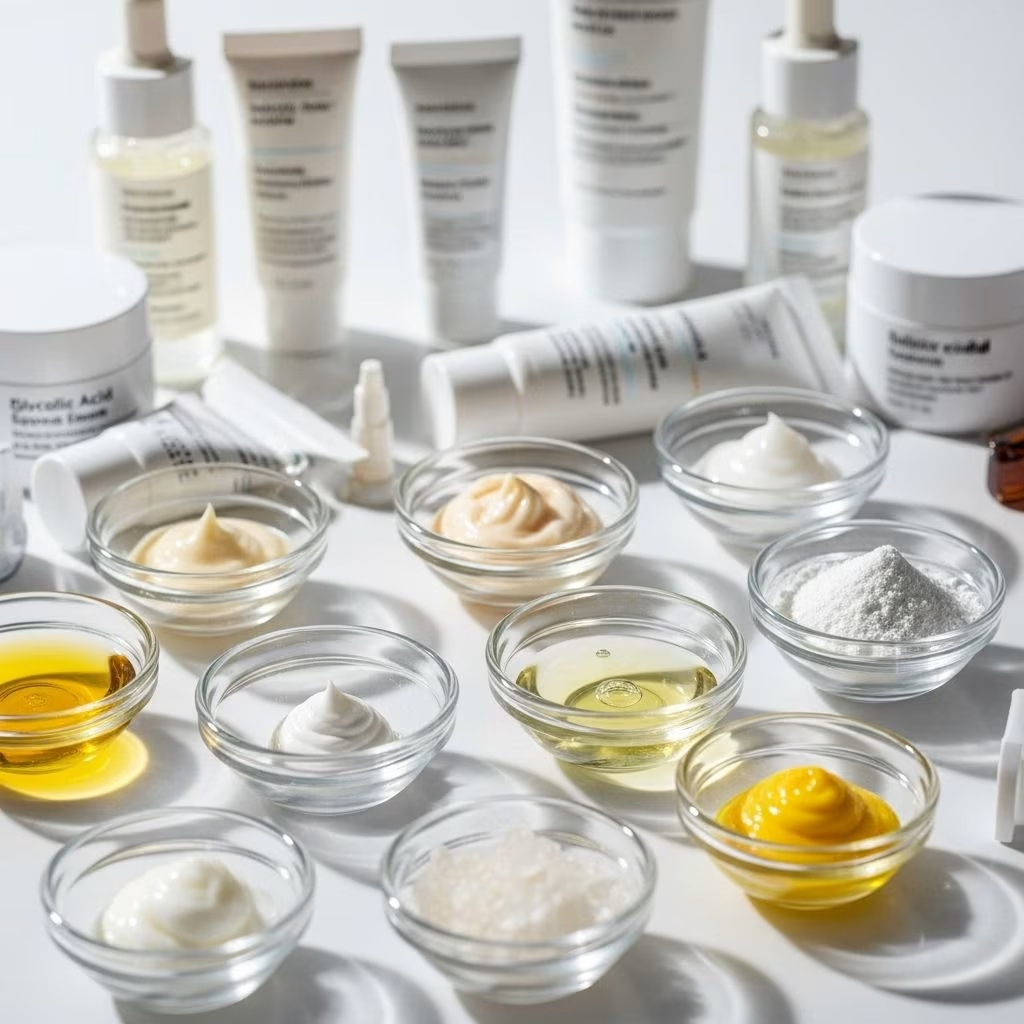
Whiteheads and closed comedones are among the most common, stubborn, and frustrating forms of acne. Fortunately, advances in dermatological science have identified a set of highly effective active ingredients that can unclog pores, reduce inflammation, and gradually minimize or prevent their occurrence. This guide provides a thorough, evidence-based overview of the best actives for tackling whiteheads and closed comedones, supported by expert recommendations and current research.
Understanding Whiteheads and Closed Comedones
Whiteheads, also known as closed comedones, are small, flesh-colored or whitish bumps that form under the skin. Unlike blackheads (open comedones), which oxidize and turn dark, whiteheads maintain a closed surface. They often appear on the face—especially the forehead, cheeks, and chin—and can be difficult to manage without the right skincare approach .
Closed Comedones vs. Blackheads: Key Differences
| Feature | Closed Comedones (Whiteheads) | Open Comedones (Blackheads) |
|---|---|---|
| Appearance | White or skin-colored, no visible head | Dark, open pore |
| Location | Beneath the skin surface | Open to air |
| Content | Trapped sebum, bacteria, dead cells | Oxidized sebum, bacteria, cells |
| Risk of Inflammation | Moderate (can develop into pimples) | Lower |
What Causes Whiteheads and Closed Comedones?
The formation of whiteheads and closed comedones typically involves:
- Excess oil (sebum) production
- Dead skin cell buildup that blocks hair follicles
- Bacterial overgrowth (especially Cutibacterium acnes)
- Friction or occlusion (e.g., helmet straps, tight hats)
- Comedogenic skincare or makeup products
When the pore is clogged but remains sealed at the surface, a closed comedone develops. Over time, this can become an inflammatory pimple if bacteria multiply or the follicle wall ruptures .
Overview of the Most Effective Actives
The term actives in skincare refers to ingredients with proven ability to effect change in skin physiology or appearance. The main actives recommended for whiteheads and closed comedones are:
- Beta hydroxy acids (BHAs) like salicylic acid
- Retinoids (retinol, adapalene, tretinoin, etc.)
- Azelaic acid
- Alpha hydroxy acids (AHAs: glycolic, lactic, mandelic acid)
- Benzoyl peroxide
- Niacinamide
- Additional supportive ingredients and emerging actives
Beta Hydroxy Acids (BHAs): Salicylic Acid
Salicylic acid is considered a gold standard for managing closed comedones and whiteheads due to its unique oil-solubility. This property allows it to penetrate and exfoliate within the pore, unclogging blockages and reducing subsequent breakouts. Clinical studies confirm its benefits for comedonal acne. Recommended concentrations range from 0.5% to 2% in over-the-counter leave-on formulas .
- Unclogs pores by dissolving excess sebum and debris
- Reduces inflammation in mild to moderate acne
- Best used as a gentle daily exfoliant (leave-on)
Usage Tips:
- Introduce gradually, 2-3 times a week, then increase frequency as tolerated
- Pair with hydrating ingredients to prevent dryness
- Avoid using alongside other strong exfoliants initially
Retinoids: Retinol, Adapalene, Tretinoin
Retinoids are vitamin A derivatives known for their comedolytic properties—meaning they help eliminate and prevent clogged pores. They accelerate cell turnover, preventing dead skin cells from building up and blocking hair follicles. Prescription retinoids like adapalene and tretinoin have robust evidence supporting their efficacy for comedonal acne .
- Promote cellular renewal and prevent pore blockage
- Effectively reduce both existing and new comedones
- Improve overall skin texture and even tone
Usage Tips:
- Start with lower concentrations to minimize irritation
- Apply at night due to sun sensitivity
- Expect a purging phase as skin adjusts; results usually visible after several months
- Avoid use during pregnancy without medical guidance
Azelaic Acid
Azelaic acid is a unique, multi-functional active with anti-bacterial, anti-inflammatory, and comedolytic (pore-unclogging) effects. Widely used for mild to moderate acne, rosacea, and pigmentation, azelaic acid inhibits growth of C. acnes and normalizes keratinization, making it ideal for treating closed comedones .
- Reduces existing whiteheads and prevents new ones
- Benefits sensitive and redness-prone skin
- Pregnancy-safe alternative to retinoids
- Typically well-tolerated, but can cause mild dryness or tingling
Best Practices:
- Use in the morning and/or evening after cleansing
- Pair with gentle moisturizers to reduce potential dryness
Alpha Hydroxy Acids (AHAs)
Alpha hydroxy acids (AHAs)—including glycolic, lactic, and mandelic acids—are primarily surface-level exfoliants that help shed dead skin cells. They are less effective for deep pore exfoliation compared to BHAs but still beneficial in addressing the surface component of comedonal acne and improving overall skin smoothness .
| AHA | Main Benefits |
|---|---|
| Glycolic Acid | Strong exfoliation, helps reduce hyperpigmentation |
| Lactic Acid | Gentler, hydrating, suitable for sensitive skin |
| Mandelic Acid | Largest molecule, slow penetration—good for sensitive skin prone to clogging |
How to Use:
- Start with lower concentrations (5-10%) a few times per week
- Apply in the evenings
- Avoid mixing with strong retinoids or other exfoliants on the same night
Benzoyl Peroxide
Benzoyl peroxide is a proven topical that reduces C. acnes bacteria and decreases both inflammatory and non-inflammatory acne lesions, including comedones. It also offers mild exfoliation. Benzoyl peroxide’s main strength is in combination with other actives, especially for those who present both red pimples and closed comedones .
- Reduces bacterial count on the skin
- Prevents antibiotic resistance when used with prescription antibiotics
- Best in 2.5%-5% concentrations for daily use
Caution:
- Can cause dryness or irritation; pair with good moisturizers
- May bleach fabric (use white towels/pillowcases)
Niacinamide
Niacinamide (Vitamin B3) has become a popular adjunct for acne-prone skin due to its gentle anti-inflammatory properties, ability to regulate oil production, and capacity to strengthen the skin barrier. While not as potent as exfoliating acids or retinoids, it supports other actives and improves skin clarity and barrier function .
- Reduces redness and soothes irritation from more intense actives
- Balances sebum production and decreases pore congestion
- Compatible with almost all ingredients
Other Innovative and Supporting Actives
Emerging and supportive ingredients for closed comedones and whiteheads include:
- Lipo-hydroxy acid (LHA): A derivative of salicylic acid with a more gradual exfoliating effect, suitable for sensitive skin .
- Zinc PCA: Sebum-regulating and anti-inflammatory, found in some targeted acne treatments .
- Seaweed-derived actives (such as oligosaccharides): Shown in studies to decrease comedone formation, inflammation, and even suppress C. acnes .
- Sulfur and Resorcinol: Traditional ingredients, often in spot treatments, that help dissolve plug material.
How to Build an Effective Routine
For optimal results, combine these actives strategically and avoid overwhelming the skin. Here is a sample routine outline:
- AM Routine:
- Gentle foaming or gel cleanser
- Optionally, niacinamide serum and/or azelaic acid
- Light, non-comedogenic moisturizer
- Broad-spectrum sunscreen (crucial for actives users)
- PM Routine:
- Cleanser (removes sunscreen/makeup)
- Salicylic acid or AHA toner or serum (a few nights a week)
- Retinoid at night (start 2-3x/week and gradually increase)
- Hydrating or barrier-repair moisturizer
Introduce new products one at a time and monitor for adaptation or irritation. Use actives at night if possible, especially retinoids and exfoliants, due to photosensitivity. Consistency is essential—improvement is gradual and may take weeks to months .
Common Mistakes to Avoid
- Over-exfoliation by using too many actives simultaneously
- Not using sunscreen, risking further irritation and pigmentation
- Layering incompatible ingredients without patch testing
- Using comedogenic oils or heavy makeup
- Abandoning actives too soon—true improvement is slow and may require enduring a brief purging phase as the skin clears itself
Frequently Asked Questions (FAQs)
Q: Which active is best for beginners with closed comedones?
A: Salicylic acid is often the most gentle starting option. Azelaic acid and niacinamide are also well tolerated and suitable for sensitive skin. Start gradually and build up use.
Q: Can I use more than one active ingredient at a time?
A: Yes, but introduce them slowly and never add multiple strong actives simultaneously. For example, use a salicylic acid cleanser in the morning and a retinoid or azelaic acid at night, always with a gentle moisturizer and sunscreen.
Q: Are these actives safe for pregnancy?
A: Avoid prescription and over-the-counter retinoids during pregnancy. Salicylic acid is typically safe for use on small areas, but always consult with your healthcare provider. Azelaic acid and most AHAs (especially lactic acid) are considered safer alternatives.
Q: How long does it take to see results from actives?
A: It may take 4-12 weeks to see significant improvement, especially with retinoids and azelaic acid. Be consistent and patient—temporary worsening (purging) is possible as the skin clears out blockages.
Q: What should I do if my skin gets irritated?
A: Reduce the frequency of active use, focus on hydration, and avoid harsh scrubs or drying agents. If irritation persists or worsens, discontinue use and consult a dermatologist.
References
- La Roche-Posay, “Closed comedones: Causes and treatment”
- Dr. Sam Bunting, “How to tackle closed comedones”
- PMC, “Treatment Modalities for Acne”
- Youtube (Dermatologist Q&A), “Best products for closed comedones”
- Medical News Today, “Comedonal acne: Types, pictures, and treatment”
- DermNetNZ, “Comedonal acne”
- Dr. Zenovia, “The Best Skincare Ingredients for Acne”
References
- https://www.laroche-posay.co.uk/en_GB/closed-comodones-causes-and-treatments.html
- https://drsambunting.com/en-us/blogs/sam-bunting/how-to-tackle-closed-comedones
- https://pmc.ncbi.nlm.nih.gov/articles/PMC6273829/
- https://www.youtube.com/watch?v=cq-AyaIjEM0
- https://www.medicalnewstoday.com/articles/comedonal-acne
- https://dermnetnz.org/topics/comedonal-acne
- https://drzenovia.com/blogs/skin-journal/the-best-skin-care-ingredients-for-acne


