


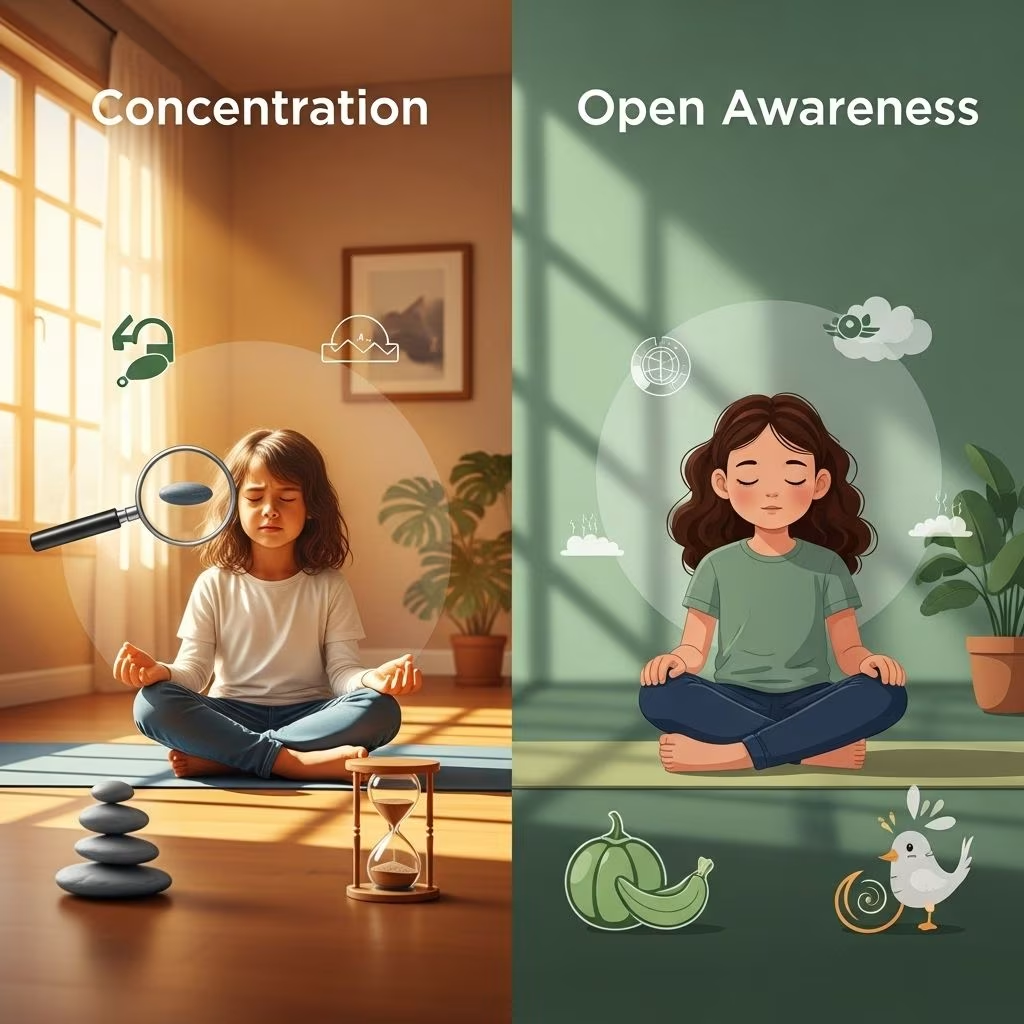
Mindfulness has become an increasingly valuable tool in supporting children’s emotional, cognitive, and social development. Within the broader practice of mindfulness, two distinct approaches stand out: concentration-based practices and open awareness techniques. Understanding the differences between these methods and knowing when to apply each can significantly enhance the benefits children receive from mindfulness training.
Both concentration and open awareness represent fundamental pillars of mindfulness practice, each offering unique advantages for developing minds. While concentration practices help children build focus and attention control, open awareness techniques foster broader perception and emotional acceptance. The interplay between these two approaches creates a comprehensive framework for nurturing well-rounded, resilient children who can navigate both academic challenges and emotional complexities.
Understanding Concentration in Children’s Mindfulness
Concentration meditation, also known as focused attention meditation, involves directing a child’s awareness toward a single object, sensation, thought, or experience. This approach trains the mind to maintain sustained attention on one specific point, developing the mental muscle of focus. When children practice concentration meditation, they learn to anchor their awareness to something concrete, such as their breath, a visual object, or a particular sound.
The practice works by repeatedly bringing attention back to the chosen focus point whenever the mind wanders. This repetitive process strengthens neural pathways associated with attention control and cognitive focus. For children whose minds naturally dart from one stimulation to another, concentration practices provide a structured method for developing mental discipline and sustained attention capabilities.
How Concentration Practices Work
During concentration meditation, children are instructed to select an anchor for their attention. Common anchors include breathing sensations, counting breaths, observing a candle flame, or listening to a specific sound. The simplicity of having one focal point makes this practice particularly accessible for young minds that are still developing executive function skills.
When distractions arise or thoughts pull attention away from the chosen focus, children are taught to gently acknowledge the distraction without judgment and redirect their attention back to the anchor. This process of noticing, releasing, and returning builds the foundational skill of attention regulation. Over time, children become more adept at maintaining focus for longer periods and experience fewer intrusive distractions.
Benefits of Concentration for Children
Research demonstrates that focused attention meditation encourages better focus and increases sustained attention in practitioners. Children who regularly engage in concentration practices often show improvements in academic performance, particularly in tasks requiring sustained mental effort. The ability to maintain focus directly translates to enhanced learning capacity, as children can absorb information more effectively when their attention remains stable.
Beyond academic benefits, concentration practices help children develop impulse control and self-regulation. The skill of redirecting attention from distractions mirrors the real-world challenge of resisting impulsive behaviors. Children learn that they have agency over their mental focus, which empowers them to make more conscious choices rather than reacting automatically to stimuli.
Concentration meditation also cultivates patience and perseverance. As children practice returning their attention repeatedly to the focus point, they develop tolerance for the discomfort of mental effort. This builds resilience and teaches the valuable lesson that skills improve through consistent practice, a mindset that benefits all areas of development.
Understanding Open Awareness in Children’s Mindfulness
Open awareness meditation, sometimes called open monitoring or non-directive meditation, represents a fundamentally different approach from concentration practices. Rather than focusing on a single point, children practicing open awareness maintain a broad, receptive attention that encompasses all experiences as they arise. The practice involves observing thoughts, emotions, sensations, sounds, and other phenomena without focusing exclusively on any one element.
This approach teaches children to witness their internal and external experiences without getting caught up in them. Instead of concentrating intensely on one thing, they develop a spacious awareness that can hold multiple experiences simultaneously. The goal involves remaining present to whatever arises while maintaining a non-judgmental, accepting stance toward all experiences.
The Practice of Open Awareness
In open awareness meditation, children are encouraged to notice everything that enters their field of awareness. This includes bodily sensations like tingling or tension, emotional states like happiness or frustration, thoughts that pass through the mind, sounds in the environment, and any other perceivable experiences. Rather than selecting one element to focus on, they observe the entire landscape of their moment-to-moment experience.
The key instruction in open awareness involves maintaining a stance of curious observation. Children learn to notice experiences arising and passing without trying to hold onto pleasant ones or push away unpleasant ones. This develops equanimity and acceptance, as children realize that all experiences are temporary and that they can observe their inner world without being overwhelmed by it.
Benefits of Open Awareness for Children
Studies show that meditators practicing open monitoring meditation were able to perform better on sustained attention tasks than focused attention meditators, and those who participated in intensive Vipassana meditation had a broader attentional scope. This suggests that open awareness practices enhance cognitive flexibility and the ability to track multiple information streams simultaneously.
For children, open awareness meditation fosters emotional intelligence by teaching them to observe their feelings without immediately reacting. When children can notice emotions arising without being consumed by them, they develop greater emotional regulation. This skill proves invaluable during challenging situations, as children learn to pause and observe their emotional state before choosing how to respond.
Open awareness also cultivates acceptance and reduces self-judgment. Children often struggle with harsh internal criticism when they experience difficult emotions or thoughts. By practicing non-judgmental observation of all experiences, they learn that thoughts and feelings are natural phenomena that don’t define their worth. This acceptance fosters psychological flexibility and resilience.
Additionally, open awareness enhances creativity and problem-solving abilities. By maintaining a broad attentional scope, children become more receptive to novel connections and insights. The practice supports divergent thinking, as the mind remains open to various possibilities rather than fixating on a single solution.
Key Differences Between Concentration and Open Awareness
| Aspect | Concentration | Open Awareness |
|---|---|---|
| Attention Focus | Single point or object | Broad, inclusive field |
| Primary Skill Developed | Sustained attention and focus | Cognitive flexibility and acceptance |
| Mental Approach | Narrowing and directing | Opening and receiving |
| Best for Beginners | Yes, provides clear structure | Better after some practice |
| Cognitive Impact | Enhanced focus and attention control | Improved monitoring and broader awareness |
| Emotional Benefits | Impulse control and self-regulation | Emotional acceptance and non-reactivity |
| Learning Applications | Tasks requiring sustained focus | Creative thinking and problem-solving |
Which Approach is Best for Children?
The question of whether concentration or open awareness is better for children doesn’t have a simple answer, as both approaches offer distinct advantages. The optimal choice depends on several factors, including the child’s age, developmental stage, temperament, and specific needs. However, research and practical experience suggest that a sequential approach often yields the best results.
Starting with Concentration
It is often recommended that those new to meditation start with focused attention meditation as opposed to open monitoring. Focused attention helps practitioners bring their minds to a state of stillness, which proves particularly effective in preventing distractions from arising in beginning meditators. For children, whose attention naturally jumps from stimulus to stimulus, starting with concentration provides a concrete anchor that makes the abstract concept of mindfulness more tangible.
The structured nature of concentration practices appeals to children because the instructions are clear and simple. They understand what they need to do: pay attention to their breath, count to ten, or watch a object. This clarity reduces confusion and frustration, making the practice more accessible and enjoyable. When children experience success in maintaining focus, even for brief periods, they gain confidence in their ability to meditate.
Beginning with concentration also builds the foundational attention skills necessary for more advanced practices. Repeatedly engaging in focused attention meditation improves concentration and gradually minimizes distractions. This attentional strength then supports open awareness practice, as children need sufficient attention control to maintain broad monitoring without becoming lost in distraction.
Progressing to Open Awareness
After children have built up their awareness through concentration practices, they can move on to open monitoring meditation more easily. The attention that has been created through focused attention benefits the process of open monitoring as children allow all sensations to rise up inside and then pass through without reacting to them. This progression respects the developmental trajectory of attention skills while expanding children’s mindfulness repertoire.
Introducing open awareness too early can overwhelm children who haven’t yet developed sufficient attention stability. Without the ability to anchor their awareness, children may become lost in the stream of thoughts and sensations, leading to frustration rather than mindfulness. However, once concentration skills are established, open awareness offers powerful tools for emotional regulation and cognitive flexibility that complement concentration practices.
Integrating Both Approaches for Whole Child Development
The classical teaching of the Four Foundations of Mindfulness beautifully integrates the whole child, starting with awareness of the body, then awareness of the mind including thoughts, and then awareness of the heart including emotions and world view. To serve the whole child, a mindful awareness program cannot leave any of these elements out: body, mind, and heart. Both concentration and open awareness practices contribute uniquely to this holistic development.
Building Left and Right Brain Integration
Mindfulness can, through focused awareness practices, build left-brain concentration skills, and through the world-view parts of mindfulness and open awareness practices, develop right-brain capacities. This integration of analytical and creative processes supports balanced cognitive development. Children benefit from having both the ability to focus intensely on specific tasks and the capacity to perceive broader patterns and connections.
Concentration practices strengthen linear, sequential thinking abilities that support academic learning, while open awareness enhances holistic, intuitive understanding that fosters creativity and emotional intelligence. Together, these approaches help children develop as well-rounded individuals who can adapt their cognitive strategies to different situations.
Clear Seeing and Emotional Intelligence
One of the most valuable outcomes of combining concentration and open awareness involves developing clear seeing, the capacity to observe what is happening as it happens without emotional charge. When children can step back from an unpleasant experience and reflect on it before trying to fix or change it, they access greater wisdom in their responses. This skill emerges from the stability cultivated through concentration combined with the non-reactive observation trained through open awareness.
You see a child upset about something take a breath, settle down, and see things more clearly. The concentration skills help them pause and anchor their attention, while open awareness skills allow them to observe their emotional state without being consumed by it. This combination creates the space for conscious, compassionate responses rather than automatic reactions.
Practical Applications in Children’s Daily Lives
The real value of teaching children both concentration and open awareness emerges in how these skills translate to everyday situations. Mindfulness practices allow students to stay focused on a single task ahead and reduce distractions around them, directly supporting academic success. When facing a challenging homework assignment, concentration skills help children maintain attention despite boredom or difficulty.
Open awareness skills prove equally valuable in social and emotional contexts. When conflicts arise with peers, children who have practiced non-judgmental observation can notice their emotional reactions without immediately acting on them. They recognize feelings of anger or hurt arising, observe them without suppression or explosion, and choose responses aligned with their values rather than their immediate impulses.
Regulating Emotions Through Combined Practices
Mindfulness provokes children’s concentration and helps them recognize and balance their emotions, thoughts, and behavior. By being more self-aware of their feelings, they can effectively handle depression, anxiety, and stress. The combination of concentration and open awareness creates a powerful toolkit for emotional regulation.
When experiencing strong emotions, children can first use concentration skills to anchor their attention in the present moment, perhaps focusing on their breath or bodily sensations. This stabilizes their awareness and prevents them from being swept away by emotional intensity. Then, they can employ open awareness to observe the emotion itself, noticing its qualities, its location in the body, and how it changes over time. This two-step process transforms overwhelming emotions into manageable experiences.
Teaching Mindfulness to Children: Best Practices
Effectively teaching concentration and open awareness to children requires age-appropriate methods that engage their natural curiosity and playfulness. Starting practices like the hello game, where children notice the color of someone’s eyes, helps them really look at somebody else in a way that is not emotionally charged. This grounds mindfulness practice in concrete, relatable experiences while building both concentration and open awareness skills.
Creating Developmentally Appropriate Practices
For younger children, concentration practices should be brief and use engaging focal points. Watching a pinwheel spin, listening to a singing bowl’s sound fade, or following a breathing buddy on their belly makes focus training fun and accessible. These practices build attention span gradually, starting with just one or two minutes and extending duration as skills develop.
Open awareness practices for children benefit from guidance and structure. Rather than simply asking children to observe everything, teachers might lead them through a body scan, directing attention sequentially through different body parts while maintaining an open, accepting attitude. Or they might invite children to notice sounds, guiding them to hear all the sounds in their environment without focusing on any one sound exclusively.
Emphasizing Kindness and Acceptance
Children are often very hard on themselves from a very early age, so mindfulness teaching should emphasize openness, acceptance, sense of humor, and peace. When practicing concentration, children should learn that mind-wandering is normal and that gently returning attention is the practice itself, not a sign of failure. Similarly, in open awareness practice, all experiences are welcome without judgment—pleasant and unpleasant sensations, happy and sad emotions, peaceful and agitated thoughts.
This attitude of friendly curiosity, viewing experiences through the lens of an impartial spectator who sees the whole person, prevents mindfulness from becoming another arena where children feel pressure to perform perfectly. Instead, it becomes a refuge where they can be exactly as they are while developing skills that support their growth.
The Science Behind Both Approaches
Research demonstrates that different meditation types connect with distinct neural structures and electroencephalographic activity. Several studies showed support for the thought that focused attention meditation encourages better focus and increases sustained attention, while experienced meditators were found to have more connectivity to the right insula, a region of the cerebral cortex, which researchers believe may enhance awareness of bodily states. This suggests that both concentration and open awareness produce measurable changes in brain function and structure.
Theta brain activity increases during meditation, indicating shifts in consciousness that support both relaxation and focused awareness. Vipassana meditators who performed auditory tasks both before and after meditation had greater amplitudes to tones, which is thought to illustrate better attention and engagement during tasks. These findings validate the benefits of both approaches and support their integration in children’s mindfulness programs.
Moving Toward Effortless Presence
Reaching the state of effortless presence represents the ultimate goal of all forms of meditation, though starting out with focused or open meditation is the pathway to this effortless presence. In this state, attention is not focused on a particular object, thought, or sensation, nor is it actively monitoring multiple experiences. Instead, there is simply a quiet awareness, free from mental commentary or distractions.
For children, this state emerges naturally as they develop proficiency in both concentration and open awareness. The skills learned through focused attention—the ability to maintain stable awareness—combine with the receptivity cultivated through open monitoring to create a effortless quality of presence. Children access this state spontaneously during play, creative activities, or moments of wonder, and mindfulness practice helps them recognize and return to this natural state more readily.
Frequently Asked Questions
Q: At what age should children start learning mindfulness?
A: Children can begin simple mindfulness practices as early as preschool age, around 3-4 years old. However, practices should be very brief, playful, and developmentally appropriate. Concentration practices work well for young children when kept under 5 minutes, while more complex open awareness techniques are better suited for children aged 8 and older.
Q: How long should children practice mindfulness each day?
A: For beginners, starting with 3-5 minutes daily is ideal. As children develop their practice, this can gradually extend to 10-20 minutes for older children and adolescents. Consistency matters more than duration, so brief daily practice yields better results than occasional longer sessions.
Q: Can mindfulness help children with ADHD?
A: Yes, research suggests that mindfulness practices can benefit children with ADHD by improving attention regulation and impulse control. Concentration practices particularly support focus development, while open awareness techniques help with emotional regulation. However, practices may need to be adapted with shorter durations, more movement, and engaging focal points.
Q: Should children practice concentration or open awareness first?
A: It is generally recommended that children start with concentration practices before moving to open awareness. Focused attention provides a clear, structured entry point that builds foundational attention skills. Once children can maintain focus for several minutes, they are better prepared to benefit from open awareness practices.
Q: How can parents support their children’s mindfulness practice?
A: Parents can best support children by practicing mindfulness themselves, creating a regular practice time, making it fun and pressure-free, and celebrating small successes. Avoid turning mindfulness into another performance expectation. Instead, frame it as a tool children can use when they choose to, emphasizing that all experiences during practice are valid.
Q: What are signs that a child is benefiting from mindfulness practice?
A: Benefits may include improved focus during homework, better emotional regulation during conflicts, increased self-awareness about feelings and needs, enhanced ability to calm down when upset, greater acceptance of challenges, and improved sleep. However, benefits often emerge gradually over weeks or months of consistent practice.
Q: Can mindfulness practices be integrated into school curricula?
A: Yes, many schools successfully integrate mindfulness into daily routines through brief morning practices, transition activities, or dedicated mindfulness periods. Both concentration and open awareness practices can be adapted for classroom settings, supporting academic focus, emotional regulation, and positive social interactions.
Conclusion
Understanding the distinction between concentration and open awareness in children’s mindfulness practice empowers parents, educators, and caregivers to provide comprehensive support for children’s development. Rather than viewing these approaches as competing methods, recognizing them as complementary practices that address different aspects of wellbeing creates a more complete mindfulness toolkit.
Concentration practices build the fundamental attention skills that support academic success, impulse control, and mental discipline. Open awareness techniques cultivate emotional intelligence, cognitive flexibility, and acceptance. Together, they foster whole-child development that integrates body, mind, and heart. By starting with concentration to establish foundational skills and progressing to open awareness as children mature, we respect developmental readiness while expanding mindfulness capacities.
The ultimate goal involves helping children access effortless presence, a state of natural awareness that supports both focused work and creative exploration. As children develop proficiency in both approaches, they gain agency over their attention and emotional states, discovering that they can influence their inner experience through mindful awareness. This realization becomes one of the most valuable gifts we can offer developing minds, providing tools they will use throughout their lives to navigate challenges, pursue goals, and cultivate inner peace.
References
- https://www.pocketmindfulness.com/focused-open-meditation/
- https://www.buddhistinquiry.org/article/mindfulness-for-children/
- https://www.ishcmc.com/news-and-blog/what-is-mindfulness-for-kids/
- https://pmc.ncbi.nlm.nih.gov/articles/PMC9163650/
- https://school.bankstreet.edu/mindfulness-in-the-classroom/
- https://pmc.ncbi.nlm.nih.gov/articles/PMC3679190/


