


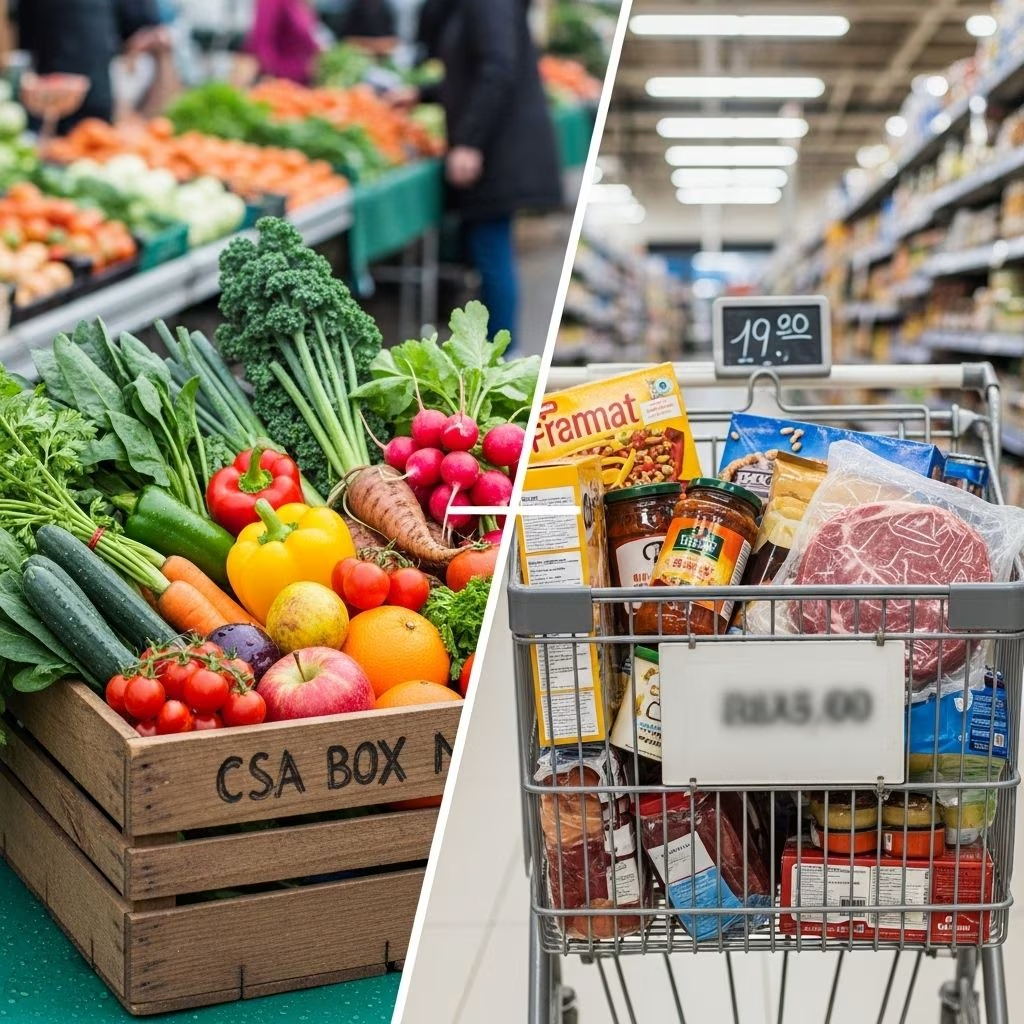
Modern consumers face an ever-growing array of choices for procuring fresh fruits and vegetables. Chief among these are Community Supported Agriculture (CSA) boxes and traditional supermarket shopping. As the cost of groceries continues to rise, many households weigh not just price but also quality, freshness, sustainability, and support for local farms. This article comprehensively compares the cost and value of CSA boxes versus supermarket shopping, arming you with insights for smarter, healthier, and more economical grocery decisions.
Introduction: Understanding CSA Boxes and Supermarket Shopping
CSA Boxes involve a direct subscription to a local farm, where members receive a weekly or biweekly box of freshly harvested produce throughout the growing season. CSA programs vary in price, duration, and content but generally emphasize local, seasonal, and transparent sourcing. Supermarkets, on the other hand, aggregate produce from local, national, and international suppliers for convenient, year-round access. Pricing fluctuates based on seasonality, supply chain disruptions, and organic certifications.
How Cost Structure Differs: CSA Boxes vs Supermarkets
Let’s break down how costs are determined and delivered in each model.
- CSA Boxes:
- You pay upfront, usually as a lump sum or in installments for the entire season (typically 12–24 weeks).
- Boxes are filled with a fixed or seasonally varying selection of produce, often determined by what the farm harvests that week.
- Costs are generally stable during the season and may include bonuses (extra produce during bumper weeks or discounts for early/full payment).
- Supermarket Shopping:
- You pay per item, at prices that vary with seasonality, type (organic vs conventional), brand, and quantity.
- You select exactly what you want, but prices can swing due to supply, demand, shipping, and retailer markups.
- You bear the cost of transportation (in time and fuel), and products may be imported and stored for extended periods before sale.
Side-by-Side Cost Comparison: Real Numbers
Here we synthesize published data and real-world examples to provide a practical, data-backed outlook on cost differences. For clarity, examples compare prices as closely as possible using similar quantities and varieties.
| Item (Typical Weekly Box) | CSA Cost (per box) | Supermarket Cost (organic, per item) |
|---|---|---|
| 1 head lettuce | $22–$38 (varies by region/size) | $3.99 |
| 2 lbs tomatoes | $4.99/lb ($9.98 total) | |
| 1 bunch carrots | $2.99 | |
| 2 zucchini | $1.99 each ($3.98 total) | |
| 1 lb green beans | $4.99 | |
| Total (Supermarket) | $25.93 | |
| Total (CSA) | $22.00 | |
Using this example, a CSA member saves approximately $3.93 per week compared to shopping for the same organic items at a supermarket. Over a standard 20-week season, that’s $78.60 in savings, not including value-added factors like extra produce during peak harvests, specialty varieties, or culinary inspiration through surprise items .
Other studies confirm similar patterns:
- One farm calculated seasonal costs at $600 for a CSA, $510.76 for the grocery store, and $1044.73 for the farmer’s market .
- Another report showed that a $38 spend at a supermarket buys far less variety and freshness than a $38 CSA box, with supermarket goods often being older, imported, and heavily packaged .
Key Takeaway: The cost advantage of a CSA box versus supermarket shopping is modest per week, but can accumulate over a season, and further tilts in favor of the CSA when comparing organic, local, and in-season produce.
What About Bulk Discounts and Non-Organic?
If you buy only sales or conventional (non-organic) items in bulk at the supermarket, the price gap may shrink or even tilt slightly in favor of the supermarket. However, this comparison often sacrifices freshness, local impact, or specialty organic varieties typically found in CSA boxes .
Beyond Dollars: Freshness, Quality, and Environmental Factors
- Freshness: CSA boxes are typically harvested within 24 hours of delivery, while supermarket produce may be days or weeks past harvest and shipped from distant regions or countries .
- Quality: CSA varieties are often chosen for flavor and nutrition, not just for durability during shipping. Expect more variety and flavors in a CSA.
- Environmental Impact: CSAs have a lighter carbon footprint (shorter farm-to-table distances, reduced packaging), whereas supermarkets rely on global supply chains and more single-use plastics .
- Supporting Local Farmers: CSA fees go directly to growers, stabilizing local agriculture, while supermarkets distribute profits among many layers of distributor, wholesaler, and retailer .
Seasonality & Variation in Cost
Seasonality plays a crucial role in both the cost and value of produce:
- CSA Boxes: Content changes weekly with local harvests, meaning you may receive more or less of certain crops depending on the time of year. During peak season, boxes often overflow with variety and value (sometimes with bonus crops for members), enhancing the overall savings.
- Supermarkets: Maintain year-round stock by importing produce, with prices surging out of season (and often with lower quality and higher travel distance).
In off-season months, CSA shares may not be available, potentially requiring supplemental shopping at supermarkets or farmer’s markets.
Pros and Cons: CSA Boxes vs Supermarket Shopping
| CSA Box | Supermarket Shopping | |
|---|---|---|
| Price/Value | Often competitive, sometimes cheaper (especially for organic/local); stable for the season | Widely variable, dependent on sales/season; can be lower for conventional/non-local |
| Quality & Freshness | Highest; usually harvested same day | Variable; often less fresh, sometimes weeks old |
| Convenience | Subscription, pick-up or delivery; box content chosen by farm | Shop anytime, total choice; time-intensive; can make use of sales |
| Variety/Choice | Limited to what’s in season; less item-level choice | Year-round variety; can buy exactly what you want |
| Environmental Impact | Lower: minimal packaging, fewer food miles | Higher: more packaging, more travel distance |
| Supporting Local Economies | Direct support to farmers and local agriculture | Indirect; supports supply chains, but less direct farmer connection |
How To Choose: Which Option Is Right for You?
Selecting between a CSA box and supermarket shopping comes down to personal priorities. Here’s what to consider:
- Budget Focus: If you mainly buy non-organic produce and base your menu on discounts and sales, supermarkets may offer lower absolute prices but with frequent quality trade-offs.
- Preference for Organic/Local/Seasonal: CSA boxes almost always deliver higher value for these priorities, with fresher, more nutritional produce at a comparable or lower cost .
- Desire for Flexibility and Control: Supermarkets give you full control over selection and volume, while CSAs require adapting to what’s ripe and available.
- Supporting Local Farms: CSAs are unmatched in directly strengthening local food economies.
- Time and Convenience: CSA boxes are pre-packed, sometimes delivered, but offer less flexibility; supermarkets are always accessible, though shopping trips can be time-consuming.
Frequently Asked Questions (FAQs)
Q: Are CSA boxes always cheaper than supermarkets?
A: Not always. CSAs are usually cheaper or comparable for organic local produce, especially when you consider quality, but supermarkets can be less expensive for conventional or imported goods .
Q: What do I do if I don’t like or use everything in my CSA box?
A: Many CSAs provide recipe ideas, swap tables, or donation options. It’s an opportunity to discover new vegetables and expand your palate. Be prepared for some flexibility!
Q: Can I pause my CSA subscription if I’m away?
A: Policies vary by farm. Some allow box skips or substitutions; others encourage gifting your share to a friend or neighbor during absences.
Q: What if my family eats a lot more (or less) produce?
A: CSAs offer different box sizes. Carefully review estimates and ask the farm for box content examples to match your household’s needs.
Q: Does joining a CSA mean I stop shopping at supermarkets?
A: Not necessarily. Many families pair a CSA subscription with supplemental supermarket trips for staples, off-season produce, or other grocery categories.
Conclusion
For those prioritizing freshness, quality, value, and environmental impact, a CSA box is highly competitive—often offering slightly lower or comparable prices for organic produce, with significant hidden value in superior quality and local economic support. For shoppers seeking flexibility, lowest absolute prices, or year-round variety (especially for non-organic produce), supermarkets still hold appeal. Ultimately, the greatest savings—both financial and nutritional—accrue to those who plan ahead: keeping a grocery price journal, understanding seasonal cycles, and evaluating the true cost beyond the receipt.
References
- https://dontwastethecrumbs.com/which-is-the-better-deal-the-csa-or-farmers-market/
- https://goldenearthworm.com/farmblog/2025/5/22/the-38-reality-check-grocery-store-vs-csa
- https://csafarms.ca/smart-money-math-calculate-your-real-savings-with-a-csa-share/
- https://buttonsoup.ca/csa-v-farmers-market-v-supermarket-the-numbers/
- https://www.klippersorganics.com/csa-vs-grocery-store-cost-comparison
- https://www.farmhabit.com/blog-2/blog-post-title-four-khxth
- https://veganfamilykitchen.com/are-csa-boxes-worth-it/


