


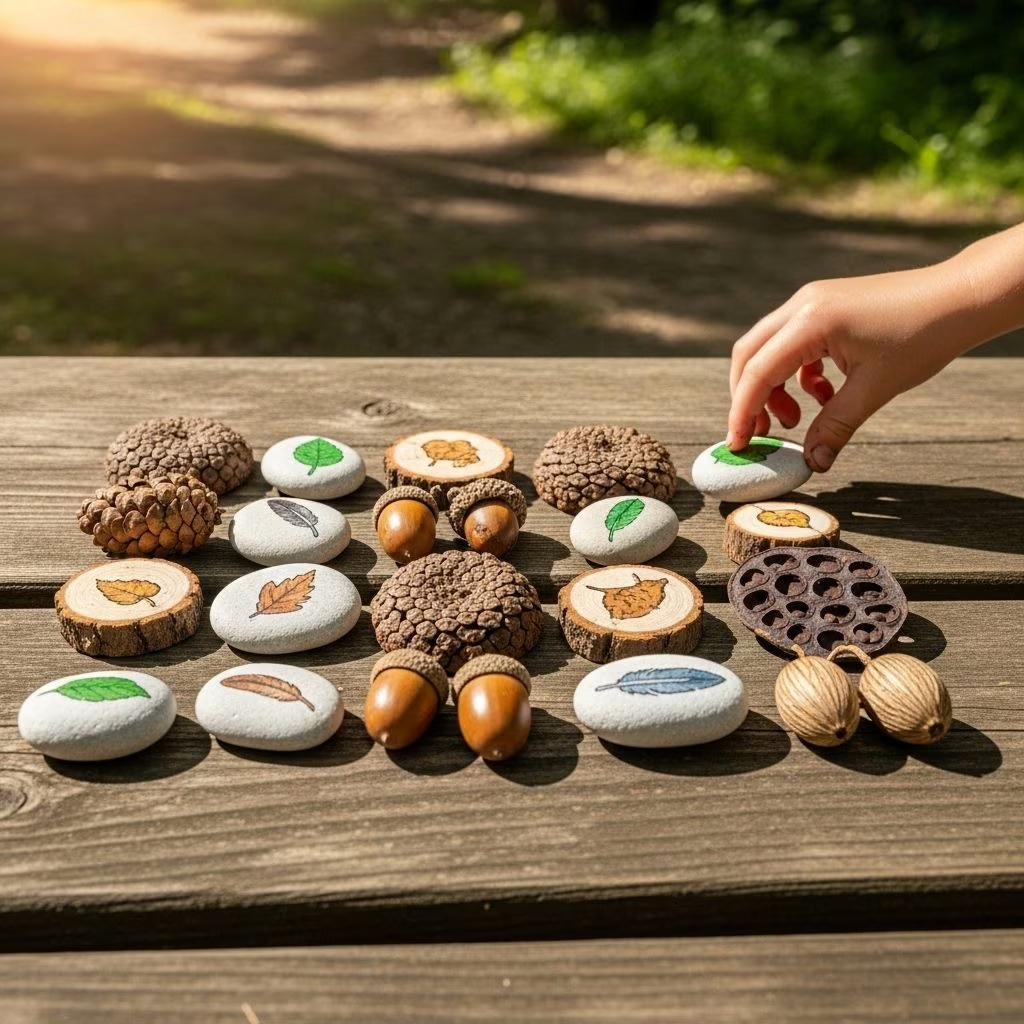
Looking for a creative, educational, and eco-friendly activity to enjoy with kids outdoors? A DIY memory match game made with natural items is the perfect solution. This article will walk you through everything you need to know to create, play, and enjoy your own outdoor memory game using found treasures from nature—no special equipment required!
Introduction to DIY Outdoor Memory Games
Memory match games are a classic way to have fun and sharpen cognitive skills. By bringing this game outdoors and using natural items, you add a sensory-rich, hands-on learning experience that connects children (and adults) with nature. Whether you’re in your backyard, a park, or a forest, this activity is flexible, sustainable, and endlessly customizable.
Why Use Natural Items?
Natural items offer several advantages for memory games:
- Sensory exploration: Children touch, see, and sometimes smell or hear natural materials, engaging multiple senses.
- Eco-friendly: No need to buy plastic toys—just use what nature provides.
- Uniqueness: Every game is different, as items change with the seasons and location.
- Learning: Kids learn about local plants, rocks, and other natural objects.
Materials Needed
- Small, safe natural items (e.g., pebbles, pinecones, acorns, leaves, flowers, shells)
- Containers or muffin tins (6–12 units)
- Cardstock or cupcake liners (if using muffin tins)
- A collection basket or bag
You’ll need at least three pairs of each item for a full game, but you can use fewer for a simpler version.
How to Prepare Your Materials
Start by gathering your items outdoors. Go on a nature hunt with the kids—this is part of the fun!
- Collect: Find pairs of identical or very similar natural items.
- Sort: Check that items are safe to touch and won’t be a choking hazard for young children.
- Clean: Rinse or wipe off dirt if necessary.
- Dry: Let the items air-dry before using them in the game.
Setting Up the Game
- Option 1: Boxes or Containers—Place one of each set into small boxes (like paper mache boxes) and close the lids. Arrange them in rows on a table or picnic blanket.
- Option 2: Muffin Tins—Place one item in each cup and cover with a piece of cardstock or a cupcake liner. Mix up the positions to prepare for play.
- Option 3: Open Play—For a simpler version, lay all items face down on a table, cloth, or directly on the grass, hiding their shapes.
How to Play
The rules are simple and can be adapted for different ages and group sizes:
- Arrange the containers or muffin tins in rows.
- Players take turns selecting two boxes or muffin tins (by opening or flipping) to reveal the items inside.
- If the items match, the player keeps the match and takes another turn.
- If they don’t match, the items are covered again, and play passes to the next person.
- The game continues until all pairs are found. The player with the most matches wins!
Educational Benefits
- Cognitive Skills: Memory, concentration, and observation.
- Language Development: Describing and naming natural items.
- Sensory Learning: Feeling textures, comparing weights, and noticing details.
- Science & Nature: Learning about local ecology and natural materials.
- Social Skills: Taking turns, following rules, and good sportsmanship.
Tips for a Great Experience
- Mix & Match: Add new items each time you play for variety.
- Themes: Focus on a particular category (e.g., trees, rocks, flowers) or mix different types for a challenge.
- Number of Items: Start with a few pairs for younger kids; add more for older children.
- Storage: Keep your containers and natural items in a box for repeat use.
Sensory and Fine Motor Development
This activity is excellent for fine motor practice—handling small objects, opening containers, and covering/uncovering items. Sensory exploration is also a key feature—the feel, weight, and sometimes smell of each object engage children in tactile learning.
Variations and Themes
- Scavenger Hunt Memory: Players must find matching pairs hidden outdoors.
- Giant Outdoor Memory Game: Make larger containers and use bigger natural items for a physical, team-based game.
- Seasonal Sets: Collect spring flowers, summer shells, autumn leaves, or winter pinecones for themed games.
Frequently Asked Questions (FAQs)
What age is this game suitable for?
This activity can be adapted for all ages. For toddlers, use larger, safe items and fewer pairs. For older children, add more pairs and introduce categories.
What if I can’t find enough natural items?
Supplement with household items or draw pictures of natural things to expand your game.
Can I play this game indoors?
Yes! Collect your natural items outdoors, then bring them inside for play on a rainy day.
How do I keep the natural items in good condition?
Let items dry after use, store them in a cool, dry place, and refresh your collection regularly.
Is there a limit to the number of players?
No, you can play solo, with a partner, or as a group. Adjust the number of pairs to suit your group size.
Safety Reminders
- Avoid Toxic Plants: Never use items that may be harmful if touched or ingested.
- Supervision: Always supervise young children, especially if they are still mouthing objects.
- Cautions: If you’re unsure about an item’s safety, leave it out of the game.
Conclusion
A DIY outdoor memory match game with natural items is a wonderful way to combine play, learning, and nature exploration. It’s easy to set up, adaptable for all ages, and encourages curiosity about the natural world. Gather your containers, head outside, and let the matching fun begin!
Whether you’re hosting a family gathering, a classroom activity, or just looking for a creative afternoon, this game will create memories both in your mind and in your heart—connecting you to the world around you in the simplest, most natural way.
Additional Resources
- For more nature-based activities, visit platforms specializing in outdoor play and crafts.
- Explore free printable memory game templates for an indoor twist using natural item illustrations.
- Check out YouTube for giant outdoor memory game ideas using tiles and natural themes.
References
- https://createtodonate.org/how-to-make-a-memory-match-game-with-free-printables/
- https://rhythmsofplay.com/diy-nature-memory-game/
- https://www.youtube.com/watch?v=0l29i4K_Ey8
- https://ouraestheticabode.com/how-to-make-a-giant-outdoor-diy-memory-card-game/
- https://studiodiy.com/diy-giant-lawn-matching-game/
- https://craftgossip.com/make-a-diy-giant-outdoor-matching-game/
- https://dollarstorecrafts.com/2013/08/tutorial-oversized-memory-game/
- https://sesameworkshop.org/resources/counting-outdoors-memory-match/


