


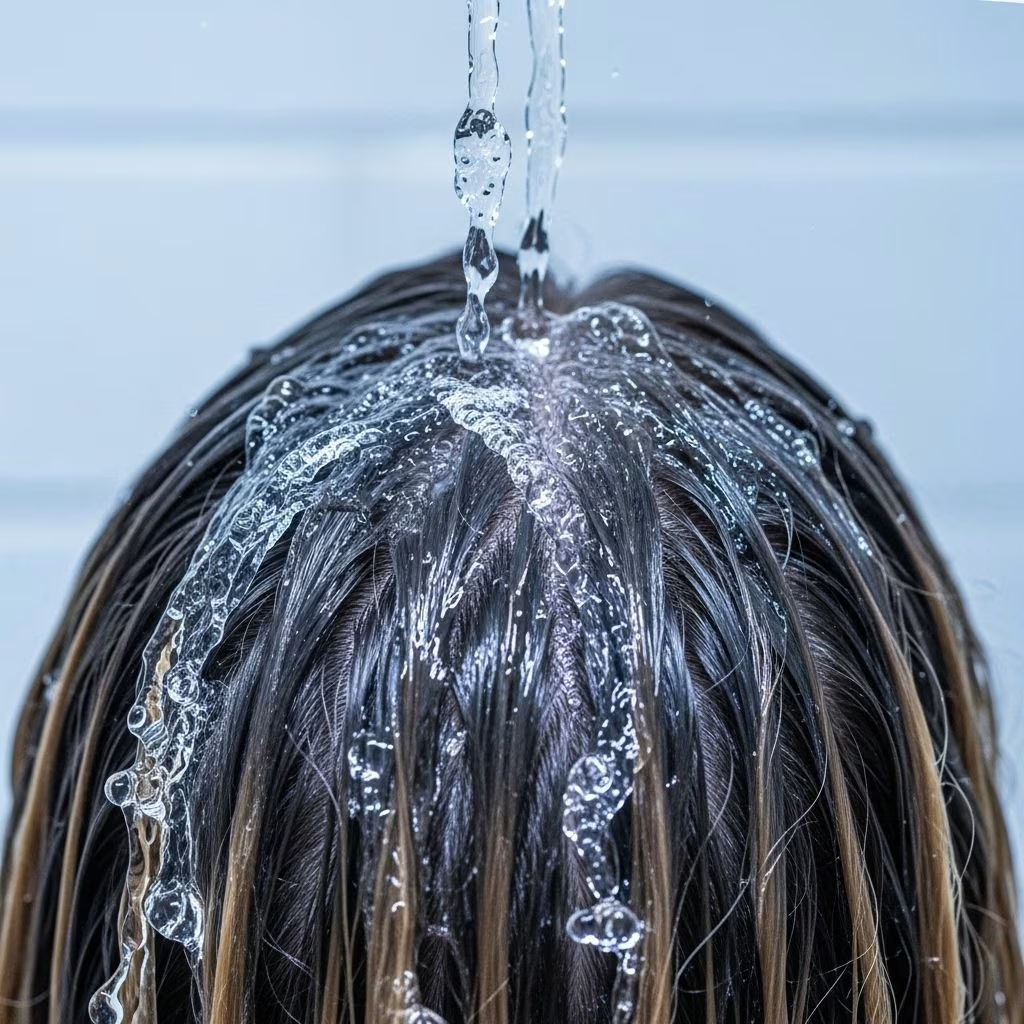
Daily Cold Water Rinse: Preventing Capillary Breakage Study
Can a daily cold water rinse help prevent capillary breakage and promote healthier hair and scalp? This question has sparked considerable interest among researchers, hair care professionals, and beauty enthusiasts. Combining clinical findings and expert guidance, this article explores the physiological mechanisms, scientific studies, suggested routines, and practical tips for effectively leveraging cold water rinses to minimize hair and scalp capillary fragility.
Introduction: The Science of Capillaries in Hair Care
The biomechanical integrity of capillaries—tiny blood vessels in the scalp—plays a crucial role in supplying oxygen and nutrients to hair follicles, ensuring proper hair growth and resilience. Capillary breakage, while most commonly discussed in the context of skin and the circulatory system, also has indirect implications in hair and scalp health. Factors such as thermal exposure, inflammation, oxidative stress, and improper hair care routines can exacerbate microvascular fragility, leading to poor hair and scalp outcomes over time.
Cold water rinses have been lauded for their ability to improve circulation, calm inflammation, protect the cuticle, and reduce moisture loss. But do such habits actually protect or strengthen capillaries, or is the effect primarily superficial?
How Cold Water Affects Hair and Scalp
The use of cold water in hair care is not new. It is often recommended by trichologists and dermatologists for several reasons:
- Seals hair cuticles: Cold water helps lay down the scales of the hair’s outer layer (the cuticle), which makes the hair feel smoother and look shinier.
- Reduces frizz and moisture loss: Sealed cuticles limit the escape of moisture and minimize frizzy strands and flyaways.
- Minimizes scalp inflammation: Cold water temporarily constricts blood vessels and reduces swelling and surface inflammation, calming irritated or itchy scalps.
- Decreases oiliness: Cooling the scalp can temper overactive sebaceous glands, lowering the appearance of greasy roots.
It’s important to note that extremely cold water is not required—just water that is cool enough to refresh the scalp without causing discomfort or shock.
Cold Water and Capillary Breakage: What Does Science Say?
There is currently limited direct research specifically measuring capillary breakage in response to cold water rinsing alone. However, scientific consensus indicates that rapid, extreme heat (such as from hot water or heat styling) increases capillary fragility and scalp inflammation, both risk factors for impaired microvasculature and follicle stress. By contrast, cold water:
- Temporarily constricts scalp blood vessels, which may relieve superficial irritation and swelling without causing vascular damage.
- Reduces inflammation-related stress: Less inflammation means lower risk of chronic capillary stress in sensitive or irritation-prone scalps.
- Promotes capillary tone and microvascular function over time with alternating hot/cold treatments, according to studies on showering and cardiovascular health.
While no current study links a daily cold water rinse to prevention of capillary breakage in absolute terms, the evidence does suggest that this habit supports the underlying conditions essential for scalp microvascular health, thereby indirectly reducing the risk of capillary and follicle fragility.
Mechanisms and Benefits of the Cold Water Rinse
Let’s delve deeper into the physiological changes triggered by cold water:
- Cuticle Sealing and Shine
Cool water leads to a flattening of the cuticle structure, increasing light reflection for greater shine and softness. - Hydration Preservation
Cold water slows evaporation from the hair and scalp, helping preserve moisture in both the cuticle and the skin barrier. - Reduced Swelling
Cold temperatures constrict peripheral blood flow, which can transiently reduce swelling, itchiness, and redness on inflamed or irritated scalps. This effect, though temporary, may improve comfort and scalp environment. - Oil Control
By calming overactive sebaceous glands, cold rinses help manage scalp oiliness and reduce the proliferation of seborrheic dermatitis. - Support for Microcirculation
Alternating between hot and cold water (contrast hydrotherapy) is hypothesized to strengthen small vessels, enhance lymphatic drainage, and filter toxins, potentially improving capillary integrity long-term. - Immunity and Healing
Some studies suggest cold exposure can boost white blood cell production, offering greater resistance to infections and inflammation that damage scalp microvasculature.
Step-by-Step: Adding a Cold Water Rinse to Your Routine
To support hair and capillary health, experts recommend the following protocol for incorporating cold water rinses:
- Begin with warm water (not hot) to loosen debris and prepare the scalp for cleansing. Warm water (95°F–100°F/35°C–38°C) dilates vessels slightly and supports gentle removal of styling product buildup.
- Apply shampoo and massage the scalp using gentle, circular movements. Rinse thoroughly with lukewarm water.
- Follow with your preferred conditioner. Allow it to sit for the recommended time, then rinse with cool-to-cold water for 20–30 seconds. This step seals in moisture and smooths cuticles.
- Pat hair dry with a soft towel. Avoid vigorous rubbing, as mechanical friction can lead to breakage, especially if the hair is wet and fragile.
- Allow the scalp to air dry if possible, or use the cool setting on a blow-dryer.
Best Practices
- Always lower the water temperature gradually to minimize thermal shock, especially for sensitive individuals.
- Use cold water rinses as the final rinse only (not throughout the entire wash), to maximize cuticle-sealing benefits.
- Monitor scalp sensitivity; those with certain cardiovascular or circulation disorders should consult a physician before beginning regular cold water rinses.
Comparison Table: Hot Water vs. Cold Water for Hair and Scalp Health
| Parameter | Hot Water | Cold Water |
|---|---|---|
| Cuticle Effect | Opens cuticles, increases porosity (may lead to frizz, tangling and moisture loss) | Seals cuticles, reduces frizz, improves smoothness and shine |
| Moisture Retention | Strips natural oils and moisture from scalp and hair | Locks in moisture and natural oils |
| Blood Vessel Response | Dilates vessels, increases circulation (good for cleansing, but may irritate inflamed/scaly scalps) | Constricts vessels, calms inflammation and irritation |
| Oil Gland Activity | May overstimulate oil glands if overused | Helps normalize excess oil production |
| Scalp Sensation | Warm, sometimes irritating | Refreshing, can relieve itching/irritation |
| Capillary Impact | Potential to stress fragile vessels if too hot | Protects and preserves vessel tone, lowers inflammation risk |
Expert Insights and Real-World Evidence
Hair care professionals and dermatologists widely recommend ending your cleansing routine with a cold water rinse, especially for those with sensitive or irritable scalps, frizzy hair, or a tendency toward dryness and breakage. Key points echoed by experts include:
- The cuticle-sealing benefit is mainly temporary but significantly improves hair manageability, resulting in shinier, less frizzy hair.
- A cold water rinse can soothe an itching scalp or one troubled by eczema, seborrheic dermatitis, or mild inflammation.
- Alternating between warm and cold water may strengthen vascular responsiveness, potentially protecting against age- or environment-related capillary weakness.
- For individuals with cardiovascular disease or certain skin conditions, gradual and moderate cooling is key to avoid adverse reactions.
Some publications also note that frequent, repeated exposure to very cold water can cause short-term vasoconstriction and sensations of tightness but is not known to disrupt the structural integrity of scalp capillaries. Evidence for direct capillary strengthening from cold water rinses alone is lacking, though indirect benefits are widely documented.
Frequently Asked Questions (FAQs)
Q: Can a daily cold water rinse stop or reverse hair loss?
A: While a cold water rinse can support scalp health and reduce moisture loss, it does not directly address genetic, hormonal, or pathological hair loss. It primarily improves surface hydration and comfort.
Q: Is it safe to do a cold water rinse every day?
A: Yes, provided you avoid extreme temperatures. Individuals with scalp sensitivity, migraines, or circulatory issues should begin with mild cooling and consult a healthcare provider if uncertain.
Q: How cold should the water be?
A: The water should be refreshingly cool, not painfully cold. Aim for a final rinse that feels brisk but comfortable over 20–30 seconds.
Q: Will a cold water rinse help with scalp acne or dandruff?
A: By calming inflammation and controlling oil production, a cold water rinse may help reduce minor flare-ups, but it should be used as part of a comprehensive scalp care plan that includes medicated shampoos if needed.
Q: Can cold water rinses damage the hair?
A: No, cold water is generally safe and does not weaken hair structure. In contrast, hot water and vigorous towel drying or brushing are common causes of hair shaft damage.
Conclusion
Incorporating a daily cold water rinse as the final step of your hair cleansing routine offers multiple support mechanisms for scalp and hair health—sealing the cuticle, controlling hydration, minimizing frizz, and reducing inflammation. While direct clinical evidence for capillary breakage prevention is currently limited, the substantial indirect benefits to scalp comfort, microvascular responsiveness, and overall follicle environment strongly support this simple practice as a low-risk, high-reward addition to hair care regimens.
Those seeking to maximize their hair and scalp health should adopt a balanced approach: cleanse with warm water for effective debris removal and cap off with a brief cold water rinse to lock in benefits and reinforce scalp resilience day after day.
References
- https://new-beauty.com/blog/hair/cold-water-scalp-rinse-benefits/
- https://www.ctnaturalhealth.com/end-showers-cold-water/
- https://www.healthline.com/health/beauty-skin-care/wash-face-with-cold-water
- https://www.wimhofmethod.com/benefits-of-cold-showers
- https://elosklinik.com/en/dermatology/Does-cold-water-make-hair-grow-Effects-of-water-temperature-on-hair/
- https://pmc.ncbi.nlm.nih.gov/articles/PMC9518606/
- https://better-notyounger.com/blogs/the-better-blog/what-is-the-best-water-temperature-for-washing-my-hair


