


Introduction
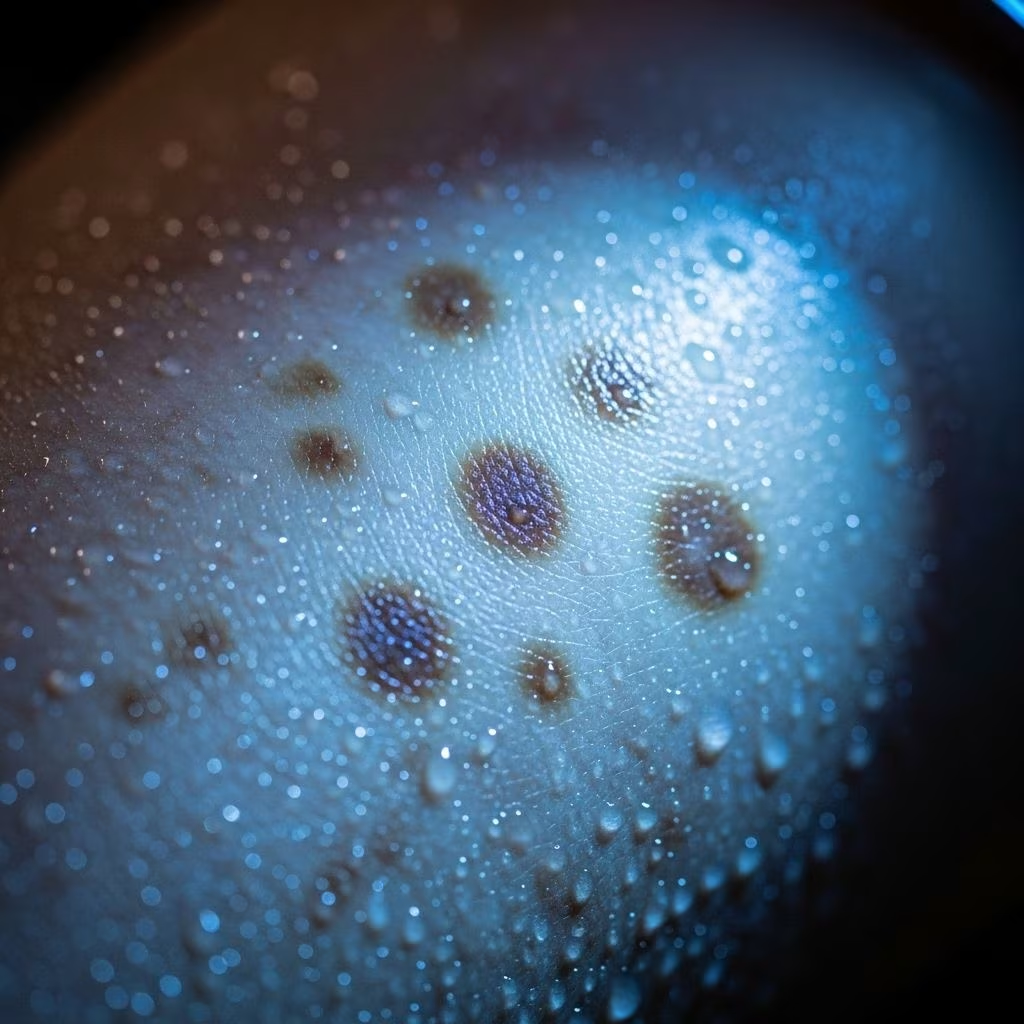
Sunspots—commonly called hyperpigmentation or solar lentigines—are dark patches that often appear on sun-exposed skin. Traditionally linked to ultraviolet (UV) radiation, emerging research suggests that visible light, especially blue light (400–490 nm wavelength), may also play a pivotal role in triggering these pigment changes. With increasing daily exposure from both the sun and artificial sources (screens, LEDs), understanding blue light’s effects on skin and whether it truly triggers sunspots is essential for informed skin health management.
What Is Blue Light?
Blue light is a high-energy visible (HEV) light with wavelengths between 400 and 490 nanometers. It has more energy than other colors in the visible spectrum, and though not as hazardous as high-dose UV rays, it penetrates the epidermal and superficial dermal layers, interacting directly with skin cells.
- Wavelength range: 400–490 nm
- Penetration: Primarily affects the epidermis and superficial dermis
- Energy: Lower than UV, higher than other visible light
Sources of Blue Light Exposure
Humans encounter blue light from both natural and artificial sources. While the sun is the primary emitter, indoor environments can also contribute significant exposure via electronic devices and lighting.
- Sunlight: Accounts for over 50% of total blue light exposure outdoors.
- Electronic screens: Smartphones, laptops, tablets, and TVs emit blue light at lower power but with substantial cumulative exposure.
- LED and fluorescent lighting: Modern indoor lighting solutions often emit a higher blue light fraction.
- Medical and cosmetic devices: Certain phototherapy and skin treatment apparatus utilize blue wavelengths.
Blue Light Effects on Skin
The skin interacts with blue light through multiple pathways, inducing biochemical changes that may ultimately affect cellular health, pigmentation, and aging.
1. Generation of Reactive Oxygen Species (ROS)
- Blue light induces ROS: Studies reveal that wavelengths between 360 and 470 nm stimulate ROS generation from various skin chromophores, surpassing even UV-induced effects in carbonylated protein oxidation within the stratum corneum.
- Consequences: Accumulated ROS can damage lipids, proteins, and DNA, leading to cellular dysfunction—hallmarks of skin aging and pigment alteration.
2. Mitochondrial Dysfunction and DNA Damage
- Blue light damages mitochondria: Exposure results in mitochondrial DNA strand breaks, reduced oxygen consumption, and nearly absent cellular ATP production—a scenario reminiscent of UV radiation damage.
- Impact: Damaged mitochondria compromise energy production, leading to further ROS buildup and premature skin aging.
3. Impaired Collagen Metabolism
- Disruption: Blue light reduces procollagen synthesis, transforming growth factor beta (TGF-β) signaling, and collagen contractility, which may contribute to photo-aging.
4. Inflammatory Pathways
- Mixed effects: While some studies record increased tumor necrosis factor-alpha (TNF-α) and proinflammatory signaling, others report minimal modulation of inflammation with certain blue light dosages.
Mechanisms: Blue Light & Hyperpigmentation
Hyperpigmentation occurs when skin cells, mainly melanocytes, produce excess melanin. Research details how blue light specifically promotes melanogenesis through molecular and cellular pathways.
- Opsin-Mediated Signaling: Human melanocytes express OPN3 (an opsin protein). Blue light activates OPN3, triggering calcium-dependent cascades and the activation of transcription factors (MITF) that upregulate melanin-synthesizing enzymes, notably tyrosinase and dopachrome tautomerase.
- Pigment Persistence: Blue light-induced hyperpigmentation can be rapid, persistent, and resemble UVA effects, with changes lasting beyond the initial exposure period.
- Melanin Complex Formation: The impact is more pronounced in darker skin types (Fitzpatrick III–VI), due to higher levels of tyrosinase-DCT enzyme complexes, increasing susceptibility to blue light-driven pigment formation.
Table 1: Blue Light vs UV Radiation Effects on Skin
| Parameter | Blue Light (400–490 nm) | Ultraviolet (UV) |
|---|---|---|
| Penetration | Epidermis, superficial dermis | Epidermis, dermis |
| Key Damage | ROS, DNA, mitochondria, hyperpigmentation | DNA mutation, ROS, photoaging, skin cancer |
| Pigment Response | Persistent, darkening, mlore so in darker skin | Transient or persistent, all skin types |
| Repair Ability | Slow recovery, pigment may persist | Partial recovery, risk of malignancy |
Is Blue Light a Trigger for Sunspots?
Evidence increasingly confirms that blue light exposure can trigger the formation of sunspots—hyperpigmented patches similar to those caused by UV rays.
- Direct Melanin Production: Blue light activates melanocyte signaling, leading to overproduction of melanin and the visible appearance of sunspots and lentigines, especially after cumulative or high-intensity exposure.
- Photobiological Pathway: Blue light-induced changes mirror those seen after UVA exposure, persisting well after irradiation and with a slower fade to baseline skin color.
- Clinical Observations: Studies document color changes and increased pigmentation after controlled blue light irradiation, even in the absence of significant UVC/A/B exposure.
While blue light’s contribution to sunspots is historically understated, contemporary research suggests its impact may rival or exceed that of UVA in certain populations and conditions.
Population Risks: Who Is Most Vulnerable?
- Darker Skin Types (Fitzpatrick III–VI): Higher baseline levels of melanogenic enzymes result in more pronounced pigmentation and slower fading of blue-light-induced sunspots.
- Individuals with Frequent Outdoor Exposure: Sunlight, the primary source of environmental blue light, poses greater daily risk to those outdoors for extended periods.
- Electronic Device Users: Cumulative daily exposure from screens—though lower in energy—may still elicit pigment alterations over time, particularly in susceptible individuals.
- Children and Elderly: Skin may have altered barrier properties and differing antioxidant capacities, affecting susceptibility.
Mitigation and Prevention Strategies
With mounting evidence linking blue light to sunspot formation, protective strategies target both behavioral change and topical interventions.
- Physical UV/Visible Light Blockers: Sunscreens labeled as “broad spectrum” with iron oxide or tinted formulations protect against both UV and blue light irradiation.
- Antioxidant Therapy: Formulations containing niacinamide (vitamin B3), vitamin C, E, and botanical extracts (e.g., Scenedesmus rubescens microalga) mitigate ROS buildup and blue-light-induced hyperpigmentation.
- Behavioral Adjustments: Limiting time in direct midday sunlight, using screen filters, and selecting lighting with reduced blue light emission can lower exposure.
- Barrier Repair: Blue light disrupts the permeability barrier; emollients and ceramide-rich moisturizers may aid recovery after exposure.
Note: Cosmetic products claiming blue light protection vary in efficacy; evidence-based choices are recommended.
Controversies and Current Research
The association between blue light and skin pigmentation is robust, yet research continues to refine risk quantification and protective efficacy.
- Inflammatory Response: Some studies record blue light-driven inflammation, but others find negligible effects at certain wavelengths and dosages, suggesting dosage and skin type may mediate pathway activation.
- Long-Term Effects: Chronic, low-dose blue light exposure (e.g., screens) is still under study. Current data affirm acute outdoor exposure as higher risk; cumulative indoor exposure needs more investigation for pigment changes and aging.
- Variation in Individual Response: Genetics, skin phototype, and antioxidant capacity mediate blue light outcomes, underscoring personalized approaches to photoprotection.
Frequently Asked Questions (FAQs)
Q: Can screen-based blue light cause sunspots?
A: While screens emit less intense blue light than sunlight, frequent exposure may contribute to hyperpigmentation in sensitive individuals over time.
Q: Is sunscreen effective against blue light?
A: Sunscreens with iron oxides or tinted formulas offer better protection against blue light than non-tinted mineral/chemical sunscreens.
Q: Are blue light-induced sunspots permanent?
A: Blue light-induced pigmentation can persist longer than UV-induced pigmentation, particularly in darker skin types, but may fade gradually with time and appropriate skincare.
Q: What ingredients can help protect my skin from blue light?
A: Niacinamide, vitamin C, E, certain plant extracts, and iron oxide-based products can mitigate oxidative stress and pigmentation.
Q: Should I avoid blue light therapy for skin conditions?
A: Therapeutic blue light (e.g., for acne) uses calibrated wavelengths and dosages under medical supervision—risks and benefits should be discussed with a dermatologist if pigment alteration is a concern.
Conclusion
Blue light, long overshadowed by concerns about UV exposure, is now recognized as a genuine trigger for hyperpigmentation and sunspot formation. Its effects arise through oxidative stress, mitochondrial dysfunction, and activation of pigment-producing pathways in the skin. Darker skin types are especially susceptible, and even regular device use or indoor lighting might pose risks over time. Evidence-based photoprotection, antioxidant supplementation, and informed behavioral changes can support skin health in a blue-light-saturated world. Ongoing research will refine our understanding, risk quantification, and best practices in the years ahead.
References
- https://karger.com/spp/article/35/6/305/826941/Direct-and-Indirect-Effects-of-Blue-Light-Exposure
- https://pmc.ncbi.nlm.nih.gov/articles/PMC12107506/
- https://pmc.ncbi.nlm.nih.gov/articles/PMC7496068/
- https://blogs.bcm.edu/2022/04/18/examining-benefits-dangers-of-blue-light-on-skin/
- https://www.frontiersin.org/journals/medicine/articles/10.3389/fmed.2023.1267409/full
- https://www.colorescience.com/blogs/blog/blue-light-effect-on-skin


