


What Are Psoriasis and Eczema?
Psoriasis and eczema (atopic dermatitis) are among the most common chronic inflammatory skin conditions worldwide. Psoriasis is characterized by rapid skin cell proliferation leading to thick, red, scaly plaques, often accompanied by itching and discomfort. Eczema, on the other hand, typically presents as dry, itchy, inflamed skin that can blister or weep. Both conditions significantly impact quality of life due to symptoms, visibility, and the chronic nature of the diseases.
Traditional Treatments and Their Challenges
Traditional management of psoriasis and eczema includes topical corticosteroids, moisturizers, systemic medications, and various forms of phototherapy (light therapy), such as narrowband UVB and PUVA. While these treatments can be effective, they often require frequent applications, have varying side effect profiles, and may not adequately control symptoms in all patients. Prolonged use of topical steroids can lead to skin thinning, and systemic therapies carry risks of systemic side effects. Broadband phototherapy exposes large areas of skin—including healthy tissue—to UV radiation, increasing the risk of premature aging and skin cancer.
What Is Excimer Laser Therapy?
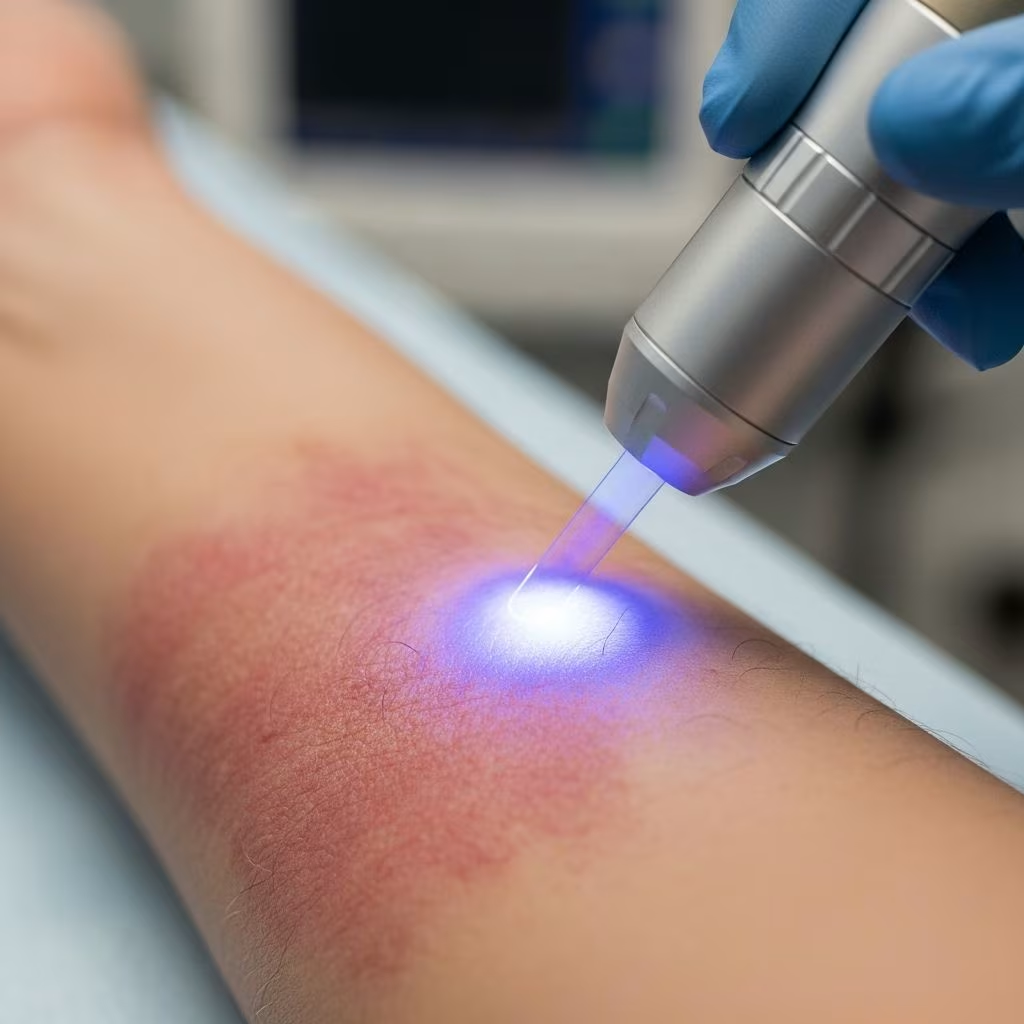
Excimer laser therapy represents a modern, targeted approach to treating localized skin conditions. The term “excimer” refers to an excited dimer, a molecule that emits ultraviolet (UV) light at a specific wavelength—308 nanometers (nm)—when returning to its ground state. This technology has been adapted for medical use, most notably in dermatology, to treat conditions like psoriasis and eczema by delivering high-intensity UVB light precisely to affected areas.
How Excimer Laser Works for Skin Conditions
The excimer laser emits a concentrated beam of 308 nm UVB light, which is absorbed by the DNA of rapidly proliferating skin cells. This process helps reduce inflammation, slow down excessive skin cell growth, and promote healing. Unlike traditional phototherapy, the excimer laser selectively irradiates only the affected skin, leaving surrounding healthy tissue unaffected. Its precision makes it especially useful for treating plaques on the elbows, knees, hands, feet, and scalp, areas that can be challenging to treat with other modalities.
Clinical Evidence and Effectiveness
Psoriasis
Numerous studies have demonstrated the effectiveness of excimer laser therapy for mild-to-moderate psoriasis. For example, Feldman et al. (2002) reported that 72% of patients who completed the treatment course achieved at least 75% clearance of plaques after an average of 6.2 sessions, with 84% reaching similar improvement after 10 or fewer treatments. Gerber et al. (2003) found that two-thirds of patients achieved 90% or greater improvement in Psoriasis Area and Severity Index (PASI) scores after a maximum of 10 treatments. The XTRAC excimer laser is a well-known brand in this space, often delivering noticeable improvements in just a few sessions.
Excimer laser therapy has also been shown to produce rapid results—sometimes after a single treatment—with moderately long remission periods. However, it is important to note that the therapy is not curative; psoriasis plaques may recur, necessitating repeat treatment cycles. The treatment appears to be most effective for localized, stable plaques rather than widespread disease.
Eczema
While the majority of research focuses on psoriasis, excimer laser therapy is also used for eczema, particularly for refractory or localized cases. Patients often see improvement in symptoms and skin appearance, with benefits lasting several months. The targeted nature of the treatment reduces the risk of side effects associated with widespread UV exposure, making it a valuable option for patients who do not respond to topical therapies alone.
Procedure: What to Expect
Excimer laser therapy is performed in a dermatologist’s office. Each session typically lasts only a few minutes. The process involves:
- The dermatologist identifies and marks the areas to be treated.
- Protective eyewear is provided to shield the eyes from UV exposure.
- The laser handpiece is applied directly to the plaques, delivering precise doses of UVB light.
- Patients may feel warmth or a mild snapping sensation, but the procedure is generally well tolerated.
- Treatment frequency is usually twice weekly for 4 to 10 sessions, depending on the response and severity of the condition.
Side Effects and Safety
Excimer laser therapy is considered safe for most patients, with side effects generally limited to the treated area. Commonly reported adverse effects include:
- Erythema (redness)
- Blisters
- Hyperpigmentation or hypopigmentation (darkening or lightening of the skin)
- Pain, burning, itching, or stinging at the treatment site
- Rarely, scarring
The risk of systemic side effects is minimal because of the localized nature of the treatment. However, long-term data on skin cancer risk are limited, so patients with a history of skin cancer or increased photosensitivity should exercise caution.
Who Is a Good Candidate for Excimer Laser?
Excimer laser therapy is best suited for patients with:
- Mild-to-moderate, localized psoriasis or eczema plaques
- Plaques that have not responded adequately to topical treatments
- No contraindications to UV exposure (e.g., lupus, photosensitivity, xeroderma pigmentosum, or a history of skin cancer)
- Fair to medium skin tones, as dosing must be adjusted based on skin color
Patients with widespread disease or those who are not candidates for phototherapy should consider alternative treatments.
Excimer Laser vs. Other Phototherapies
| Feature | Excimer Laser | Conventional Phototherapy (e.g., Narrowband UVB, PUVA) |
|---|---|---|
| Targeted Treatment | Yes—treats only affected skin | No—exposes large areas, including healthy skin |
| Number of Sessions | Fewer (typically 4–10) | More frequent (2–3 times weekly for months) |
| Side Effects | Localized (redness, blistering, pigmentation changes) | More generalized (rash, burning, increased skin cancer risk) |
| Effective for Localized Disease | Excellent | Moderate |
| Effective for Widespread Disease | Limited | Better |
| Remission Duration | Months | Variable |
Limitations and Considerations
Excimer laser therapy is not a cure for psoriasis or eczema. It is most effective for localized, recalcitrant plaques and may not be suitable for those with extensive skin involvement. Relapse is common, and repeat treatments are often necessary. Cost and accessibility may also be limiting factors, as the procedure requires specialized equipment and trained clinicians. Long-term safety data, particularly regarding skin cancer risk, remain an area of ongoing research.
Future Directions and Ongoing Research
Research continues to explore the optimal protocols for excimer laser therapy, including dosing, frequency, and combination with other treatments (e.g., biologics or topical agents). The development of excimer lamps, which emit similar wavelengths but do not require the same level of technical expertise, may increase accessibility. Further studies are needed to define the long-term risks, particularly in vulnerable populations, and to establish its role in the broader management of inflammatory skin diseases.
Frequently Asked Questions (FAQs)
Q: How long does excimer laser treatment take to work?
Most patients notice improvement within several sessions (usually 4–10), but significant clearance may be seen as early as after a single treatment for some individuals.
Q: Is excimer laser therapy painful?
Treatment is generally well tolerated, with most patients experiencing only mild warmth or a snapping sensation. Some report temporary redness, stinging, or blistering.
Q: Can excimer laser therapy cure psoriasis or eczema?
No, it is not a cure. It effectively treats existing plaques, but the condition may recur over time, requiring additional treatment cycles.
Q: Who should avoid excimer laser therapy?
Patients with a history of skin cancer, photosensitivity disorders (e.g., lupus, xeroderma pigmentosum), or those on medications that increase sun sensitivity should avoid this treatment.
Q: How does excimer laser compare to traditional phototherapy?
Excimer laser targets only affected skin, requires fewer sessions, and may have fewer side effects than conventional phototherapy, but it is not suitable for widespread disease.
Conclusion
Excimer laser therapy represents a significant advancement in the management of localized psoriasis and eczema. Its precision, relatively rapid onset of action, and favorable side effect profile make it an attractive option for patients with mild-to-moderate disease that is resistant to topical therapies. While not a cure, it offers durable symptom relief for many and can be used alone or in combination with other treatments. Careful patient selection and ongoing monitoring are essential to maximize benefits and minimize risks. As research evolves, excimer laser technology is likely to play an increasingly important role in the dermatologic armamentarium.
References
- https://www.aetna.com/cpb/medical/data/500_599/0577.html
- https://www.webmd.com/skin-problems-and-treatments/psoriasis/laser-treatment-for-psoriasis
- https://pmc.ncbi.nlm.nih.gov/articles/PMC10774623/
- https://dermatologyseattle.com/phototherapy-as-a-breakthrough-for-eczema-and-psoriasis-what-to-know/
- https://www.fargoderm.com/everything-you-need-to-know-about-the-xtrac-excimer-laser/
- https://www.nationwidechildrens.org/specialties/dermatology/dermatology-resources/excimer-laser-therapy
- https://jamanetwork.com/journals/jamadermatology/fullarticle/190214
- https://www.advancederm.net/xtrac-therapy-an-effective-treatment-for-psoriasis-vitiligo-and-eczema/


