


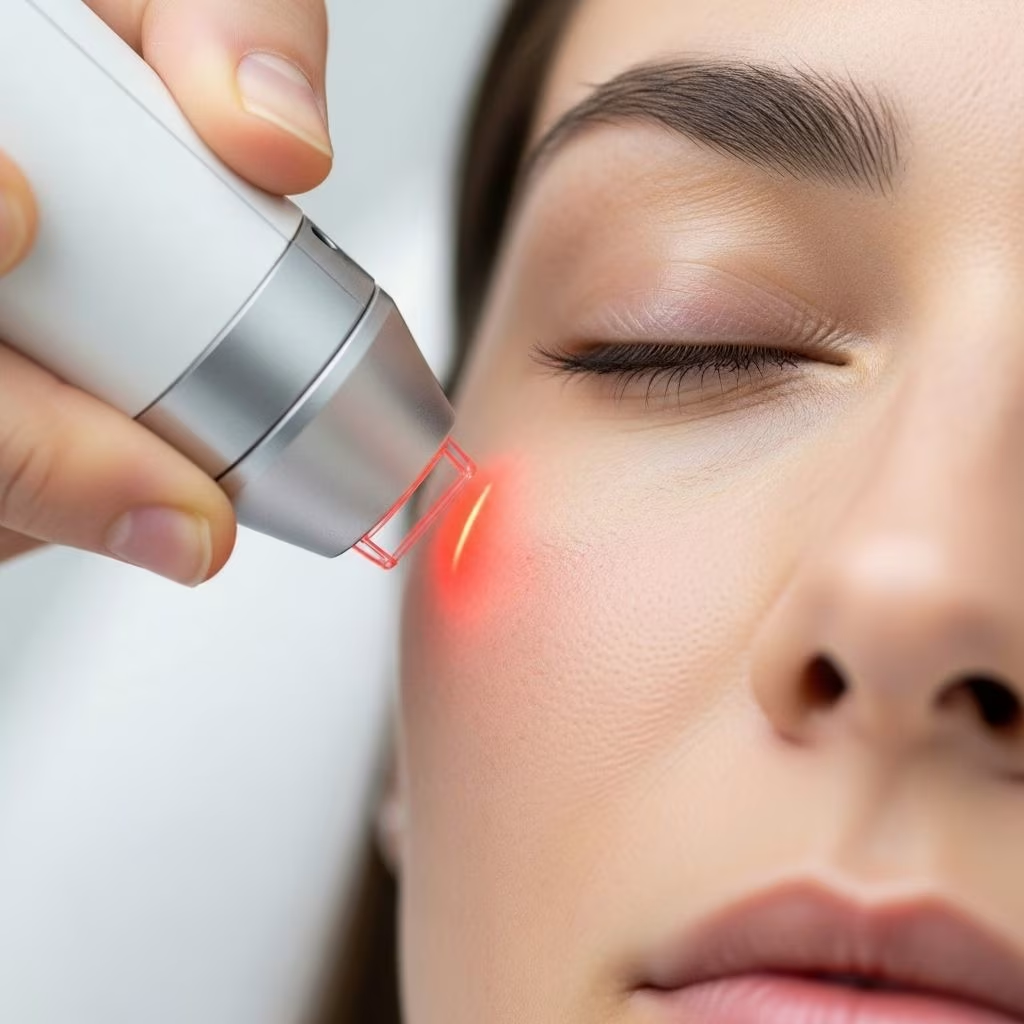
If you’re considering laser resurfacing after completing an Accutane treatment course, understanding the proper waiting period is absolutely critical for your safety and treatment success. Accutane, known generically as isotretinoin, is a powerful medication that fundamentally changes how your skin functions, and these effects persist long after you’ve taken your last pill. This comprehensive guide explores everything you need to know about timing laser resurfacing procedures after Accutane treatment.
Understanding Accutane and Its Effects on Skin
Accutane represents one of the most effective treatments available for severe acne, but its power comes with significant implications for skin structure and function. This medication works by dramatically reducing the size and activity of sebaceous glands, which are responsible for producing the skin’s natural oils. The drug also accelerates skin cell turnover, helping to prevent the clogged pores that lead to acne breakouts.
The transformative effects of isotretinoin extend far beyond the treatment period itself. The medication alters fundamental aspects of skin biology, including collagen production, wound healing capacity, and overall skin thickness. These changes make the skin significantly more vulnerable to trauma and slower to recover from invasive procedures like laser resurfacing. Understanding these effects is essential for anyone planning post-treatment cosmetic procedures.
The Standard Waiting Period Recommendation
The medical community has historically recommended waiting between six to twelve months after completing Accutane before undergoing laser resurfacing procedures. This conservative timeline stems from documented cases of poor healing and atypical scarring in patients who underwent dermabrasion while taking or shortly after discontinuing isotretinoin. These early reports, primarily from the 1980s and 1990s, established the foundation for current waiting period guidelines.
Most dermatologists and aesthetic practitioners recommend a minimum waiting period of six months for any resurfacing procedure. Some conservative practitioners prefer to wait a full twelve months, particularly for more aggressive ablative laser treatments or chemical peels. The specific recommendation often depends on several factors, including the total cumulative dose of Accutane taken, the duration of treatment, and the individual patient’s healing response.
Why the Wait Time Matters: Six Critical Reasons
Skin Thinning and Fragility
One of the most significant concerns with performing laser treatments too soon after Accutane involves the thinning effect the medication has on skin. Isotretinoin reduces sebaceous gland size and alters the normal skin cell turnover cycle, resulting in thinner, more delicate skin tissue. This fragility dramatically increases the risk of complications when the skin is subjected to the intense heat and energy of laser treatments. Thinner skin is more susceptible to burns, excessive damage, and unpredictable healing patterns that can lead to permanent scarring or pigmentation changes.
Compromised Healing Capacity
Accutane significantly impacts the body’s natural wound healing processes. The medication affects collagen synthesis and remodeling, which are essential components of proper wound repair. When laser resurfacing creates controlled injury to the skin, the body must mount an effective healing response to achieve the desired cosmetic results. In patients who have recently used Accutane, this healing response may be delayed, incomplete, or aberrant, leading to prolonged recovery times, persistent redness, or the development of hypertrophic scars.
Increased Risk of Scarring
The combination of fragile skin and impaired healing creates a perfect storm for abnormal scarring. Patients who undergo laser resurfacing too soon after Accutane treatment face elevated risks of developing keloid scars, hypertrophic scars, or areas of atrophic scarring. These scarring complications can be far worse than the original skin concerns that prompted the laser treatment, resulting in outcomes that are both aesthetically disappointing and potentially permanent.
Heightened Skin Sensitivity
Isotretinoin leaves skin in a hypersensitive state that persists for months after treatment completion. This heightened sensitivity manifests in multiple ways, including increased pain perception during procedures, greater susceptibility to thermal injury, and enhanced photosensitivity. The combination of Accutane-induced sensitivity with the heat and energy delivered during laser resurfacing can result in severe irritation, burns, or prolonged inflammatory responses that compromise treatment outcomes.
Unpredictable Treatment Response
When skin hasn’t fully recovered from Accutane’s effects, its response to laser energy becomes less predictable. The altered skin architecture may absorb, scatter, or reflect laser energy differently than normal skin, making it difficult for practitioners to achieve consistent results. This unpredictability increases the risk of both under-treatment, where desired results aren’t achieved, and over-treatment, which can cause excessive damage and complications.
Optimizing Treatment Effectiveness
Beyond safety considerations, waiting for skin to fully recover from Accutane ensures optimal treatment results. Laser resurfacing works most effectively when applied to healthy, resilient skin with normal healing capacity. Fully recovered skin responds more predictably to laser energy, heals more efficiently, and produces better aesthetic outcomes. For laser tattoo removal, healthy skin allows laser energy to focus on breaking down ink particles rather than being absorbed by compromised skin tissue. For rejuvenation treatments, normalized skin produces more robust collagen remodeling and superior textural improvements.
Recent Research Challenging Traditional Guidelines
Emerging research has begun to question whether the traditional six to twelve month waiting period is necessary for all types of laser treatments. A groundbreaking pilot study conducted at the University of Utah examined the safety of nonablative fractional laser resurfacing performed within one month of completing isotretinoin treatment. The study involved ten patients with mild to moderate acne scars who had recently finished Accutane courses with cumulative doses of at least 120 mg/kg.
The research utilized a randomized split-face design, treating one side of the face with the Fraxel DUAL laser system while leaving the other side untreated as a control. Treatments began within one month of the last isotretinoin dose and continued for three sessions spaced four weeks apart. The study found that nonablative fractional laser treatment for acne scarring appeared to be well tolerated within one month of completing isotretinoin treatment, with no significant adverse events reported.
This research represents an important challenge to decades-old recommendations that were based primarily on case reports involving ablative procedures like dermabrasion rather than modern nonablative laser technologies. However, it’s crucial to note that this was a small pilot study, and the findings may not apply to all laser types or all patients. The distinction between nonablative and ablative laser treatments is particularly important when considering timing after Accutane.
Different Laser Types and Varying Wait Times
Not all laser treatments carry the same level of risk when performed after Accutane, and waiting periods may vary based on the specific technology being used. Nonablative fractional lasers, which create microscopic treatment zones while leaving surrounding tissue intact, may be safer to perform sooner after isotretinoin than traditional ablative lasers that remove entire layers of skin. The emerging research suggests that nonablative treatments might be performed as early as one month post-Accutane in carefully selected patients, though this remains controversial.
Ablative laser resurfacing, which includes CO2 and erbium YAG lasers that vaporize skin tissue, requires more conservative timing. Most experts continue to recommend waiting the full six to twelve months for these more aggressive treatments. The greater depth of injury and more extensive healing requirements associated with ablative procedures make the traditional waiting period more critical for safety.
Factors Influencing Individual Wait Time Recommendations
The appropriate waiting period after Accutane isn’t one-size-fits-all. Several individual factors should influence the timing decision:
Cumulative Dose and Treatment Duration: Patients who took higher cumulative doses of isotretinoin or remained on the medication for longer periods may require extended waiting times. Higher doses produce more pronounced effects on skin structure and healing capacity, necessitating longer recovery periods before the skin can safely handle laser treatments.
Individual Healing Response: Some patients recover from Accutane’s effects more quickly than others. Factors like age, overall health status, nutritional status, and genetic variations in drug metabolism can all influence how long isotretinoin’s effects persist. A dermatologist familiar with your treatment history can help assess your individual healing trajectory.
Type of Laser Treatment Planned: As discussed, nonablative treatments may be considered sooner than ablative procedures. The specific wavelength, energy settings, and treatment density also affect risk levels and appropriate timing.
Treatment Area and Skin Type: Facial skin typically recovers more quickly than body skin due to higher density of sebaceous glands and better blood supply. Additionally, certain skin types may be more prone to pigmentation changes or scarring complications, warranting more conservative timing approaches.
Consultation with Qualified Professionals
Before scheduling any laser resurfacing procedure after Accutane, consultation with qualified professionals is absolutely essential. Ideally, you should discuss your plans with both the dermatologist who prescribed your Accutane and the practitioner who will perform your laser treatment. These professionals should coordinate to assess your individual risk profile and determine the safest timing for your specific situation.
During consultations, be completely transparent about your Accutane treatment history, including total doses taken, treatment duration, when you completed therapy, and any persistent side effects you’ve experienced. Also discuss any other medications you’re taking, as certain drugs can further impact healing capacity or increase photosensitivity.
Alternative Treatments During the Waiting Period
The months-long waiting period after Accutane doesn’t mean your skin improvement goals must be put on hold entirely. Several gentler treatment options can be safely pursued during this time:
Gentle Facials: Non-invasive facial treatments that focus on hydration and gentle exfoliation can be performed safely after Accutane. These treatments help maintain skin health and can provide modest improvements while you wait for more aggressive procedures.
Topical Treatments: Certain prescription and over-the-counter topical products can address skin concerns without the risks associated with laser treatments. Retinoids should be reintroduced gradually and only with physician guidance, but other ingredients like hyaluronic acid, niacinamide, and vitamin C can support skin health during recovery.
Microneedling Considerations: Like laser treatments, microneedling should typically wait at least six months after Accutane completion. This procedure creates controlled injury to stimulate collagen production, and performing it too soon after isotretinoin carries similar risks of impaired healing and scarring.
Monitoring Your Skin’s Recovery
As you progress through the waiting period after Accutane, pay attention to signs that your skin is returning to normal function. Indicators of adequate recovery include normalization of oil production, reduction in dryness and flaking, improved skin texture and resilience, and faster healing of minor cuts or abrasions. If you notice that your skin remains excessively dry, fragile, or slow to heal beyond the typical recovery timeframe, discuss extending your waiting period with your dermatologist.
Table: Recommended Wait Times by Procedure Type
| Procedure Type | Minimum Wait Time | Conservative Wait Time | Considerations |
|---|---|---|---|
| Nonablative Fractional Laser | 1-3 months | 6 months | Emerging research suggests earlier treatment may be safe; requires careful patient selection |
| Ablative Laser Resurfacing | 6 months | 12 months | Higher risk procedure requiring conservative timing approach |
| Chemical Peels | 6 months | 12 months | Depth of peel influences risk level and appropriate timing |
| Microneedling | 6 months | 12 months | Creates controlled injury requiring adequate healing capacity |
| Laser Tattoo Removal | 3 months | 6 months | Risk varies with treatment intensity and skin location |
The Bottom Line on Safety and Timing
While the traditional six to twelve month waiting period after Accutane may seem frustratingly long, this conservative approach remains the safest choice for most patients, particularly those considering ablative laser resurfacing or chemical peels. The consequences of proceeding too early—including severe scarring, prolonged healing complications, and disappointing aesthetic outcomes—far outweigh the inconvenience of waiting a few additional months.
That said, the emerging research on nonablative fractional lasers offers hope that carefully selected patients might safely undergo certain treatments sooner than previously thought. If you’re eager to address acne scars or other skin concerns soon after completing Accutane, discuss the possibility of nonablative options with a knowledgeable dermatologist who can assess your individual risk profile.
Ultimately, the decision about when to pursue laser resurfacing after Accutane should be made collaboratively with qualified medical professionals who understand both your treatment history and your aesthetic goals. Patience during the waiting period sets the foundation for safe procedures and optimal results that enhance rather than compromise your skin’s health and appearance.
Frequently Asked Questions
Q: Can I have any laser treatments while still taking Accutane?
A: No, laser resurfacing treatments should never be performed while you are actively taking Accutane. The medication must be completely discontinued, and an appropriate waiting period must pass before laser procedures can be safely performed. Even non-ablative treatments carry significant risks when performed during active isotretinoin therapy.
Q: What happens if I get laser resurfacing too soon after Accutane?
A: Undergoing laser resurfacing too soon after Accutane significantly increases risks of complications including abnormal scarring, prolonged healing times, severe inflammation, burns, persistent pigmentation changes, and overall poor treatment outcomes. These complications can be permanent and may be more problematic than the original skin concerns.
Q: Does the type of acne I had affect the waiting period?
A: The severity of your acne doesn’t directly affect the waiting period, but the dose and duration of Accutane treatment required to treat your acne does matter. More severe acne typically requires higher cumulative doses or longer treatment courses, which may necessitate longer waiting periods before laser procedures.
Q: Are there any laser treatments that are completely safe immediately after Accutane?
A: No laser resurfacing treatment is considered completely safe immediately after completing Accutane. Even the most conservative nonablative treatments carry elevated risks when performed too soon. The emerging research suggests some nonablative fractional lasers might be performed within one month in carefully selected patients, but this should only be done under close medical supervision.
Q: How do I know when my skin has fully recovered from Accutane?
A: Signs of skin recovery include return of normal oil production, improved skin texture and thickness, reduced dryness and sensitivity, and normal healing of minor injuries. Your dermatologist can assess your skin’s recovery status through clinical examination and help determine when you’ve reached an appropriate point for laser treatments.
Q: Will waiting longer than the minimum time improve my laser treatment results?
A: Yes, allowing your skin more time to fully recover from Accutane’s effects generally improves both the safety and effectiveness of laser resurfacing treatments. Healthier, more resilient skin responds more predictably to laser energy and heals more efficiently, producing superior aesthetic outcomes with lower complication risks.
Q: Can I use topical retinoids during the waiting period after Accutane?
A: Topical retinoids can typically be reintroduced after Accutane, but this should be done gradually and under medical supervision. While topical retinoids don’t carry the same restrictions as laser procedures, they can increase skin sensitivity and should be used cautiously during the recovery period. Discuss timing and appropriate products with your dermatologist.
References
- https://eraseandembrace.com/2025/05/24/6-reasons-why-we-wait-3-months-after-the-use-of-accutane-for-laser-tattoo-removal-and-laser-facials/
- https://www.realself.com/question/resurfacing-laser-microneedling-post-accutane-wait
- https://kerryspindler.com/facials-after-accutane-safe-timing-and-key-tips-for-skin-care/
- https://www.dermatologytimes.com/view/isotretinoin-study-laser-treatment-safe-one-month-post-treatment
- https://pubmed.ncbi.nlm.nih.gov/28853175/
- https://pmc.ncbi.nlm.nih.gov/articles/PMC5820835/
- https://www.sanovadermatology.com/chemical-peels/can-i-do-chemical-peels-or-laser-after-accutaneisotretinoin-if-so-when/
- https://www.dermatologytimes.com/view/should-you-wait-after-isotretinoin-treat-acne-laser


