


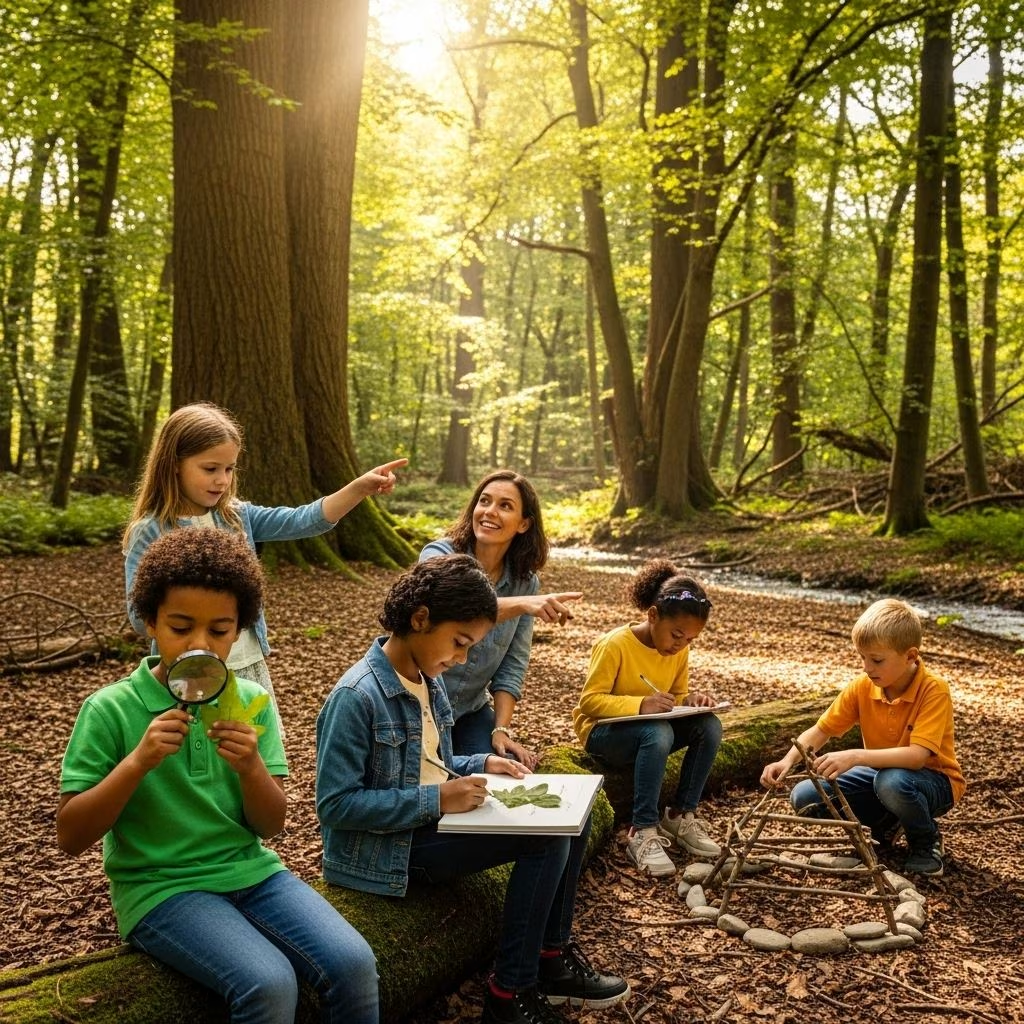
What is Forest Schooling?
Forest Schooling is an educational approach that takes learning outdoors, using natural environments—such as woodlands, parks, or even backyards—as classrooms. Rooted in the idea that regular, sustained contact with nature supports holistic child development, forest schools emphasize hands-on, experiential learning led by children’s curiosity and interests. Unlike traditional schooling, forest schooling is not confined by walls or rigid schedules; instead, it thrives on exploration, play, and connection with the natural world.
The concept originates from Scandinavia but has gained global traction, with programs now found in the UK, North America, Australia, and beyond. While “forest school” often refers to organized programs, the principles can be adapted for homeschooling or family-based nature education.
Benefits of Nature-Based Education
Research and practice consistently highlight the wide-ranging benefits of nature-based education for children of all ages and backgrounds.
- Holistic Development: Nature-based learning supports physical, social, emotional, and cognitive growth. Children develop motor skills, spatial awareness, and coordination through active play outdoors.
- Social and Emotional Skills: Collaborative activities in natural settings foster teamwork, communication, and empathy. Children learn to negotiate, share, and solve problems together.
- Resilience and Confidence: Facing manageable risks—like climbing trees or navigating uneven terrain—builds resilience, self-esteem, and a sense of accomplishment.
- Creativity and Imagination: Unstructured play in nature sparks creativity, as children invent games, stories, and art using natural materials.
- Environmental Stewardship: Regular interaction with nature cultivates respect and care for the environment, fostering a lifelong connection to the natural world.
- Health and Wellbeing: Time spent outdoors is linked to reduced stress, improved mood, and better overall health.
Principles of Forest Schooling
Forest schooling is guided by a set of core principles that distinguish it from other forms of outdoor education.
- Regular and Repeated Access: Learning happens through frequent, sustained visits to the same natural space, allowing children to observe seasonal changes and develop a deep connection to the land.
- Child-Led Learning: Activities emerge from children’s interests and curiosities, with adults acting as facilitators rather than directors.
- Holistic Development: The curriculum is broad and interdisciplinary, integrating natural sciences, arts, math, and language through practical, hands-on experiences.
- Risk-Taking: Children are encouraged to take safe, calculated risks, which builds confidence, judgment, and resilience.
- Community and Relationships: Strong bonds are formed among children, between children and adults, and between the group and the natural environment.
- Inclusivity: Forest schooling is adaptable and welcoming to all learners, regardless of age, ability, or background.
Getting Started with Forest Schooling at Home
Bringing forest schooling into your home life is simpler than you might think. You don’t need a vast woodland—a local park, garden, or even a balcony with potted plants can serve as your “outdoor classroom”. Here’s how to begin:
Choosing Your Outdoor Space
- Local Parks and Green Spaces: Regular visits to a nearby park or nature reserve provide diverse opportunities for exploration.
- Backyard or Garden: Even a small backyard can become a rich learning environment with the addition of natural materials, plants, and simple play structures.
- Balcony or Indoor Nature Corner: If outdoor space is limited, create a nature corner indoors with plants, rocks, shells, and natural art materials.
Essential Supplies
- Weather-Appropriate Clothing: Invest in rain gear, sturdy boots, hats, and layers to ensure comfort in all seasons.
- Nature Tools: Magnifying glasses, binoculars, field guides, notebooks, and small containers for collecting and observing.
- Art Supplies: Sketchbooks, colored pencils, watercolors, and clay for nature journaling and creative projects.
- Safety Kit: Basic first aid supplies, sunscreen, and insect repellent.
Establishing Routines
- Regular Outdoor Time: Aim for daily or weekly outdoor sessions, even if only for an hour. Consistency deepens the learning experience.
- Open-Ended Exploration: Allow children to lead the way, following their interests and questions.
- Reflection and Sharing: End each session with a discussion or journal entry to reflect on discoveries and experiences.
Sample Forest School Activities
Forest schooling activities are as varied as the natural world itself. Here are some ideas to inspire your own nature-based learning sessions:
| Activity | Skills Developed | Materials Needed |
|---|---|---|
| Building shelters with sticks and leaves | Teamwork, problem-solving, fine and gross motor skills | Sticks, leaves, rope (optional) |
| Nature scavenger hunts | Observation, classification, language skills | List of items to find, baskets or bags |
| Creating art with natural materials | Creativity, fine motor skills, sensory awareness | Leaves, flowers, stones, clay, paper |
| Tracking animal footprints | Scientific inquiry, patience, attention to detail | Field guide, notebook, camera |
| Planting and tending a garden | Responsibility, patience, understanding of life cycles | Seeds, soil, pots or garden bed, watering can |
| Storytelling and role-play in nature | Imagination, language, social skills | No materials required |
Curriculum Ideas for Nature-Based Learning
Forest schooling doesn’t require a rigid curriculum, but having a loose framework can help integrate academic learning with outdoor exploration. Here are some curriculum ideas that align with forest school principles:
- Science: Study local plants and animals, weather patterns, ecosystems, and the water cycle through direct observation and experiments.
- Math: Count natural objects, measure tree circumferences, create patterns with leaves and stones, and explore geometric shapes in nature.
- Language Arts: Keep a nature journal, write stories or poems inspired by outdoor experiences, and read books about nature and adventure.
- Art: Create land art, leaf rubbings, nature collages, and sculptures using found materials.
- Social Studies: Learn about the cultural and historical uses of local plants, Indigenous land practices, and environmental conservation.
- Physical Education: Hike, climb, balance, and engage in cooperative games that develop strength, coordination, and teamwork.
Safety and Risk Management
While forest schooling encourages risk-taking, safety remains a priority. Here’s how to manage risks responsibly:
- Know Your Environment: Familiarize yourself with the area, including potential hazards like poisonous plants, sharp objects, or uneven terrain.
- Set Clear Boundaries: Establish rules for exploration, such as staying within sight, respecting wildlife, and not tasting unknown plants.
- Teach Safe Practices: Show children how to use tools safely, climb carefully, and respond to emergencies.
- Prepare for Weather: Dress appropriately, seek shelter during storms, and stay hydrated.
- First Aid Readiness: Keep a first aid kit handy and know basic first aid procedures.
Assessing Progress in Forest Schooling
Assessment in forest schooling focuses on holistic development rather than standardized tests. Consider these approaches:
- Observation: Notice changes in confidence, curiosity, social skills, and physical abilities over time.
- Portfolios: Collect photos, journal entries, artwork, and project documentation to track growth.
- Child-Led Reflection: Encourage children to share what they’ve learned, enjoyed, or found challenging.
- Parent-Educator Collaboration: Engage in ongoing dialogue about goals, challenges, and achievements.
Resources and Next Steps
To deepen your forest schooling journey, explore the following resources:
- Books: “The Nature Principle” by Richard Louv, “Last Child in the Woods” by Richard Louv, “Forest School and Outdoor Learning in the Early Years” by Sara Knight.
- Online Communities: Join forums and social media groups dedicated to nature-based education.
- Workshops and Courses: Look for local or online training in forest school leadership and outdoor education.
- Local Networks: Connect with other homeschooling families, nature centers, and environmental organizations.
Remember, the essence of forest schooling is not perfection but presence—being fully engaged with your child in the natural world, learning and growing together.
Frequently Asked Questions (FAQs)
Q: Do I need a forest to practice forest schooling at home?
A: Not at all! While forests and woodlands are ideal, any natural space—parks, gardens, even urban green areas—can serve as your outdoor classroom. The key is regular, meaningful engagement with nature.
Q: How much time should we spend outdoors each day?
A: Even 30–60 minutes of focused outdoor time can be beneficial. Consistency is more important than duration; aim for regular sessions, whether daily or weekly.
Q: Is forest schooling suitable for all ages?
A: Yes! Forest schooling principles can be adapted for toddlers, school-aged children, and even teens. Activities and expectations will vary with age, but the core benefits—curiosity, resilience, connection—are universal.
Q: How do I handle bad weather?
A: Dress appropriately and embrace all weather as part of the learning experience. On days with extreme conditions, adapt activities to a sheltered area or bring nature indoors with art, stories, and experiments.
Q: Can forest schooling be combined with traditional academics?
A: Absolutely. Many families blend forest schooling with standard curricula, using outdoor experiences to enrich and contextualize academic subjects like science, math, and language arts.
Q: What if my child is hesitant to go outside?
A: Start small and follow your child’s lead. Incorporate their interests—whether it’s bugs, art, or storytelling—into outdoor activities. Gradually, most children become more comfortable and enthusiastic about outdoor exploration.
Q: How can I assess my child’s progress without tests?
A: Focus on observation, reflection, and documentation. Notice changes in confidence, curiosity, social skills, and physical abilities. Keep a portfolio of photos, journal entries, and projects to track growth over time.
References
- https://en.wikipedia.org/wiki/Forest_school_(learning_style)
- https://childnature.ca/about-forest-and-nature-school/
- https://www.theforestschoolfoundation.org/background-information-history
- https://anbe.org/blog/12654475
- https://www.naeyc.org/resources/pubs/yc/fall2021/take-it-outside
- https://tenaflynaturecenter.org/forest-school/
- https://www.forestschools.com/pages/what-is-forest-school-an-introduction
- https://wildbeginningsnatureschool.org/what-is-nature-school/
- https://theforest.school/digging-deeper


