


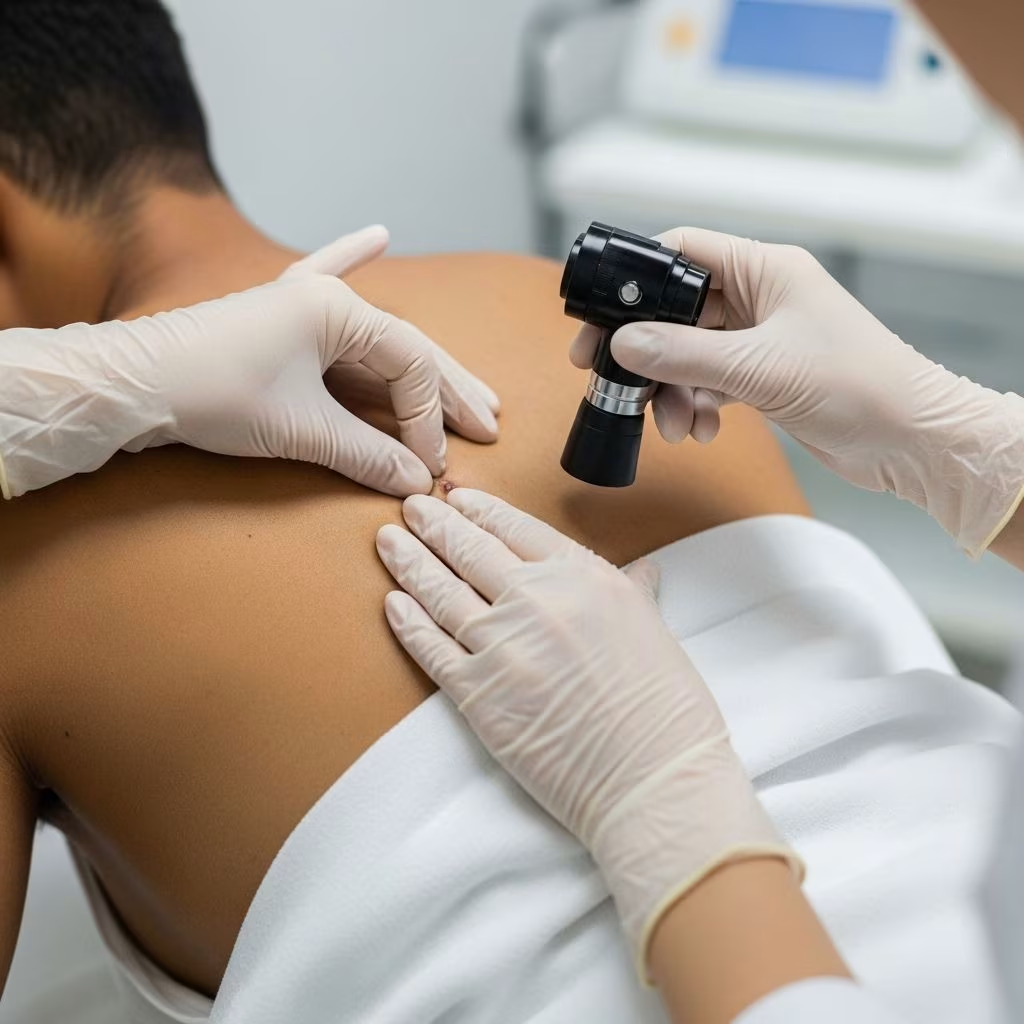
Early detection is crucial in the fight against skin cancer and other dermatological conditions. An annual full body skin exam is a proactive step toward maintaining skin health and ensuring peace of mind. This guide provides in-depth advice on how to prepare for your appointment, what to expect during the visit, and answers to frequently asked questions to help you feel confident and informed.
Why Full Body Skin Exams Matter
Skin exams are vital for the early detection of skin cancer, including life-threatening types like melanoma, as well as for identifying other skin conditions such as atypical moles, benign growths, and chronic rashes. Most dermatologists recommend a professional full body skin check once a year. If you have a high risk due to personal or family history, excessive sun exposure, atypical moles, or previous skin cancers, more frequent exams may be advised.
Regular self-exams are important, but a trained dermatologist can spot subtler changes or hidden lesions, improving your chance of successful treatment and reducing anxiety about the unknown.
Preparing for Your Appointment
Effective preparation maximizes the thoroughness and efficiency of your full body skin exam. Taking simple steps before your appointment sets you up for the most informative visit possible.
- Choose appropriate clothing: Wear loose, easily removed clothing. Some clinics provide a gown for the exam, but you may be asked to disrobe to your underwear for a complete inspection of all skin areas.
- Remove makeup: Facial makeup can hide subtle changes in skin tone, color, or new lesions. Remove all cosmetics, especially foundation and concealers, before arriving or bring makeup remover.
- Take off nail polish and jewelry: Nail polish can obscure signs of skin cancer, which rarely but occasionally begin under the nails. Remove rings, bracelets, and other jewelry to prevent missing spots on fingers, toes, or ears.
- Wear your hair loose: Free your scalp by undoing ponytails, headbands, or elaborate hairdos to allow your provider to inspect the scalp thoroughly.
- Continue daily use of lotions, deodorants, or self-tanners: These products do not interfere with your dermatologist’s ability to examine your skin, so you do not need to alter your normal routine.
- Write down your concerns: Make detailed notes on any new, changing, or unusual spots. Bring photos if you have documented changes in a mole or rash over time. This information is valuable for both you and your provider.
Essential Prep Tips: What to Do Before Your Exam
- Perform a self-exam: Before your appointment, check your skin from head to toe. Use mirrors for hard-to-see areas. Look for new moles, spots that have changed, sores that don’t heal, and anything unusual. Note your findings for your provider.
- List your medical and family history: Be ready to discuss prior skin conditions, skin cancers, patterns of sun exposure, history of sunburns, and any relevant family history. Your provider will ask about these influences as they assess your risk profile.
- Be mindful about modesty and comfort: Privacy and respect are paramount. If you are uncomfortable with aspects of the exam (such as genital or breast exams), discuss your wishes ahead of time. A chaperone is available if you prefer.
- Arrive on time and relaxed: Plan your day to avoid last-minute stress. Allow extra time in case the appointment takes longer than anticipated—full body checks usually run 15 to 30 minutes depending on complexity.
- Bring insurance and ID: As with all medical visits, have your insurance information, identification, and any referral forms if needed.
- Don’t cancel if you have a pimple, rash, or blemish: Dermatologists prefer to see your skin in its true, untreated state.
Sample Preparation Checklist
- Remove all makeup
- Take off nail polish (fingers and toes)
- Remove or loosen tight hairstyles
- Wear or bring easily removed clothing
- Don’t forget photographic documentation of changing spots
- Write down skin concerns and medical history
- Arrive a few minutes early
What to Expect During the Exam
Knowing what will happen during a full body skin check demystifies the exam and makes you more comfortable participating in your care.
- Initial consultation: Expect a brief discussion of your medical and skin history, existing concerns, and recent skin changes. Use this time to share any self-identified concerns and ask initial questions.
- Private, respectful environment: You’ll likely be offered a private room with a changing area and gown. A chaperone or nurse may be present upon request or as office policy, especially for sensitive area exams.
- Head-to-toe visual check: Your dermatologist will inspect your skin in a systematic manner—scalp, face, neck, trunk, arms, hands, legs, feet, and between toes and fingers. Sensitive areas (breasts, groin, buttocks) will be checked if you give permission.
- Use of specialized tools: A dermatoscope (a portable skin microscope) may be used to examine moles or lesions more closely. A measuring tape or ruler may document the size of a concerning spot.
- Minimal discomfort: The exam is non-invasive and, for most people, completely painless. You may be asked to change positions or move hair aside.
- Opportunity for questions and discussion: At any time during the exam, ask questions about findings, unfamiliar terms, or follow-up steps. Your provider will describe any spots requiring further observation or biopsy.
Step-by-Step Skin Exam Process
While each practice may vary, here’s a typical sequence for a full body dermatology exam, based on expert guidelines and standard procedures:
| Area Examined | Exam Technique | What Dermatologist Looks For |
|---|---|---|
| Scalp | Hair parted, scalp examined under good lighting | New or changing moles, spots, scaling, sores, odd color changes |
| Face & Neck | Full facial and neck evaluation, including eyelids, lips, ears | Atypical moles, color changes, persistent red or crusted areas |
| Arms & Hands | Shoulders, arms, hands, palms, nails, between fingers | Irregular moles, lesions, nail changes, pigment streaks |
| Torso & Back | Chest, abdomen, back, sides, under breasts/folds | Unusual growths, symmetry or border changes, sores that don’t heal |
| Legs, Feet & Toes | Thighs, legs, ankles, soles, between toes, under toenails | New spots, pigmentation, open non-healing sores, nail issues |
| Genital & Perianal Area | Examined with express permission, respecting privacy/draping | Unexplained lesions, irritation, persistent rashes |
| Nails & Mucous Membranes | Nail plates, beds, gums, oral cavity as needed | Pigment streaks, ulcers, unusual masses or color changes |
Common Signs Dermatologists Look For
- Asymmetry: Uneven shape or color within a mole
- Irregular or blurred borders
- Multiple or unusual colors in a lesion
- Diameter larger than 6mm (about pencil eraser)
- Rapid change in appearance, size, or texture
- Sores that do not heal over several weeks
If anything suspicious is found, the dermatologist may recommend a biopsy or additional follow-up. Most exams do not result in immediate procedures.
After Your Skin Exam: What Comes Next?
- Immediate feedback: Your dermatologist will discuss all findings, identify any concerning spots, and guide you on next steps (routine monitoring, biopsy, removal, or reassurance).
- Documented findings: Notes and photographs may be added to your medical chart for baseline comparison during future visits.
- Self-monitoring guidance: Patients are usually taught how to perform self-checks, what warning signs to look for, and when to return for a follow-up.
- Follow-up plan: If you are high risk, have multiple suspicious moles, or a personal history of skin cancer, you may be scheduled for more frequent checks. If a biopsy is required, results are usually available within 1-2 weeks.
Frequently Asked Questions (FAQs)
Will my dermatologist check private areas?
This part of the exam is always your choice. The provider will explain the reason for checking genital, perianal, or breast skin (since skin cancer can develop anywhere) and obtain your permission first. You may request a chaperone and decline any part of the exam at any time.
How long does a full body skin exam take?
Most appointments last between 15 and 30 minutes, depending on the number and complexity of moles or lesions, medical history, and discussion time.
Should I cancel my appointment if I have a rash, acne, or recent sunburn?
No. Your skin’s true condition is important for your dermatologist to see. If you’re worried, call the office beforehand for advice, but most exams should proceed regardless.
Do children need full body skin checks?
Routine full body exams are not typical for young children unless there is a family or personal history of skin cancers, many moles, or specific concerns. Adolescents with significant sun exposure or atypical moles may benefit.
What is a dermatoscope and will the dermatologist use one?
A dermatoscope is a handheld magnifying device with special lighting that allows dermatologists to examine moles and lesions in detail. It is commonly used for suspicious spots but not on every lesion.
Can I wear body lotion, deodorant, or self-tanner to my appointment?
Yes, these do not interfere with your provider’s inspection. Just avoid makeup and nail polish.
What happens if the dermatologist finds something suspicious?
They will explain the reason for concern and may recommend a biopsy (a minor procedure under local anesthesia to remove a small sample) or more frequent monitoring. The vast majority of spots checked are benign but identifying dangerous lesions early is essential.
How can I perform a self-skin check at home?
Use a full-length mirror and a hand mirror. In good lighting, check your entire body, including back, scalp, soles, and between fingers and toes. Look for new or changing spots, sores that don’t heal, or anything that stands out. Document concerns and bring them to your appointments.
Helpful Resources
- Skin Cancer Foundation (skincancer.org): Professional advice and self-check guides
- American Academy of Dermatology (aad.org): Educational materials and dermatologist locator
- Your local dermatology clinic or primary care provider
Key Takeaways
- Full body skin exams are critical for early detection of skin cancer and thorough skin health assessment.
- Preparation: Remove makeup and nail polish, wear loose clothing, keep hair loose, and write down medical and skin concerns.
- Be prepared for a respectful, systematic, head-to-toe exam lasting 15–30 minutes.
- Ask questions, discuss privacy preferences, and bring photos of skin changes if available.
- Follow post-exam guidance and schedule follow-ups as recommended by your dermatologist.
Glossary
- Dermatoscope: A magnifying device dermatologists use to examine skin lesions in detail.
- Biopsy: Removal of a small piece of tissue for laboratory analysis.
- Lesion: Any abnormal growth or area on the skin that looks different from the surrounding tissue.
- ABCDEs of melanoma: Guidelines for checking moles: Asymmetry, Border irregularity, Color variation, Diameter (greater than 6 mm), Evolving (changing over time).
References
- https://coastalderminstitute.com/full-body-skin-check/
- https://pmc.ncbi.nlm.nih.gov/articles/PMC11188824/
- https://www.skincancer.org/early-detection/annual-exams/
- https://www.dermplasticsaz.com/dermatology/how-to-prepare-for-your-skin-check/
- https://www.henryford.com/Blog/2023/05/How-To-Prep-For-A-Full-Body-Skin-Cancer-Exam
- https://www.tuftsmedicine.org/about-us/news/know-you-go-what-expect-during-skin-cancer-check
- https://www.centerforsurgicaldermatology.com/blog/a-comprehensive-guide-to-total-body-skin-exams-what-to-expect-and-why-they-matter
- https://www.derm90210.com/resources/tip-of-the-month-preparing-for-your-full-body-skin-check
- https://www.cancer.org/cancer/risk-prevention/sun-and-uv/skin-exams.html


