


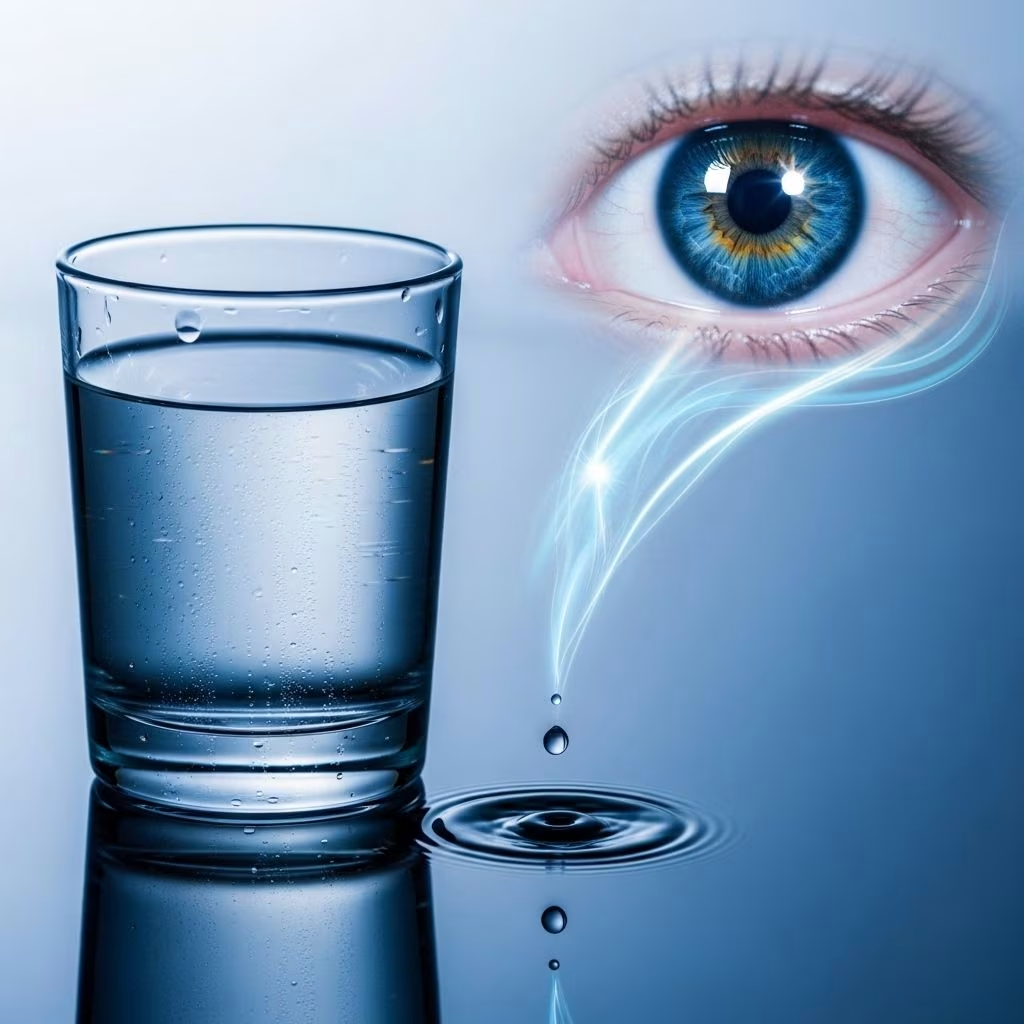
Many people recognize the importance of drinking water for general health, but few appreciate its direct impact on eye health. Scientific research and clinical evidence now confirm that proper hydration is fundamental for maintaining clear vision, preventing dry eye, and supporting overall ocular comfort. This article explores the vital connection between daily hydration and eye health, provides guidance on optimal habits, and answers common questions about vision and water intake.
Introduction: The Overlooked Link Between Hydration and Eye Health
Water constitutes the foundation of life and is crucial for all aspects of human health, including the eyes. Yet, while most people focus on hydration’s role in cardiovascular, kidney, or skin health, only a fraction realize its essential function in visual wellbeing. The eyes are among the body’s most water-dependent organs, relying on regular fluid intake to maintain tear film stability, intraocular pressure, and cell nourishment.
How Hydration Affects Eye Structure and Function
Every significant structure of the eye, from the tear film and aqueous humor to the vitreous body, is highly water-dependent. The tear film, which covers and protects the eye’s surface, is over 98% water. The aqueous (fluid in the front of the eye) and vitreous (gel filling the back of the eye) humors are similarly water-rich.
- Proper hydration ensures tissues remain well-lubricated, reducing friction and protecting delicate structures.
- Water helps transport nutrients to the cornea and lens, which have no direct blood supply.
- Water supports normal intraocular pressure (IOP), which is crucial for shape, optical function, and preventing damage from conditions like glaucoma.
- Hydration helps flush out metabolic waste and toxins from ocular tissues, reducing inflammation and disease risk.
Tear Film Physiology
The
References
- https://msretina.com/2025/02/11/how-hydration-impacts-eye-health-why-drinking-water-is-essential-for-your-vision/
- https://www.sightresearchuk.org/nutrition/water-good-for-your-eyes/
- https://www.reviewofoptometry.com/article/drink-up
- https://www.lovelandeyecare.com/2024/05/02/the-connection-between-water-and-vision-health/
- https://pubmed.ncbi.nlm.nih.gov/25950246/
- https://pmc.ncbi.nlm.nih.gov/articles/PMC10087849/
- https://specialty.vision/article/hydrations-impact-on-dry-eye-symptoms/
- https://www.uoosd.com/hydration-beyond-water
- https://www.eyecaresuperior.com/waters-effect-on-eye-pressure


