


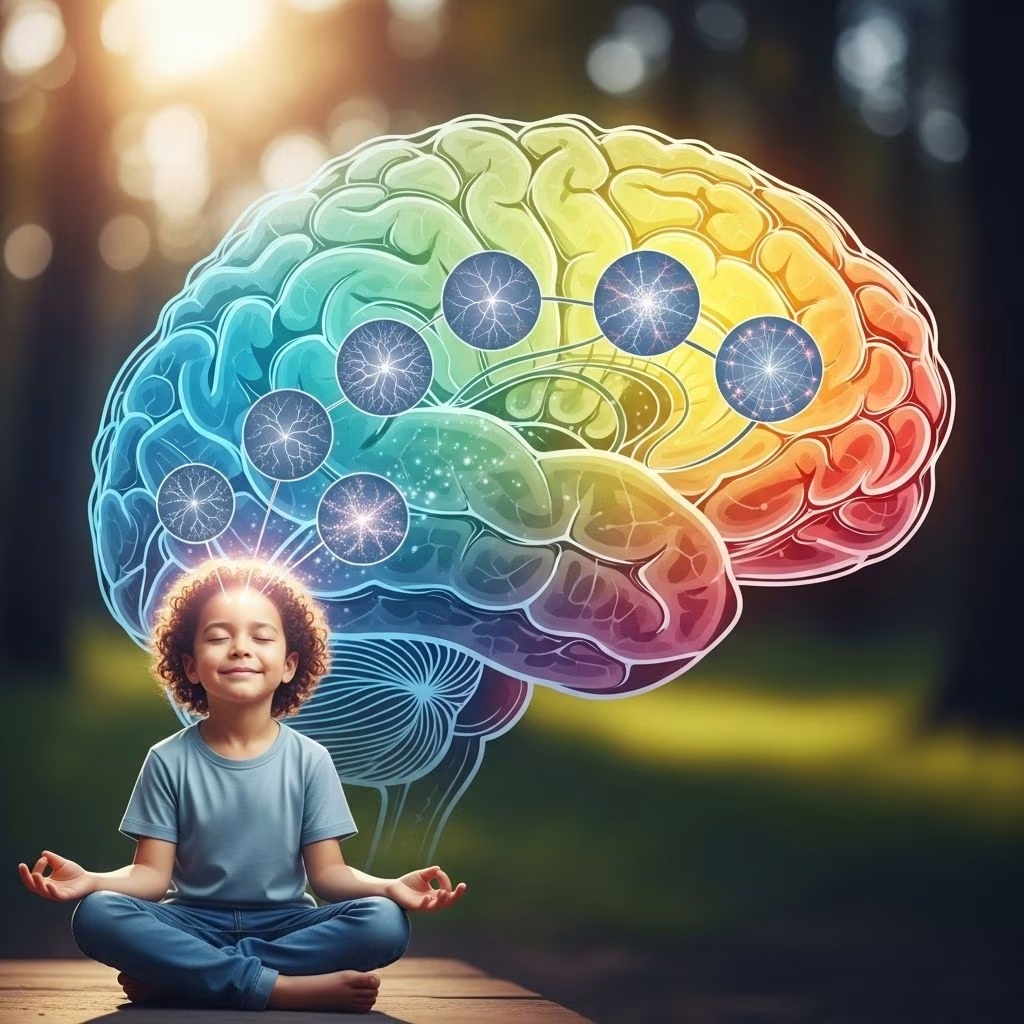
The fusion of neuroscience and meditation provides profound insight into how childhood experiences — including the practice of mindfulness — sculpt the developing brain. This article explores how children’s brains grow, why early years are critical, and how meditation techniques can nurture healthy neurological and emotional development.
Understanding Kids’ Brain Development
Childhood is a period of astonishing brain growth and change. From conception through adolescence, the brain rapidly forms its intricate structure, supporting the emergence of cognitive, social, and emotional abilities. This process is shaped by both genetic programming and environmental experiences, especially during the early years .
- At birth, the brain is about 25% the size of an adult’s but grows to 90% by age five .
- Each second, more than one million new neural connections form in the young brain .
- Brain development proceeds from the “back” (occipital lobe, vision) to the “front” (frontal lobe, higher cognitive functions) .
This extraordinary neurological proliferation means that every early-life experience — including nurturing, stress, play, and learning — has a tangible effect on brain architecture .
The Seven Stages of Brain Development in Childhood
Neuroscientists describe brain development as unfolding in seven broad stages. Each is crucial to a child’s cognitive, social, and emotional capabilities in later life :
| Stage | Description |
|---|---|
| Neurogenesis | Generation of new neurons, primarily in the embryo, establishing the brain’s cellular foundation. |
| Cell Migration | Neurons move to specialized locations, forming the basic brain architecture. |
| Cell Differentiation | Neurons and glia acquire their unique functions. |
| Cell Maturation | Neurons extend dendrites and axons, increasing connectivity. |
| Synaptogenesis | Formation of synaptic connections allowing communication between nerve cells. |
| Cell Death and Pruning | Elimination of unneeded neurons and synapses — experience shapes which connections are kept. |
| Myelogenesis | Formation of myelin sheath that insulates nerves, speeding up information transmission. |
This careful orchestration ensures the brain is wired to handle increasingly complex tasks, from movement to emotional control and advanced reasoning .
Neuroplasticity and Environmental Impact
The concept of neuroplasticity describes the brain’s lifelong capacity to remodel itself based on experiences, learning, and repeated activities. Neuroplasticity is greatest in early childhood, allowing new skills and emotional patterns to be acquired rapidly .
- Positive stimulation fosters robust neural circuits, enhancing learning, memory, and adaptation.
- Adverse experiences (trauma, neglect) can weaken or misdirect neural development, sometimes resulting in lifelong challenges.
- Consistent nurturing and enriching experiences are essential for healthy emotional and cognitive outcomes.
The brain’s plasticity gradually declines over time, making early intervention and support during childhood especially vital .
Why the Early Years Matter Most
The period from birth to age five sets the groundwork for a child’s lifelong ability to learn, adapt, and form relationships . During this phase:
- Neural connections underlying language, problem-solving, emotional regulation, and social behavior are especially sensitive to experience.
- Skills and traits established in these years become much harder to alter later.
- Supportive caregiver relationships, positive social interaction, and diverse sensory experiences are critical.
Children’s brains are like sponges, ready to absorb and hardwire crucial skills when adults engage, play, read, and respond to them consistently .
Introduction to Meditation for Children
Meditation encompasses practices such as mindfulness, focused breathing, and guided imagery that cultivate intentional attention and emotional calm. Increasingly, these practices are being introduced in schools and homes to help children harness their attention, soothe stress, and build social-emotional skills.
- Meditation is adaptable for even very young children — no prior experience required.
- Practices can be as short as a few minutes and include breathing exercises, listening to sounds, or visualizing peaceful scenes.
- Consistent meditation positively impacts behavior, mood, and learning capacity.
How Meditation Changes the Child Brain
Scientific imaging and longitudinal studies show that meditation changes the structure and function of the developing brain. Key neurological transformations include:
- Reduced activity in the amygdala: Meditation calms the brain’s fear center, reducing anxiety and emotional reactivity.
- Strengthened prefrontal cortex: The brain area responsible for decision-making, impulse control, and attention becomes more active and connected.
- Improved connectivity: Meditation boosts connections between brain regions involved in awareness, empathy, and self-control.
By establishing new pathways through regular practice, children’s brains become better equipped to manage distractions, cope with emotions, and build resilience.
Benefits of Meditation: A Neuroscientific Perspective
- Emotional regulation: Children learn to notice and manage feelings rather than acting impulsively.
- Improved focus and attention: Meditation enhances connectivity in the brain’s attention networks.
- Stress reduction: Regular practice lowers stress hormones and supports a quieter mind.
- Greater empathy and compassion: The brain’s social and emotional centers become more active and responsive.
- Better sleep: Practices like body scans and breathing exercises foster relaxation and calm before bedtime.
For children with challenges such as ADHD, anxiety, or social-emotional difficulties, meditation can be a supportive, non-pharmacological tool for improved self-regulation and learning outcomes.
Best Practices for Parents and Educators
Introducing meditation and mindfulness requires sensitivity to each child’s developmental stage and background. Key recommendations include:
- Start with short, playful sessions — for young children, even 1-2 minutes at a time can be effective.
- Use simple language and concrete examples (“Let’s take three slow dragon breaths!”).
- Make meditation a regular, predictable part of the day (e.g., after lunch or before bedtime).
- Model mindful behavior — children learn self-regulation from observing adults.
- Avoid pressuring participation; instead, offer meditation as a fun exploration of feelings and senses.
Teachers can integrate mindfulness into class transitions, story time, or calming routines, while parents can use similar approaches at home.
Practical Meditation Exercises for Kids
Here are some age-appropriate meditation activities that harness neuroplasticity and support brain growth:
- Belly Breathing: Lie down and place a stuffed animal on the belly. Watch it rise and fall while taking slow breaths.
- Mindful Listening: Close eyes and notice all the sounds in the room or outside for 30 seconds. Share what was heard.
- Body Scan: Gently focus attention on different parts of the body, noticing sensations or any tension.
- Gratitude Jar: Write or draw something you’re thankful for each day and add to a jar. Discuss feelings together.
- Guided Imagery: Imagine floating down a peaceful river or walking through a magical forest. Describe the sights, sounds, smells, and feelings.
These activities not only calm children but also reinforce neural growth in regions responsible for self-awareness and emotional control.
Frequently Asked Questions
Q: At what age can children start meditating?
A: Even toddlers can participate in short mindfulness or breathing activities. Tailor activities to match attention spans and developmental stage.
Q: Will meditation improve my child’s school performance?
A: Meditation supports brain processes crucial for attention, working memory, and self-regulation, helping children engage better with learning tasks.
Q: Is meditation safe for all children?
A: Meditation is generally safe for all ages and backgrounds. However, some children with severe trauma or anxiety may benefit from professional guidance to ensure activities feel safe and supportive.
Q: How often should kids meditate to experience benefits?
A: Consistency matters. Even 3–5 minutes a day practiced regularly can significantly strengthen capacity for calm, focus, and resilience.
Conclusion
The intersection of childhood neuroscience and meditation reveals a powerful opportunity: by nurturing children’s brains through mindful practices during their most sensitive period of growth, we can equip them with lifelong strengths in learning, emotional well-being, and resilience.
As research continues to unravel the neurological underpinnings of meditation’s effects on developing brains, families and educators can confidently harness these tools to foster healthier, happier children ready to thrive in a complex world.
References
- https://www.luriechildrens.org/en/blog/early-childhood-brain-development-and-health/
- https://www.ncbi.nlm.nih.gov/books/NBK225562/
- https://www.neurocenternj.com/blog/what-are-the-7-stages-of-brain-development/
- https://theaimgroup.co.uk/blog/what-is-neuroscience-in-the-early-years
- https://www.firstthingsfirst.org/early-childhood-matters/brain-development/
- https://developingchild.harvard.edu/key-concept/brain-architecture/
- http://faculty.washington.edu/chudler/dev.html
- https://www.mentallyhealthyschools.org.uk/getting-started/neuroscience-and-brain-development/
- https://www.zerotothree.org/why-0-3/


