


Introduction
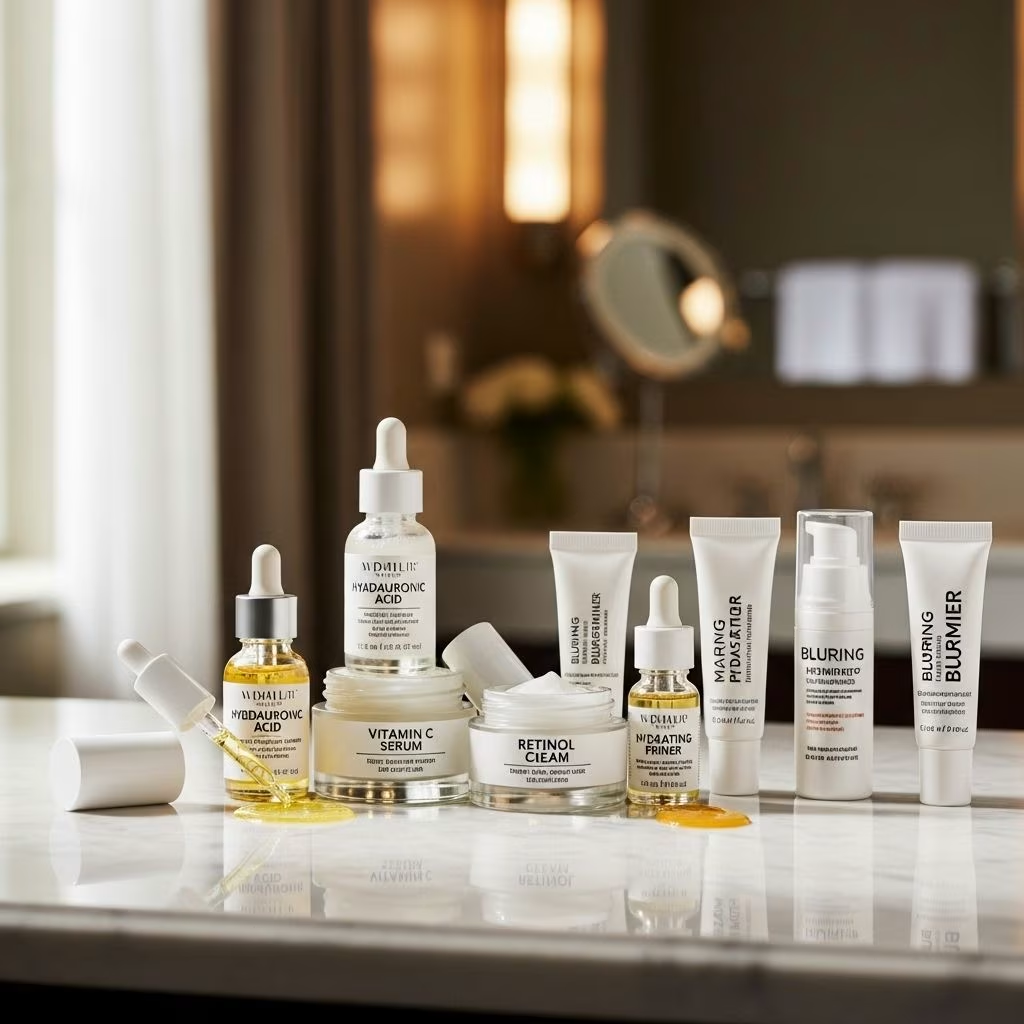
The fusion of skincare actives with makeup primers has revolutionized modern beauty routines, presenting both tremendous benefits and unique challenges. As consumers seek skin health alongside flawless makeup, understanding how active ingredients interact with primers is crucial. This article synthesizes the latest research, dermatological guidance, and expert opinions to help you navigate this complex topic and achieve optimal results for your skin and makeup.
What Are Active Ingredients?
Active ingredients in skincare refer to compounds scientifically shown to address specific skin concerns. They deliver targeted benefits—such as exfoliation, brightening, or anti-aging—and include:
- AHAs (Alpha Hydroxy Acids): glycolic and lactic acid; exfoliate surface layers.
- BHAs (Beta Hydroxy Acids): salicylic acid; penetrate pores and remove oil.
- Retinol & Retinoids: increase cell turnover, promote collagen.
- Vitamin C: antioxidant, brightens skin, protects against UV damage.
- Niacinamide: anti-inflammatory, regulates oil, minimizes pores.
- Hyaluronic Acid: hydrates and plumps skin.
- Benzoyl peroxide: treats acne by killing bacteria.
- Others: peptides, alpha-arbutin, licorice extract, kojic acid, resveratrol.
When included in skincare routines, these actives dramatically improve skin’s texture, tone, and resilience. However, their power also means they can interact—and sometimes conflict—with both other actives and makeup ingredients.
What Are Makeup Primers?
Makeup primers are preparatory products applied after skincare and before foundation. Their main roles are:
- Creating a smooth canvas by filling pores, fine lines, and minor imperfections.
- Improving the adherence, longevity, and evenness of makeup.
- Acting as a barrier between skin and makeup, reducing irritation risk.
Most primers are silicone-based (common ingredients: cyclomethicone, dimethicone), but they may also include oils, water, or actives like niacinamide, hyaluronic acid, or antioxidants. Some modern primers are formulated to deliver skincare benefits alongside their core cosmetic functions.
Key Interactions: Actives and Makeup Primers
Interactions between active ingredients and makeup primers can enhance results, cause adverse skin reactions, or negate product benefits. Critical considerations include:
- Physical and chemical compatibility: Some actives may destabilize formulas or reduce efficacy when layered inappropriately.
- Skin barrier integrity: Aggressive actives can compromise skin, making it more sensitive to cosmetic ingredients.
- Primer composition: Silicones, oils, and polymers may occlude or amplify actives depending on their placement in the routine.
| Active Ingredient | Interaction with Primer | Potential Outcome |
|---|---|---|
| Retinol | Barrier-forming primers may reduce irritation but occlude absorption if used too soon | Reduced efficacy or irritation |
| Vitamin C | Layering can destabilize formula or dilute actives | Reduced antioxidant protection |
| AHAs/BHAs | Can cause increased sensitivity to primers with fragrance or alcohol | Redness, peeling, irritation |
| Niacinamide | Stable with water-based primers | Enhanced calming effect |
| Hyaluronic Acid | Works well with hydrating primers | Added plumping and hydration |
In summary, layering actives and primers must be approached strategically to maximize benefits while ensuring safety and comfort.
Common Ingredient Combinations: Safe and Risky Matches
The synergy or conflict between actives and primers depends on specific ingredient pairings. Below, key combinations are outlined.
Safe Combinations
- Niacinamide + Hyaluronic Acid: Both are water-based and hydrate and soothe skin. They pair well with hydrating or oil-free primers, supporting a smooth complexion without irritation.
- Vitamin C + Silicones (in Primers): Vitamin C can function well under silicone-based primers, as the barrier effect helps preserve its antioxidant activity, provided it’s fully absorbed before primer application.
- Retinol + Hydrating, Non-comedogenic Primers: Hydrating primers can buffer the skin from potential irritation caused by retinol, but must be free from harsh ingredients.
- AHAs/BHAs + Non-Irritating Primers: Gentle, fragrance-free primers reduce the risk of further sensitizing skin after exfoliation.
Risky or Contraindicated Combinations
- Vitamin C + AHAs/BHAs: Vitamin C’s acidity clashes with exfoliating acids, destabilizing pH and risking irritation or reduced efficacy.
- Retinol + AHAs/BHAs: Both are potent actives; layering leads to over-exfoliation, barrier compromise, and possible severe irritation.
- Benzoyl Peroxide + Retinol/Tretinoin: Can cancel each other out or cause irritation. Use separately and avoid in the same routine.
- SPF + Primer/Foundation: Mixing SPF with primer or foundation dilutes its protective effect. SPF should be applied in its own dedicated layer.
- Multiple Potent Actives + Occlusive Primers: Layering several strong actives under a heavily occlusive primer (e.g., silicone/oil-rich) increases the chance of irritation and breakouts, especially in sensitive skin.
Correct Layering and Application Techniques
Proper order maximizes the efficiency of both active skincare and primer:
- Step 1: Cleanse skin thoroughly—remove all impurities without over-stripping the barrier.
- Step 2: Apply active treatments (serums, exfoliants, or retinoids)—allow enough time for complete absorption (generally 1–5 minutes, check product instructions).
- Step 3: Follow with hydrators (like hyaluronic acid or niacinamide)—these buffer skin and prepare a smooth surface.
- Step 4: Seal with moisturizer for enhanced hydration and improved active absorption.
- Step 5: Apply SPF (if daytime)—always as a separate layer; do not mix with primer or foundation.
- Step 6: Use makeup primer—choose one compatible with your skin’s actives and allow at least 60 seconds for absorption before applying foundation or other makeup.
- Step 7: Continue with foundation, concealer, and other makeup products.
This order helps each product work optimally, minimizes the risk of pilling (when makeup or skincare balls up on the skin), and reduces chances of cross-reaction or diminished efficacy.
Potential Issues and How to Prevent Them
- Irritation & Sensitization: Symptoms include redness, peeling, and stinging. Usually occur when combining potent actives, using occlusive primers over exfoliated or compromised skin, or layering incompatible ingredients.
- Product Pilling: Results when foundation interacts poorly with skincare ingredients like moisturizers or actives. Prevent by allowing adequate absorption time and avoiding over-layering.
- Decreased Efficacy: Mixing actives (e.g., Vitamin C and AHAs) can neutralize their effects, wasting both product and effort.
- Breakouts: Occlusive primers over strong actives may trap bacteria or oil, causing acne—especially in sensitive or oily skin.
- Sun Sensitivity: Both exfoliants (AHAs/BHAs) and retinol increase sun sensitivity; always use a standalone SPF and avoid layering with makeup products that dilute protection.
Address these issues by tailoring product choice and sequence to your skin’s needs and by patch-testing new combinations.
Formulation Insights: How Products Are Designed
Modern primers increasingly incorporate skincare actives, promising two-in-one benefits. These formulations are designed with:
- Stable emulsifiers to blend oil- and water-based ingredients.
- Preservatives to prevent microbial growth, which can interact with actives.
- Emollients and surfactants to provide texture and coverage while not interfering with active efficacy or skin integrity.
- Non-comedogenic agents to prevent pore-clogging and breakouts.
Understanding a product’s ingredient list (INCI) helps users select compatible pairings and avoid antagonistic ingredients.
Considerations by Skin Type
| Skin Type | Recommended Actives | Best Primer Formula | Key Concerns |
|---|---|---|---|
| Oily/Acne-Prone | Niacinamide, salicylic acid, low-strength retinol | Oil-free, mattifying, non-comedogenic | Prevent breakouts, avoid occlusion |
| Dry/Dehydrated | Hyaluronic acid, peptides, gentle AHAs | Hydrating, luminous finish | Minimize moisture loss |
| Sensitive | Low-strength actives, niacinamide, gentle antioxidants | Minimalist, fragrance-free, calming | Prevent irritation |
| Combination | Niacinamide, balanced exfoliation | Balanced, smoothing, hybrid formulas | Address different zones accordingly |
Tailoring skincare and primer choices to your skin type maximizes efficacy and comfort.
Expert Tips for Optimizing Makeup and Skincare
- Patch test new actives and primers to prevent unexpected reactions.
- Allow sufficient time (at least 60 seconds) between the application of skincare actives and primer.
- Do not mix SPF with primer or foundation; always apply sunscreen separately for full protection.
- Alternate potent actives (like retinol and AHAs/BHAs) on different days.
- Choose non-comedogenic and fragrance-free formulas if you are sensitive or acne-prone.
- Review ingredient lists for potential conflicts (e.g., multiple exfoliants, actives at conflicting pH ranges).
- Consult a dermatologist when unsure about complex routines, especially when introducing multiple new actives.
- Monitor skin response to new combinations; adjust frequency or switch products if irritation occurs.
Frequently Asked Questions (FAQs)
Q: Can I use a primer with active skincare ingredients?
A: Yes, but make sure the actives and primer ingredients are compatible. Allow skincare to absorb fully before applying primer, and avoid layering incompatible actives directly beneath occlusive primers.
Q: Will mixing SPF with makeup primer reduce protection?
A: Yes. Sunscreen should always be applied in a dedicated layer, not mixed with primer or foundation, to ensure full coverage and efficacy.
Q: How do I prevent makeup pilling on top of actives?
A: Use lightweight, compatible skincare formulas, allow adequate absorption time, and choose primers suited to your skin type and foundation formula.
Q: Are multitasking primers with actives effective?
A: Many are designed to combine benefits safely. However, effectiveness depends on concentration, formulation stability, and proper application. Patch-test first and evaluate results.
Q: Should actives be used every day under makeup?
A: Most potent actives (e.g., retinol, AHAs/BHAs) are best used a few times a week or on alternate days. Daily use of milder actives (e.g., hyaluronic acid, niacinamide) is generally safe when paired with compatible primers.
Final Thoughts
Actives and makeup primers can work synergistically for both healthy skin and beautiful makeup, but their successful combination depends on understanding ingredient compatibility, optimal layering, and skin type considerations. With guidance, careful product selection, and a thoughtful routine, you can enjoy the best of science and artistry in your beauty regimen.
References
- https://sublimelife.in/blogs/sublime-stories/skincare-ingredients-can-be-used-together-inci-to-be-avoided-together
- https://skincarejunkie.com/blogs/news/5-active-skincare-ingredient-interactions-you-need-to-know-about
- https://hudabeauty.com/us/en_US/blog-active-ingredients-guide-70823.html
- https://www.poison.org/articles/cosmetics-primers-foundations-cream-based-makeup
- https://www.curaloe.com/blogs/everyday-aloe-vera-benefits/perfecting-your-look-the-correct-order-of-skincare-and-makeup-products
- https://eightsaintsskincare.com/blogs/page-eight/how-to-combine-makeup-and-skincare-products
- https://www.skincare.com/expert-advice/all-expert-advice/how-to-mix-foundation-and-skin-care
- https://www.typebeautyinc.com/blogs/blog/best-multi-tasking-makeup-concealers-and-primers
- https://www.100percentpure.com/blogs/feed/cosmetic-ingredients-that-shouldn-t-be-combined


