


Introduction
In today’s fast-paced world, stress is an unavoidable part of daily life. Chronic stress doesn’t just strain mental health; it also leaves its mark on the body, potentially impacting everything from cardiac health to skin condition. One innovative tool for tracking and managing stress—and, by extension, possibly supporting skin health—is the heart rate variability (HRV) monitor. These devices, often wearable, provide real-time feedback on the balance of the autonomic nervous system, which is a key indicator of stress resilience and recovery. This article explores how HRV monitors function, their role in stress management, their emerging connection to skin health, and practical ways to integrate them into daily wellness routines.
What is Heart Rate Variability (HRV)?
Heart Rate Variability (HRV) refers to the variation in the time intervals between successive heartbeats. Unlike a metronome, the human heart does not beat with clock-like regularity; instead, there are subtle variations. These variations are controlled by the autonomic nervous system (ANS), which consists of the sympathetic nervous system (SNS) and the parasympathetic nervous system (PNS). The SNS prepares the body for action (the “fight or flight” response), while the PNS promotes relaxation and recovery (“rest and digest”).
HRV is a non-invasive, powerful biomarker of autonomic nervous system function. A higher HRV generally reflects a healthy balance between the SNS and PNS, indicating that the body can adapt flexibly to internal and external stressors. Conversely, low HRV often signals an imbalance, typically with excessive sympathetic activation due to chronic stress, poor recovery, or underlying health issues.
HRV measurements can be influenced by:
- Age and sex
- Physical fitness
- Smoking and alcohol consumption
- Medications
- Chronic stress levels
HRV and Stress: The Science Explained
Stress triggers physiological changes that are immediately visible in HRV data. When the body perceives a threat, the SNS is activated, increasing heart rate and reducing variability between beats as the body prepares to respond. If stress becomes chronic, this imbalance persists, leading to sustained low HRV and increased risk for stress-related disorders.
Scientific studies consistently show that individuals with lower HRV are more susceptible to stress, anxiety, and related health issues, including chronic pain, insomnia, cardiovascular disease, and anxiety-related disorders. Monitoring HRV provides real-time feedback, enabling users to recognize and manage stress more effectively.
Conversely, relaxation techniques, mindfulness, physical exercise, and proper sleep can increase HRV, reflecting a stronger, more adaptive stress response. This makes HRV a valuable tool not just for identifying stress but also for guiding interventions to enhance resilience and overall well-being.
HRV Monitoring Devices and Wearables
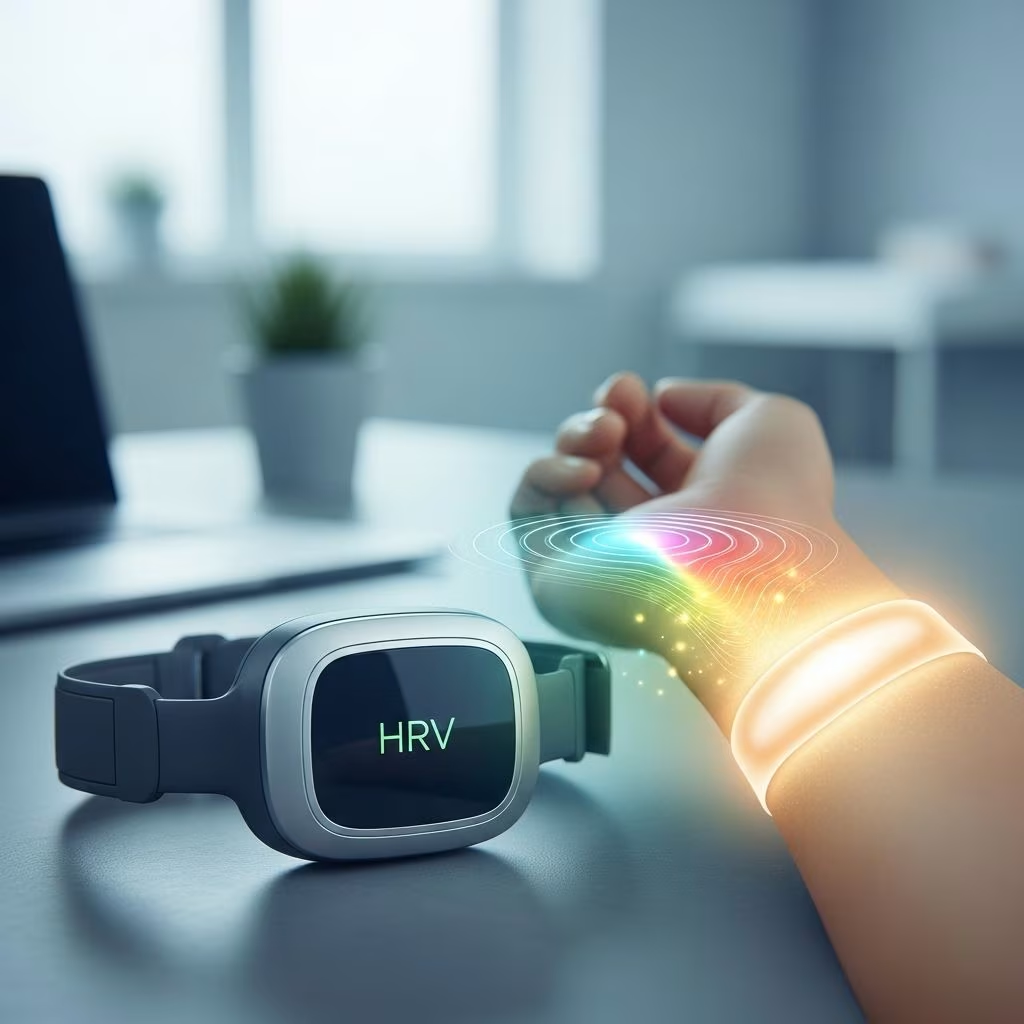
Advancements in wearable technology have made HRV monitoring accessible to the general public. Devices such as chest straps, finger sensors, and smartwatches (e.g., Oura Ring, Apple Watch) use optical sensors or electrodes to record heartbeats and calculate HRV in real time. Some devices, like the Apollo wearable, even deliver gentle vibrations designed to stimulate the PNS and promote relaxation, thereby increasing HRV.
These wearables offer several benefits:
- Continuous, longitudinal tracking of HRV trends
- Personalized feedback based on individual baselines
- Integration with mobile apps for data visualization and actionable insights
By providing real-time data, these devices help users understand their body’s response to daily activities, stressors, and interventions, making it easier to manage stress proactively.
Using HRV Monitors for Stress Management
HRV monitors empower users to take control of their stress responses through data-driven insights. Here’s how:
- Stress Awareness: HRV data provides clear, objective evidence of how events, activities, or thoughts affect autonomic balance, increasing awareness and prompting proactive stress management.
- Emotional Regulation: Tracking HRV helps users recognize patterns in emotional states, improving emotional regulation and resilience.
- Guided Relaxation: Devices can recommend or even deliver interventions, such as breathing exercises, mindfulness, or biofeedback, to restore autonomic balance during stressful moments.
- Sleep Optimization: Since HRV is closely linked to sleep quality, monitoring can guide changes in bedtime routines to enhance rest and recovery.
- Physical Activity Adjustment: Athletes and fitness enthusiasts use HRV to guide training intensity, ensuring optimal recovery and performance.
Exploring the Skin-Stress Connection
Chronic stress is not just a mental health concern; its effects cascade throughout the body—including the skin. The skin, being the body’s largest organ, is highly sensitive to changes in the autonomic, endocrine, and immune systems. Stress can exacerbate or trigger a range of skin conditions, including acne, eczema, psoriasis, and premature aging.
The physiological pathways include:
- Increased cortisol and inflammation, which can slow healing and worsen inflammatory skin disorders
- Reduced blood flow to the skin, impairing barrier function and hydration
- Altered immune responses, making the skin more vulnerable to infections and allergies
Autonomic imbalance (as reflected in low HRV) is a hallmark of chronic stress and may be a common denominator in stress-related skin issues.
Can HRV Monitoring Improve Skin Health?
While direct research linking HRV monitoring to improvements in skin health is still emerging, strong indirect evidence exists. By helping users identify and manage chronic stress, HRV monitors support autonomic balance, which may, in turn, help mitigate stress-related skin problems.
- Stress Reduction: Lowering chronic stress through HRV-guided interventions can reduce cortisol levels and inflammation, potentially improving skin conditions such as acne and eczema.
- Better Sleep: Improved HRV is associated with better sleep quality, which is critical for skin repair and regeneration.
- Enhanced Recovery: For athletes, HRV-guided training can prevent overtraining and associated immune suppression, reducing the risk of skin infections.
- Personalized Skincare: By identifying stress triggers and recovery patterns, individuals can tailor their skincare and stress management routines for optimal skin health.
While HRV monitors are not a substitute for dermatological care, they offer a valuable tool for holistic stress management—a crucial component of skin wellness.
HRV in Clinical and Everyday Settings
In clinical settings, HRV monitoring is used to assess the autonomic nervous system’s function in patients with cardiovascular diseases, diabetes, and inflammatory conditions. In rehabilitation, physical therapists use HRV to customize exercise regimens, avoiding overexertion and supporting pain management.
For everyday users, HRV monitoring is becoming a cornerstone of personal wellness technology. Wearables provide continuous, actionable feedback, empowering users to:
- Adjust exercise intensity and recovery periods
- Modify sleep habits for better quality rest
- Employ breathing and mindfulness techniques during stressful periods
- Track the effectiveness of lifestyle interventions on autonomic balance
Choosing the Right HRV Monitor
Selecting an HRV monitor depends on your goals, lifestyle, and budget. Here’s a comparative table of popular types:
| Type | Example Devices | Pros | Cons |
|---|---|---|---|
| Chest Strap | Polar H10, Garmin HRM-Pro | High accuracy, good for athletes | Less comfortable for all-day wear |
| Smartwatch | Apple Watch, Oura Ring, Whoop | Convenient, continuous tracking | Less accurate than chest straps, battery life varies |
| Finger Sensor | EmWave, Meru Health HRV device | Portable, affordable | Requires active user involvement |
When choosing a device, consider accuracy, comfort, battery life, data visualization, and app integration. For holistic stress management, look for devices that offer actionable feedback and, ideally, guided interventions.
Integrating HRV into Your Wellness Routine
Including HRV monitoring in your daily routine is straightforward and can yield significant benefits for stress and potentially skin health. Here are practical steps:
- Establish a Baseline: Track your HRV consistently for a week to establish a baseline in different contexts (morning, during exercise, after meals, before bed).
- Identify Stress Triggers: Notice correlations between HRV dips and stressful events, poor sleep, or unhealthy habits.
- Act on the Data: Adjust your lifestyle—increase mindfulness practice, improve sleep hygiene, modify exercise routines—and track changes in HRV.
- Combine with Other Metrics: Integrate HRV data with sleep tracking, activity logs, and skin health journals for a comprehensive wellness picture.
- Seek Professional Guidance: If you have chronic health or skin issues, share your HRV data with a healthcare provider, therapist, or dermatologist.
The Future of HRV Technology
HRV technology is rapidly evolving, with new wearable devices, AI-driven insights, and integration with broader wellness ecosystems. Future directions include:
- More accurate and comfortable sensors, possibly embedded in clothing or jewelry
- AI-driven stress and recovery coaching, personalized to each user’s physiological data
- Deeper integration with mental health and dermatological care, supporting a truly holistic approach to well-being
- Expanded research into the links between autonomic balance, stress, and skin health, potentially leading to new therapeutic applications
Frequently Asked Questions (FAQs)
Q: What is heart rate variability (HRV)?
A: HRV is the variation in time between successive heartbeats, reflecting the balance between your sympathetic (stress) and parasympathetic (rest) nervous systems. It serves as a biomarker for stress, recovery, and overall well-being.
Q: How does HRV relate to stress?
A: Lower HRV typically indicates higher stress and reduced resilience, as the body’s stress response becomes dominant. Higher HRV suggests better adaptability and recovery from stress.
Q: Can HRV monitoring improve skin health?
A: While direct research is limited, managing stress (as reflected by HRV) can reduce inflammation and improve skin conditions indirectly. Better autonomic balance supports skin repair and reduces stress-related flares of skin disorders.
Q: Which HRV device is best for daily use?
A: The best device depends on your needs. Chest straps offer high accuracy for athletes; smartwatches and rings provide convenience for continuous tracking; finger sensors are portable and affordable. Choose based on accuracy, comfort, and features.
Q: How do I use HRV data to manage stress?
A: Track your HRV consistently, identify patterns related to stress and recovery, and use this information to adjust your lifestyle—such as improving sleep, practicing mindfulness, and optimizing exercise—for better autonomic balance and well-being.
Q: Is HRV monitoring suitable for everyone?
A: HRV monitoring is generally safe for healthy adults. Those with heart conditions or other chronic illnesses should consult a healthcare provider before starting an HRV-based stress management program.
Q: Can you have good skin with poor HRV?
A: While stress is one factor among many influencing skin health, poor HRV (a marker of chronic stress and autonomic imbalance) is often associated with increased systemic inflammation, which can exacerbate skin issues. Managing stress through HRV monitoring may help, but genetics, environment, and skincare routines also play significant roles.
References
- https://apolloneuro.com/blogs/news/hrv-and-stress
- https://www.meruhealth.com/heart-rate-variablity
- https://www.parknorthpt.com/post/why-heart-rate-variability-hrv-matters-for-your-rehabilitation-journey
- https://pmc.ncbi.nlm.nih.gov/articles/PMC10742885/
- https://www.health.harvard.edu/blog/heart-rate-variability-new-way-track-well-2017112212789
- https://pmc.ncbi.nlm.nih.gov/articles/PMC5900369/
- https://my.clevelandclinic.org/health/symptoms/21773-heart-rate-variability-hrv
- https://bannerpeakhealth.com/heart-rate-variability-stress-management/


