


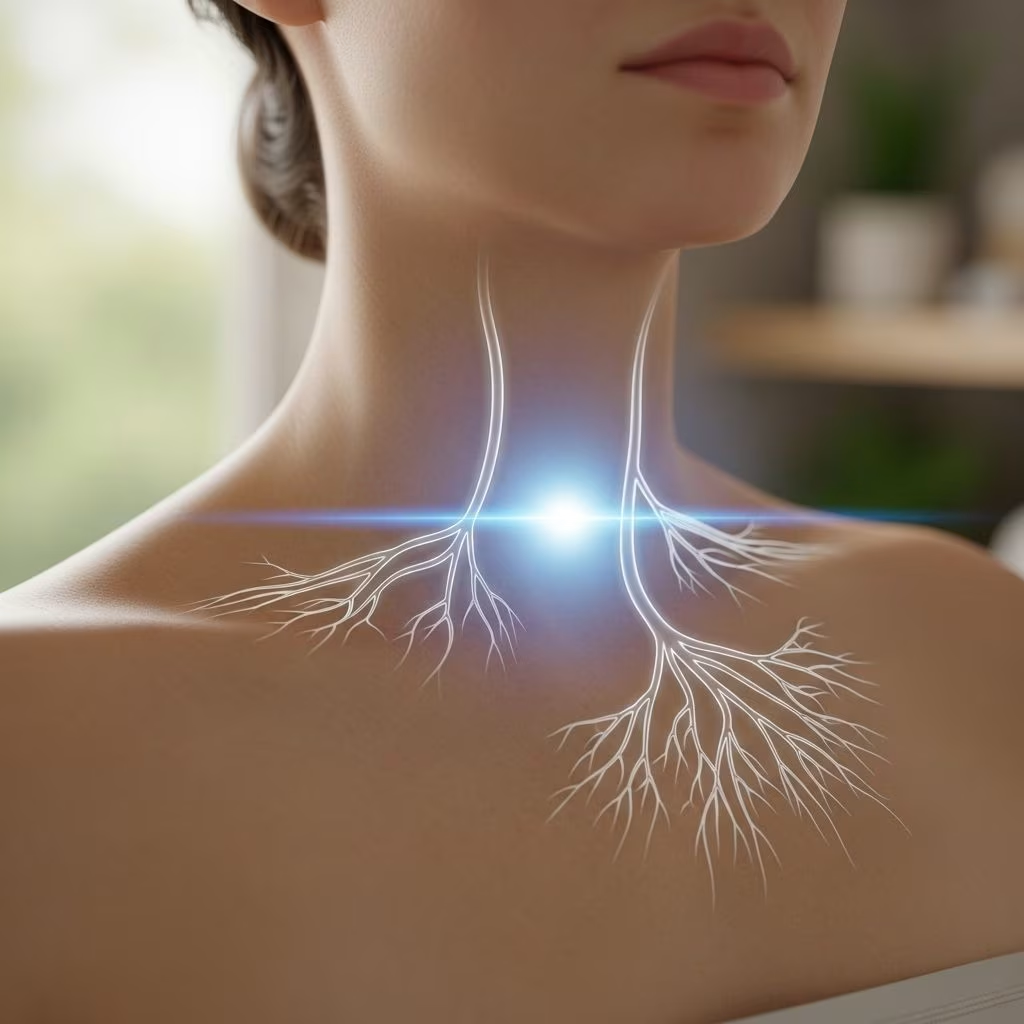
The vagus nerve, a crucial part of our nervous system, plays a significant role in managing various bodily functions, including inflammation and stress responses. Recently, its potential in treating dermatitis flares has garnered attention due to its anti-inflammatory properties. In this article, we delve into the vagus nerve’s role in calming dermatitis flares and explore the mechanisms behind this therapeutic approach.
Introduction to the Vagus Nerve
The vagus nerve is the longest cranial nerve and has a wide range of functions, including controlling the autonomic nervous system, which regulates heart rate, digestion, and respiratory rate. It also plays a key role in the body’s response to stress and inflammation. The cholinergic anti-inflammatory pathway, which involves the vagus nerve, is particularly significant in reducing inflammation by modulating cytokine production and promoting the release of anti-inflammatory mediators.
Vagus Nerve Stimulation (VNS) and Dermatitis
Dermatitis, a term used to describe a group of skin conditions that cause inflammation and irritation, can be challenging to treat, especially in severe cases. Recent studies suggest that VNS may offer a novel approach to managing dermatitis by reducing inflammation and itchiness. This is achieved through the modulation of the immune system and the enhancement of parasympathetic activity, which helps in balancing the body’s response to inflammation.
Mechanism of Vagus Nerve Stimulation
Cholinergic Anti-Inflammatory Pathway
The cholinergic anti-inflammatory pathway is a key mechanism through which VNS exerts its anti-inflammatory effects. This pathway involves the release of acetylcholine by the vagus nerve, which then acts on immune cells to reduce the production of pro-inflammatory cytokines. By decreasing these cytokines, VNS helps in reducing inflammation and alleviating symptoms associated with dermatitis.
Modulation of Cytokines
Cytokines are proteins that are crucial in the immune response. In inflammatory conditions like dermatitis, the balance of cytokines is disrupted, leading to excessive inflammation. VNS helps in modulating this balance by promoting anti-inflammatory cytokines while suppressing pro-inflammatory ones, thereby reducing inflammation and promoting healing.
Clinical Applications of VNS
VNS has been approved for treating several conditions, including epilepsy, migraines, and depression. Its potential in reducing inflammation makes it a promising candidate for treating inflammatory skin diseases like dermatitis. Both invasive (iVNS) and non-invasive (niVNS) methods are being explored, with niVNS offering a safer and more tolerable option for patients.
Other Neuromodulation Techniques for Dermatitis
Acupuncture and Dermatitis
Acupuncture, another form of neuromodulation, has been shown to enhance parasympathetic activity, reducing itch and inflammation in dermatitis. By improving the balance of the autonomic nervous system, acupuncture can help in managing symptoms of atopic dermatitis and other inflammatory skin conditions.
Challenges and Future Directions
While VNS holds promise for treating dermatitis, further research is needed to fully understand its effectiveness and optimal application. Challenges include the need for more clinical trials to establish its efficacy and safety in dermatology. Additionally, exploring the potential of non-invasive methods could make VNS more accessible to patients.
Frequently Asked Questions (FAQs)
Q: Is VNS safe for use in dermatitis?
A: VNS is generally considered safe for various conditions, but its application in dermatitis specifically requires further clinical trials to confirm safety and efficacy.
Q: How does VNS reduce inflammation in dermatitis?
A: VNS reduces inflammation by activating the cholinergic anti-inflammatory pathway, which decreases the production of pro-inflammatory cytokines and promotes anti-inflammatory responses.
Q: Can non-invasive VNS methods be effective for dermatitis?
A: Non-invasive VNS methods are being explored for their potential in treating dermatitis. These methods are generally safer and more tolerable than invasive options, but more research is needed to confirm their efficacy.
Conclusion
In conclusion, the vagus nerve offers a promising avenue for managing dermatitis flares through its anti-inflammatory effects. While VNS has shown potential in reducing inflammation and itchiness, further studies are necessary to fully explore its therapeutic potential in dermatology. As research continues to uncover the mechanisms and applications of VNS, it may become a valuable tool in treating inflammatory skin conditions.


