


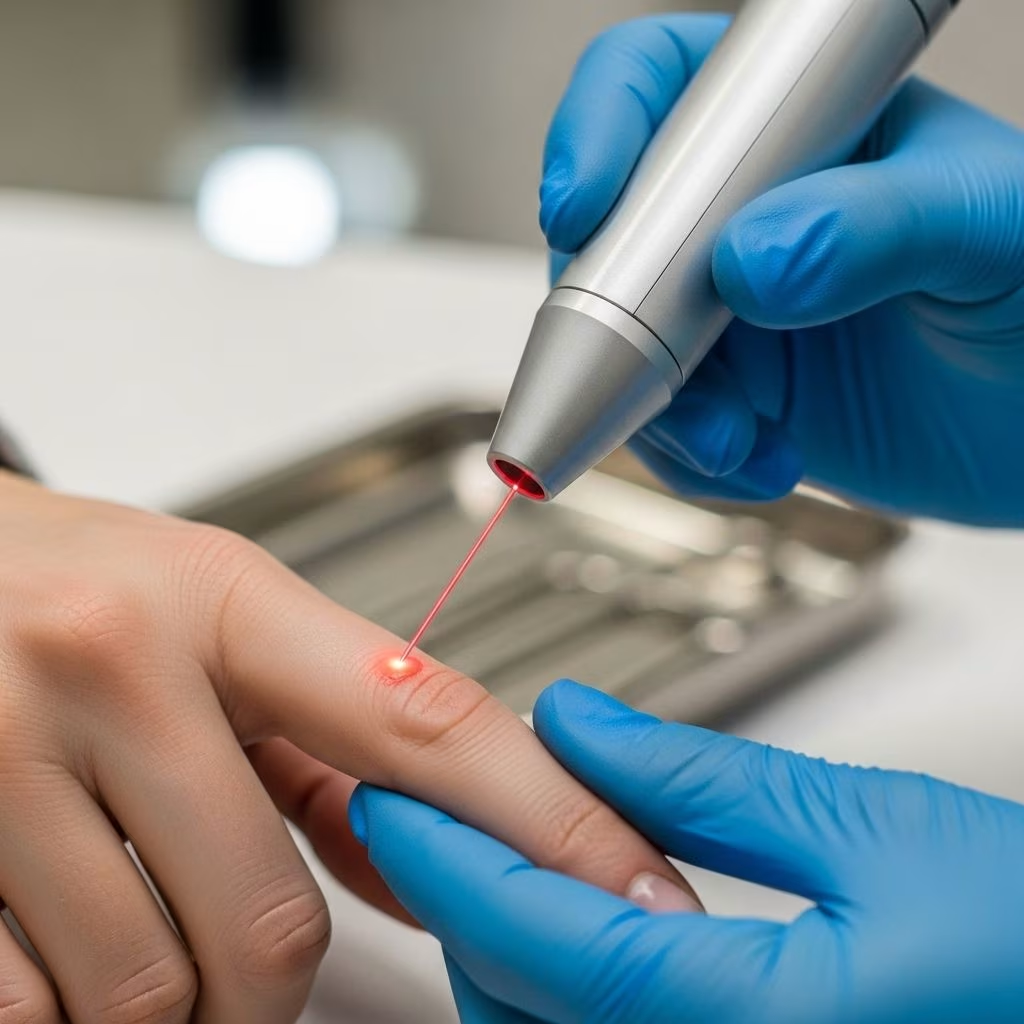
Laser Wart Removal: Efficacy and Recurrence
Laser wart removal has emerged as a preferred intervention for persistent or recalcitrant warts, offering higher clearance rates and lower recurrence compared to many conventional treatments. This article provides a comprehensive review of its efficacy, recurrence rates, technology, and comparisons to other therapies, serving both clinicians and patients seeking evidence-based guidance.
Overview of Cutaneous Warts and Treatment Challenges
Cutaneous warts, or verrucae, are benign skin proliferations caused by the human papillomavirus (HPV). They commonly occur on hands, feet (plantar warts), and other exposed body areas. While many warts resolve spontaneously, a considerable subset become recalcitrant, negatively impacting quality of life due to discomfort, cosmetic concerns, and risk of spread. Traditional treatments such as cryotherapy, chemical agents, or excision often present variable efficacy, inconsistent recurrence rates, and may provoke scarring or pain.
Laser Technologies for Wart Removal
Lasers have been adopted for wart removal due to their precision, ability to target blood vessels, and promote local tissue destruction with minimal collateral damage. The main laser types used include:
- Long-pulsed Nd:YAG laser (1064 nm): Penetrates deeply and targets dilated blood vessels feeding the wart.
- Pulsed dye laser (PDL, 585 nm): Targets capillaries within the wart, causing necrosis and immune-mediated clearance.
- CO2 and Er:YAG lasers: Ablative, vaporize wart tissue layer-by-layer.
- Diode lasers: Recently studied for speed and efficacy in plantar wart removal.
The mechanism involves absorption by red chromophores, rapid heating, and vessel rupture—disrupting nutrient flow and inducing immune elimination of HPV-infected cells.
Efficacy of Laser Wart Removal
Multiple prospective and randomized studies highlight the robust efficacy of laser-based wart removal, often surpassing standard therapies:
- The long-pulsed Nd:YAG laser achieved a 96% overall clearance rate in 348 patients with recalcitrant or untreated warts. First-treatment success for common warts reached 72.6%, requiring on average 1.5 sessions for full clearance.
- Pulsed dye lasers report cure rates from 48% up to 92%, depending on treatment protocol and wart type.
- For plantar warts, 1064 nm laser yielded cure rates of approximately 84%, with pain reduction techniques (cooling, anesthesia) enhancing tolerability.
- CO2 and Er:YAG lasers showed variable effectiveness, ranging from 46.2% to 100% in stubborn cases.
- Diode lasers demonstrated faster removal time compared to cryotherapy and are considered a promising noninvasive alternative.
Laser therapy is especially effective for non-resistant warts, with clearance rates reaching as high as 100% for superficial types. Resistant warts may require combined therapies for optimal outcomes.
Laser Efficacy in Context: Comparative Table
| Treatment Method | Average Clearance Rate | Recurrence Rate | Sessions Required |
|---|---|---|---|
| Nd:YAG Laser | Up to 96% | ~3-13% | Avg 1.5 |
| Pulsed Dye Laser | 48–92% | Up to 31% | 2–6 |
| CO2/Er:YAG Ablative Lasers | 46–100% | Variable (depends on follow-up) | 1–2 |
| Cryotherapy | 63–69% | Up to 30% | 2–6 |
| Salicylic Acid (Topical) | 75–80% | Up to 48% | Daily, weeks |
| Manual Surgery | 85% | Up to 30% | 1 |
Recurrence Rates After Laser Treatment
Low recurrence rates are a key advantage of laser wart removal:
- The Nd:YAG laser showed a recurrence rate of 3.3% during median follow-up of 2.24 months, suggesting durable clearance in the majority of cases . Longer follow-up studies are recommended to confirm sustained results.
- Pulsed dye laser therapy resulted in 69% of cleared patients remaining wart-free for up to 11 months.
- Overall, recurrence rates vary with wart type and protocol, between 6–13% following laser removal.
- Traditional methods—such as cryotherapy or manual excision—may see recurrence as high as 30%.
Comparison With Other Wart Treatments
Standard wart therapies include:
- Cryotherapy: Uses liquid nitrogen to freeze warts; effective but recurrence rates are high and may result in pain/scarring.
- Topical agents (salicylic acid, cantharidin, imiquimod): Variable efficacy, often lower than lasers.
- Manual surgical excision: Moderate success, but relatively high recurrence (up to 30%) and scarring.
Laser therapy stands out for higher clearance and lower recurrence, particularly for persistent and deep lesions. It also provides a sterile treatment field, minimizing infection risk.
Patient Selection and Indications
- Ideal Candidates: Individuals with resistant, recalcitrant, or multiple warts who failed conventional therapies.
- Contraindications: Active skin infections at treatment site, poorly controlled medical conditions, photosensitivity, pregnancy, or implanted electronic devices near the treated area.
- Special Populations: Children, immunocompromised individuals, and patients with diabetes may require tailored approaches.
Laser Wart Removal Procedure and Protocols
Laser procedures differ slightly based on technology used but typically include:
- Local preparation: Cleaning and, if needed, anesthesia or cooling to minimize pain.
- Laser parameters: Nd:YAG laser typically set at 5mm spot size, 20 msec pulse duration, 200 J/cm2 fluence for common warts, with 1–6 sessions spaced at 3–4 week intervals.
- Treatment: Laser is applied directly to the wart; purpura may develop post-procedure (resolves in days).
- Post-treatment care: Antiseptic cleaning and minimal dressing for healing; patients are advised to avoid trauma to treated area.
The number of required sessions varies: most warts clear after 1–2 treatments, but plantar and deep warts may need up to six. In these cases, success is further optimized by combining laser with other therapies.
Safety, Adverse Effects and Patient Experience
- Pain: Laser procedures can cause discomfort; topical anesthesia, ice application, or analgesics effectively mitigate this.
- Transient side effects: Redness, swelling, purpura (bruising), localized skin discoloration, and mild blistering are commonly reported but self-limited.
- Scarring and pigmentation: Less frequent than with surgical excision or cryotherapy; ablation lasers are more likely to cause scarring than vascular lasers.
Overall, laser wart removal is well-tolerated, yields a sterile healing field (lower infection risk), and empowers better cosmetic and functional outcomes.
Highlights from Clinical Studies
- Nd:YAG Laser Study: In 1-year prospective analysis of 369 patients (with 348 completing follow-up): 96% overall clearance and just 3.3% recurrence.
- Plantar Wart Laser Study: 84% cure rate with average 3.6 sessions; pain minimized with cooling techniques.
- Pulsed Dye Laser: Up to 92% clearance and 69% of subjects remained wart-free for an average of 11 months.
- CO2 and Er:YAG Lasers: Variable efficacy in highly stubborn cases, up to 100%.
Frequently Asked Questions (FAQs)
Q: Is laser wart removal painful?
A: Pain varies by patient and laser type. Cooling, anesthesia, or ice application can minimize discomfort during the procedure.
Q: How many treatments are usually needed?
A: Most warts clear after one or two sessions, but plantar or deep warts can require up to six sessions for complete resolution.
Q: Do warts come back frequently after laser removal?
A: Recurrence rates range between 3–13%, typically much lower than with cryotherapy or manual excision (up to 30%).
Q: Is there any downtime after laser wart removal?
A: Recovery is usually fast. Temporary redness, swelling, or bruising can occur but resolves in days. Most patients resume daily activities within 24–48 hours.
Q: Are there risks of scarring or pigmentation changes?
A: These risks are low with vascular lasers (Nd:YAG, PDL) and higher with ablative types (CO2, Er:YAG), but overall incidence is lower than with surgical removal.
Conclusion
Laser wart removal, especially with Nd:YAG and pulsed dye technologies, consistently demonstrates higher efficacy, shorter treatment courses, and lower recurrence rates compared to traditional destructive therapies. Its advantages include precision, minimal scarring, rapid recovery, and sterile procedures. Continued research and longer follow-up studies will further define its value, but laser therapy is an excellent choice for resistant, recalcitrant, or multiple cutaneous warts where other modalities have failed.
References
- https://pmc.ncbi.nlm.nih.gov/articles/PMC2752774/
- https://pmc.ncbi.nlm.nih.gov/articles/PMC8775824/
- https://bhskin.com/blog/laser-wart-removal-blast-away-hpv-painlessly-and-effectively/
- https://onlinelibrary.wiley.com/doi/full/10.1155/dth/7793571
- https://www.alpinefoot.com/library/laser-wart-removal-safety-and-effectiveness.cfm
- https://onlinelibrary.wiley.com/doi/full/10.1155/dth/1890940
- https://www.aafp.org/pubs/afp/issues/2005/0815/p647.html
- https://vivo.weill.cornell.edu/display/pubid10469076
- https://www1.racgp.org.au/ajgp/2022/october/destructive-therapies-for-cutaneous-warts


