


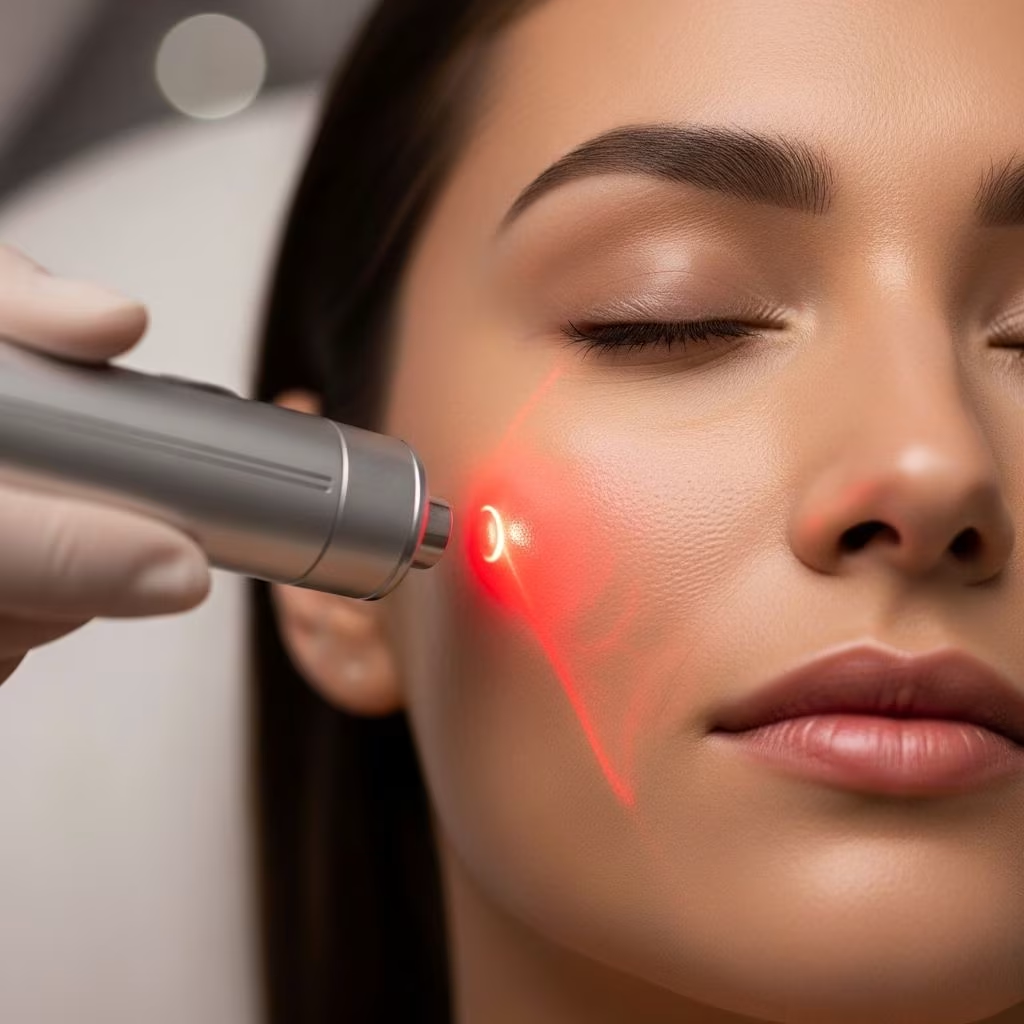
Low-Level Laser Therapy (LLLT), also known as photobiomodulation or red light therapy, has emerged as a revolutionary non-invasive technique to stimulate collagen production, enhance skin texture, and accelerate tissue healing. With mounting clinical and laboratory evidence, LLLT is increasingly adopted in dermatological clinics, orthopedic rehabilitation, and aesthetic medicine. This in-depth article unveils the scientific mechanisms, practical benefits, clinical protocols, and frequently asked questions around the use of LLLT for collagen boost and skin rejuvenation.
Introduction to Low-Level Laser Therapy (LLLT)
Low-Level Laser Therapy (LLLT) refers to the use of visible or near-infrared light for therapeutic biostimulation, delivered at relatively low power densities that do not cause thermal injury. Since its advent in the mid-20th century, LLLT has gained recognition for treating soft-tissue conditions, managing pain, accelerating wound healing, and more recently, as a tool for skin rejuvenation and collagen stimulation.
- Wavelengths Used: Typically red (600–700 nm) and near-infrared (780–1100 nm) light
- Intensity: Low-level energy, insufficient to generate heat or tissue ablation
- Treated Conditions: Aging skin, scars, joint pain, tendon injuries, and melasma, among others
The Science of Collagen Production
Collagen is the most abundant protein in the human body, vital for providing structure, strength, and elasticity to the skin, tendons, ligaments, and connective tissues. Over time, age and environmental factors like UV exposure and oxidative stress trigger a decline in collagen synthesis, manifesting as wrinkles, diminished elasticity, and thinning of skin.
- Types of Collagen: Type I (skin, tendon, bone), Type II (cartilage), and Type III (skin, muscle)
- Role in Skin: Maintains firmness, smooths fine lines, and helps repair cellular damage
- Natural Decline: Collagen production slows down by approximately 1% per year after early adulthood
How LLLT Stimulates Collagen Synthesis
LLLT initiates a cascade of physiological responses at the cellular and molecular level, leading to enhanced collagen synthesis and fibroblast proliferation. Scientific investigations highlight several key mechanisms through which LLLT amplifies collagen content in skin and other connective tissues.
- Activation of Fibroblasts: Fibroblasts are the primary cells responsible for producing collagen and elastin. LLLT stimulates their metabolic activity, resulting in increased collagen synthesis.
- Modulation of Growth Factors: LLLT enhances the release of growth factors such as TGF-β (Transforming Growth Factor Beta), which regulates collagen deposition and wound healing.
- Induction of Matrix Remodeling: By creating controlled micro-injuries or subclinical stimulation, LLLT triggers the skin’s natural repair response, leading to the removal of damaged collagen and replacement with new fibers.
- Enzyme Regulation: LLLT influences the activity of metalloproteinases (MMPs) and their inhibitors (TIMPs), balancing collagen synthesis and breakdown, thus supporting net collagen gain.
Mechanisms of Action in LLLT
The core biostimulatory effect of LLLT originates from its interaction with cytochrome c oxidase, a mitochondrial respiratory chain enzyme. This interaction augments adenosine triphosphate (ATP) production, leading to downstream cellular effects crucial for collagen production and tissue repair.
- Photobiomodulation: Light energy is absorbed by chromophores within cells, notably cytochrome c oxidase, resulting in increased ATP and reactive oxygen species (in controlled amounts).
- Cell Proliferation: Boosted ATP levels spark increased fibroblast proliferation, which is fundamental to new collagen fiber production.
- Growth Factor Induction: LLLT upregulates TGF-β and other key growth factors known to stimulate extracellular matrix (ECM) remodeling and collagen assembly.
- Tissue Remodeling: The process not only increases collagen deposition but also orchestrates the alignment and maturation of new fibers, improving the biomechanical properties of skin and connective tissue.
Key Scientific and Clinical Evidence
A wealth of in vitro (lab-based) and clinical (human-based) studies substantiates the role of LLLT in boosting collagen synthesis and improving tissue quality.
Laboratory Studies
- Fibroblast Activity: LLLT at specific wavelengths (e.g., 850 nm) significantly increased fibroblast proliferation and collagen type I synthesis in cultured ligament cells.
- Optimal Dosage Effects: Low doses maximized fibroblast proliferation, while higher doses most effectively enhanced collagen production.
- Reduction in Collagen Degradation: LLLT positively regulates enzymes and inhibitors involved in the matrix breakdown, supporting net collagen gain.
Clinical Studies & Outcomes
- Skin Rejuvenation: Human studies report increased skin thickness, improved elasticity, and a reduction in wrinkles following courses of LLLT.
- Tendon and Ligament Healing: LLLT accelerates collagen maturation in tendon and ligament injuries, expediting the healing process and restoring mechanical strength.
- Scar Improvement: Enhanced remodeling of old and new scars has been observed, resulting in smoother and less visible marks.
- Melasma and Hyperpigmentation: Evidence indicates that LLLT improves pigmentation disorders by modulating dermal remodeling without significant side effects.
Benefits and Applications of LLLT for Collagen Boost
LLLT is distinguished by its safety, non-invasiveness, and versatility, making it a popular choice for both medical and cosmetic applications.
- Stimulates production of new collagen and elastin for firmer, more elastic skin
- Reduces the appearance of fine lines, wrinkles, and sagging
- Speeds up the healing of wounds, scars, and surgical incisions
- Improves the texture and tone of sun-damaged and aging skin
- Supports recovery from sports injuries by enhancing tissue regeneration
- Minimizes downtime by avoiding thermal injury or ablation
Safety Profile and Side Effects
LLLT is widely recognized for its high safety profile when administered by trained professionals or using certified home devices.
- Rare Side Effects: Mild redness, temporary swelling, or tingling may occur but typically resolves rapidly
- Avoid Direct Eye Exposure: Protective eyewear is essential, as laser energy can damage the retina
- Contraindications: LLLT may not be recommended for individuals with active malignancy, pregnancy (for certain regions), or those taking light-sensitizing medications
- No Thermal or Ablative Effects: LLLT does not cause burns or significant inflammation, differentiating it from ablative laser technologies
LLLT vs Other Collagen-Stimulating Modalities
| Modality | Mechanism | Downtime | Risks/Side Effects | Collagen Impact |
|---|---|---|---|---|
| Low-Level Laser Therapy (LLLT) | Non-thermal photobiomodulation, fibroblast stimulation | None to minimal | Tingling, mild redness | Inc. collagen synthesis, improved skin tone |
| Fractional/CO2 Lasers | Thermal injury, micro-ablation of skin | Several days | Burn, swelling, pigment changes | Strong collagen remodeling |
| Radiofrequency (RF) | Heat-based deep tissue remodeling | Minimal | Swelling, discomfort | Moderate collagen boost |
| Microneedling | Controlled micro-injuries and tissue repair | 1–2 days | Redness, risk of infection | Collagen induction via wound healing |
Treatment Protocols and Practical Considerations
- Session Frequency: Most protocols call for 1–3 sessions per week over 4–8 weeks
- Session Duration: Each treatment typically lasts 10–20 minutes, depending on the treated area and device used
- Device Parameters:
- Wavelength: 630–850 nm commonly used for skin and connective tissue therapy
- Energy Density: 1–5 J/cm² for skin procedures
- Maintenance: Periodic “booster” sessions help maintain collagen levels and treatment benefits
- Professional vs Home Devices: Clinic-based lasers are typically more powerful but home-use LED panels or wands provide convenient, regular exposure for skin maintenance
Individual response may vary, and consultation with a certified practitioner is advised before starting LLLT.
Frequently Asked Questions (FAQs)
Q: Is LLLT effective for all skin types?
A: Yes, LLLT is suitable for all Fitzpatrick skin types because it does not target melanin and avoids risks of hyperpigmentation common with some laser modalities.
Q: How soon are results visible after LLLT for collagen boost?
A: Visible improvements in skin firmness and texture may appear within a few weeks, with optimal effects typically observed after several months, as new collagen fibers mature.
Q: Can LLLT be combined with other skin treatments?
A: Yes, LLLT is often incorporated alongside microneedling, RF, or topical skincare for synergistic results, though therapy timing should be tailored by a professional.
Q: Are at-home LLLT devices as effective as professional treatments?
A: Home devices offer convenience for maintenance and minor improvements but typically deliver lower power, yielding more gradual changes compared to clinical-grade lasers.
Q: Is LLLT painful or uncomfortable?
A: LLLT is generally painless; patients may feel a gentle warmth or tingling sensation but no discomfort or downtime.
Conclusion
Low-Level Laser Therapy provides a science-backed, safe, and highly versatile method to stimulate collagen, rejuvenate skin, and accelerate tissue repair. Leveraging its non-invasive photobiomodulatory effects, LLLT offers distinct advantages over conventional ablative modalities, with minimal side effects and downtime. Ongoing advances in light technology and increasing clinical experience promise an expanded role for LLLT in both medical and aesthetic applications, making it an essential option for those seeking effective, long-lasting collagen enhancement.
References
- https://pubmed.ncbi.nlm.nih.gov/39207591/
- https://pmc.ncbi.nlm.nih.gov/articles/PMC4126803/
- https://www.frontiersin.org/journals/physiology/articles/10.3389/fphys.2022.808374/full
- https://dermatologyseattle.com/how-lasers-target-skin-layers-and-stimulate-collagen-production/
- https://med.stanford.edu/news/insights/2025/02/red-light-therapy-skin-hair-medical-clinics.html
- https://my.clevelandclinic.org/health/articles/22114-red-light-therapy
- https://onlinelibrary.wiley.com/doi/10.1111/jocd.16404
- https://lightforcemedical.com/wp-content/uploads/2020/05/MRH-2006-LLLT-rev.pdf


