


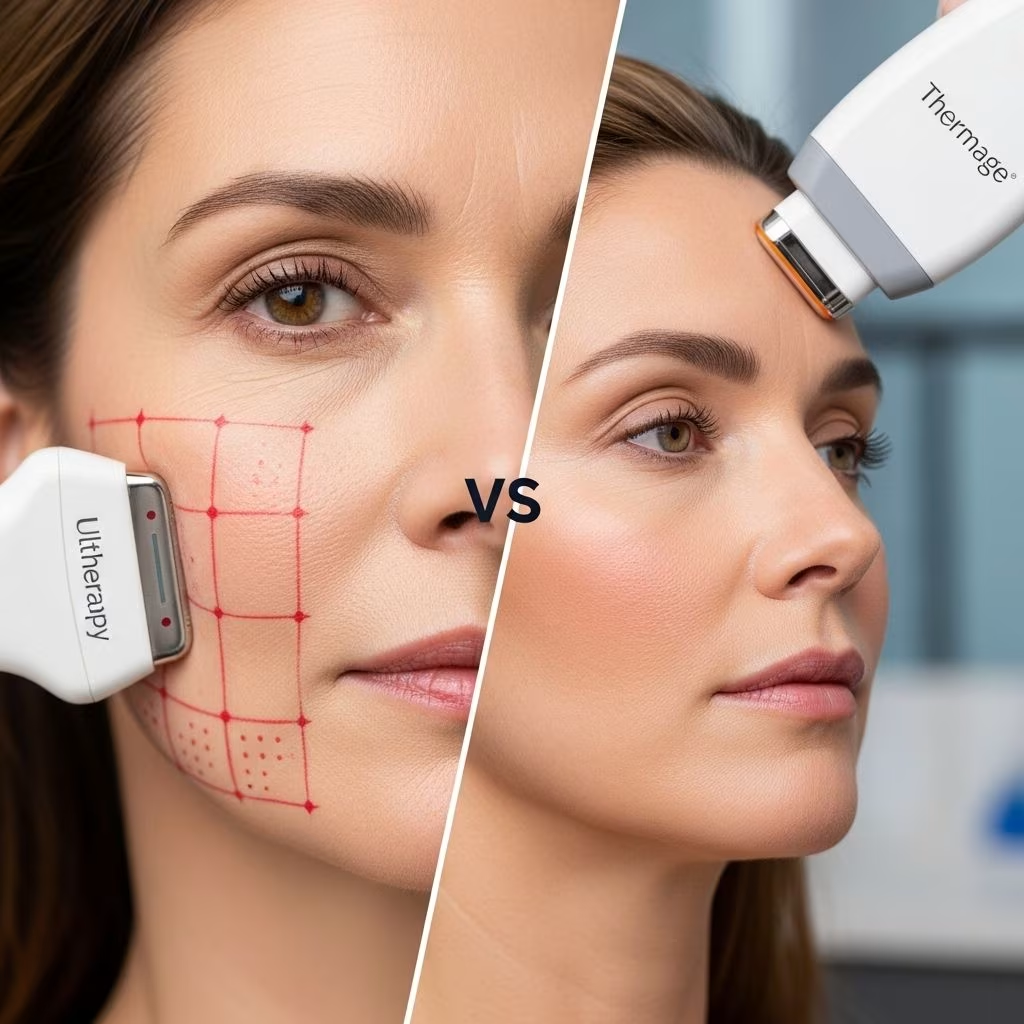
Introduction to Non-Invasive Skin Tightening
As we age, our skin naturally loses collagen and elastin, the essential proteins responsible for maintaining firmness, elasticity, and youthful appearance. This gradual depletion leads to visible signs of aging including sagging skin, wrinkles, fine lines, and loss of facial contours. While surgical facelifts have traditionally been the gold standard for addressing these concerns, modern aesthetic medicine has introduced revolutionary non-invasive alternatives that deliver impressive results without the risks, downtime, or recovery period associated with surgery.
Among the most advanced and effective non-surgical skin tightening treatments available today are Ultherapy and Thermage. Both procedures are FDA-approved and have gained widespread popularity for their ability to stimulate natural collagen production, resulting in tighter, smoother, and more youthful-looking skin. These innovative technologies harness different forms of energy to trigger the body’s natural healing response, encouraging the regeneration of collagen deep within the skin layers.
Understanding the fundamental differences between these two treatments is essential for anyone considering non-invasive skin rejuvenation. While both Ultherapy and Thermage aim to achieve similar aesthetic goals, they employ distinct technologies, target different skin depths, and are suited for varying concerns and treatment areas. This comprehensive guide will explore every aspect of these treatments to help you make an informed decision about which option best aligns with your aesthetic goals and skin concerns.
Understanding the Technologies
Thermage: Radiofrequency Energy
Thermage utilizes advanced radiofrequency (RF) energy to stimulate collagen production and tighten the skin. The treatment employs a sophisticated device with a smooth-tip handpiece that delivers controlled RF energy deep into the skin layers. When this energy penetrates the dermis, it instantly heats the tissue to temperatures ranging from 40 to 55 degrees Celsius. This precise heating triggers an immediate contraction of existing collagen fibers while simultaneously stimulating the production of new collagen over time.
The radiofrequency technology used in Thermage works in a three-dimensional manner, affecting the collagen-rich dermis layer comprehensively. What makes this treatment particularly appealing is its ability to deliver results similar to a deep chemical peel but without damaging the outer epidermis or requiring any recovery time. The RF energy also accelerates the regeneration of damaged skin cells, making Thermage exceptionally effective for revitalizing crepey, textured skin often described as having an orange peel appearance.
Ultherapy: Ultrasound Energy
Ultherapy represents a breakthrough in aesthetic medicine as it harnesses the power of micro-focused ultrasound (MFU-V) energy to achieve skin tightening and lifting effects. This technology uses highly targeted ultrasound waves that penetrate deep beneath the skin surface to reach the SMAS (Superficial Musculo-Aponeurotic System) layer, the same foundational layer that surgeons address during traditional facelift procedures.
The ultrasound energy creates concentrated thermal coagulation points within the targeted tissue, heating the area to temperatures between 60 and 70 degrees Celsius. This momentary but intense heatwave triggers a natural wound-healing response that stimulates the regeneration of both collagen and elastin proteins. One of the most remarkable features of Ultherapy is its incorporation of real-time ultrasound imaging, which allows practitioners to visualize the layers of tissue being treated. This 3D visualization capability ensures precise energy delivery to areas where collagen depletion is most significant, facilitating highly targeted and accurate treatment.
How Each Treatment Works
The Thermage Mechanism
Thermage penetrates the skin from the dermis layer, located just below the surface, down to the subcutaneous fat layer. While it doesn’t reach as deeply as Ultherapy, Thermage covers a wider treatment area and delivers a greater volume of energy in a single session. The radiofrequency energy heats the collagen fibers, causing them to contract immediately. This immediate tightening effect is complemented by a more gradual improvement as new collagen forms over the following months.
The treatment refreshes the skin at multiple levels simultaneously, working across three distinct layers: the epidermis, dermis, and hypodermis. This multi-layer approach makes Thermage particularly effective for addressing surface texture issues, fine lines, and overall skin laxity. The technology is designed to maintain optimal temperatures throughout the treatment while protecting the skin’s surface with a cooling mechanism that ensures patient comfort.
The Ultherapy Mechanism
Ultherapy takes a different approach by penetrating much deeper into the skin structure. The ultrasound energy bypasses the upper skin layers to reach the SMAS layer, which sits just above the muscle tissue and below the fat layer. This deep penetration is significant because the SMAS layer is the foundational support structure of the face that becomes progressively thinner with age, contributing to sagging and the formation of wrinkles.
By delivering focused ultrasound energy to this critical layer, Ultherapy stimulates robust collagen and elastin production at the deepest possible level without surgery. The treatment can target multiple skin layers simultaneously, creating thousands of precise thermal coagulation points that act as anchors for the lifting and tightening process. This depth of treatment enables Ultherapy to achieve more dramatic lifting effects, particularly in areas where significant sagging has occurred.
Key Differences Between Ultherapy and Thermage
| Feature | Thermage | Ultherapy |
|---|---|---|
| Energy Type | Radiofrequency (RF) | Ultrasound (MFU-V) |
| Penetration Depth | Dermis to subcutaneous fat | Deep to SMAS layer |
| Temperature Range | 40-55°C | 60-70°C |
| Primary Effect | Skin tightening and texture improvement | Lifting and contouring |
| Treatment Duration | 60-90 minutes | 30-60 minutes |
| Results Timeline | Full results in 6 months | Full results in 2-3 months |
| Longevity | 1-2 years | 1-2+ years |
| Pain Level | Mild to moderate | Moderate to significant |
Depth of Penetration
The most significant distinction between these treatments lies in how deeply they penetrate the skin structure. Thermage operates at a relatively shallower depth, working from the dermis down to the subcutaneous fat layer. This makes it excellent for addressing surface concerns and improving overall skin quality. Ultherapy, conversely, reaches the deepest non-surgical level possible by targeting the SMAS layer beneath the fat. This deeper penetration allows Ultherapy to achieve more substantial lifting effects, particularly for moderate to advanced skin laxity.
Energy Delivery Systems
The fundamental difference in energy types means each treatment interacts with tissue differently. Radiofrequency energy in Thermage heats a larger volume of tissue more uniformly, creating widespread collagen stimulation across treatment areas. Ultrasound energy in Ultherapy focuses on creating precise, concentrated points of thermal injury at specific depths, resulting in more targeted lifting action. This difference influences not only the results achieved but also the sensation experienced during treatment and the types of concerns each procedure addresses most effectively.
Treatment Areas and Applications
Thermage Treatment Zones
One of Thermage’s greatest advantages is its versatility across numerous body areas. The treatment is FDA-cleared for use on the face, around the eyes, neck, and various body regions. Thermage can effectively address concerns in the following areas:
Facial Areas: The upper face including the forehead and eyelids can be treated to reduce hooding and smooth horizontal lines. The lower face benefits from jawline definition and reduction of jowls. A specialized Thermage Eyes treatment targets delicate periorbital areas to address crow’s feet and under-eye laxity.
Body Areas: Beyond the face, Thermage excels at treating the abdomen for post-pregnancy or weight loss skin tightening, arms to eliminate bingo wings, décolletage to smooth chest wrinkles, buttocks for lifting effects, thighs to reduce cellulite appearance, knees to tighten crepey skin, and even hands to rejuvenate aging skin texture. This extensive range of treatable areas makes Thermage a comprehensive solution for overall body contouring and skin rejuvenation.
Ultherapy Treatment Zones
Ultherapy holds the distinction of being the only FDA-approved non-invasive procedure specifically for lifting the eyebrows, making it particularly valuable for patients concerned about drooping brows or heavy upper eyelids. The treatment is also FDA-cleared for the neck, chin, and chest (décolletage) areas. While Ultherapy treats fewer body areas than Thermage, its applications are highly effective for facial rejuvenation.
The treatment excels at addressing the brow area for subtle lifting, the full face for overall contouring and definition, the submental region (under the chin) for reducing the appearance of a double chin, the neck to eliminate turkey neck and improve jawline definition, and the chest to smooth décolletage lines. Ultherapy is particularly suited for fat-concentrated areas where deeper tissue lifting is needed to achieve noticeable improvements in facial contours.
What to Expect During Treatment
Pre-Treatment Preparation
Before undergoing either Ultherapy or Thermage, patients typically have a comprehensive consultation with their practitioner to assess skin condition, discuss aesthetic goals, and determine the most appropriate treatment plan. Both procedures require minimal preparation, with patients advised to arrive with clean skin free of makeup, lotions, or other topical products. Unlike surgical procedures, no fasting or extensive pre-treatment protocols are necessary.
The Thermage Experience
A typical Thermage session lasts between 60 and 90 minutes depending on the size and number of treatment areas. The procedure begins with the practitioner marking the treatment zones and applying a temporary transfer grid to guide energy delivery. Throughout the treatment, patients experience a heating sensation as the radiofrequency energy is delivered, followed immediately by a cooling pulse that protects the skin surface and enhances comfort.
Most patients describe the sensation as tolerable, with feelings of deep warming alternating with cooling relief. The technology includes built-in vibration and cooling mechanisms to minimize discomfort. No anesthesia is typically required, though some practitioners may offer topical numbing cream for particularly sensitive patients. The immediate tightening of collagen fibers means some patients notice subtle changes right after treatment, though the most significant results develop gradually over subsequent months.
The Ultherapy Experience
Ultherapy sessions are generally shorter, lasting 30 to 60 minutes for facial treatments. The procedure begins with the application of ultrasound gel to the treatment area, similar to a diagnostic ultrasound. The practitioner uses the Ultherapy device equipped with real-time imaging to visualize the layers beneath the skin, ensuring precise energy delivery to target depths.
During treatment, patients experience pulsing or tingling sensations as the ultrasound energy is delivered in brief bursts. Many patients report that Ultherapy is more uncomfortable than Thermage due to the deeper penetration and higher temperatures achieved at the SMAS level. The discomfort is typically described as sharp, prickling sensations that occur during energy delivery but subside immediately afterward. Some practitioners offer oral pain medication or nerve blocks for sensitive areas like the jawline and brow. Despite the discomfort, the treatment is well-tolerated by most patients, and no recovery time is needed afterward.
Results and Timeline
Thermage Results
Thermage produces gradual improvements that unfold over an extended period. Some patients notice an immediate subtle tightening effect due to the initial collagen contraction, but the most dramatic results develop as new collagen forms over the following months. The full benefits of Thermage typically become apparent around the six-month mark, with continued improvement possible for up to a year after treatment.
Results generally last between one and two years, with many patients maintaining their improvements even longer with proper skincare and sun protection. The longevity of results depends on individual factors including age, skin condition, lifestyle habits, and the natural aging process. Many patients choose to undergo maintenance treatments every one to two years to sustain their results and continue stimulating collagen production.
Ultherapy Results
Ultherapy results also develop progressively as the body produces new collagen in response to the ultrasound energy. Initial improvements may be visible within a few weeks, with the most significant changes occurring over two to three months post-treatment. The lifting and tightening effects continue to evolve as collagen remodeling takes place, with some patients noticing improvements for up to six months after their session.
The longevity of Ultherapy results typically ranges from one to two years, though many patients experience benefits lasting beyond two years, especially when combined with a comprehensive skincare regimen. Factors affecting duration include the patient’s age, degree of skin laxity, collagen production capacity, and adherence to sun protection and healthy lifestyle practices. Maintenance treatments are generally recommended every 12 to 18 months to optimize and prolong results.
Who Are the Ideal Candidates
Best Candidates for Thermage
Thermage is ideal for individuals seeking overall skin tightening and texture improvement across various body areas. The treatment works best for patients with mild to moderate skin laxity who want to address multiple concerns simultaneously. Ideal candidates include those looking to improve crepey skin texture, reduce the appearance of cellulite, tighten loose abdominal skin after pregnancy or weight loss, eliminate bingo wings on the upper arms, or achieve comprehensive facial tightening without dramatic lifting.
Thermage is particularly suitable for patients who prefer a more comfortable treatment experience with minimal discomfort. It’s also an excellent choice for those seeking body contouring benefits beyond facial rejuvenation, as the technology can safely treat numerous areas that Ultherapy cannot address. Patients with realistic expectations about gradual, natural-looking improvements tend to be most satisfied with Thermage outcomes.
Best Candidates for Ultherapy
Ultherapy is best suited for individuals with mild to moderate facial skin laxity who desire noticeable lifting effects, particularly in the brow, jawline, and neck areas. Ideal candidates are those concerned with sagging brows that create a tired or aged appearance, loss of definition along the jawline, early jowl formation, neck laxity or turkey neck, and décolletage wrinkles.
The treatment is particularly effective for patients whose primary concern is gravitational sagging rather than surface texture issues. Those seeking the most dramatic non-surgical lifting results available may prefer Ultherapy despite the more intense treatment sensation. Additionally, candidates should have sufficient fat layers, as Ultherapy works by penetrating through fat to reach the SMAS layer. Patients with very thin faces may experience unwanted fat loss in treated areas, making Thermage a better option in such cases.
Safety and Side Effects
Thermage Safety Profile
Thermage is generally considered a very safe procedure with minimal side effects and no downtime required. The most common side effects are mild and temporary, including slight redness that typically resolves within a few hours, minor swelling that subsides within a day or two, and temporary tenderness in treated areas. Rare side effects may include temporary bumps or contour irregularities that resolve on their own, temporary changes in skin sensation, and very rarely, minor burns if the device is not used properly.
The built-in cooling mechanism and advanced safety features of modern Thermage devices minimize the risk of complications. There is no damage to the skin surface, no open wounds, and no risk of scarring when performed by a qualified practitioner. Patients can immediately return to normal activities, including applying makeup and exercising, making Thermage an excellent option for those with busy schedules.
Ultherapy Safety Profile
Ultherapy is also FDA-approved and has an established safety record, though the deeper penetration and higher temperatures can lead to slightly more noticeable side effects. Common temporary effects include redness and swelling that may last a few hours to a couple of days, tenderness or sensitivity in treated areas for several days, tingling or numbness that typically resolves within weeks, and occasional bruising, particularly in more sensitive areas.
More significant but rare side effects can include temporary nerve effects such as numbness or weakness in treated areas, usually resolving within weeks to months, unintended fat loss in treated areas, particularly in patients with thin faces, and very rarely, welts or contour irregularities. The ultrasound imaging technology helps practitioners avoid sensitive structures and ensure safe energy delivery. Despite the potential for these side effects, serious complications are extremely rare when Ultherapy is performed by experienced, trained practitioners.
Choosing the Right Treatment for You
Consider Your Primary Concerns
The choice between Thermage and Ultherapy should be guided primarily by your specific aesthetic concerns and goals. If your main objective is improving overall skin texture, tightening crepey skin, reducing the appearance of cellulite, or addressing laxity on body areas beyond the face and neck, Thermage is likely the superior choice. Its ability to treat extensive areas with comfortable sessions makes it ideal for comprehensive skin rejuvenation.
Conversely, if you’re primarily concerned with lifting sagging facial features, defining the jawline, elevating drooping brows, or addressing moderate neck laxity, Ultherapy may deliver more dramatic and satisfying results. The deeper penetration and targeted lifting action make Ultherapy particularly effective for gravitational sagging and loss of facial contours.
Assess Your Pain Tolerance
Comfort during treatment is an important consideration. Thermage is generally more comfortable due to its integrated cooling system and shallower penetration depth. Patients typically describe the sensation as tolerable deep warming with minimal discomfort. Ultherapy, while not unbearable, can be significantly more uncomfortable due to the deeper tissue heating and higher temperatures achieved. The intensity varies by treatment area, with bony regions like the jawline and forehead being most sensitive.
If you have a low pain tolerance or anxiety about discomfort, Thermage may be preferable. However, if you’re willing to tolerate moderate discomfort for potentially more dramatic lifting results, Ultherapy remains an excellent option, especially with appropriate pain management strategies.
Timeline and Maintenance Considerations
Your schedule and expectations regarding result timing should also influence your decision. If you need results relatively quickly for an upcoming event, Ultherapy’s faster result timeline of two to three months may be advantageous compared to Thermage’s six-month development period. However, both treatments require patience as results develop gradually through natural collagen production.
Regarding maintenance, both treatments offer comparable longevity, with results lasting one to two years or longer. Your commitment to skincare, sun protection, and healthy lifestyle habits will significantly impact how long your results last, regardless of which treatment you choose.
Consultation with a Qualified Practitioner
The most important step in choosing between Ultherapy and Thermage is scheduling a consultation with an experienced practitioner who offers both treatments. A qualified provider can assess your skin condition, facial anatomy, degree of laxity, and aesthetic goals to recommend the most appropriate option. Some patients may even benefit from combining both treatments, using Ultherapy for deep lifting and Thermage for surface tightening and texture improvement.
During your consultation, discuss your concerns openly, ask about the practitioner’s experience with each technology, view before-and-after photos of previous patients with similar concerns, and ensure you have realistic expectations about what can be achieved with non-invasive treatments. Remember that while both Ultherapy and Thermage produce impressive results, they cannot replicate the dramatic changes possible with surgical intervention.
Frequently Asked Questions
Q: Are Ultherapy and Thermage painful?
A: Both treatments involve some discomfort, but the intensity varies. Thermage is generally more comfortable, producing sensations of deep warming followed by cooling relief. Ultherapy can be more uncomfortable due to deeper penetration, with patients experiencing sharp, prickling sensations during energy delivery. Pain management options including topical numbing, oral medication, or nerve blocks can be provided for sensitive patients.
Q: How long do results last from each treatment?
A: Both Ultherapy and Thermage results typically last between one and two years, with some patients experiencing benefits beyond two years. Longevity depends on individual factors including age, skin condition, lifestyle, and skincare maintenance. Periodic maintenance treatments every 12-24 months help sustain and optimize results.
Q: Can I combine Ultherapy and Thermage?
A: Yes, some practitioners recommend combining these treatments for comprehensive rejuvenation. Ultherapy can provide deep lifting at the SMAS level while Thermage addresses surface tightening and texture improvement. However, treatments are typically performed several months apart rather than simultaneously. Consult with your practitioner to determine if combination therapy is appropriate for your goals.
Q: Is there any downtime with these treatments?
A: Both Ultherapy and Thermage require no downtime. Patients can immediately resume normal activities, including work, exercise, and social engagements. Mild redness, swelling, or tenderness may occur but typically resolves within hours to a few days. Makeup can be applied immediately after treatment if desired.
Q: How many treatments are needed?
A: Most patients achieve their desired results with a single treatment session for either Ultherapy or Thermage. However, some individuals with advanced laxity may benefit from a second session. Maintenance treatments are recommended every 1-2 years to sustain results and continue stimulating collagen production.
Q: Which treatment is better for neck tightening?
A: Both treatments can effectively address neck concerns, but they target different issues. Ultherapy is FDA-approved for neck lifting and excels at addressing moderate to significant neck laxity and turkey neck by reaching the deep SMAS layer. Thermage is better suited for improving overall neck skin texture and tightening mild laxity. Your practitioner can assess your specific concerns and recommend the most appropriate option.
Q: Are these treatments safe for all skin types?
A: Yes, both Ultherapy and Thermage are safe for all skin types and tones. Unlike some laser treatments that can cause pigmentation issues in darker skin, these energy-based treatments do not target melanin and pose no risk of hyperpigmentation or hypopigmentation. However, a thorough consultation is essential to ensure you’re a good candidate.
Q: What is the cost difference between Ultherapy and Thermage?
A: Costs vary significantly based on treatment area, geographic location, and practitioner expertise. Generally, both treatments range from $2,000 to $5,000 or more for full-face treatment. Ultherapy is often slightly more expensive due to the advanced ultrasound imaging technology. Body treatments with Thermage may cost more due to larger treatment areas. Consult with providers in your area for specific pricing information.
References
- https://www.cosmeticskinclinic.com/blog/thermage-versus-ultherapy-the-difference/
- https://sianclinic.com/thermage-vs-ultherapy.html/
- https://www.healthline.com/health/thermage-vs-ultherapy
- https://www.michelegreenmd.com/ultherapy-thermage-skin-tightening
- https://www.icls.ca/blog/ultherapy-vs-thermage/
- https://www.mirrormirrorhouston.com/blog/ultherapy-vs-thermage/
- https://skintechnique.com/blog/thermage-vs-ultherapy
- https://www.westlakedermatology.com/blog/ultherapy-vs-thermage-which-is-better/
- https://jivaka.kr/blogs/blog/thermage-vs-ultherapy-how-to-choose-the-right-anti-aging-treatment-in-korea
- https://aestheticcenternj.com/ultherapy-vs-thermage-which-skin-tightening-treatment-is-best-for-you/


