


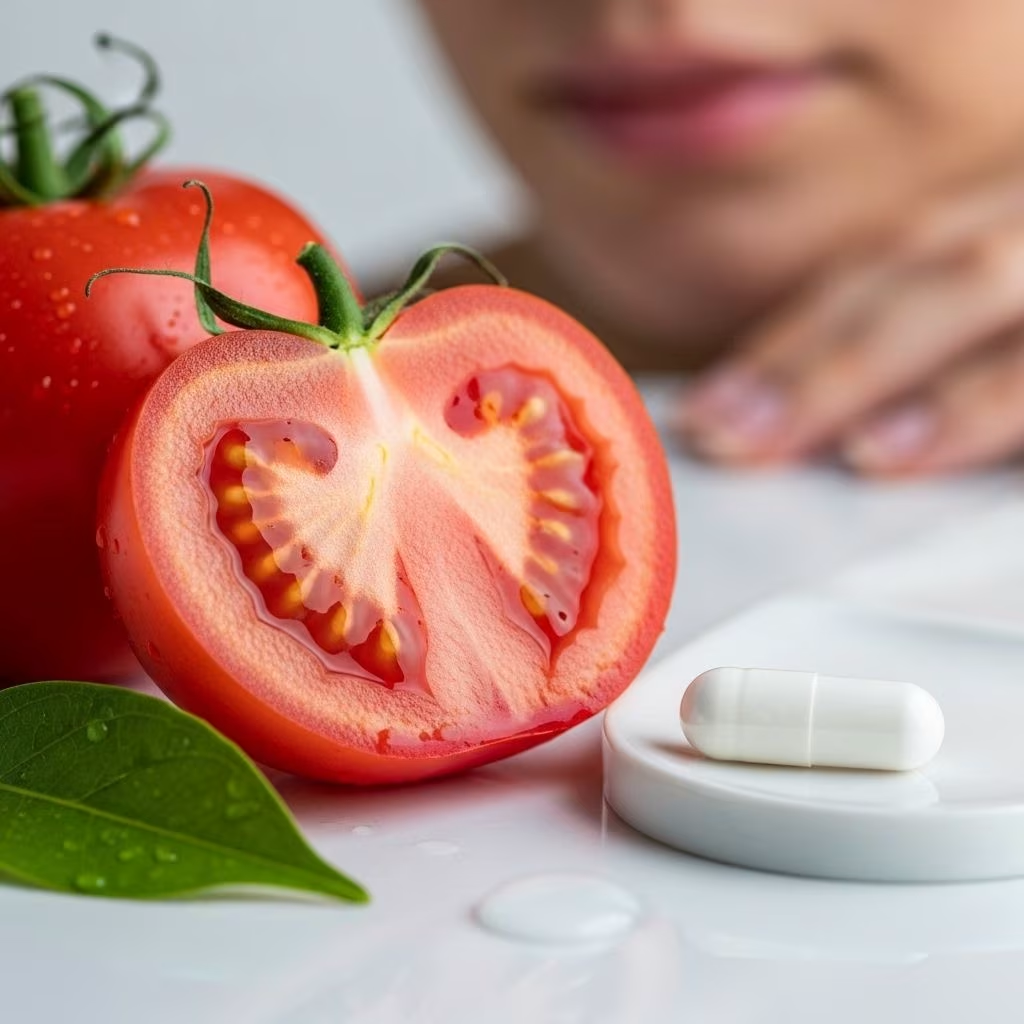
Lycopene Supplements for Skin Redness & Sensitivity: Science, Benefits, and Best Practices
Lycopene is a naturally occurring antioxidant found primarily in tomatoes and other red fruits. Its connection to skin health—especially in managing skin redness and sensitivity—has garnered increasing attention due to a growing body of scientific evidence. This comprehensive article explores the underlying science, potential benefits, optimal usage, safety, and practical guidance on lycopene supplements for those seeking clearer, calmer, and more resilient skin.
Introduction to Lycopene and Skin Health
Lycopene is a carotenoid responsible for the vivid red hue of tomatoes, watermelon, and pink grapefruit. In addition to its role as a plant pigment, lycopene stands out due to its potent antioxidant activity, which can help protect the skin from oxidative stress and inflammation, two primary triggers of skin redness and increased sensitivity.
The skin acts as the body’s first defense against environmental insults, physical damage, and harmful radiation. Disruptions here can manifest as visible redness (erythema), increased sensitivity, or chronic inflammatory states. By scavenging free radicals and stabilizing cellular processes, lycopene may reinforce skin defenses and reduce adverse reactions.
How Lycopene Affects Skin Redness & Sensitivity
1. Antioxidant Protection
Lycopene neutralizes reactive oxygen species (ROS), which are produced in high amounts in response to ultraviolet (UV) radiation and environmental stressors. Unchecked, ROS cause inflammation and can break down skin barrier function, leading to redness and sensitivity.
2. Anti-Inflammatory Effects
Lycopene downregulates pro-inflammatory mediators and cytokines, possibly reducing inflammatory skin reactions, erythema (redness), and the tendency for skin to react to irritants.
3. Strengthening the Skin Barrier
Clinical studies indicate lycopene supplementation can improve the skin’s barrier function, as shown by reduced transepidermal water loss (TEWL). A robust barrier retains moisture and keeps irritants out, decreasing both redness and sensitivity.
4. Photoprotection
By absorbing UV photons and mitigating the resultant inflammatory cascade, lycopene helps prevent UV-induced skin redness (sunburn) and photoaging.
Clinical Evidence and Research Findings
Studies Supporting Lycopene for Skin Health
- Reduction in Redness and Erythema: Peer-reviewed studies highlight lycopene’s ability to reduce erythema (skin redness), especially that induced by UV exposure. Anbualakan et al. and others confirm lycopene aids in preventing and treating sunburn and photoaging.
- Hydration, Smoothness, and Elasticity: A controlled trial using a tomato-based lycopene supplement (Lycoderm) demonstrated marked improvement in skin hydration, smoothness, and tightness after 4–16 weeks versus placebo. Self-assessment and dermatologist evaluations agreed on these benefits: after 16 weeks, over 80% of subjects on lycopene observed greater skin smoothness, and 90% reported increased hydration.
- Barrier Improvement: In a double-blind study, 12 weeks of lycopene supplementation significantly enhanced skin barrier function (as measured by lower TEWL) while also improving firmness, tonality, and appearance of pores and wrinkles.
- Presence in Skin Layers: Supplementing with 7 mg/day of lycopene for four weeks increased lycopene concentrations in both serum and the upper layers of the skin, supporting bioavailability and direct action at the skin’s surface.
Summary Table: Effects of Lycopene Supplementation on the Skin
| Observed Effect | Supporting Evidence | Duration | Relative Improvement |
|---|---|---|---|
| Reduction in Redness | Randomized trials, observational data | 4–12 weeks | Moderate to high (particularly with UV-induced redness) |
| Improved Skin Barrier (TEWL) | Double-blind clinical studies | 12 weeks | Statistically significant |
| Enhanced Hydration, Firmness, Smoothness | Clinical supplement studies | 4–16 weeks | Noticeable to high (80–90% of subjects noted improvement) |
| Reduction in Lines & Wrinkles | Expert and self-assessment | 12–16 weeks | Statistically and visually significant |
Conflicting Evidence and Limitations
- Not every clinical study has observed statistically significant results in all populations. For instance, a recent review found no clinically meaningful benefit in improving all facets of photoaging in healthy adults in some studies. This suggests individual factors, supplement formulation, or the presence of other nutrients may modulate outcomes.
- Most studies incorporate other antioxidants or skin-protective nutrients alongside lycopene, potentially confounding results. However, trials with isolated lycopene in otherwise matched groups still report significant improvements in key skin parameters.
Overall Conclusions from Research
- Lycopene supplementation has strong evidence supporting its role in improving skin barrier function, hydration, smoothness, and mitigating erythema/redness, especially from UV exposure.
- Outcomes are most reliably observed over a 4–16 week period of daily supplementation.
- Individual responses may vary—factors such as age, diet, baseline skin health, dosage, and presence of other skin nutrients affect results.
Dosage and Supplementation Guidelines
Lycopene is generally consumed at doses between 7 and 15 mg per day in skin health studies. Supplements typically come in the following forms:
- Capsules or softgels containing synthetic or natural (from tomatoes) lycopene
- Blends with other carotenoids or skin antioxidants (e.g., lutein, vitamin E, selenium, beta-carotene)
Recommended Course:
- Minimum intervention period: 4 weeks (with best results often seen at 12–16 weeks)
- Follow manufacturer instructions; many studies use 7 mg/day as a standard bioactive dose
- Combine with a diet rich in healthy fats to enhance absorption; lycopene is a fat-soluble phytonutrient
Synergistic Ingredients: Lycopene with Other Nutrients
Many skin supplement formulas include lycopene alongside other nutrients for amplified benefits:
- Vitamin E: Acts as a powerful antioxidant, often enhancing the free-radical scavenging capacity of lycopene.
- Selenium and Zinc: Support overall skin barrier health and repair mechanisms.
- Other Carotenoids (Lutein, Beta-Carotene): Offer additional protection against oxidative and photo-induced skin damage.
- Melatonin: Shown in studies to further protect against skin aging when paired with lycopene.
These combinations may produce more significant improvements in redness, texture, and hydration than lycopene alone, although well-controlled comparative trials are needed.
Safety Considerations and Potential Side Effects
Lycopene is widely considered safe at doses used in supplementation studies.
- No significant side effects reported at daily doses of 7–15 mg among healthy adults.
- Very high intakes (>75 mg/day) may cause a harmless orange discoloration of the skin (lycopenodermia).
- No evidence links lycopene supplementation to serious adverse outcomes in humans when used as directed.
- Pregnant or breastfeeding women, and those with specific medical conditions, should consult healthcare providers before starting supplementation.
Practical Tips for Choosing Lycopene Supplements
- Look for supplements sourced from non-GMO tomatoes or reputable synthetic preparations.
- Opt for brands with third-party testing for purity and potency.
- Prefer formulas combined with healthy fats to support absorption.
- Avoid excessive doses above 20 mg daily unless under medical supervision.
- For best results, adopt lycopene supplementation as part of a broader skincare and wellness routine (sunscreen, gentle cleansers, anti-inflammatory diet).
Frequently Asked Questions (FAQs)
Q: Can lycopene help with facial redness caused by rosacea?
A: While lycopene’s anti-inflammatory and antioxidant properties may benefit generally sensitive and red-prone skin, clinical evidence on rosacea specifically is limited. However, by improving skin barrier function and reducing inflammation, lycopene could support rosacea management as part of a wider, individualized approach.
Q: How quickly can I expect visible improvements in skin redness and sensitivity with lycopene supplements?
A: Clinical trials show initial improvements as early as 4 weeks, but most significant benefits are seen after 12–16 weeks of consistent supplementation.
Q: Are food sources of lycopene as effective as supplements?
A: Lycopene from whole foods like cooked tomatoes, watermelon, and pink grapefruit is beneficial. However, supplementation provides a more standardized dose and measurable improvements in serum and skin lycopene levels, whereas dietary intake can be variable. Combining both food and supplement sources may yield optimal results.
Q: Is lycopene suitable for all skin types?
A: Yes, studies indicate benefits across diverse ages and skin types, with no significant differences in serum or skin lycopene levels between age groups when taking supplementation. Always consult a dermatologist if you have specific skin conditions or concerns.
Q: Can lycopene completely replace sunscreen or topical treatments?
A: No, lycopene is best used as an adjunct to physical and topical sun protection. It can enhance skin resilience and recovery but does not provide complete UVA/UVB protection on its own.
References
For the purposes of this overview, references are based on peer-reviewed journals and clinical studies, including:
- Clinical trials on oral lycopene and skin appearance, hydration, and barrier function.
- Comprehensive reviews on antioxidants, skin health, and photodamage prevention.
- Expert evaluations and self-assessment studies addressing skin smoothness, firmness, and erythema mitigation.
References
- https://www.omicsonline.org/open-access/effect-of-oral-supplement-ldquolycopenerdquo-on-reducing-the-signs-of-skin-ageing-111745.html
- https://onlinelibrary.wiley.com/doi/10.1111/jocd.15650
- https://pmc.ncbi.nlm.nih.gov/articles/PMC6475749/
- https://pmc.ncbi.nlm.nih.gov/articles/PMC11179732/
- https://www.dermatoljournal.com/articles/skin-health-properties-of-lycopene-and-melatonin.html
- https://www.frontiersin.org/journals/medicine/articles/10.3389/fmed.2025.1582946/full
- https://www.webmd.com/diet/health-benefits-lycopene


