


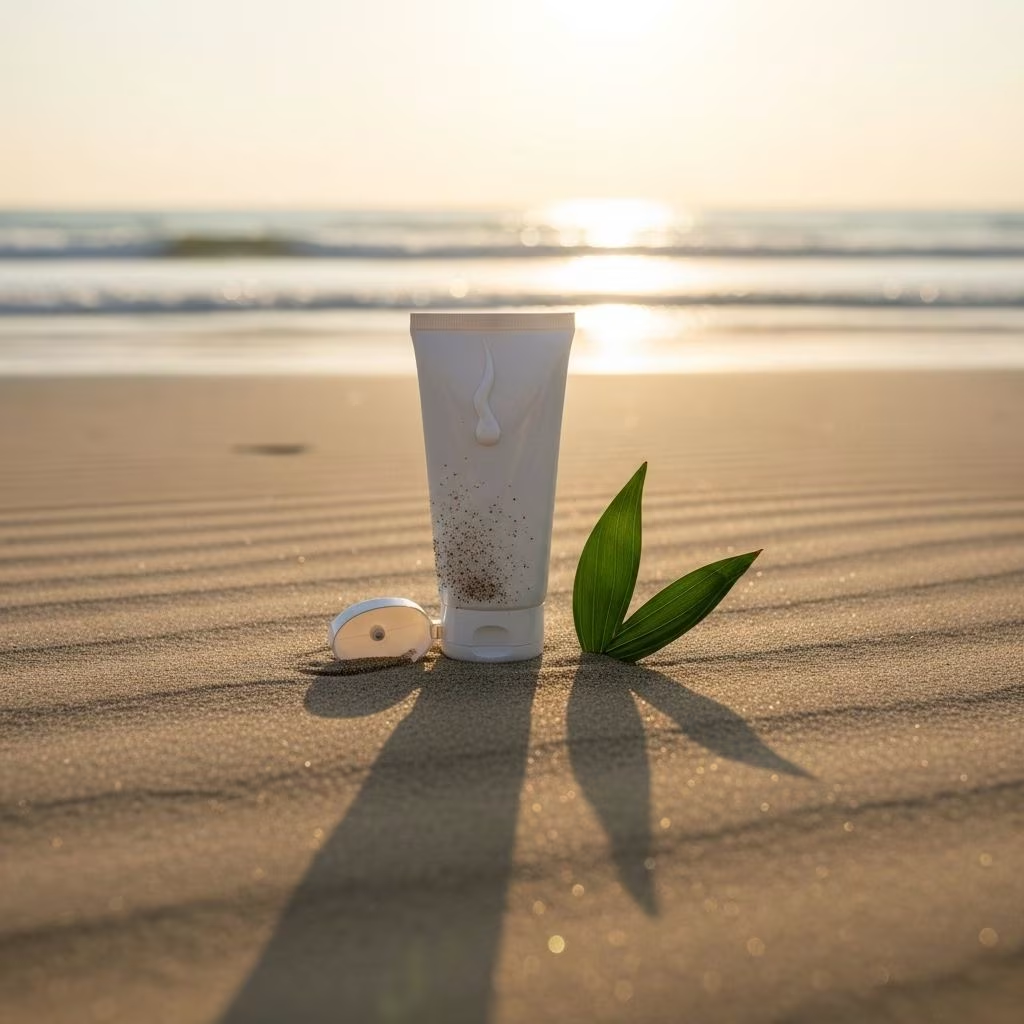
Sunscreen is an essential, year-round protector against the sun’s harmful ultraviolet (UV) rays—but have you ever wondered if it expires? The answer is critical for anyone aiming to maintain optimal skin health and effective sun protection. Understanding sunscreen expiration, stability, and efficacy can help you avoid common pitfalls, keep your skin safe, and get the most out of your sun care routine.
Does Sunscreen Expire?
Yes, sunscreen expires. All sunscreens, regardless of the brand or type, have a limited period during which their formulation guarantees effective protection against UV rays. Most sunscreen products are formulated and tested for a shelf life of about 2 to 3 years. Once past expiration, both the stability of the ingredients and the efficacy of sun protection are compromised.
Why Does Sunscreen Expire?
Sunscreen expiration is primarily caused by the breakdown of its active ingredients. Over time, exposure to heat, air, and moisture causes the chemical or physical filters (e.g., avobenzone, oxybenzone, zinc oxide, titanium dioxide) to degrade. This deterioration can significantly reduce sunscreen’s ability to absorb, reflect, or scatter UV rays, leaving your skin unprotected and potentially increasing your risk of sunburn, premature skin aging, and skin cancer.
Understanding Expiration Dates and Shelf Life
Most sunscreens display an expiration date on the packaging—typically on the bottle, tube, or outer box. This date is set by the manufacturer to indicate the period during which the product remains effective when stored under recommended conditions. If you cannot find an expiration date, the FDA requires that sunscreens be stable for three years. If undated or if you’ve decanted sunscreen into another container, it’s safest to mark the purchase date and assume a maximum of three years’ efficacy.
- EXP or Expiration Date: Usually appears as a month/year or day/month/year marker.
- PAO (Period After Opening) Symbol: An open jar icon with a number (e.g., 12M) specifies how many months the product is effective after opening.
| Sunscreen Type | Typical Shelf Life | Need Expiration Date? |
|---|---|---|
| Chemical Sunscreen | 2–3 years | Yes (unless proven stable for 3 years) |
| Mineral Sunscreen | 2–3 years (sometimes longer if well preserved) | Yes (unless proven stable for 3 years) |
Sunscreen Stability and Efficacy
Product stability refers to how well a sunscreen maintains its chemical structure, spreadability, and protective properties over time. Stability guarantees consistent SPF values and uniform coverage. As these degrade, so too does the sunscreen’s efficacy—its ability to protect your skin accurately as labeled.
- Reduced SPF: The SPF value can decrease, offering less protection than expected.
- Patchiness: Expired sunscreen may not spread evenly, resulting in missed areas and patchy coverage.
- Increased Sunburn Risk: Diminished efficacy leaves skin more vulnerable to burns and damage.
Factors Affecting Sunscreen Stability
- Storage Conditions: Exposure to heat, light, and moisture accelerates breakdown. Sunscreen should be kept in a cool, dark place whenever possible.
- Physical Changes: Sunscreens that become lumpy, separated, discolored, or develop an odd odor are likely to have degraded.
- Frequency of Use: Once opened, sunscreens tend to degrade faster, particularly if the container is handled often or exposed to the elements.
- Product Format: Sprays, sticks, lotions, and creams may degrade at slightly different rates; sprays, for example, may lose propellant pressure or allow more air exposure, hastening degradation.
How to Detect Expired Sunscreen
Besides checking the expiration date, inspecting your sunscreen for signs of spoilage is essential. If it doesn’t look or smell right, err on the side of caution and discard it.
- Texture: Clumpy, watery, separated, or gritty texture signals instability.
- Color: Yellowing or changes from the original coloration suggest degradation.
- Odor: An unusual or rancid smell is a common sign of breakdown.
- Spreadability: Difficulty in spreading smoothly or evenly indicates the product is past its prime.
Chemical vs. Mineral Sunscreens: Do They Expire Differently?
Both chemical sunscreens (using ingredients such as oxybenzone, avobenzone, octocrylene) and mineral sunscreens (using zinc oxide, titanium dioxide) will degrade, though their breakdown mechanisms differ. Chemical filters typically lose efficacy faster; mineral filters may be more stable but are still susceptible to the separation or degradation of other ingredients in the formula.
- Chemical Sunscreens: Generally have a 2–3 year shelf life. More sensitive to heat and repeated exposure, so the stability window may narrow after opening.
- Mineral Sunscreens: Can be slightly more robust, but preservatives and water-based ingredients can still expire or spoil, especially after opening.
Best Practices for Storing Sunscreen
Proper storage extends sunscreen’s life and ensures optimal protection:
- Store in a cool, dry place, out of direct sunlight and high heat (such as a glove compartment).
- Keep the cap closed tightly to prevent contamination and air exposure.
- Avoid decanting into non-original containers, as some plastics may react or fail to fully protect the contents.
- Observe the PAO symbol (e.g., 12M for 12 months’ use after opening), and discard if that time has elapsed—even if some remains.
What Happens if You Use Expired Sunscreen?
Using expired sunscreen is not recommended. The primary risks include:
- Reduced protection: The labeled SPF can no longer be guaranteed; you may be exposed to much higher levels of harmful UV radiation than you think.
- Sunburn and skin damage: Expired sunscreen can lead to sunburn, accelerating skin aging and increasing the risk of skin cancers.
- Possible skin irritation: As ingredients degrade, they may become irritants, especially if the product smells bad or looks abnormal.
Frequently Asked Questions (FAQs)
Q: Can I use sunscreen after the expiration date?
A: It is not advisable. After expiration, the product’s effectiveness is not guaranteed, and you risk inadequate sun protection.
Q: How do I find an expiration date if it’s not printed?
A: If no expiration date appears, assume sunscreen is effective for up to three years from the purchase date, according to FDA guidelines and dermatological advice. Always monitor for changes in texture and odor during this period.
Q: Does sunscreen go bad faster if kept in a hot car?
A: Yes. Repeated exposure to high temperatures will accelerate the breakdown of active and inactive ingredients, causing the sunscreen to expire faster than its labeled date.
Q: Can unopened sunscreen expire?
A: Yes. Shelf life refers to both opened and unopened products. However, opened sunscreen exposed to air or contaminants may degrade at a faster rate.
Q: Are there differences in shelf life among creams, sprays, and sticks?
A: While shelf lives are generally similar, sprays may lose pressure or introduce more air and moisture, which can hasten degradation. Creams and sticks may be more stable if stored properly and unopened.
Key Takeaways
- Sunscreen does expire. Check dates or assume a three-year shelf life maximum.
- Storage conditions and frequency of use play vital roles in maintaining efficacy.
- Expired sunscreen can look, smell, or feel different than new sunscreen—and won’t reliably protect against UV rays.
- Replace sunscreen if it’s past its expiration date, appears altered, or was not stored correctly.
- Apply sunscreen generously, reapply every two hours, and combine with other sun-safety practices for optimal skin health.
For optimal sun protection, make sunscreen a part of your daily skincare routine, use it generously, and replace bottles regularly to ensure you’re getting the level of protection your skin needs.
References
- https://supergoop.com/blogs/asked-answered/does-sunscreen-expire
- https://basksuncare.com/blogs/the-bask-blog/does-sunscreen-expire-understanding-the-lifespan-of-sunscreen-bask-suncare
- https://coola.com/blogs/blog/does-sunscreen-expire
- https://www.skincancer.org/blog/ask-the-expert-does-a-sunscreen-stay-effective-after-its-expiration-date/
- https://www.coppertone.com/sun-facts/does-sunscreen-expire
- https://www.consumerreports.org/health/sunscreens/does-sunscreen-have-an-expiration-date-a3175803160/
- https://www.paulaschoice-eu.com/does-sunscreen-expire


