


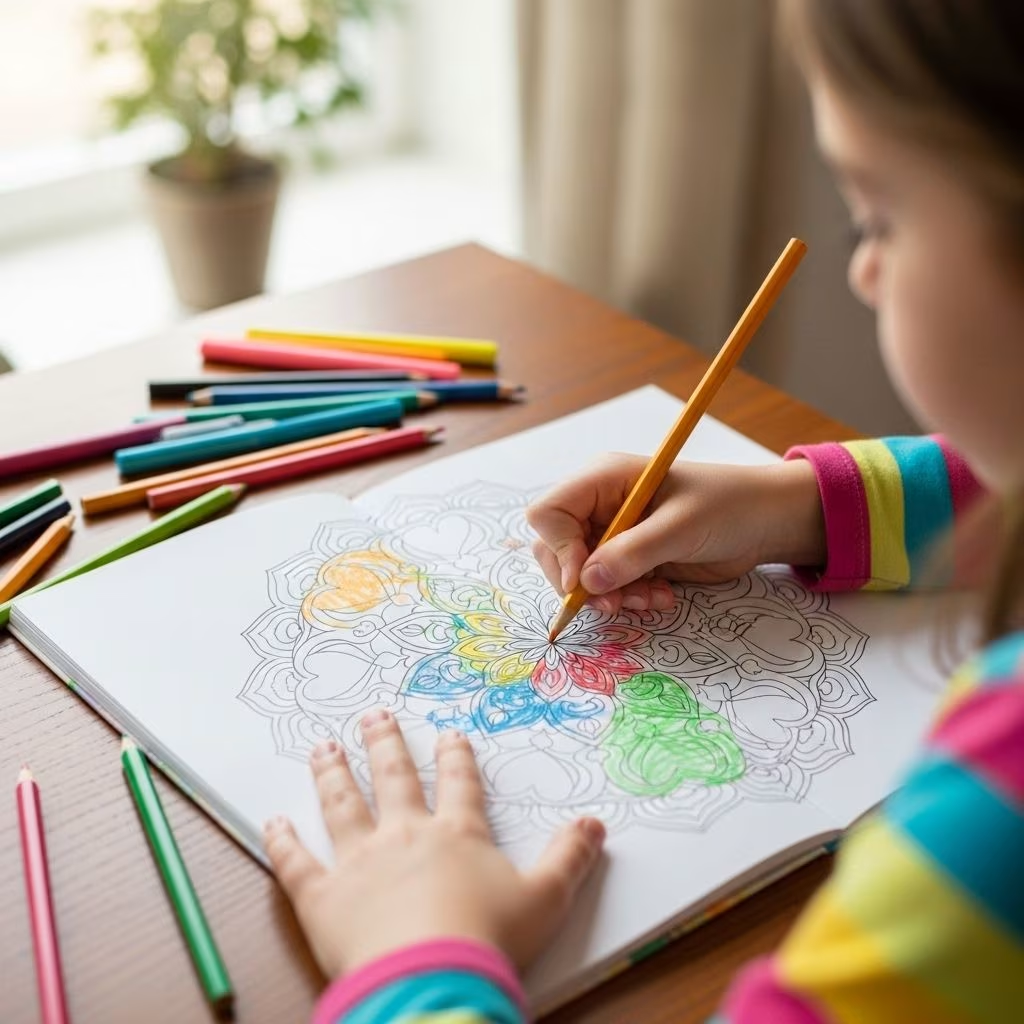
In today’s fast-paced world, children face increasing pressures from academic demands, social challenges, and overstimulation from digital devices. Parents and educators are constantly seeking effective, accessible tools to help children manage stress and develop healthy coping mechanisms. Mindful coloring has emerged as a powerful therapeutic activity that combines creativity with mindfulness principles, offering children a simple yet profound way to reduce stress, improve focus, and enhance emotional well-being.
This comprehensive review examines the science behind mindful coloring for children, explores its documented benefits, and provides practical guidance for implementing this therapeutic activity at home and in educational settings.
Understanding Mindful Coloring and Its Foundations
Mindful coloring represents the intersection of art therapy and mindfulness practice, creating an accessible entry point for children to experience the benefits of present-moment awareness. Unlike casual coloring, mindful coloring emphasizes intentional focus on the process itself rather than achieving a perfect outcome.
When children engage in mindful coloring, they direct their attention to specific elements: observing shapes and patterns, selecting colors deliberately, feeling the texture of coloring materials, and noticing the movement of their hands. This focused attention naturally quiets mental chatter and brings awareness to the present moment, similar to traditional meditation practices but through a medium that feels natural and enjoyable for children.
The practice works by engaging both hemispheres of the brain simultaneously. The left hemisphere handles logic and structure as children stay within lines and follow patterns, while the right hemisphere activates creativity through color selection and artistic expression. This bilateral brain engagement creates a calming effect that helps regulate the nervous system and reduces stress responses.
The Science Behind Stress Reduction Through Coloring
Research has consistently demonstrated that coloring activities produce measurable physiological and psychological changes in both children and adults. When children experience stress, their bodies activate the fight-or-flight response, releasing cortisol and adrenaline. Mindful coloring interrupts this stress cycle by redirecting attention and engaging the parasympathetic nervous system, which promotes relaxation and calm.
Studies examining coloring interventions have found significant reductions in stress levels after just 20 minutes of coloring activity. Participants showed decreased cortisol levels, lower heart rates, and reported feelings of increased relaxation compared to control groups. The repetitive, rhythmic nature of coloring creates a meditative state that allows the brain to process emotions and experiences without becoming overwhelmed.
Dr. Joel Pearson, a neuroscientist, explains that coloring occupies the same brain regions that would otherwise generate anxiety-related mental imagery. By focusing on shapes, edges, and color choices, children’s brains cannot simultaneously ruminate on worries or stressors. This cognitive displacement provides immediate relief from anxious thoughts and creates space for emotional processing.
Research with teachers participating in mindfulness-based coloring interventions revealed statistically significant reductions in burnout, stress, depressive symptoms, and anxiety, alongside increased resilience and mindfulness scores. While these studies focused on adults, the mechanisms apply equally to children, whose developing brains are particularly responsive to mindfulness practices.
Comprehensive Benefits of Mindful Coloring for Children
Emotional Regulation and Processing
One of the most valuable benefits of mindful coloring lies in its capacity to help children regulate their emotions. When children color, they enter a state where strong emotions can be processed and moderated without overwhelming their coping systems. The activity provides a safe container for experiencing and releasing difficult feelings such as anger, sadness, fear, or frustration.
During coloring, negative thoughts temporarily move to the background as attention focuses on the creative task. This mental shift allows the mind to calm and restore its capacity for clearer thinking. Children develop the ability to recognize their emotional states without becoming consumed by them, building crucial emotional intelligence skills that serve them throughout life.
Enhanced Focus and Concentration
Mindful coloring trains children’s attention muscles in an enjoyable, pressure-free context. As they concentrate on staying within lines, selecting harmonious colors, and completing intricate patterns, they develop sustained attention skills that transfer to academic tasks and other areas of life. This practice becomes particularly valuable for children who struggle with attention difficulties or hyperactivity.
The predictable, structured nature of coloring provides clear boundaries and achievable goals, making it easier for children to maintain focus compared to more abstract or open-ended activities. Success in completing coloring projects builds confidence in their ability to concentrate and follow through on tasks.
Motor Skills and Cognitive Development
Beyond emotional benefits, mindful coloring supports essential developmental milestones. Fine motor skills strengthen as children grip coloring instruments, control pressure, and navigate intricate spaces. Hand-eye coordination improves through the precise movements required to stay within boundaries and create desired effects.
Cognitive benefits extend to spatial awareness, pattern recognition, and planning skills. Children learn to strategize their approach to complex designs, make decisions about color combinations, and problem-solve when challenges arise. These cognitive exercises occur naturally within an enjoyable activity, making learning feel effortless.
Building Mindfulness and Present-Moment Awareness
Perhaps the most profound benefit of mindful coloring is its role in cultivating mindfulness itself. When fully engaged in coloring, children experience complete absorption in the present moment. Their minds and bodies work together harmoniously on a single task, creating the state of mindfulness that forms the foundation for stress resilience and emotional well-being.
This practice teaches children that they possess the capacity to direct their attention intentionally, a skill that becomes increasingly valuable as they navigate complex emotional landscapes and external pressures. Regular mindful coloring establishes neural pathways that make accessing calm, focused states easier over time.
Anxiety and Stress Management
Children today face anxiety-provoking situations regularly, from test anxiety to social pressures and family stressors. Mindful coloring provides an immediately accessible coping tool that requires no special equipment or expertise. When anxiety rises, children can turn to coloring as a healthy self-soothing strategy.
The activity serves multiple functions in anxiety management: it redirects ruminating thoughts, provides a sense of control through completing achievable tasks, creates predictable and safe experiences, and activates the relaxation response physiologically. Children who practice mindful coloring regularly develop a reliable resource for managing difficult moments.
Implementing Mindful Coloring Effectively
Creating the Right Environment
The environment significantly impacts the effectiveness of mindful coloring as a stress-reduction tool. Children need a calm, quiet space free from distractions and negative energy. This doesn’t require a special room; a corner of the living room or kitchen table can work beautifully when the atmosphere is peaceful.
Consider factors like lighting, which should be adequate but not harsh; seating that supports good posture; and the absence of competing stimuli such as television or loud conversations. The goal is creating a sanctuary where children feel safe to relax and focus inward.
Selecting Appropriate Materials and Images
Success with mindful coloring depends partly on matching materials and images to children’s preferences and developmental levels. Younger children benefit from simpler designs with larger spaces, while older children may enjoy intricate mandalas or detailed patterns. The key is ensuring the activity feels engaging but not frustrating.
Coloring materials matter as well. Some children prefer the smooth application of markers, while others enjoy the texture of colored pencils or crayons. Allowing children to choose their preferred media increases engagement and enjoyment. The sensory experience of different materials contributes to the overall calming effect.
Images should reflect children’s interests and preferences. A child passionate about animals will engage more deeply with wildlife coloring pages than abstract patterns. When children genuinely enjoy the subject matter, the therapeutic benefits amplify naturally.
Introducing Mindfulness Elements
To transform regular coloring into mindful coloring, introduce simple awareness practices. Before beginning, encourage children to take three deep breaths and set an intention to notice what they experience. During coloring, occasionally prompt them to observe their breathing, notice how their body feels, or pay attention to the colors they’re drawn to and why.
Emphasize process over product. Remind children that there’s no right or wrong way to color, no need for perfection, and that the goal is simply to enjoy the experience of creating. This releases performance pressure and allows genuine relaxation to occur.
Timing and Frequency
While even brief coloring sessions provide stress relief, research suggests that 20 minutes represents an optimal duration for experiencing measurable benefits. However, allowing children to color for as long as they remain engaged naturally supports their developing self-awareness about their own needs and rhythms.
Mindful coloring works both as a regular practice and an as-needed intervention. Incorporating coloring into daily routines helps children develop consistent mindfulness skills, while keeping materials accessible allows them to self-soothe during stressful moments. Effective times include after school to decompress, before bed to calm the mind, or during transitions between activities.
Strategic Applications for Maximum Benefit
Mindful coloring proves particularly valuable in specific situations where children commonly experience stress or emotional dysregulation. After challenging experiences such as medical appointments, difficult school days, or social conflicts, coloring provides a gentle way to process emotions and restore equilibrium without requiring verbal expression.
Before potentially stressful events, mindful coloring can serve as preparation, helping children enter calm, centered states. This proves especially helpful before long journeys, important presentations, or other anxiety-provoking situations. The practice builds children’s confidence in their ability to self-regulate.
During moments of heightened emotion such as anger outbursts or fear responses, offering coloring materials redirects intense energy into productive channels. While not appropriate for every situation, it provides an alternative to destructive expressions of emotion and teaches children that they have tools for managing overwhelming feelings.
Parental and Educational Support
Adults play crucial roles in helping children access the full benefits of mindful coloring. When parents or teachers model the practice themselves, children receive powerful messages about its value and legitimacy. Seeing trusted adults engage in mindful coloring normalizes the activity and often inspires children to participate.
Creating a culture of mindfulness around coloring means avoiding judgment or criticism of children’s color choices or techniques. Instead, adults can ask open-ended questions about children’s experiences: What did you notice while coloring? How do you feel now compared to before? What was your favorite part? These questions deepen children’s awareness and help them articulate their internal experiences.
In classroom settings, mindful coloring serves as an excellent brain break, transition activity, or calm-down strategy. Teachers report that brief coloring sessions help students reset their attention and return to academic tasks with renewed focus. Some educators incorporate coloring into morning routines to help students arrive mentally and emotionally prepared for learning.
Limitations and Realistic Expectations
While mindful coloring offers significant benefits, it’s important to maintain realistic expectations about what it can and cannot accomplish. Research indicates that coloring produces immediate short-term stress reduction and increased relaxation, but studies examining long-term daily coloring haven’t found sustained effects on mood or psychological symptoms without complementary interventions.
This suggests that mindful coloring works best as part of a comprehensive approach to children’s mental health and well-being rather than as a standalone solution. It complements other stress-management strategies, therapeutic interventions, and healthy lifestyle factors like adequate sleep, physical activity, and supportive relationships.
Some children may not respond positively to coloring, and that’s perfectly acceptable. Individual differences in temperament, sensory preferences, and interests mean that what works wonderfully for one child might not resonate with another. The goal is expanding children’s toolboxes of coping strategies, not insisting on any particular technique.
Comparing Mindful Coloring to Other Stress-Reduction Techniques
| Technique | Accessibility | Time Required | Skill Level | Engagement Factor |
|---|---|---|---|---|
| Mindful Coloring | Very High | 10-20 minutes | None required | High for most children |
| Traditional Meditation | High | 5-30 minutes | Moderate | Variable; challenging for young children |
| Physical Exercise | Moderate | 20-60 minutes | Low to moderate | High for active children |
| Deep Breathing | Very High | 1-5 minutes | Low | Moderate; requires prompting |
| Journaling | Moderate | 10-30 minutes | Moderate | Variable; requires writing skills |
Age-Appropriate Adaptations
Mindful coloring adapts beautifully across developmental stages, though approaches should be tailored to children’s ages and abilities. Preschoolers benefit from very simple images with large spaces, thick coloring instruments, and brief sessions of 5-10 minutes. The focus for this age group centers on enjoyment and basic motor skill development rather than formal mindfulness instruction.
Elementary-age children can handle more complex designs and longer sessions. They’re developmentally ready to understand basic mindfulness concepts when explained simply. Introducing ideas like paying attention to breathing while coloring or noticing which colors feel calming helps them connect the activity to internal awareness.
Tweens and teenagers often appreciate intricate mandalas, geometric patterns, or thematic coloring books related to their interests. At these ages, mindful coloring can be presented as a legitimate stress-management tool backed by science, appealing to their growing desire to understand and control their emotional experiences.
Integrating Technology Mindfully
While traditional paper coloring offers unique tactile benefits, digital coloring apps can provide accessible alternatives when physical materials aren’t available. Some children particularly enjoy the unlimited color options and undo features of digital coloring. However, screen time considerations should be balanced against the relaxation benefits.
The key is maintaining the mindful aspect regardless of medium. Whether coloring on paper or a tablet, the practice of focused attention, present-moment awareness, and intentional creativity remains central to achieving stress-reduction benefits.
Building Sustainable Practice Habits
For mindful coloring to become a reliable stress-management tool, children need support in developing consistent practice habits. This doesn’t mean rigid schedules, but rather creating conditions where coloring becomes a natural, accessible option when children need it.
Keeping coloring materials organized and easily accessible in multiple locations around the home or classroom removes barriers to engagement. When materials are visible and inviting, children are more likely to reach for them spontaneously during stressful moments.
Celebrating and displaying completed coloring projects honors children’s creative efforts and reinforces the value of the practice. Creating coloring journals or portfolios allows children to look back on their work and notice patterns in their preferences and emotional states over time.
Frequently Asked Questions
Q: At what age can children start benefiting from mindful coloring?
A: Children as young as 2-3 years old can begin enjoying coloring activities, though the formal mindfulness aspects become more accessible around age 5-6 when children develop greater capacity for self-awareness and focused attention. However, even very young children experience calming benefits from coloring even without explicit mindfulness instruction.
Q: How long should a mindful coloring session last for optimal stress reduction?
A: Research indicates that 20 minutes of coloring produces measurable stress reduction and relaxation benefits. However, shorter sessions of 10-15 minutes still provide value, and some children may benefit from longer periods if they remain engaged. The key is following the child’s natural attention span and interest level rather than imposing rigid time requirements.
Q: Can mindful coloring replace therapy for children with anxiety disorders?
A: No, mindful coloring should be viewed as a complementary tool rather than a replacement for professional mental health treatment. While it provides valuable stress-reduction benefits and can be incorporated into therapeutic approaches, children with diagnosed anxiety disorders need comprehensive care from qualified mental health professionals. Mindful coloring works best as part of a broader treatment plan.
Q: What if my child resists coloring or finds it stressful rather than relaxing?
A: Not all children respond positively to coloring, and that’s completely normal. Some children find staying within lines frustrating or feel performance pressure around artistic activities. If this occurs, explore alternative mindfulness activities like play dough manipulation, sensory bottles, nature observation, or gentle movement. The goal is finding stress-reduction tools that resonate with each individual child.
Q: Are there specific types of coloring pages that work best for stress reduction?
A: Mandala designs and geometric patterns are frequently used in mindfulness coloring due to their repetitive, symmetrical nature. However, the most effective coloring pages are those that genuinely interest the child. Nature scenes, animals, favorite characters, or abstract patterns all work well if they engage the child’s attention and imagination. The key is matching content to individual preferences.
Q: Should parents color alongside their children, or let them color independently?
A: Both approaches offer benefits. Coloring together creates bonding opportunities and models healthy stress management, while independent coloring builds self-reliance and allows children to fully focus inward. Many families find success alternating between shared coloring sessions and independent practice time. The most important factor is creating a calm, supportive environment regardless of whether adults participate directly.
Q: How can I tell if mindful coloring is actually reducing my child’s stress?
A: Observable signs include visible relaxation in body posture, slower breathing, decreased fidgeting, improved mood after coloring sessions, and children voluntarily reaching for coloring materials during stressful moments. You can also ask children directly about their experiences using simple questions like how do you feel now versus before coloring, helping them develop awareness of the practice’s effects on their emotional states.
Conclusion: Embracing Mindful Coloring as a Family Practice
Mindful coloring represents a remarkable convergence of simplicity and effectiveness in supporting children’s mental health and emotional well-being. In an era where complex solutions often overshadow basic interventions, this accessible practice offers children a powerful tool for managing stress, developing self-awareness, and building resilience.
The evidence clearly demonstrates that mindful coloring produces measurable short-term stress reduction, enhanced relaxation, improved focus, and emotional regulation benefits. While not a panacea for all childhood emotional challenges, it deserves a prominent place in the toolkit of strategies parents and educators use to support children’s development.
Perhaps most importantly, mindful coloring teaches children a fundamental life skill: the ability to pause, redirect attention, and access inner calm regardless of external circumstances. This capacity for self-regulation serves them not just in childhood, but throughout their lives as they navigate increasingly complex emotional landscapes.
By introducing mindful coloring thoughtfully and supporting children’s engagement with the practice, adults provide a gift that extends far beyond the immediate stress-reduction benefits. They offer children entry into the world of mindfulness, where present-moment awareness, self-compassion, and intentional living create foundations for lasting well-being.
References
- https://aliciaortego.com/coloring-for-kids-to-reduce-stress/
- https://ripplekindness.org/benefits-of-mindful-coloring-pages-for-kids/
- https://www.jiss.org/documents/volume_8/JISS%202018%208(1)%201-21%20Coloring%20and%20Mindfulness.pdf
- https://www.mayoclinichealthsystem.org/hometown-health/speaking-of-health/coloring-is-good-for-your-health
- https://pmc.ncbi.nlm.nih.gov/articles/PMC12024132/
- http://www.momentsaday.com/how-to-explain-mindful-colouring-to-kids/
- https://positivepsychology.com/mindfulness-coloring-art/
- https://extension.illinois.edu/blogs/family-files/2020-05-16-coloring-its-not-just-kids


