


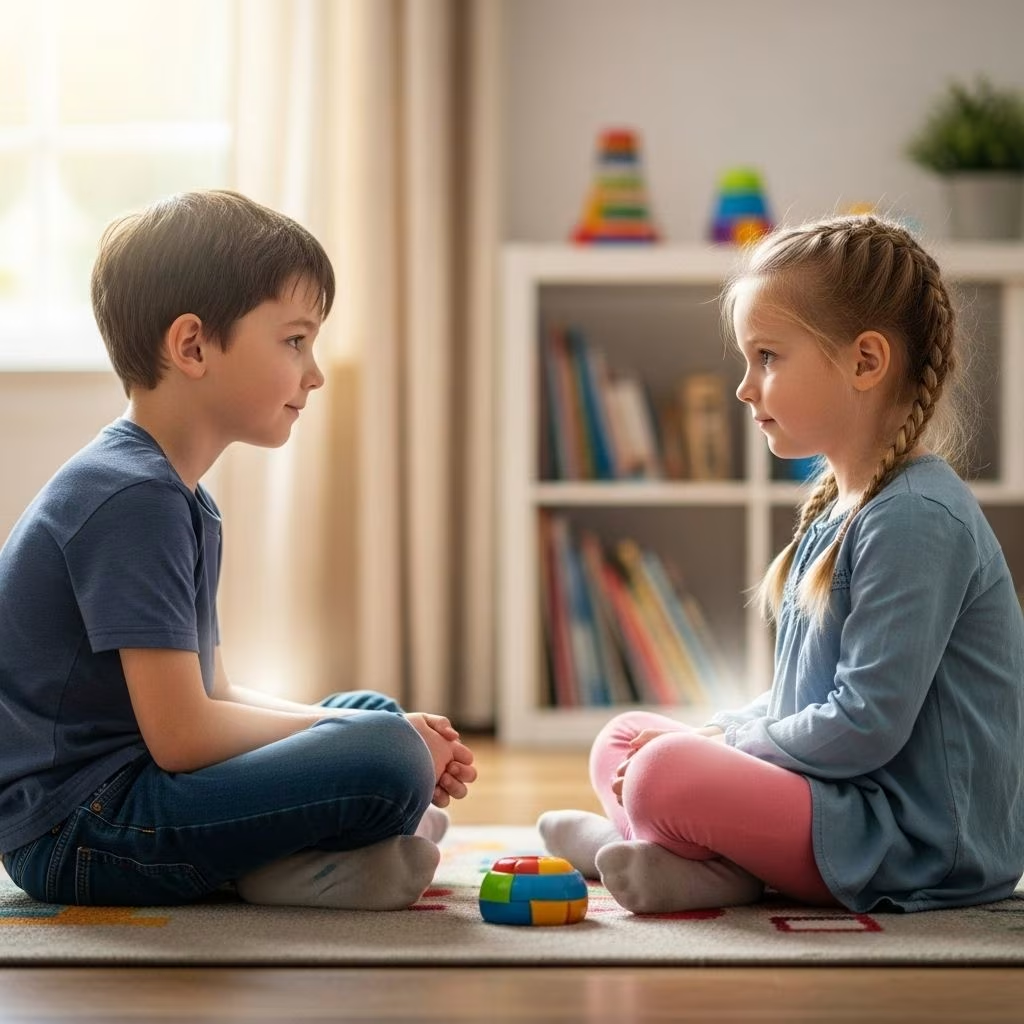
Mindful Listening for Kids: Strategies to Resolve Sibling Conflict and Foster Collaboration
Siblings often share deep bonds, but conflicts and disagreements can arise frequently, challenging harmony at home. Mindful listening equips children with essential tools to address these disputes constructively, fostering empathy, understanding, and effective problem-solving. By nurturing mindful listening, caregivers can help children transform moments of conflict into opportunities for growth and collaboration.
Introduction
Sibling rivalry and disputes are a natural part of growing up. When left unaddressed, these conflicts can escalate, leading to resentment and negative behaviors. However, when children are taught to listen mindfully—to themselves, to their siblings, and to the situation—they develop core emotional regulation, communication, and problem-solving skills that benefit them throughout life.
Understanding Mindful Listening
Mindful listening is the intentional focus on understanding the speaker’s message, thoughts, and feelings without distraction or judgment. It involves:
- Giving full attention—using eye contact, body language, and verbal cues to signal presence
- Processing both the content and emotion behind words
- Responding thoughtfully, with empathy and respect
For children, mindful listening forms the foundation of positive communication, deep friendships, and effective conflict resolution.
Common Causes of Sibling Conflict
- Competing for parental attention or resources
- Differences in age, temperament, or interests
- Sharing possessions such as toys, clothes, or space
- Miscommunication or misunderstanding
- Jealousy, frustration, or feeling unfairly treated
Recognizing these triggers helps caregivers prepare to guide mindful listening and intervention.
Why Mindful Listening Matters in Sibling Conflict
- Reduces emotional escalation by validating each child’s feelings
- Encourages empathy and consideration for others
- Transforms adversarial interactions into collaborative problem-solving
- Prevents the formation of negative communication patterns early in life
- Supports children in becoming effective negotiators and peacemakers
Kids who learn mindful listening experience less stress and anxiety and show stronger resilience when navigating interpersonal difficulties.
Teaching Mindful Listening Skills to Kids
Children, especially younger ones, benefit from concrete steps in mindful listening instruction:
- Face the speaker—turn your body toward the person, maintain soft, attentive eye contact
- Stay quiet—no interruptions or dismissive responses
- Show understanding—nod, smile, or use affirming words (“I’m listening,” “Go on,” “I want to hear more”)
- Reflect back—paraphrase what was said (“So you’re upset that the game was interrupted?”)
- Ask questions—clarify feelings and facts gently (“How did that make you feel?”)
- Slow down—take time before responding, especially when emotions run high
Caregivers can reinforce these behaviors through role playing, gentle reminders, and modeling.
Effective Communication Techniques
- Use “I” statements for self-expression (“I felt sad when my drawing was torn”)
- Avoid blaming or accusatory language (“You never let me play” becomes “I want a chance to play too”)
- Encourage active listening (“Can you tell me what you heard your brother say?”)
Steps to Resolving Sibling Conflict Mindfully
Experts recommend breaking conflict resolution into clear, repeatable stages for children:
| Step | Action | Goal |
|---|---|---|
| 1. Neutralize Situation | Help children calm down and feel safe before discussing conflict. Remove triggers (e.g., take away the disputed toy) temporarily. | Prevent escalation and allow children to access rational thinking. |
| 2. Gather Data | Let each child speak about their view without interruption. Paraphrase for clarity if needed. | Make both parties feel valued and heard. |
| 3. Identify Feelings | Ask open-ended questions like “How did you feel when that happened?” | Surface emotions to enable deeper understanding. |
| 4. Encourage Empathy | Guide each child to articulate how their sibling might feel. | Foster emotional connection and compassion. |
| 5. Brainstorm Solutions | Ask both sides to suggest solutions and write them down; discuss pros and cons calmly. | Inspire creativity and fair compromise. |
| 6. Pick a Plan & Try It Out | Choose the best solution and encourage the children to implement it; observe and provide supportive feedback. | Empower kids to take ownership and learn from outcomes. |
Compromise and Collaboration
- Encourage children to advocate for themselves, but also recognize when to give a little for the sake of agreement and peace
- Praise gentle persuasion and respectful negotiation skills
- Provide low-stress opportunities for practice, such as deciding together which game to play next
Practical Activities to Encourage Mindful Listening
Active learning cements mindful listening as a lifelong skill. Integrate these activities into daily routines:
- Role-playing scenarios: Act out common sibling disputes (e.g., sharing toys, interrupting play) and guide kids through each conflict resolution step
- Puppet shows: Use puppets to express emotions and facilitate discussions about getting along
- Reflective drawing: Let children draw how a conflict made them feel and how the other child may feel
- Listening games: Play games like “Telephone” or “Listening Detective” to practice attentive listening
- Storytime reflections: After reading a story about conflict, ask kids to identify the characters’ emotions and brainstorm better choices
Make these activities fun and brief to keep attention high and encourage repetition.
Modeling Empathy and Problem-Solving
- Children learn most effectively by observing trusted adults. Model mindful listening during disagreements with your partner or children.
- Verbally process emotions when you’re frustrated (“I’m feeling upset, so I’m taking a deep breath before I answer.”)
- Demonstrate open-mindedness when evaluating solutions (“Let’s see which idea could work best for both of you.”)
- Praise children for thoughtful negotiation and empathic statements
- Remind children that asking for help is always an option, especially if they feel scared or unsafe
Overcoming Challenges in Mindful Listening
Mindful listening can be difficult for kids, especially when emotions run high or when younger children can’t clearly express themselves.
- Developmental limitations: Adjust expectations according to age; use simple language and prompt more frequently with younger children
- Strong emotions: Encourage physical calming exercises (deep breaths, counting, quiet time) before restarting dialogue
- Impatience: Practice short, frequent listening sessions to build up focus over time
- Reluctance to compromise: Frame compromise as “finding a way for both of you to feel okay”—not as giving in or losing
- Repeated conflict: Reinforce the six-step process; over time, children internalize the routine and find resolutions more quickly
Patience and consistency are key; celebrate incremental progress and keep the focus on learning together.
Frequently Asked Questions (FAQs)
Q: At what age can children learn mindful listening for conflict resolution?
A: Children as young as three can grasp basic principles through modeling and repetition. Older children can engage in more nuanced discussions and brainstorming.
Q: What is the role of parents or caregivers during sibling conflicts?
A: Caregivers should guide children through the six-step process but avoid solving the problem for them. Stepping back allows children to practice negotiation, compromise, and empathy independently.
Q: How can I help if my children won’t listen to each other?
A: Remind them of active listening rules (one speaks at a time; no interrupting), and use games or role-play to practice. Praise moments when they try—even if they struggle.
Q: What if conflict turns aggressive?
A: Safety comes first. Separate the children, calm them down, and address any consequences. Once emotions have settled, return to the conflict to teach resolution skills.
Q: How do I encourage empathy between siblings who are very different?
A: Provide multiple opportunities for perspective-taking through stories, role-play, and guided reflections. Emphasize that understanding each other is more important than agreeing on everything.
Conclusion
Mindful listening is an invaluable skill for children navigating sibling conflict. When kids learn to listen deeply and resolve disagreements thoughtfully, they develop empathy, resilience, and lifelong abilities for building harmonious relationships. With guidance, patience, and creative practice, caregivers can empower children to turn sibling rivalry into meaningful collaboration—benefiting families now and shaping emotionally intelligent adults in the future.
References
- https://ccy.jfcs.org/6-steps-help-children-resolve-conflicts-solve-problems/
- https://www.canr.msu.edu/news/use_active_listening_skills_to_effectively_deal_with_conflict
- https://mentalhealthcenterkids.com/blogs/articles/conflict-resolution-for-kids
- https://conflict-resolution-training.com/blog/conflict-resolution-skills-for-students/
- https://childmind.org/article/teaching-kids-how-to-deal-with-conflict/
- https://brownschool.org/brown-school-difference/teaching-mindful-listening-to-reduce-stress-and-anxiety
- https://mybrightwheel.com/blog/active-listening-for-kids
- https://www.virtuallabschool.org/school-age/positive-guidance/lesson-4/act/18086


