


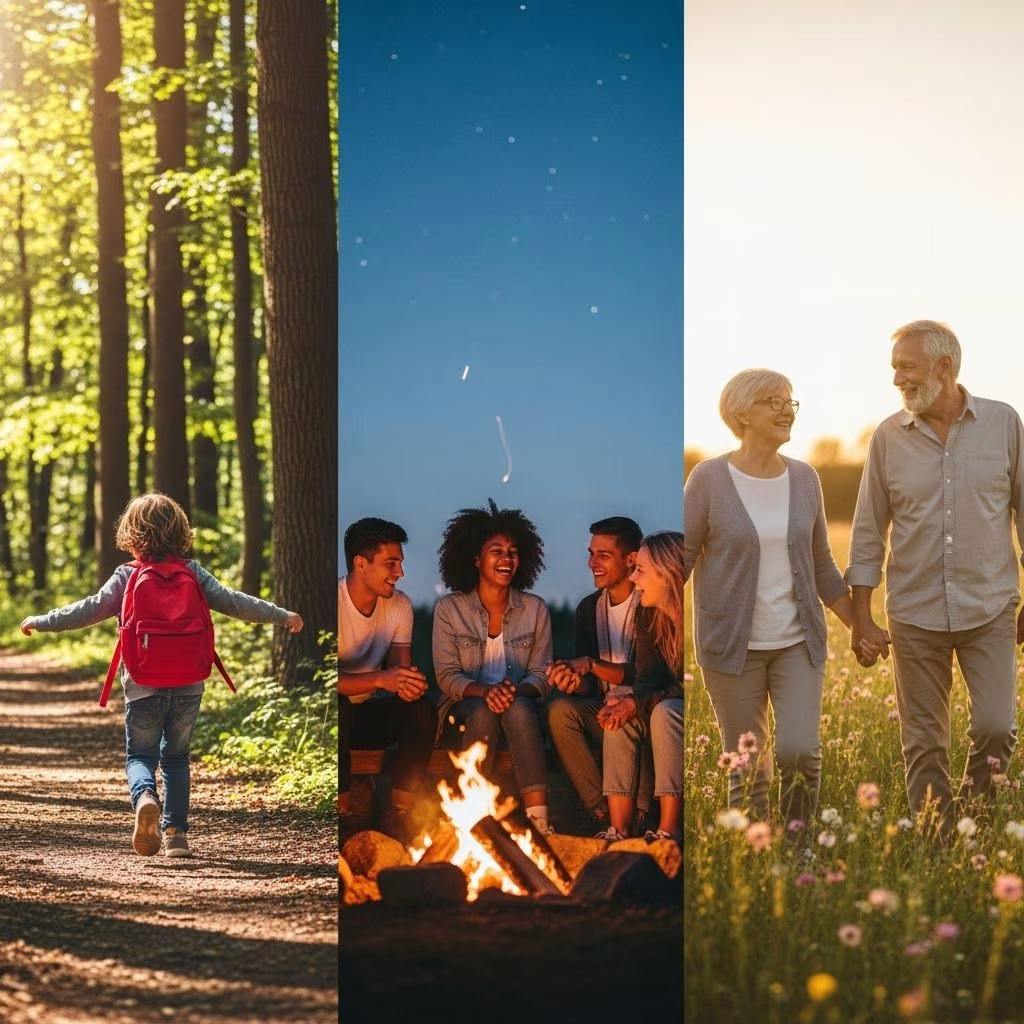
Nature Deficit Disorder has emerged as one of the defining health and social challenges of modern life. As people—especially children—spend more time indoors surrounded by screens, questions are being asked: What is this so-called disorder? How does it manifest, and most importantly, how much outdoor time is needed to alleviate its symptoms and restore holistic wellbeing?
What is Nature Deficit Disorder?
Nature Deficit Disorder (NDD) is not a formal clinical diagnosis, but a metaphorical term coined by journalist and author Richard Louv to describe “the human costs of alienation from nature.” It refers to the growing behavioral, physical, and emotional problems observed in children and adults who spend little time outdoors or have minimal contact with the natural environment. Frequent indoor lifestyles, dominated by screens and artificial environments, are at the heart of this phenomenon.
While not officially recognized by medical manuals like the ICD-10 or DSM-5, NDD is a powerful lens for understanding modern societal health challenges.
History and Origins
The term “Nature Deficit Disorder” was introduced in 2005 by Richard Louv in his influential book, Last Child in the Woods. Louv’s advocacy sparked the global movement to reconnect children and adults with nature, including the establishment of organizations like the Children & Nature Network in the US and similar initiatives worldwide. Louv emphasized that NDD is not a medical label, but a metaphor capturing the urgent issue of nature-alienation in contemporary society.
Signs and Symptoms
- Diminished use of senses: Less exposure to varied sights, sounds, and smells found in the wild.
- Attention difficulties: More frequent distractibility and inability to sustain focus.
- Obesity and inactivity: Physical sluggishness and rising rates of childhood and adult overweight/obesity.
- Emotional imbalance: Higher incidences of anxiety, depression, and irritability.
- Weakened connection to nature: Lack of curiosity about the natural world, reduced environmental stewardship.
- Sleep disturbances: Trouble falling asleep and decreased sleep quality, especially in adults.
- Behavioral problems in children: Including increased hyperactivity, aggression, and mood instability.
Key Causes of Nature Deficit Disorder
- Urbanization and poor planning: Disappearing open spaces and limited city green areas make outdoor experiences harder to access.
- Technological dependence: Increased time spent on digital devices for entertainment and communication.
- Parental fears: Concerns about safety (‘stranger danger’), traffic, and litigation restrict children’s freedom to roam outdoors.
- Lack of nature in education: Schools prioritize indoor curricula, minimizing field trips and outdoor learning.
- Socioeconomic disparities: Marginalized and low-income communities have less access to parks and green spaces due to urban design and policies such as redlining.
- Cultural shifts: Societal norms glorify productivity and screen-based leisure, undervaluing outdoor play and relaxation.
Physical and Psychological Effects
Nature Deficit Disorder is associated with a range of health impacts, illustrated in the following table:
| Effect Type | Observed Outcomes |
|---|---|
| Physical Health |
|
| Mental and Emotional Health |
|
| Social Wellbeing |
|
| Ecological Intelligence |
|
Why Outdoor Time Matters
Exposure to natural environments delivers measurable restorative benefits for body and mind. Dozens of studies confirm that:
- Cognitive performance improves after time spent outdoors, with better focus, memory, and creativity.
- Emotional regulation is enhanced—nature reduces stress hormones and elevates mood.
- Immune function is strengthened and physical activity levels generally rise.
- Children show more balanced behavior, increased self-esteem, and improved academic achievement when exposed to green environments.
Nature shapes eco-cultural identity, strengthening empathy for living things and fostering environmental stewardship among children and adults alike. A deficiency in these experiences can result in a cycle of ecological ignorance and apathy toward global environmental challenges.
How Much Outdoor Time Helps?
How much outdoor time is enough to offset the harms of nature deficit disorder? While there is no single magic number, public health, education, and psychological experts offer consensus guidelines.
- Children: Most recommendations suggest an average of 1-2 hours of free outdoor play every day—preferably unstructured time in green settings like parks, gardens, or forests. Even 20–30 minutes daily can lead to visible improvements.
- Adults: Aiming for at least 120 minutes per week in nature—whether in frequent short periods or fewer long visits—delivers proven psychological and physical benefits. A 2019 study in the journal Nature pinpointed approximately two hours (120 min) per week as a threshold for significant health gains.
- Minimum effective dose: Even 5–10 mins of “microbreaks” outdoors in green spaces improves mood and attention. However, longer periods (20+ minutes) provide cumulative and stronger health returns.
Unstructured play, natural light, varied environments (woods, meadows, gardens), and even “nature therapy” (organized nature walks or forest bathing) can all count toward these goals.
Age-Specific Recommendations for Outdoor Time
| Age Group | Recommended Outdoor Time | Recommended Activities |
|---|---|---|
| Toddlers (1–3 yrs) | 1–2 hours/day | Supervised garden play, walking, nature games |
| Children (4–12 yrs) | 1–2 hours/day | Unstructured outdoor play, nature walks, exploration |
| Teens (13–18 yrs) | 1 hour/day | Group sports, hiking, gardening, outdoor hobbies |
| Adults (19+ yrs) | 2+ hours/week | Walking, running, gardening, outdoor socializing |
| Seniors | Varies; as much as mobility allows | Gentle walks, gardening, birdwatching |
Barriers to Accessing Nature
Not everyone has equal access to nature, which exacerbates NDD:
- Urban density: Green areas may be distant or unsafe.
- Socioeconomic hurdles: Low-income communities often have fewer parks and safe public spaces.
- Physical limitations: Disabilities, health conditions, or aging can restrict mobility outdoors.
- Time constraints: Busy schedules, long commutes, and after-school activities restrict free play time.
- Parental and societal fears: Concerns about accidents, crime, or litigation reduce children’s outdoor liberties.
- Digital distractions: Ubiquity of screens and devices discourage outdoor activities.
Practical Tips for Reconnecting with Nature
- Set a daily goal for outdoor time; make it as routine as meals.
- Prioritize unstructured, free play for children—a key for imagination and sensory development.
- Incorporate nature into daily life: Walk or bike to work, eat meals outside, garden, or do household chores outdoors.
- Create or join community groups for outdoor activities: hiking, bird watching, park cleanups.
- Advocate for better green spaces in your neighborhood; support local park funding.
- Limit screen time and consciously replace it with nature-based family downtime.
- If mobility is limited, bring nature indoors—houseplants, window gardens, and nature-themed art can help.
Frequently Asked Questions (FAQs)
Q: Is nature-deficit disorder a real medical condition?
No. While the term is not recognized in medical diagnostic manuals, it is a widely accepted metaphor for the collection of problems seen when people lack exposure to nature.
Q: How quickly can time in nature reverse symptoms of NDD?
Some benefits (improved mood, attention restoration) can appear after just 10–20 minutes outdoors. Cumulative improvements in wellbeing, focus, and health accrue with sustained daily or weekly exposure.
Q: Can urban parks or small green spaces provide the same benefits as wild nature?
Yes. Urban green spaces, even pocket parks or community gardens, offer notable health and mood benefits. However, increased biodiversity and varied environments often enhance the effects.
Q: What if access to outdoor nature is limited?
Even indoor nature experiences (houseplants, views of trees, nature sounds) can help. Try “virtual nature” (videos or soundscapes) if outdoor time is truly impossible, but always aim for genuine outdoor experiences whenever possible.
Q: How can schools and communities help address NDD?
They can integrate more outdoor education, prioritize play and nature-based curricula, maintain safe and accessible green spaces, and educate families on the importance of daily outdoor activity.
In Summary
Nature Deficit Disorder is a metaphor capturing the growing disconnection between human beings and the natural world—with significant consequences for physical, mental, and communal health. While just a few minutes each day outdoors can make a difference, the science is clear: regular contact with nature is essential, not optional, for people of all ages. By making outdoor time a priority in schools, communities, and families, we can reverse the trend of nature disconnection and foster a healthier, more resilient society.
References
- https://en.wikipedia.org/wiki/Nature_deficit_disorder
- https://richardlouv.com/blog/what-is-nature-deficit-disorder
- https://www.wildcenter.org/understanding-nature-deficit-disorder/
- https://populationeducation.org/what-is-nature-deficit-disorder-causes-and-consequences/
- https://leafcare.co.uk/blog/nature-deficit-disorder-and-complex-needs-how-home-care-can-make-a-difference/
- https://kripalu.org/living-kripalu/five-symptoms-nature-deficit-disorder-and-how-mindfulness-can-help
- https://lamclinic.com/adrenal-fatigue/lifestyle/what-is-nature-deficit-disorder/
- https://takecareoftexas.org/about-us/blog/what-nature-deficit-disorder-and-what-can-we-do-about-it
- https://pmc.ncbi.nlm.nih.gov/articles/PMC4695668/


