


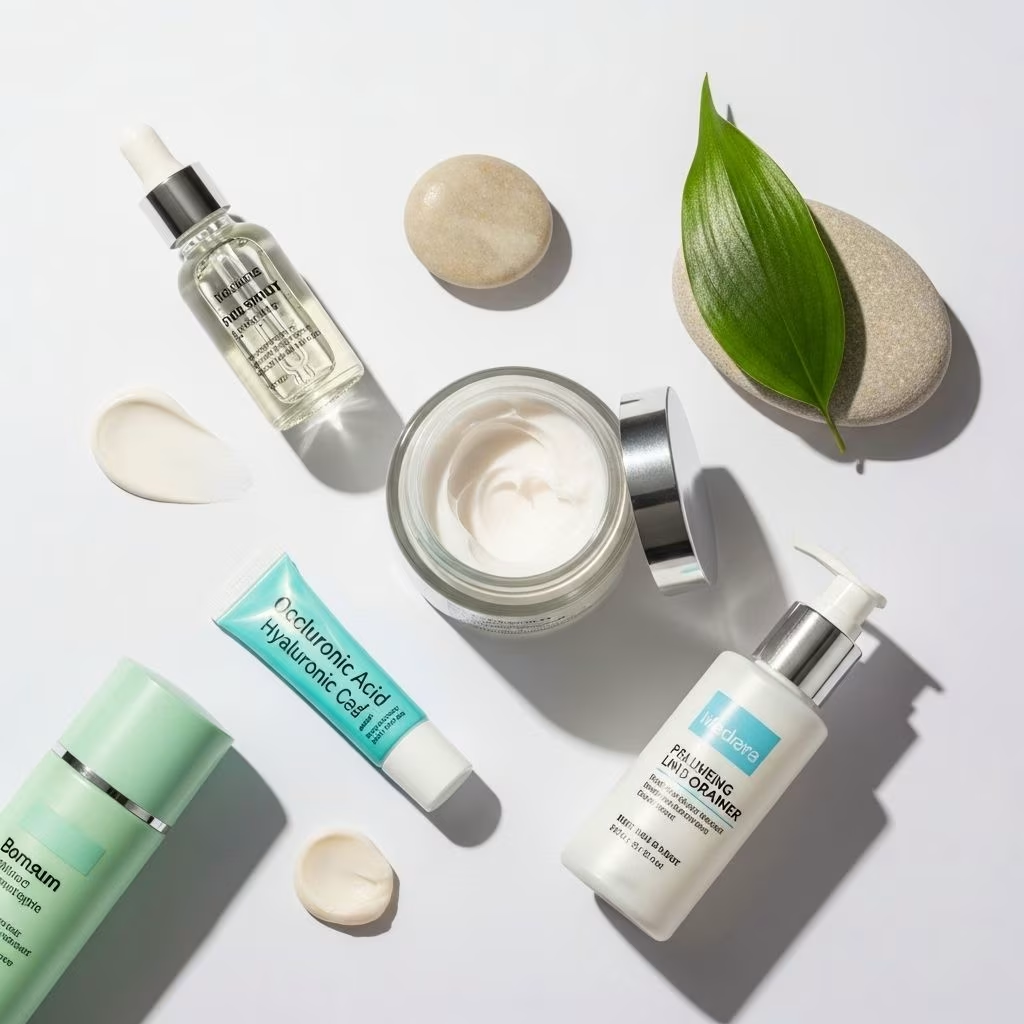
Occlusives have become a buzzword in modern skincare—especially among those seeking to combat dryness, reinforce their skin’s barrier, and unlock the full hydrating power of their routines. In this comprehensive guide, you’ll find everything you need to know about occlusives in skincare layering, from what they are and how they work to expert strategies for using occlusives effectively in your regimen.
Understanding Occlusives: The Basics
Occlusives are a category of moisturizing ingredients that form a physical barrier over the skin’s surface, helping to trap moisture and prevent water loss. Unlike humectants, which attract and draw water into the skin, occlusives simply hold this hydration in place by slowing down or blocking evaporation from the skin.
The word ‘occlusive’ comes from the Latin ‘occludere,’ meaning “to close up.” In skincare, it refers to sealing in moisture by forming a barrier—much like how cling film wraps food to prevent it from drying out.
Why Use Occlusives?
- Prevents Transepidermal Water Loss (TEWL): The primary benefit of occlusives is their ability to reduce TEWL, keeping moisture locked in the upper layers of skin for longer.
- Enhances Skin Barrier Function: Occlusives reinforce the skin’s natural barrier, protecting against environmental damage, irritants, and allergens.
- Improves Hydration When Paired with Humectants: Occlusives are most effective when used with humectants, which draw moisture into the skin, before being sealed in by an occlusive layer.
- Supports Skin Repair and Healing: Studies have shown occlusives can speed up healing, reduce irritation, and support the skin’s recovery process.
- Reduces Dryness and Flaking: By keeping skin hydrated, occlusives minimize flaky, cracked, or rough texture – ideal for those with chronic dryness.
Occlusives can be particularly beneficial for individuals experiencing:
- Chronically dry or dehydrated skin
- Sensitive or compromised skin barriers
- Eczema, psoriasis, or similar inflammatory skin conditions
- Signs of aging, such as fine lines linked to dehydration
Types of Occlusive Ingredients in Skincare
Occlusive ingredients are typically thick, oily, or waxy substances that form a protective seal over the skin. Some occlusives are natural, others synthetic; all serve a similar function.
| Occlusive Ingredient | Nature | Notes/Benefits |
|---|---|---|
| Petrolatum (Vaseline, petroleum jelly) | Synthetic | Very high occlusivity, often used for severe dryness; hypoallergenic |
| Lanolin | Natural (from wool) | Effective but can cause allergies in some; softens rough skin |
| Mineral oil | Synthetic | Widely used in cosmetic products; inert and non-comedogenic |
| Dimethicone (and other silicones) | Synthetic | Creates smooth feel, lightweight, good for layering |
| Shea butter, cocoa butter | Natural (plant-derived) | Rich in nutrients and fatty acids |
| Beeswax, carnauba wax | Natural (animal/plant-derived) | Mixes well with oils; common in balms |
| Oils (castor, coconut, tamanu, jojoba) | Natural (plant-based) | Some occlusive, some emollient; combine hydration and barrier effects |
Some products combine occlusives with emollients (which smooth skin) and humectants (which draw water in), resulting in enhanced texture and hydration.
How Occlusives Work in Layering
To maximize moisture retention and barrier repair, occlusives should be layered as the final step in your skincare routine. This is because they form an impermeable barrier, which can block other active ingredients if applied too early.
Typical skincare layering order:
- Cleansers
- Toners/Essences (if used)
- Serums or actives (e.g., vitamin C, niacinamide)
- Moisturizer (containing humectants and emollients)
- Occlusive (balm, ointment, or layer containing occlusives)
Because occlusives are heavy, lighter ingredients (like serums and water-based treatments) should be applied first, followed by emollients, then occlusives to seal in everything beneath.
Matching Occlusives to Skin Types & Concerns
Different skin types require careful selection and application of occlusives:
- Dry/Dehydrated Skin: Benefit the most; seek out petrolatum, shea butter, or heavier oils.
- Sensitive Skin: Choose hypoallergenic occlusives like petrolatum or mineral oil; avoid lanolin if allergic.
- Oily or Acne-Prone Skin: Opt for lightweight, non-comedogenic occlusives such as dimethicone; avoid thick mineral oils which may cause breakouts.
- Aging Skin: Use occlusives to preserve collagen and hydration, diminishing fine lines.
- Psoriasis/Eczema: Occlusives help reduce inflammation and irritation by reinforcing the barrier.
Skin Concerns and Occlusive Benefits
- Environmental damage: Protects from wind, cold, and pollutants by forming a barrier
- Irritation/redness: Calms irritated skin by shielding from external aggressors
- Post-procedure healing: Promotes rapid healing after peels, laser, microneedling (always follow medical guidance)
How to Layer Occlusives in Your Routine
Best practices for layering occlusives:
- Apply to Damp Skin: After cleansing and applying water-based products, allow some moisture to remain—occlusives trap this water for maximum benefit.
- Use After All Other Skincare Steps: Occlusives should be the final layer, after any treatment serums, creams, or oils.
- Spot Treatment or Full Face: Use occlusives all over for dryness, or just on targeted dry spots, lips, under eyes, or cuticles.
- Nighttime Use: Many prefer to use heavier occlusives only at night due to their sticky or shiny finish (see ‘slugging’ below).
Pro Tip: Only a thin layer of occlusive is needed; applying too much can clog pores or feel overly greasy, especially for combination and oily skin types.
‘Slugging’: The Rise of Nighttime Occlusive Use
Slugging is a viral skincare trend in which a generous layer of an occlusive—most often petroleum jelly—is applied as the last step in the evening routine to seal in hydration overnight. Originally popularized by online beauty communities and K-beauty, slugging is ideal for:
- Very dry, flaky, or damaged skin
- Winter months with harsh, dry weather
- Post-exfoliation or after irritating treatments (with professional approval)
The benefits of slugging include dramatically improved hydration, softened texture, and reduced redness. Many users report waking up to “plumper” and “smoother” skin as a result.
How to slug:
- Complete your full evening routine, ending with your moisturizer.
- Apply a thin layer of petrolatum (or another occlusive) as the last step.
- Let absorb overnight, then cleanse as usual in the morning.
Caution: Not all skin types will benefit; oily or acne-prone skin may find slugging too heavy. As with any new product or technique, patch test and adjust based on your skin’s needs.
Seasonal Strategies for Occlusive Moisturizers
The environment affects your skin’s hydration, so adjust your occlusive usage throughout the year:
- Winter: Air is drier and colder, so use richer occlusives more frequently—especially at night and on dry patches.
- Summer: Opt for lightweight formulations or use occlusives as spot treatments to avoid clogged pores.
- Spring/Fall: Transition with medium-weight occlusives; observe your skin and adjust as humidity and temperature change.
If you live in a very dry climate, you may benefit from year-round use of occlusives, while those in humid environments can reserve heavy occlusives for occasional overnight treatments.
Frequently Asked Questions (FAQs)
Q: Can I use occlusives if I have acne-prone or oily skin?
A: Yes, but choose lighter occlusives like dimethicone and avoid applying occlusive products over active breakouts or areas prone to clogging.
Q: What’s the difference between occlusives, emollients, and humectants?
A: Occlusives create a barrier to lock in moisture. Emollients smooth and soften the skin, often by filling gaps between cells. Humectants attract water into the skin from the environment or deeper skin layers. All three are essential in a balanced moisturizer.
Q: Should I use an occlusive every day?
A: Daily use is helpful for dry or mature skin. For oily or combination types, reserve occlusives for evening treatments or as-needed for dry spots, lips, or other delicate areas.
Q: Can I layer sunscreen over an occlusive?
A: Sunscreen should always be your final step in the morning routine. Apply occlusives at night, or if needed in the day, use them before sunscreen—however, lighter occlusives are preferred during the daytime to avoid disrupting sunscreen efficacy.
Q: When does it make sense to skip occlusives?
A: If your skin is oily, acne-prone, or you live in a humid environment, heavy occlusives can feel too greasy or clog pores. Use them sparingly or on targeted areas only.
Key Takeaways
- Occlusives are crucial for sealing in moisture, repairing the skin barrier, and enhancing hydration.
- They should be layered last in your routine, after lighter serums and moisturizers.
- Not all occlusive ingredients are created equal—choose one suited for your skin type and climate.
- Sensitive, dry, and aging skin types benefit most, but all can use occlusives with proper product selection.
- Trendy techniques like “slugging” showcase the power of occlusives, but always tailor use to your skin’s needs.
With the right occlusive and well-considered layering, you can optimize your skin’s hydration, resilience, and overall health—whatever your skin type or the season.
References
- https://www.patchology.com/blogs/the-blog/what-are-occlusives-in-skincare-a-complete-guide-to-these-hydrating-heroes
- https://www.skincare.com/expert-advice/all-expert-advice/what-is-occlusive-skin-care-product-ingredient
- https://eightsaintsskincare.com/blogs/page-eight/emollients-humectants-and-occlusives-here-s-what-they-are-and-how-to-use-them
- https://www.ipsy.com/blog/what-is-occlusive-skincare-ingredient
- https://sublimelife.in/blogs/sublime-stories/occlusives-in-skincare-the-what-when-and-how
- https://www.goodhousekeeping.com/beauty-products/a34406550/what-is-occlusive-skincare-ingredients/
- https://westernrepublic.com/blogs/men-skincare-products/humectants-vs-occlusives-building-a-balanced-formula
- https://grafinskinandbeauty.com/2021/03/08/occlusive-yes-or-no/


