


Introduction
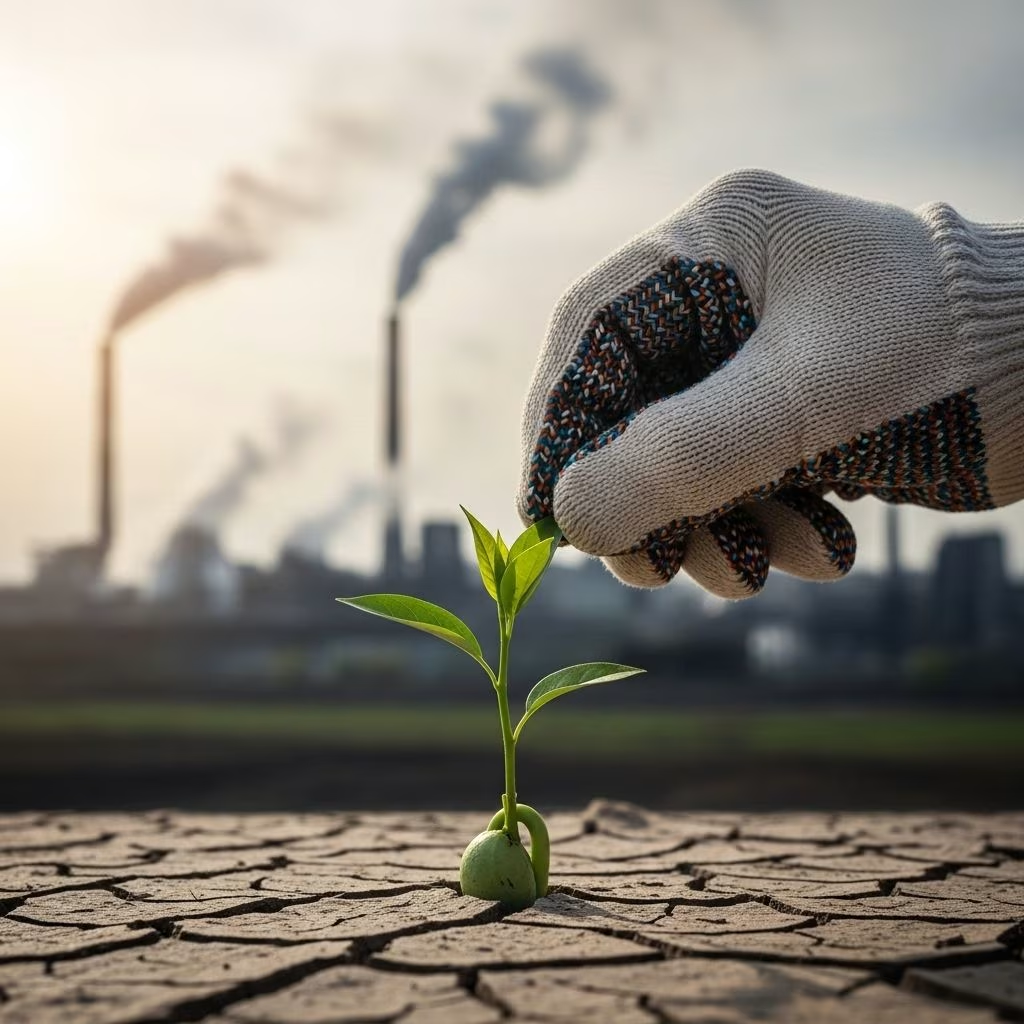
Pollution remains one of the most pressing challenges of the modern era, threatening ecosystems, human health, and global sustainability. Addressing pollution requires a dual approach: protection—preventing pollutants from entering the environment—and repair—restoring environments already affected by contamination. This article explores the full spectrum of “actives”—strategies, technologies, and policies—that enable both protection against and repair of pollution, drawing on the latest research, industry practices, and policy insights.
Understanding Pollution and Its Impacts
Pollution occurs when harmful substances are introduced into the environment, causing adverse effects on living organisms and natural systems. Major forms include air, water, and soil pollution, each with distinct sources, characteristics, and consequences. Air pollution, for example, stems from vehicle emissions, industrial processes, and energy production, leading to respiratory diseases and climate change. Water pollution arises from agricultural runoff, industrial discharges, and improper waste disposal, endangering aquatic life and freshwater resources. Soil pollution, often a result of pesticide use and industrial waste, degrades land fertility and food safety.
The impacts of pollution are far-reaching, affecting biodiversity, public health, and economic stability. Climate change, biodiversity loss, and increased healthcare costs are just a few of the downstream effects of uncontrolled pollution. Thus, understanding the origins and consequences of pollution is the first step toward effective action.
Pollution Protection: Prevention Strategies
Preventing pollution at its source is the most effective and sustainable approach. A combination of regulatory frameworks, technological innovations, and behavioral changes can significantly reduce environmental contamination.
Source Reduction
Source reduction involves minimizing or eliminating the generation of pollutants before they enter the environment. This can be achieved by:
- Process modification: Altering manufacturing or agricultural processes to use fewer resources and generate less waste. For example, replacing solvent-based paints with water-based alternatives reduces volatile organic compound emissions.
- Use of safer substances: Substituting hazardous chemicals with less toxic alternatives in products and industrial applications.
- Improved maintenance: Regular upkeep of equipment and facilities to prevent leaks and spills, especially in automotive and industrial settings.
- Product design: Designing products for longevity, recyclability, and minimal environmental impact.
Source reduction not only lessens pollution but also conserves resources and can reduce costs for businesses and municipalities.
Recycling and Reuse
Transforming waste materials into new products conserves raw materials, reduces energy consumption, and minimizes greenhouse gas emissions. Effective strategies include:
- Single-stream recycling: Simplifying recycling processes for consumers to increase participation rates.
- Industrial symbiosis: Creating networks where one company’s waste becomes another’s raw material, fostering a circular economy.
- Reuse programs: Encouraging the repair and repurposing of goods to extend their lifecycle.
Recycling and reuse are critical for reducing the volume of waste entering landfills and incinerators, thereby decreasing associated pollution.
Treatment Technologies
When pollution cannot be prevented at the source, treatment technologies offer a secondary line of defense. These include:
- Advanced filtration systems: Capturing fine particulates and pollutants from industrial emissions before release into the atmosphere.
- Wastewater treatment plants: Removing contaminants from industrial and municipal wastewater to protect water bodies.
- Air scrubbers: Using chemical or physical processes to remove pollutants from exhaust streams.
These technologies enable industries to meet regulatory standards and reduce their environmental footprint without compromising productivity.
Sector-Specific Strategies
Different industries face unique pollution challenges, necessitating tailored approaches:
Automotive and Transportation
- Emission standards: Governments set legal limits on pollutants released by vehicles and enforce compliance through regulations.
- Cleaner fuels: Switching to natural gas, biofuels, or electricity reduces emissions of nitrogen oxides, particulates, and greenhouse gases.
- Fuel efficiency improvements: Mandating or incentivizing vehicles that consume less fuel per mile traveled.
- Maintenance best practices: Using drip pans, absorbent materials, and non-toxic cleaners in vehicle repair to prevent fluid leaks and contamination.
Municipal and Urban Environments
- Stormwater management: Preventing contaminated runoff from entering water bodies through sediment control, proper storage of hazardous materials, and regular street cleaning.
- Proper disposal: Ensuring hazardous and electronic waste is collected and treated separately from general waste.
- Public education: Raising awareness about pollution sources and prevention through community programs and signage.
Agriculture
- Integrated pest management: Reducing reliance on chemical pesticides by using biological controls and crop rotation.
- Precision farming: Applying fertilizers and water more efficiently to minimize runoff and leaching.
| Sector | Key Strategies | Examples |
|---|---|---|
| Industrial | Process modification, advanced filtration, recycling | Water-based cleaners, emission scrubbers, industrial symbiosis |
| Automotive | Emission standards, cleaner fuels, maintenance protocols | Biofuels, drip pans, non-toxic cleaners |
| Municipal | Stormwater management, public education, proper disposal | Street sweeping, storm drain labeling, hazardous waste collection |
| Agriculture | Integrated pest management, precision farming | Crop rotation, targeted irrigation, biological controls |
Pollution Repair: Environmental Restoration
When prevention fails and environments become contaminated, repair and restoration are essential. Remediation techniques vary based on the type and extent of pollution.
Bioremediation
Bioremediation uses living organisms—typically microorganisms, plants, or fungi—to degrade or detoxify pollutants in soil, water, or air. This approach is especially effective for organic contaminants, such as oil spills or pesticide residues. Key examples include:
- Microbial degradation: Bacteria and fungi break down hydrocarbons, chlorinated solvents, and other toxic compounds into less harmful substances.
- Phytoremediation: Plants absorb and accumulate heavy metals or organic pollutants, which are then harvested and safely disposed of.
Bioremediation is often cost-effective and less disruptive than physical or chemical methods, making it a preferred option for large-scale or sensitive sites.
Physical and Chemical Remediation
For more stubborn or inorganic pollutants, physical and chemical methods may be necessary:
- Soil washing: Contaminated soil is excavated and treated with water or solvents to remove pollutants.
- Air sparging: Injecting air into groundwater to volatilize contaminants, which are then captured and treated.
- Chemical oxidation: Applying oxidizing agents to break down hazardous chemicals in soil or water.
These techniques are often used in combination with bioremediation for comprehensive site cleanup.
Community and Policy Initiatives
Successful pollution repair often requires coordinated efforts at the community and policy levels:
- Brownfield redevelopment: Transforming contaminated industrial sites into usable community spaces through cleanup and revitalization.
- Environmental justice programs: Ensuring that marginalized communities disproportionately affected by pollution have access to resources for remediation and protection.
- Restoration funding: Government grants and public-private partnerships to support large-scale environmental repair projects.
Case Studies and Real-World Examples
Several cities and industries have implemented successful pollution actives:
- Industrial symbiosis in Kalundborg, Denmark: Companies exchange waste and by-products, reducing pollution and resource consumption.
- Urban stormwater management in Portland, Oregon: Green infrastructure and strict runoff controls protect waterways from contamination.
- Automotive sector adoption of water-based cleaners: Reducing solvent use and hazardous waste in vehicle maintenance.
These examples demonstrate that practical, scalable solutions exist for both pollution protection and repair.
Future Trends in Pollution Actives
Emerging technologies and policy shifts are shaping the future of pollution management:
- Smart sensors and IoT: Real-time monitoring of air and water quality to enable rapid response to pollution incidents.
- Circular economy models: Designing products and systems for zero waste and full recyclability.
- Carbon capture and storage: Removing CO₂ from industrial emissions to mitigate climate change.
- Regulatory innovation: Stricter emission standards and incentives for green technology adoption.
Frequently Asked Questions (FAQs)
Q: What is the most effective way to prevent pollution?
A: Source reduction—preventing pollution before it starts—is the most effective strategy, followed by recycling, reuse, and advanced treatment technologies.
Q: How can individuals contribute to pollution prevention?
A: Individuals can reduce car use, recycle, use non-toxic cleaning products, conserve water, and support environmentally responsible businesses.
Q: What is bioremediation, and when is it used?
A: Bioremediation uses living organisms to detoxify polluted environments, especially for organic contaminants like oil or pesticides. It is often used when physical or chemical methods are impractical or too costly.
Q: Are there technologies that can repair air pollution damage?
A: While it is challenging to “repair” air once polluted, technologies like carbon capture and advanced filtration can reduce ongoing emissions and improve air quality over time.
Q: What role do governments play in pollution prevention and repair?
A: Governments set emission standards, fund research and cleanup, enforce regulations, and educate the public to drive both prevention and repair efforts.
Conclusion
Actives for pollution—encompassing both protection and repair—are essential for safeguarding human health, ecosystems, and the planet’s future. A combination of source reduction, recycling, advanced treatment, and innovative remediation techniques can address pollution at every stage. Sector-specific strategies, community engagement, and forward-thinking policies further enhance these efforts. By adopting and scaling these solutions, society can move toward a cleaner, more sustainable world where pollution is not only managed but actively reversed.
References
- https://restorical.com/pollution-abatement/
- https://www.ebmud.com/download_file/force/1926/644?vehicle-repair-guidelines.pdf
- https://stormwater.pca.state.mn.us/index.php/Municipal_pollution_prevention_methods
- https://www.portland.gov/bes/preventing-pollution/prevent-pollution/vehicle-and-equipment-maintenance
- https://www.epa.gov/p2/learn-about-pollution-prevention
- https://www.pca.state.mn.us/news-and-stories/what-you-can-do-about-air-pollution
- https://iiseagrant.org/22-ways-to-prevent-pollution/
- https://www.epa.gov/air-quality-management-process/managing-air-quality-control-strategies-achieve-air-pollution
- https://sensorex.com/effective-water-pollution-solutions-to-protect-our-environment/


