


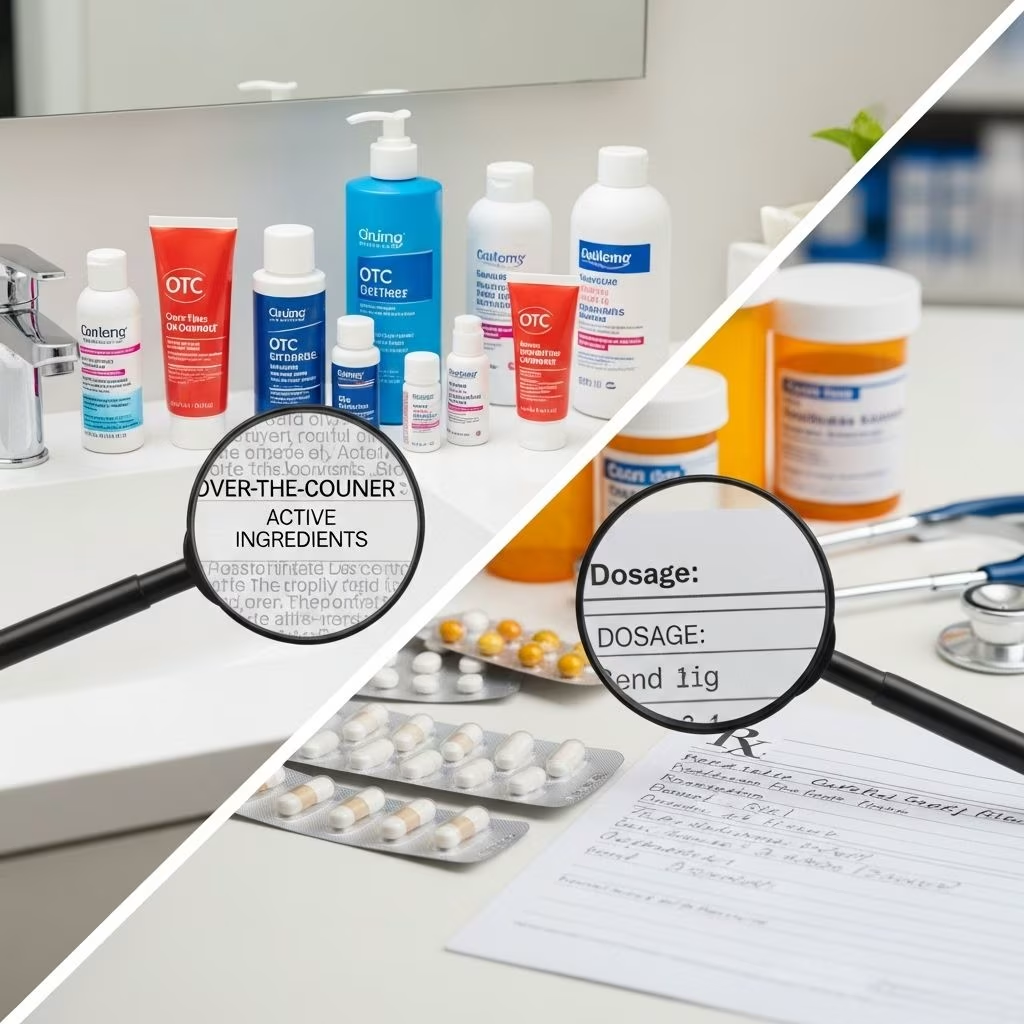
In today’s healthcare landscape, patients and consumers routinely face choices between over-the-counter (OTC) and prescription medications. A central aspect influencing this decision is the difference in the active concentration—the amount of a therapeutically active ingredient contained in a single dose—between these two categories. This in-depth guide analyzes regulatory frameworks, clinical implications, safety, efficacy, and real-world considerations for understanding and selecting between OTC and prescription strengths.
Introduction
The availability of medications without a prescription has empowered individuals to take a proactive role in managing common health conditions, from headaches to seasonal allergies. However, a key point of confusion—and a critical consideration for safety and effectiveness—is the difference in the active concentration of drugs sold OTC versus those obtained via prescription. This article dissects these differences to help patients, caregivers, and professionals make informed medication choices.
Defining OTC and Prescription Medications
Over-the-Counter (OTC) Medications are drugs available for purchase without a prescription. These products are formulated and regulated for safety, allowing consumers to self-treat a variety of mild-to-moderate health issues. OTC medications can be found in grocery stores, pharmacies, and general retailers.
Prescription Medications require an order from a licensed healthcare provider. They are dispensed by a pharmacist and are often stronger, have more stringent safety profiles, or are indicated for more serious or lasting health conditions.
Key Points of Distinction
- OTC: Self-treatment, readily available, labeled for lay understanding, lower concentrations.
- Prescription: Requires health professional oversight, controlled access, higher concentrations, indicated for specific medical needs.
Regulation and Approval Processes
Both OTC and prescription drugs are regulated by the U.S. Food and Drug Administration (FDA), but the pathways for approval and the level of oversight differ significantly based on intended use, risk profile, and active concentration.
OTC Medications
- Approved based on demonstration of safety for self-use without physician supervision.
- Subject to strict concentration limits for certain active ingredients to minimize risks of toxicity or misuse.
- Must feature consumer-friendly labeling with clear drug facts and usage directions.
Prescription Medications
- Undergo stringent FDA review, including clinical trials proving safety and efficacy for specific indications.
- Not restricted in active concentration to the same extent—dosing is managed by a healthcare provider.
- Labeling is customized with individual instructions from the prescriber.
Rx-to-OTC Switch
- Some drugs first introduced as prescription medications become available OTC if post-market data support adequate safety in wider populations and at specified lower concentrations.
- Labeling and dosing may change as part of this transition.
Differences in Active Ingredient Concentrations
The concentration of active ingredients is a fundamental variable separating OTC from prescription drugs. This affects the potency, duration, and magnitude of the effect, and must be understood in context.
| Category | Typical Active Concentration | Intended Use | Example Ingredient | Example Product |
|---|---|---|---|---|
| OTC | Lower (e.g., 1% hydrocortisone) | Mild conditions, short-term use | Hydrocortisone | Cream for itching |
| Prescription | Higher (e.g., 2.5% hydrocortisone) | Moderate/severe, chronic, or specialist supervision needed | Hydrocortisone | Rx steroid for eczema |
Why Are OTC Concentrations Lower?
- Safety Margin: Lower concentrations minimize the risk of adverse effects or accidental overdose.
- Self-Dosing: Products are designed for use by nonspecialists, reducing the chance of medical errors.
- Regulatory Requirement: FDA mandates concentration limits for certain actives in OTC products to ensure safe use by the general public.
Safety and Efficacy: Clinical Implications
Concentration differences impact both the risk and potential benefit of a medication. Lower active concentrations in OTC products mean:
- Lower risk of side effects, even with broader access.
- Suitable for self-limited or mild conditions, such as minor headaches, transient allergies, or mild heartburn.
- Potentially less effective for severe or persistent problems.
Prescription medications, because of their higher concentrations, can:
- Affect more profound or chronic medical conditions.
- Require monitoring for adverse effects, drug interactions, and appropriate dosing.
- Be tailored by the prescriber for specific patients’ needs.
Regulatory Safety Mechanisms
- OTC: Formulated for a large safety cushion; packs and dosages are often limited to reduce misuse. Example: Ranitidine OTC tablets were limited to 75 mg per dose, lower than the prescription-only 150 or 300 mg tablets.
- Prescription: Stronger drugs with more complex risk profiles, thus requiring medical oversight for safety and benefit-risk assessment.
Accessibility and Labeling Standards
OTC and prescription drugs differ in labeling, user directions, and points of sale. Understanding these distinctions is vital for ensuring correct use.
OTC Medicines
- Freely available at various retailers: grocery stores, pharmacies, even gas stations.
- Labeling must include a “Drug Facts” panel:
- Active ingredients and amounts
- Intended uses
- Directions for safe and effective use
- Warnings, contraindications, potential side effects
- Some OTC products (e.g., pseudoephedrine) are kept behind-the-counter due to risk of misuse, requiring identification and quantity restrictions.
Prescription Medicines
- Dispensed only by pharmacies under license.
- Labeling is individualized, reflecting physician instructions and patient-specific considerations.
- Not required to have a “Drug Facts” panel for the lay public, as guidance is provided directly by healthcare professional.
Case Studies and Common Examples
Several drugs exist in both OTC and prescription forms, with their primary distinction being active concentration. Below are a few notable examples:
| Drug | OTC Strength | Prescription Strength | Common Uses |
|---|---|---|---|
| Hydrocortisone (topical) | 1% or lower | 2%, 2.5% | Allergic skin reactions, eczema |
| Esomeprazole (Nexium) | 20 mg | 40 mg | Acid reflux, GERD |
| Adapalene (Differin) | 0.1% | 0.3% | Acne |
| Ibuprofen | 200 mg | 400 mg, 600 mg, 800 mg | Pain, inflammation |
| Salicylic Acid (topical) | 0.5–2% | Up to 5–6% by Rx | Acne, psoriasis |
These differences directly translate to which conditions and severities each product can appropriately treat. For example, a 1% hydrocortisone cream is suitable for minor rash, but moderate or persistent eczema often requires the higher prescription form.
Making the Right Choice: Clinical Recommendations
For most mild, self-limited health issues, an OTC medication at recommended doses suffices. However, knowing when to escalate to a prescription product is essential for safety and effectiveness.
Stepwise Approach for Consumers
- Start with OTC products when available, following label directions precisely.
- If symptoms persist or worsen after a reasonable period, consult a healthcare provider for possible prescription alternatives.
- Never adjust drug dosages or combine multiple products to achieve ‘prescription-like’ strength without medical advice.
- Be aware of label indications: Only use OTC drugs that clearly state their intended treatment use.
Frequently Asked Questions (FAQs)
Q: Why do prescription drugs have higher active concentrations than OTC?
A: Prescription drugs are allowed higher concentrations because they are used under medical supervision, making it easier to monitor for side effects or complications.
Q: Are OTC medications less effective?
A: OTC medications are effective for mild-to-moderate conditions at their approved dosages, but may be less effective for severe or persistent problems where higher concentrations (requiring a prescription) are needed.
Q: Can I take a higher dose of OTC medication to match prescription strength?
A: No. Taking more than the recommended dose increases the risk of adverse effects and may not be safe; always consult a healthcare provider before altering dosages.
Q: Do OTC and prescription drugs with the same name always have the same ingredients?
A: Sometimes, but not always. They may differ in concentration, formulation, or other inactive components—so always check labels and follow professional advice.
Q: How can I tell if an OTC product is high quality?
A: Look for the FDA-required “Drug Facts” label detailing active ingredients, uses, warnings, and directions. Use products from reputable brands and check for clinical backing.
Conclusion
Understanding the difference in active concentrations between OTC and prescription medications is essential for safe, effective self-care and clinical practice. OTC drugs offer convenience and safety at lower concentrations, suitable for mild ailments and self-limited conditions. Prescription medications, with their higher active levels, can treat more severe problems but require professional guidance due to heightened risks of side effects. Always consult healthcare professionals when in doubt or when symptoms persist, and remember: the safest medication is one used appropriately at the correct dosage for the right indication.
References
- https://www.goodrx.com/drugs/otc/vs-prescription
- https://slmdskincare.com/blogs/learn/prescription-vs-medical-grade-vs-otc-skincare-ultimate-guide
- https://pmc.ncbi.nlm.nih.gov/articles/PMC1884570/
- https://www.fda.gov/drugs/understanding-over-counter-medicines/over-counter-medicines-whats-right-you
- https://www.drclevens.com/blog/a-comparison-medical-grade-vs-over-the-counter-skincare-products/
- https://www.webmd.com/allergies/otc-vs-prescription-whats-difference
- https://pmc.ncbi.nlm.nih.gov/articles/PMC6118289/
- https://americanaddictioncenters.org/over-the-counter-medications/are-they-safer
- https://today.uconn.edu/2021/10/why-prescription-drugs-can-work-differently-for-different-people-2/
- https://transit-safety.fta.dot.gov/DrugAndAlcohol/Publications/Documents/substance/RxOTC/RxOTC_April2011_Feb2012_Update.pdf


