


Table of Content
- Introduction
- What is Pulse Dye Laser?
- Pediatric Hemangiomas
- Treatment Options for Hemangiomas
- Pulse Dye Laser Treatment for Hemangiomas
- Safety and Efficacy of Pulse Dye Laser
- Combined Therapy for Hemangiomas
- Frequently Asked Questions (FAQs)
Introduction
Pediatric hemangiomas are benign vascular tumors that frequently occur in infants and young children. These lesions can appear shortly after birth and are known for their rapid growth during the first few months of life, eventually involuting over several years. However, some hemangiomas may require treatment if they pose a risk to the child’s health or cause cosmetic concerns. One effective treatment for infantile hemangiomas is the Pulse Dye Laser (PDL), which has been widely used for its safety and efficacy in managing vascular lesions.
What is Pulse Dye Laser?
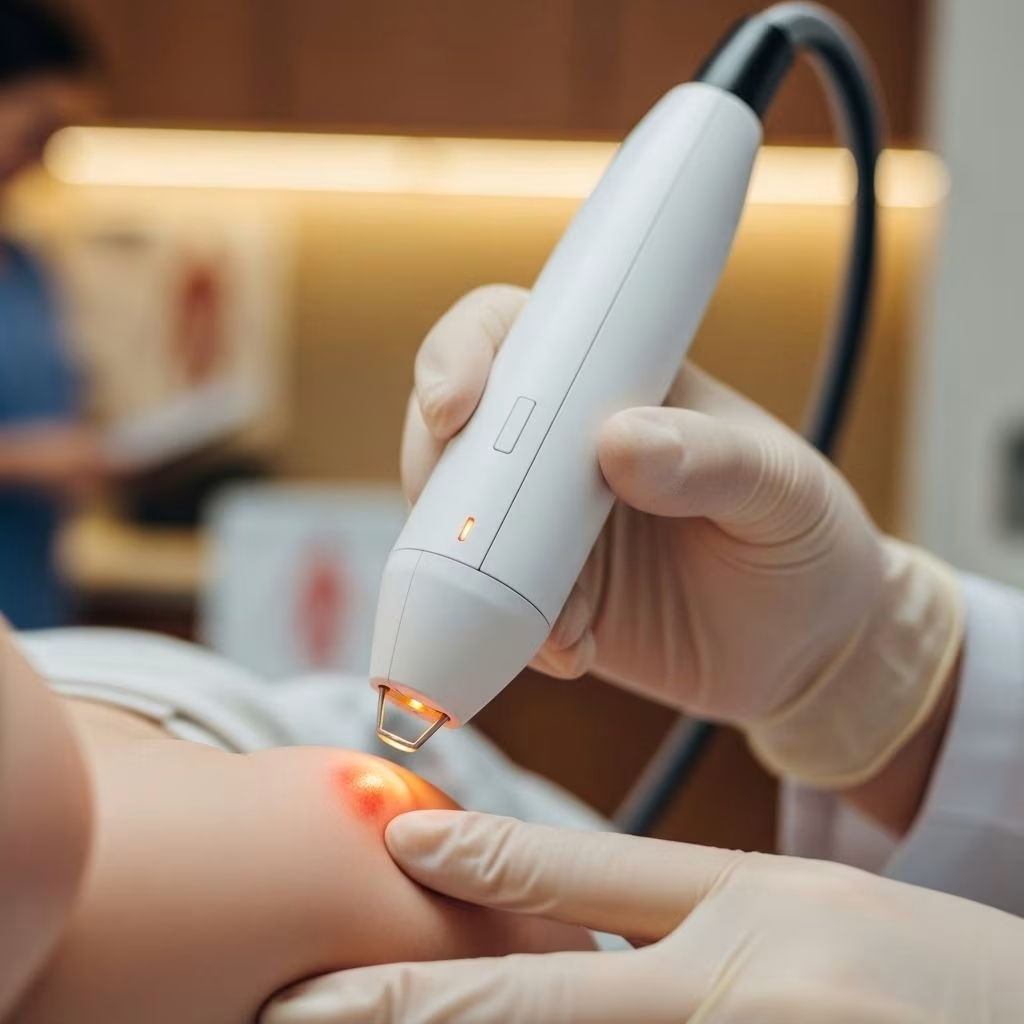
Pulse Dye Laser (PDL) is a type of vascular laser that targets hemoglobin in red blood cells, making it ideal for treating vascular lesions like hemangiomas. It emits a specific wavelength of light that selectively targets and coagulates the blood vessels, reducing the appearance of the lesion. PDL is recognized for its effectiveness in treating port-wine stains and other vascular birthmarks.
Pediatric Hemangiomas
Infantile hemangiomas are the most common soft tissue tumors in infants, occurring in approximately 10% of children under one year old. These lesions typically enter a rapid growth phase during the first few weeks of life, followed by a gradual involution phase that can last several years. While many hemangiomas resolve on their own, some may require medical intervention if they cause complications or significant cosmetic concerns.
Treatment Options for Hemangiomas
Treatment options for pediatric hemangiomas vary based on the size, location, and depth of the lesion. Common treatments include:
- Observation: For small, uncomplicated hemangiomas, observation is often recommended, as many resolve spontaneously.
- Topical or Systemic Medications: For larger or more problematic hemangiomas, medications like propranolol may be used to reduce growth and facilitate involution.
- Laser Therapy: PDL is a popular choice for treating superficial hemangiomas due to its precision and safety.
Pulse Dye Laser Treatment for Hemangiomas
PDL treatment is particularly effective for superficial hemangiomas. It is most commonly recommended for infants under six months, as it can significantly improve the cosmetic outcome of the lesion. The treatment involves using a 595-nm wavelength laser with specific settings to target the hemoglobin in the blood vessels of the hemangioma, leading to the coagulation and eventual reduction of the lesion.
Laser Parameters
The laser settings for treating hemangiomas typically include a wavelength of 595-nm, a spot diameter of 5-10 mm, and a fluence range of 6.0-7.5 J/cm². Dynamic cooling devices are used to protect the skin and reduce discomfort during treatment.
Safety and Efficacy of Pulse Dye Laser
The safety and efficacy of PDL for treating hemangiomas have been extensively studied. While it is generally safe, potential side effects include temporary bruising, redness, and swelling at the treatment site. The efficacy of PDL in reducing the size and color of hemangiomas is well-documented, with significant improvements observed in cosmetic outcomes when used appropriately.
Combined Therapy for Hemangiomas
Combining PDL with other treatments, such as propranolol, can enhance the effectiveness of hemangioma management. This approach has been shown to result in faster resolution of hemangiomas and a reduced need for prolonged medication use.
Frequently Asked Questions (FAQs)
Q: What is the optimal age for PDL treatment of hemangiomas?
A: PDL is most effective for children under six months, as it can significantly improve the cosmetic outcome. However, it can be used for older children if necessary.
Q: How many PDL treatments are typically needed for hemangiomas?
A: The number of treatments can vary, but multiple sessions are often required to achieve optimal results.
Q: Are there any side effects associated with PDL treatment?
A: Common side effects include temporary redness, swelling, and bruising at the treatment site. Serious side effects are rare.
Conclusion
Pulse Dye Laser is a valuable treatment option for pediatric hemangiomas, offering both safety and efficacy. It is particularly effective for superficial lesions and can be used in combination with other treatments to achieve optimal results.
References
- https://pubmed.ncbi.nlm.nih.gov/23279058/
- https://pmc.ncbi.nlm.nih.gov/articles/PMC9285537/
- https://www.laserskinsurgery.com/conditions/hemangiomas/
- https://www.childrenshospital.org/treatments/pulsed-dye-laser
- https://www.rileychildrens.org/health-info/laser-skin-therapy
- https://www.amerihealthcaritaspa.com/content/dam/amerihealth-caritas/acpa/pdf/provider/resources/clinical/202507/ccp1136-pulsed-dye-laser-port-wine-stain-infantile-hemangioma.pdf.coredownload.inline.pdf
- https://jamanetwork.com/journals/jamadermatology/fullarticle/190229
- https://nyulangone.org/conditions/birthmarks-in-children/treatments/medication-laser-therapy-for-birthmarks-in-children


