


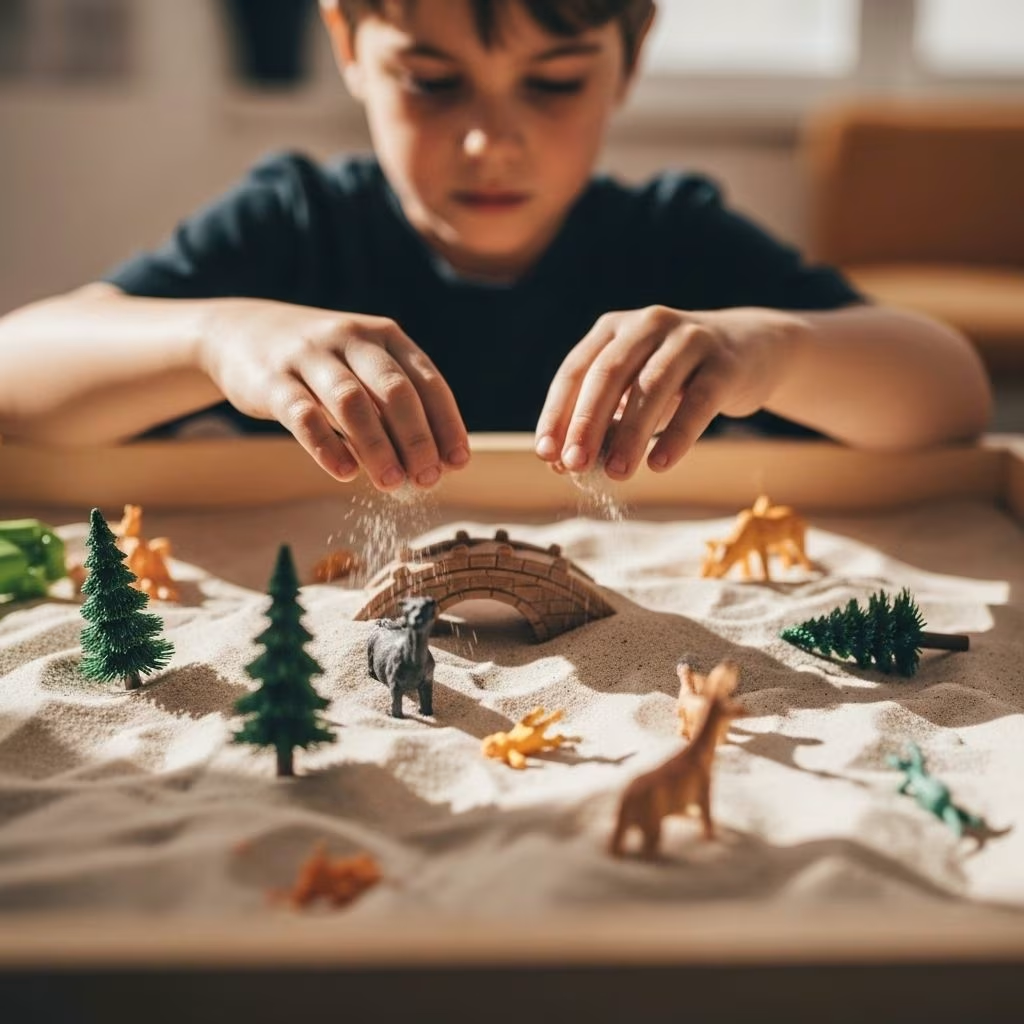
Children communicate through play, often more easily than through words. Sand play therapy taps into this language, offering a creative and sensory-rich medium where kids can process and express emotions, reduce anxiety, and develop mindful focus. This article explores the roots, mechanisms, and therapeutic power of sand play for mindful attention in child therapy.
Introduction to Sand Play Therapy
Sand play therapy, sometimes called sand tray therapy, is a form of expressive and sensory-based psychotherapy that uses a box of sand, water, and miniature figures to facilitate communication, self-expression, and healing, especially for children. Through creative play, kids externalize their internal worlds—expressing thoughts and feelings that might otherwise remain unspoken or difficult to articulate.
The earliest roots of sand play reach back to Jungian psychology, but its practice today is informed by developmental psychology, trauma research, and mindfulness-based approaches. Sand play therapy is distinct from mere play: it is structured, intentional, and guided by a trained therapist who invites children into a safe, non-judgmental environment to explore freely.
Key Features of Sand Play Therapy
- Expressive and nonverbal: Uses objects and scenes to represent feelings and stories.
- Sensory-rich medium: The tactile nature of sand offers grounding and soothing effects.
- Therapeutic alliance: The therapist observes, supports, and gently guides without imposing meaning.
- Flexibility: Adaptable for diverse needs, ages, cultures, and developmental levels.
The Role of Mindful Focus in Child Therapy
Mindful focus is the ability to sustain present-moment attention with acceptance and calm. In therapy for kids, mindful focus improves emotional regulation, behavioral control, and academic performance. However, many children—especially those facing anxiety, trauma, ADHD, autism, or emotional difficulties—struggle with sustained attention and regulation.
- Why mindful focus matters:
- Enhances self-awareness and calming skills
- Reduces impulsivity and emotional reactivity
- Supports resilience and adaptability
Play-based approaches, when integrated with mindfulness, yield especially powerful results for younger children by engaging their innate curiosity and active senses.
How Sand Play Promotes Mindful Focus
Sand play creates a foundation for mindful focus through multisensory engagement and symbolic expression. Here’s how:
- Sensory Engagement
The tactile experience of handling, sifting, pouring, or molding sand has a naturally calming and focusing effect. The sense of touch anchors children in the here-and-now, while the repetitive movements encourage a meditative rhythm, akin to mindfulness exercises. - Emotional Externalization
Children often find it easier to depict worries, fears, and hopes in sand than to verbalize them. As conflicts or anxieties are externalized into the tray, kids observe and interact with their own symbolic worlds from a safe psychological distance, fostering insight without overwhelm. - Structured Yet Open-Ended Play
The blend of freedom and safe boundaries in sand play encourages mindful curiosity and attentive exploration. Whether constructing scenes or burying figures, children choose how to use the space, promoting agency and focus. - Supportive Therapeutic Presence
The therapist’s non-judgmental observation and gentle inquiry help maintain a mindful, respectful space. The therapist may use open-ended questions, reflections, and non-directive support, allowing the child to be the author of their story in the sand.
Sand Play Therapy Process Overview
| Stage | Description |
|---|---|
| Invitation | Child is welcomed into a safe room with a sand tray and diverse miniatures. |
| Free Play | Child creates scenes, tells stories, or simply explores textures and shapes. |
| Observational Support | Therapist quietly observes; may reflect or ask open questions about the creation. |
| Processing | Discussion or art-based exploration of the story if the child wishes. |
| Integration | Session ends with reflection, supporting mindful closure and recalibration. |
Benefits of Sand Play Therapy for Kids
Extensive research and practice highlight sand play as profoundly beneficial for emotional, behavioral, and social functioning in children.
Core Benefits
- Reduces Anxiety & Stress: The tactile, meditative process regulates the nervous system, lowering anxiety and calming hyperarousal.
- Improves Emotional Regulation: Children develop skills to express, contain, and soothe their emotions by moving from chaos (messy sand) to order (created worlds).
- Encourages Mindful Focus: The immersive aspect of sand play draws attention to the present moment, fostering attentive and mindful engagement.
- Fosters Emotional Insight: Externalizing experiences helps children gain distance and perspective, opening pathways for discussion and reflection with the therapist.
- Builds Coping and Resiliency Skills: Through creative problem-solving and mastery of the tray, children learn nonverbal coping mechanisms transferrable to real-life challenges.
- Inclusive & Adaptive: Works for children of all developmental levels and backgrounds, including those with language, learning, or sensory differences.
Quantitative Outcomes
| Skill / Outcome | Change Reported |
|---|---|
| Reduction in Anxiety (Average) | Up to 55% improvement after therapy cycles. |
| Emotional Expression | 80% of children showed increased ability to verbalize or depict feelings. |
| Improved Coping & Self-Esteem | About 65-70% of children reported enhanced skills. |
| Reduction in Negative Behaviors | Notable decrease in aggression and peer issues, especially in ASD/ADHD populations. |
Who Benefits Most?
- Children with anxiety, stress, or phobias
- Children coping with trauma, loss, or family disruption
- Neurodivergent children (e.g., autism, ADHD), who may struggle with verbal communication or sensory integration
- Kids facing social, behavioral, or peer relationship challenges
- Those experiencing chronic illness or ongoing medical treatment, benefiting from emotional resilience work
Scientific Evidence and Case Studies
Several studies and clinical case reviews underline the effectiveness of sand play and sand tray therapy in supporting children’s emotional and behavioral health:
- Reduces Clinically Significant Anxiety: Kids with chronic illness or anxiety showed measurably reduced panic and worry symptoms post-intervention, with some studies noting up to a 55% overall reduction.
- Enhances Social and Coping Skills: In children, including those with high-functioning autism and ADHD, sand play correlated with fewer negative peer interactions and improved adaptability.
- Facilitates Emotional Processing in Trauma: Research on children with trauma backgrounds suggests that sand play aids in regulating emotions, integrating memories, and gently resolving internal conflicts.
- Mindful Focus as a Mechanism: Animal-assisted and mindfulness-based sand play programs showed improvements in attention, calming, and mindfulness in children diagnosed with ADHD or executive function challenges.
- Supports Resilience through Symbolic Expression: In longitudinal studies, children facing medical adversities used sand play to develop and re-author stories of hope, healing, and empowerment.
Implementing Sand Play Therapy in Practice
Therapists bring sand play into individual or group sessions in mental health clinics, schools, and specialized therapy centers. Key implementation steps:
Core Elements of Sand Play Setup
- Sand Tray: Standard trays are rectangular, shallow, and portable—often with blue interior sides to evoke water or sky. Dimensions commonly used are roughly 19″ x 28″.
- Variety of Miniatures: A diverse collection allows the child to represent people, animals, buildings, vehicles, natural elements (trees, rocks), fantasy figures, and more.
- Safe, Supportive Environment: Space must be private, calming, and free from distractions.
Therapeutic Techniques
- Open-Ended Play: Child explores freely, selecting and arranging miniatures without instruction.
- Observational & Reflective Practice: Therapist witnesses the process, sometimes reflecting on themes, but avoids judgment or premature interpretation.
- Facilitated Dialogue: Therapist may invite discussion through gentle, open questions, e.g., “What is happening in your scene?” or “How does this figure feel?”
- Closure Rituals: End with mindful transitions, perhaps inviting the child to notice a sensation or emotion as the session concludes.
Common Challenges and Solutions
- Initial Resistance: Some children hesitate or feel unsure; start with tactile exploration or model play to build trust.
- Overwhelm or Flooding: If a child becomes distressed, therapist redirects gently—offering grounding, containment, or shifting focus.
- Interpretation Pitfalls: Avoid premature analysis; focus on attunement, safety, and child-led exploration.
- Mess or Sensory Discomfort: Sensitive children may prefer dry sand, kinetic sand, or creative alternatives (e.g., rice or beans).
Frequently Asked Questions (FAQs)
Q: Is sand play therapy only for young children?
A: No. While especially effective for children ages 3 to 12, sand play therapy can benefit adolescents and adults seeking nonverbal, symbolic modes of processing emotions.
Q: What makes sand play therapy different from regular play?
A: Sand play is facilitated by a trained therapist and incorporates symbolic representation, emotional processing, and mindful attention, all within a safe, guided therapeutic setting.
Q: Can sand play therapy help with ADHD and autism?
A: Yes. Research indicates positive outcomes for children with ADHD, autism spectrum conditions, and sensory integration challenges, improving focus, regulation, and expression.
Q: How many sessions are typically needed to see benefits?
A: Each child is unique. Some improvement may appear after a few sessions, while deeper, lasting benefits often develop after 10–20 sessions, depending on the goals and child’s needs.
Q: Is sand play therapy supported by science?
A: Yes. Multiple studies demonstrate its effectiveness in reducing anxiety, fostering resilience, and improving mindful focus in a range of child populations.
Conclusion
Sand play therapy transforms a simple sandbox into a mindful arena of healing, exploration, and growth. By meeting children at the intersection of play, sensory engagement, and mindfulness, therapists help unlock emotional resilience, foster focus, and empower children to narrate and reshape their inner worlds—one handful of sand at a time.
References
- https://www.kidsfirstservices.com/first-insights/how-sand-play-therapy-helps-with-anxiety
- https://www.sinews.es/en/sandplay-therapy-how-and-why-is-this-technique-used-in-therapy/
- https://mentalhealthcenterkids.com/blogs/articles/sand-tray-therapy
- https://www.psychologytoday.com/us/therapy-types/sandplay-therapy
- https://pubmed.ncbi.nlm.nih.gov/37699060/
- https://www.olivebranchtherapygroup.com/sand-tray-therapy-play-therapy-or-just-play/
- https://www.healingpsychiatryflorida.com/services/therapy-counseling/children/sand-tray/
- https://wonderscounseling.com/sand-tray-therapy/


