


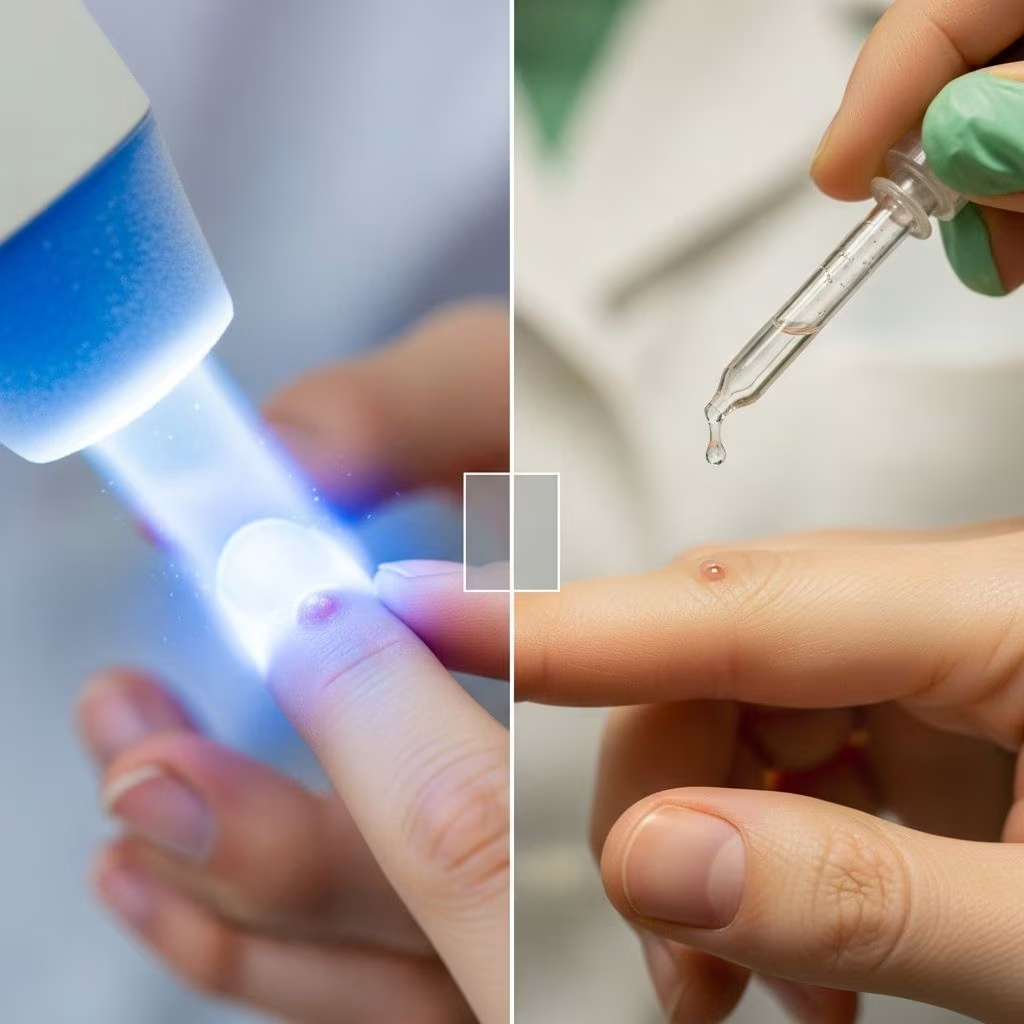
Cryotherapy vs. Salicylic Acid for Warts: Comparative Effectiveness, Safety, and Patient Insights
Warts are benign growths caused by the human papillomavirus (HPV) and represent one of the most frequent dermatologic complaints across all age groups. Two of the most commonly employed strategies for their management are cryotherapy and topical salicylic acid. This article provides a rigorous, evidence-based comparison of these therapies, addressing their respective efficacy, safety, patient satisfaction, recommended use cases, and additional considerations.
Introduction to Wart Treatments
Warts are non-cancerous skin growths resulting from infection with the human papillomavirus (HPV). They appear most frequently on fingers, hands, and feet and can be classified into several types (e.g., common, plantar, flat, and genital). Although many warts resolve spontaneously within two years—particularly in children—a substantial subset requires treatment due to discomfort, social stigma, or persistence.
The most widely used wart-removal therapies in primary care are cryotherapy (liquid nitrogen freezing) and topical salicylic acid (keratolytic agent). Each approach has distinct mechanisms, application protocols, efficacy profiles, and safety considerations.
Mechanisms of Action
Cryotherapy
- Definition: Involves the application of liquid nitrogen at -196°C directly to the wart.
- Mode of Action: Rapid freezing causes ice crystal formation, cell destruction, and inflammation. This subsequently results in an immune response that targets HPV-infected keratinocytes, contributing to wart clearance.
- Administration: Performed every 2–3 weeks by a healthcare professional; requires specialized equipment and trained personnel.
Salicylic Acid
- Definition: A keratolytic agent available in various concentrations (typically 10–50%) intended for topical use.
- Mode of Action: Softens the thickened wart tissue, promoting exfoliation and eventual removal of HPV-infected skin cells.
- Administration: Self-applied daily at home for several weeks; often requires pre-soaking and removal of dead tissue before reapplication.
Comparative Effectiveness
Numerous randomized controlled trials and systematic reviews have evaluated the effectiveness of cryotherapy and salicylic acid for both common (non-plantar) and plantar warts. Here, we synthesize high-quality evidence on their relative cure rates, efficacy timelines, and subgroup outcomes.
Effectiveness for Common Warts
- Cryotherapy: Reported cure rates for common warts range from 39% to 54% at 12–13 weeks.
- Salicylic Acid: Cure rates are generally lower (15%–25%) for common warts over similar intervals.
- Direct Comparisons: Some studies suggest cryotherapy is significantly more effective for common warts than salicylic acid (49% vs. 15% in one trial), whereas other large reviews found no statistically significant differences (pooled efficacy rates around 14–34% for both).
Effectiveness for Plantar Warts
- Cryotherapy: Efficacy for plantar warts (warts on the soles of the feet) is 14%–35%, depending on protocol and study population.
- Salicylic Acid: Similar efficacy for plantar warts (14%–30% in direct comparisons).
- Key Finding: Most studies, including systematic reviews and multicenter trials, report no meaningful difference in cure rates for plantar warts between cryotherapy and salicylic acid.
Additional Data and Meta-Analyses
- Pooled analyses show comparable efficacy for both treatments in common and plantar warts, with no statistically significant advantage for either approach when employed according to standard protocols.
- Some variation in response rates may be attributable to disease chronicity, treatment aggressiveness, and patient compliance.
- Natural resolution is a significant confounder, as up to two-thirds of pediatric warts resolve spontaneously within two years.
Safety and Side Effects
Adverse event profiles are important when selecting a treatment modality for warts, especially in vulnerable populations such as children.
Cryotherapy
- Pain and Discomfort: Immediate pain, blistering, and stinging at the treatment site are common at the time of application.
- Local Side Effects: May cause blister formation, skin discoloration (hypopigmentation or hyperpigmentation), scarring, and, rarely, infection.
- Recovery: Healing usually occurs within one to two weeks post-application.
- Patient Tolerance: Tolerated well by most adults; younger children may be less tolerant due to pain and anxiety.
Salicylic Acid
- Skin Irritation: Mild irritation, redness, and burning are the most common side effects.
- Allergic Reaction: Rare; most formulations are safe for daily use when applied carefully.
- Risk of Overuse: Overapplication may cause superficial chemical burns or ulceration, particularly in sensitive skin or higher concentrations.
- Practical Safety: Considered very safe; suitable as a first-line therapy for home treatment in children and adults.
Practical Considerations
Convenience and Accessibility
- Cryotherapy:
- Requires clinic visits every 2–3 weeks.
- Performed by healthcare professionals; not suitable for easy self-administration.
- May be difficult to access in resource-limited or rural areas.
- Salicylic Acid:
- Readily available over the counter.
- Applied daily at home by patients or caregivers.
- More convenient for individuals seeking flexible treatment schedules.
Cost Comparison
- Cryotherapy: Higher cost due to professional administration, equipment, and multiple office visits.
- Salicylic Acid: Low cost; inexpensive OTC preparations with no need for professional involvement for most cases.
Duration of Treatment
- Cryotherapy: Usually requires 2–6 sessions over 2–12 weeks; rapid results observed in some responsive patients.
- Salicylic Acid: Requires daily application for 6–12 weeks; treatment success depends on consistency and patient adherence.
Patient Preferences and Satisfaction
- Studies report higher satisfaction with cryotherapy due to faster perceived results and the professional care experience.
- Salicylic acid is preferred by patients who value convenience, privacy, and self-management.
- For children and individuals with low pain tolerance, topical therapy is preferable due to minimal discomfort.
- Shared decision-making, considering patient lifestyle, pain threshold, and access to care, is recommended in clinical practice.
Clinical Guidelines and Recommendations
Evidence-based guidelines synthesize trial data and expert consensus to recommend selection criteria for wart treatment.
- For common warts (excluding plantar lesions), cryotherapy is generally more effective but also associated with increased pain and risk of scarring.
- For plantar warts, both salicylic acid and cryotherapy demonstrate equivalent effectiveness; choice should be individualized based on patient needs.
- When neither therapy is preferred or accessible, a ‘wait-and-see’ strategy may be reasonable, especially for younger patients and lesions of short duration.
- Combination therapy (e.g., initial salicylic acid followed by cryotherapy) is sometimes used in difficult cases, though supporting evidence is limited and warrants further research.
Special Considerations for Children
- Topical salicylic acid is advised as first-line due to the lower pain and risk profile, especially for children with multiple warts or low pain tolerance.
- Cryotherapy may be reserved for recalcitrant or cosmetically bothersome lesions if topical therapy fails.
Frequently Asked Questions (FAQs)
Q: Which treatment works faster for warts: cryotherapy or salicylic acid?
Cryotherapy generally yields faster visible results, often within a few sessions over several weeks. Salicylic acid requires consistent daily use for up to three months.
Q: Are there age restrictions for cryotherapy or salicylic acid?
Both treatments can be used in children, but topical salicylic acid is preferred due to its safety and tolerability. Cryotherapy may not be suitable for very young children due to pain and anxiety.
Q: Will warts come back after treatment?
Recurrence is possible with both modalities, as neither eradicates the underlying HPV. Good hygiene and immune health may lower risk of recurrence.
Q: Can I combine cryotherapy and salicylic acid?
Yes, some dermatologists recommend combination therapy for recalcitrant warts, but robust supporting evidence is limited.
Q: Are there any precautions when using salicylic acid?
Apply only to the wart, avoid surrounding healthy skin, and discontinue if severe irritation or allergic reaction occurs. Not recommended for facial or genital warts.
Summary Table: Cryotherapy vs. Salicylic Acid
| Aspect | Cryotherapy | Salicylic Acid |
|---|---|---|
| Efficacy (Common Warts) | 39%–54% | 15%–34% |
| Efficacy (Plantar Warts) | 14%–35% | 14%–30% |
| Application | Clinic procedure (every 2–3 weeks) | Daily home application |
| Side Effects | Pain, blistering, rare scarring | Minor irritation, redness |
| Cost | Higher (professional visits) | Low (OTC purchase) |
| Patient Satisfaction | Higher for fast results | Higher for convenience |
| Best for | Common warts, adults | Plantar warts, children |
Key Takeaways
- Cryotherapy is more effective for common warts but is associated with increased pain and required clinic visits.
- Salicylic acid offers similar efficacy for plantar warts, with the advantage of convenience and lower cost.
- Both treatments are acceptable; choice depends on patient age, pain tolerance, access to care, and personal preference.
- A wait-and-see approach is reasonable for new, small warts when treatment risks outweigh benefits.
- Consult your healthcare provider for individualized recommendations based on wart type, location, and history.
References
- https://pmc.ncbi.nlm.nih.gov/articles/PMC2952009/
- https://www.jpad.com.pk/index.php/jpad/article/download/2619/2255/9131
- https://onlinelibrary.wiley.com/doi/10.1155/2023/4283918
- https://www.aafp.org/pubs/afp/issues/2020/1201/p648.html
- https://jamanetwork.com/HttpHandlers/ArticlePdfHandler.ashx?journal=DERM&pdfFileName=deb120004_1311_1313.pdf
- https://www1.racgp.org.au/ajgp/2022/october/destructive-therapies-for-cutaneous-warts
- https://www.droracle.ai/articles/309827/between-cryotherapy-and-topical-salystic-acid


