


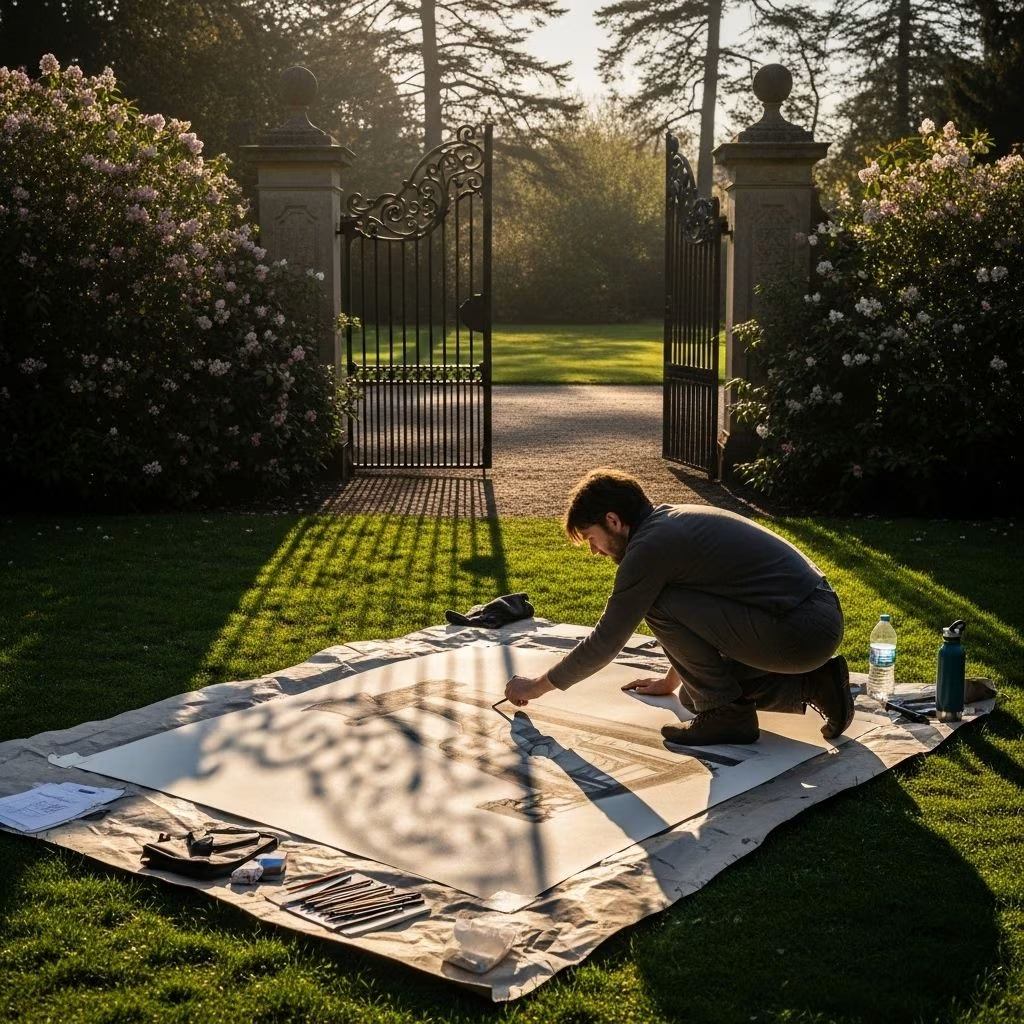
Shadow tracing is a captivating and accessible method that unites art with direct observation of nature’s fleeting phenomena. By using sunlight and outdoor environments as your studio, shadow tracing routines encourage creativity, an improved understanding of light, and the sharpening of observational skills. This article provides a comprehensive guide to shadow tracing—covering its artistic principles, scientific foundation, methods for all ages, and imaginative extensions for deeper discovery and fun.
Introduction to Shadow Tracing
Shadow tracing is a creative *plein air* (outdoor) practice where artists or observers capture the contours and play of shadows cast by natural or man-made objects. This process can be as structured or as spontaneous as desired—and it serves as a bridge between perceptual drawing, scientific investigation, and meditative observation of the ever-changing environment.
Artists and educators value shadow tracing not only for its aesthetic beauty but for its unique ability to foster a free, playful approach to art, encouraging participants to let go of perfectionism and experiment with interpretation. By working with shadows, observers connect with the sun’s daily journey and witness firsthand how minor changes in time, weather, or movement alter their subject’s appearance.
“Drawing and painting with light and shadow is an intriguing art encounter that can be as simple or as complex as you choose to make it, and requires minimal tools and artists of any age and skill level will enjoy it”.
Essential Materials & Preparation
Beginning a shadow tracing session outdoors is easy and requires little more than basic creative materials and a keen eye for sunlight. Here is a list of recommended items to help you get started:
- Paper – Any size will work, but larger sheets allow for grander compositions and more freedom of movement. (Sketchbooks, watercolor paper, or rolled craft paper are all suitable options.)
- Drawing Tools – Pencils, permanent markers, charcoal, ink pens, or sidewalk chalk for tracing.
- Coloring Materials – Watercolor paints, colored pencils, chalk paint, pastels, or markers for filling, embellishing, or finishing your traced forms.
- Hard Drawing Surface – Drawing board, cardboard, or a hardcover book for stability.
- Outdoor Objects – Plants, tree branches, toys, hands, architectural features, or even people (for large-scale body tracing).
- Sunshine or Strong Light Source – The activity is best done on bright, sunny days; however, you can use a lamp indoors for similar effects.
- Tape (Optional) – For securing your paper so it does not shift during tracing.
Preparation involves simply selecting a location with rich, defined shadows—whether a sunlit patch of ground, a deck, a park, or any open space where shadows are prominent and accessible.
Basic Techniques and Step-by-Step Routine
The beauty of shadow tracing is its approachability. Here is a straightforward, step-by-step routine for creating shadow art outdoors:
- 1. Choose Your Shadow: Select an interesting shadow—plant, tree, toy, person, or architectural line. Observe how its shape falls onto the ground or paper.
- 2. Arrange Your Materials: Place your paper on a hard surface, using tape if needed for windy days. Position it so the shadow clearly falls across the surface, adjusting the orientation until you like the composition.
- 3. Observe Carefully: Notice the differences between the shadow (positive shape) and the space around it (negative shape). Examine details such as overlaps, breaks, or edge softness.
- 4. Trace Quickly and Confidently: Using a pencil, marker, or chalk, closely follow the outline of the shadow. Shadows often shift quickly due to breeze or the sun’s movement, so speed and looseness are encouraged. Do not worry about making each line perfect—embrace spontaneity.
- 5. Add Color and Details: Once the outlines are complete, fill the shapes with paint, patterns, or additional designs. Highlight contrasts between shadow and light, or exaggerate shapes for expressive effect.
- 6. (Optional) Experiment: Try tracing new shadows over your existing work, use metallic markers, or blend colors for visual richness.
Shadow tracing can be adapted for all ages, from young children using sidewalk chalk to adults exploring watercolor or mixed media techniques.
The Science Behind Shadows: Light, Angle, and Time
Shadow tracing is a natural intersection of art and science. Shadows exist due to the obstruction of light—when an opaque object interrupts a straight path between a light source (like the sun) and a surface, a shadow appears behind the object.
| Scientific Factor | Effect on Shadow |
|---|---|
| Sun’s Position (Morning/Noon/Evening) | Shadows are longest at sunrise and sunset, shortest when the sun is high overhead (noon). This changes the size, angle, and length of the traced shadow. |
| Weather Conditions | Clear days create crisp shadows; cloudy days result in softer, diffuse shadows. Active weather alters clarity and opportunity for tracing. |
| Object’s Shape and Distance from Surface | Objects closer to the drawing surface cast sharper, more defined shadows; varied distances or irregular objects yield complex shapes. |
| Movement | Wind, movement, or time passing causes the shadow to shift. This creates opportunities for layered or sequential tracing (tracking the shadow’s journey). |
By tracing at different times of the day, artists and observers learn about the diurnal motion of the sun and can even use these observations to approximate the passage of time or cardinal directions—connecting art closely to solar science and practical observation.
Artistic Composition and Design Choices
Shadow tracing, despite its reliance on chance and nature, allows for intentional artistic decisions. Here are key principles for enhancing your design:
- Composition: Decide how much of the shadow to include; try capturing full forms, overlaps, or fragments.
- Positive and Negative Space: Deliberately balance shadow (positive) and background (negative) spaces for aesthetic harmony.
- Layering: Trace new shadows as the sun shifts, creating temporal layers that narrate the story of a day or changing environment.
- Perspective and Scale: Play with viewpoints—trace the shadow from different angles or at different distances to manipulate scale and distortion.
- Embellishment: Fill traced spaces with color, pattern, collage, or drawings inspired by the object itself or abstract designs.
Whether working quickly to catch a fleeting moment or methodically building up a multi-layered composition, shadow tracing can be both meditative and energetically expressive.
Advanced Ideas: Layering, Color, and Mixed Media
Once you have mastered basic shadow tracing, there are endless possibilities for creative exploration:
- Sequential Tracing: Trace the same object at several times throughout the day, using different colors for each tracing to record the shadow’s transformation.
- Mixed Media: Combine traditional drawing materials with watercolor washes, chalk paint, collage elements, or metallic markers for dynamic surfaces.
- Collaborative Art: Work in teams to capture group shadows, weave together multiple tracings, or create sidewalk murals in public spaces.
- Thematic Exploration: Choose a theme or narrative—such as the life cycle of a leaf, the flight path of birds, or geometry in architecture—and explore variations in shadow.
- Photography Integration: Document your shadow tracings alongside photos of the original shadows and environments for an artistic portfolio or nature study scrapbook.
- Environmental Observations: Record temperature, weather, and time alongside your drawings to tie each artwork to a specific environmental moment.
Larger outdoor spaces allow for full-body tracing, interactive group artwork, or community science and art projects.
Educational Benefits & STEAM Connections
Shadow tracing is celebrated as a cross-disciplinary activity, supporting growth and learning in several domains:
- Art: Develops eye-hand coordination, observational drawing skills, and creativity. Encourages freedom from perfectionism and experimentation with abstraction.
- Science: Teaches fundamentals of optics (light and shadow), solar movement, geometry of projection, and observation of weather phenomena.
- Math: Provides an introduction to measurement, angles, and scale through the changing dimensions of shadows over time.
- Mindfulness: Involves meditation on change, chance, and the fleeting qualities of time and light.
- Social Learning: Promotes cooperative play, communication, and collaborative problem-solving during group projects.
Shadow tracing supports STEAM (Science, Technology, Engineering, Art, Mathematics) objectives by demonstrating real-world applications of scientific principles within a highly creative process.
Safety and Practical Tips for Outdoor Shadow Art
While shadow tracing is generally safe and low risk, attention to environment and materials is important:
- Supervision: Young children should be supervised, especially on paved surfaces or in busy public spaces.
- Weather Awareness: Avoid outdoor art during extreme heat or when storms are likely. Protect artwork from unexpected rain or sprinklers.
- Sun Protection: Wear hats, sunscreen, or protective clothing for longer art sessions in the sun.
- Cleanliness: If using permanent paint or chalk, be mindful of public areas and always seek permission when creating larger murals or sidewalk art.
- Material Suitability: Chalk, water-based paints, or washable markers are preferable for young artists or temporary art.
- Accessibility: Use portable surfaces or clipboards for easier work on uneven ground.
Plan your session to take advantage of the best light, and work quickly to capture the most defined and beautiful shadows.
Frequently Asked Questions (FAQs)
Q: What type of objects make the most interesting shadow tracings?
A: Objects with intricate outlines and shapes (such as leaves, flowers, ferns, or branches) offer visually complex tracings. However, even toys, hands, or architectural lines like railings or fences can yield surprising results. Experiment with different textures for variety and challenge.
Q: Can shadow tracing be done indoors?
A: Yes. Use a strong lamp or flashlight as a controlled light source, and position objects between the light and your paper. This adapts the process for any weather, time, or indoor setting—especially useful for classroom demonstrations or nighttime experiments.
Q: How do you preserve outdoor shadow art like sidewalk chalk drawings?
A: To preserve ephemeral chalk or outdoor paints, photograph your work or use a fixative spray (if materials are compatible and approved for outdoor use). For permanent records, work on removable surfaces such as poster boards or wood panels and bring them indoors when finished. Always photograph your completed shadow tracing for portfolios or digital archiving.
Q: What educational lessons can be integrated with shadow tracing?
A: Use shadow tracing to teach lessons about the earth’s rotation, the properties of light and shadow, geometry, art composition, and environmental observation. Keep journals with notes about the time, place, and weather when each artwork is created.
Q: How do you manage rapidly moving shadows?
A: Work quickly—trace the most prominent parts first. If a shadow moves too soon, use multiple tracings to create a ‘shadow journey’ effect, layering outlines to show progression. For less movement, choose objects in sheltered areas or fix objects in place as much as possible.
Q: Why try shadow tracing as an adult?
A: Shadow tracing relieves stress by engaging you in immersive, mindful, and spontaneous creativity. It offers a refreshing break from screen time, reconnects you to natural cycles, and hones observational skills valuable for all types of creative practice.
Conclusion
Shadow tracing is a joyful, flexible art and observation technique, rich in sensory, artistic, and scientific rewards. Whether as a solo endeavor, a family activity, or a classroom project, shadow tracing invites everyone outdoors to see, observe, and create in partnership with the sun’s light and the world’s contours. Let each session remind you: art, science, and nature are always in motion, ready to be traced and celebrated—one shadow at a time.
References
- https://mysticmuseumofart.org/shadow-tracing/
- https://www.pem.org/virtual-art-activities/shadow-drawing-in-nature
- https://artfulparent.com/shadow-tracing-art-kids/
- https://www.youtube.com/watch?v=LJsmnTS5aLk
- https://rhythmsofplay.com/shadow-art-outdoor-science/
- https://www.youtube.com/watch?v=1LZWJyIES5E
- https://ltl.org.uk/resources/shadow-art/


