


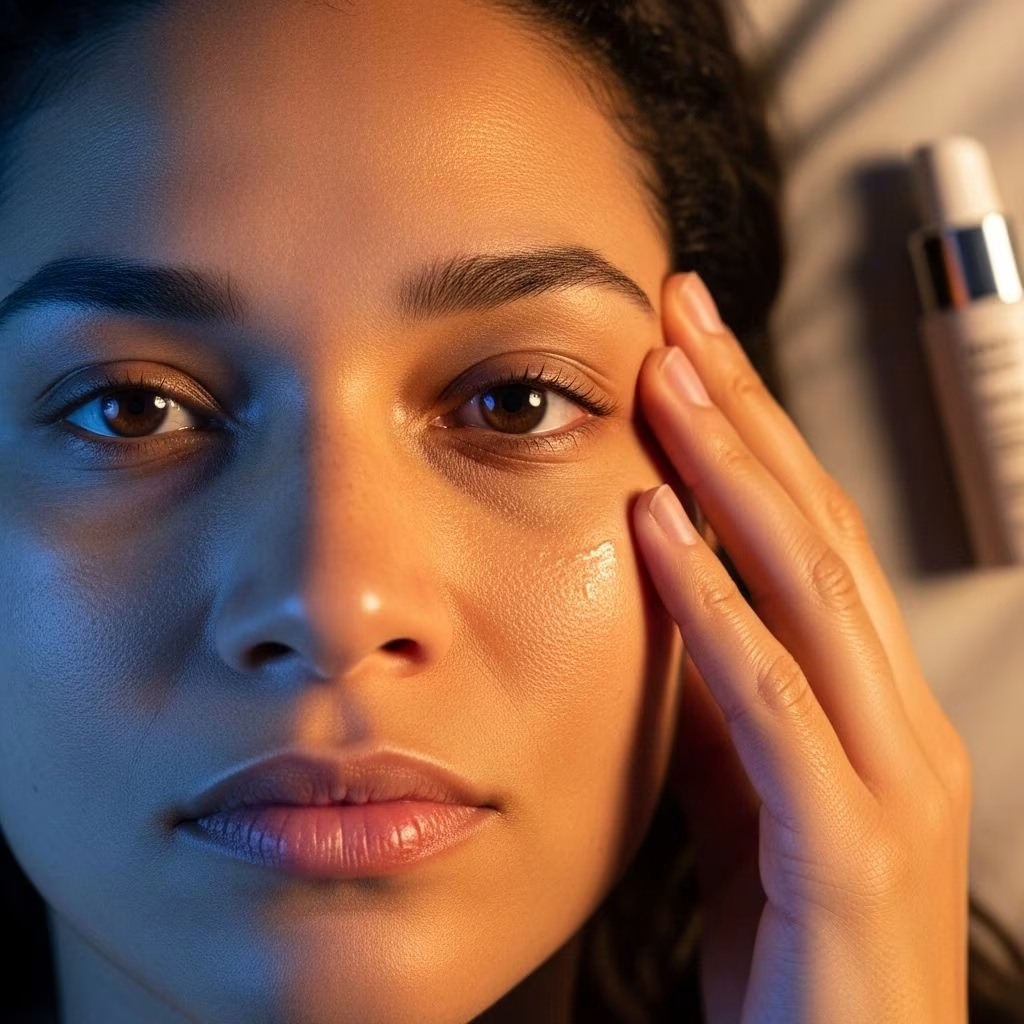
Shift Work Skincare: Circadian Rhythm Disruption
Modern society relies on the around-the-clock labor of healthcare professionals, emergency responders, factory operators, and countless others. Yet the cost of this convenience often falls on those who work during the night or in rotating shifts, whose biological clocks and skin health suffer. This comprehensive guide explores the science of circadian rhythm disruption due to shift work and outlines actionable skincare strategies to support skin health in these workers.
Understanding Circadian Rhythms
The circadian rhythm is an approximately 24-hour cycle that regulates biological processes, including the sleep-wake cycle, hormone release, body temperature, and cellular repair. It is governed by the brain’s suprachiasmatic nucleus (SCN), mainly guided by light and darkness cues. When you work against these natural signals—such as at night or in rotating shifts—your internal clock becomes misaligned, affecting numerous systems.
- Key circadian markers: Melatonin and cortisol.
- Controlled by the central clock in the brain and peripheral clocks in tissues like the skin.
- Light exposure is the main zeitgeber (time-giver) for circadian synchrony.
Shift Work and Circadian Disruption
Shift work means working schedules outside the standard daytime hours—including night shifts, rotating shifts, or early morning shifts. Non-standard schedules force abrupt changes in sleep and light-dark exposure, disrupting the circadian system.
- Central rhythm effects: Melatonin and cortisol rhythms show reduced amplitude and distorted patterns in night-shift workers.
- Internal desynchronization: Misalignment between central clock (melatonin/cortisol secretion) and peripheral clocks (skin, blood cells).
- Persistent misalignment: Studies reveal little adaptation to night schedules, even after several days or weeks.
- Long-term health risks: Increased risk of metabolic syndrome, cardiovascular disease, and cancer.
Chronotype and Shift Work
A person’s chronotype (morning or evening preference) can mediate health and sleep outcomes in shift work settings. Evening chronotypes may be at higher risk of metabolic syndrome, but the relationship between individual chronotype and shift-related risks is complex and may be influenced by lifestyle choices.
Skin Physiology and Circadian Cycles
Human skin hosts its own peripheral clock system, affecting cell proliferation, repair, barrier function, and immune surveillance. Circadian-regulated processes in the skin include:
- Barrier repair—heightened in the evening.
- Cell turnover—greater at night.
- DNA repair—active during sleep.
- Collagen production—stimulated at night.
When circadian rhythm is disrupted, these processes lose their rhythm, resulting in suboptimal cellular function and increased vulnerability to external stressors.
Impact of Shift Work on Skin Health
Numerous studies highlight several mechanisms through which shift work and circadian misalignment impact skin:
- Disturbed skin barrier function: Circadian disruption and sleep deprivation impair skin integrity and barrier repair, increasing susceptibility to irritants and allergens.
- Accelerated skin aging: Poor sleep and misaligned circadian cycles reduce collagen synthesis and skin regeneration, accelerating signs of aging (wrinkles, fine lines).
- Wound healing delay: Wounds occurring during the rest phase (when the body expects inactivity) heal more slowly than those during the active phase.
- Chronic inflammation: Night-shift work is associated with elevated inflammatory markers, leading to an increased risk of autoimmune skin diseases.
- Increased dryness, itching, and pain: Disrupted nocturnal skin temperature and changes in skin proteases may enhance itching, scratching, and pain, particularly at night.
- Hyperkeratosis and ulcers: Chronic circadian misalignment drives hyperkeratosis (thickened skin) and increased risk of ulceration.
Hormonal Mediators
Melatonin (sleep hormone) and cortisol (stress hormone) regulate inflammatory responses and skin regeneration. Shift workers often experience reduced melatonin levels due to sleep deprivation and altered light exposure, further undermining skin health.
Chronic Effects and Skin Disease Risks
Over months or years, repeated circadian disruption magnifies systemic and local health issues:
- Autoimmune skin disorders: Shift work is linked to higher risk for conditions like psoriasis, eczema, and lupus.
- Systemic inflammation: Increases susceptibility to allergic reactions and immune-mediated skin problems.
- DNA damage and cancer risk: Studies associate night-shift work with increased risks for certain cancers, including skin and colorectal cancer, due in part to suppressed melatonin and impaired cellular repair.
- Mood disorders: Fatigue, low alertness, and depression symptoms are common among shift workers, further impacting self-care and skin health.
| Disrupted Process | Effect on Skin | Long-Term Risks |
|---|---|---|
| Barrier Function | Increased dryness, itching, sensitivity | Hyperkeratosis, eczema, ulcers |
| Collagen & Repair | Reduced elasticity, premature aging | Deep wrinkles, slow wound healing |
| Immune Regulation | Greater inflammation, pain | Autoimmune skin diseases |
| Hormonal Balance | Altered melatonin/cortisol levels | Cancer risk, persistent inflammation |
Science-Backed Skincare Strategies for Shift Workers
While circadian misalignment poses distinct challenges, targeted skincare and lifestyle interventions can help minimize its impacts.
- Restore hydration regularly: Use emollient-rich and hydrating products (ceramides, hyaluronic acid), particularly after a shift and before sleep.
- Barrier support: Look for ingredients that strengthen the skin barrier, such as niacinamide, squalane, and peptides.
- Antioxidants: Night workers experience heightened oxidative stress; apply serums with vitamin C, E, and resveratrol to counteract damage.
- Sun protection: Shift workers exposed to daylight after night shifts are vulnerable to UV damage. Use broad-spectrum SPF every morning.
- Gentle cleansing: Clean skin promptly after your shift to remove sweat, pollutants, and accumulated free radicals.
- Align skincare routine with your sleep cycle: Apply repair-focused products (retinoids, peptides, intense moisturizers) just before daytime sleep.
- Consider melatonin-infused products: Topical melatonin has shown promise in supporting skin barrier repair and antioxidant defenses in sleep-deprived individuals.
Skincare Routine Example for Night Shift Workers
| Step | Product Type | Purpose | When |
|---|---|---|---|
| 1 | Gentle cleanser | Remove impurities, sweat, pollutants | After shift |
| 2 | Hydrating toner | Replenish skin moisture | After cleansing |
| 3 | Antioxidant serum | Neutralize free radicals | Before sleep |
| 4 | Barrier-repair moisturizer | Support skin integrity | Before sleep |
| 5 | Broad-spectrum sunscreen (SPF 30+) | Prevent UV damage | Before morning commute |
Lifestyle Tips to Support Circadian Alignment
- Optimize sleep environment: Block light and noise during daytime sleep with blackout curtains, earplugs, and eye masks.
- Regulate light exposure: Use bright light boxes during night shifts to boost alertness and gradually dim lights when ready to sleep.
- Keep consistent sleep-wake times: Even on days off, maintaining a routine stabilizes your circadian clock.
- Prioritize naps strategically: Short naps or rest periods during shifts can alleviate fatigue and boost skin repair.
- Monitor diet and hydration: Hydrate well and eat antioxidant-rich foods (berries, leafy greens) to support skin and immune health.
- Avoid caffeine and heavy meals close to sleep: These delay sleep onset, worsening circadian misalignment.
Frequently Asked Questions (FAQs)
Q: Why is my skin so dry and itchy after night shifts?
A: Night shift and poor sleep disrupt the circadian rhythm of skin barrier function, resulting in increased water loss, dryness, and itching.
Q: Can shift work make skin conditions like eczema or psoriasis worse?
A: Yes. Circadian disruption increases systemic and local inflammation, elevating risks for autoimmune and allergic skin diseases.
Q: Should I use retinoids and peptides if I sleep during the day?
A: Yes, repair-focused products are most effective just before your major sleep, regardless of the time of day, as skin repair processes are governed by your sleep cycle.
Q: How does light exposure during my commute home affect my skin’s circadian rhythm?
A: Bright morning light after a night shift can further misalign your circadian clock and skin rhythms. Use sunglasses and minimize exposure to manage this effect.
Q: What is the most important skincare product for night shift workers?
A: Broad-spectrum sunscreen is essential if you are exposed to daylight after your shift, followed by a hydrating moisturizer to repair and protect the barrier.
Conclusion
Shift work is an inescapable reality for many—and its impact extends deep into the body, affecting sleep, mood, and the skin’s vital processes. Disrupted circadian rhythms impair barrier function, accelerate aging, and increase autoimmune risk. But with targeted skincare, smart sleep strategies, and conscious lifestyle choices, shift workers can minimize these impacts, promoting healthier, more resilient skin. Understanding and respecting your skin’s biological clock—no matter your work hours—remains key for long-term well-being.
References
- https://pmc.ncbi.nlm.nih.gov/articles/PMC8832572/
- https://www.frontiersin.org/journals/immunology/articles/10.3389/fimmu.2022.1000951/full
- https://www.nature.com/articles/s44323-024-00011-3
- https://pmc.ncbi.nlm.nih.gov/articles/PMC6777699/
- https://www.health.harvard.edu/blog/shift-work-can-harm-sleep-and-health-what-helps-202302282896
- https://www.cutislaserclinics.com/blog/how-circadian-rhythms-affect-your-skin-and-why-timing-matters-in-skincare/


