


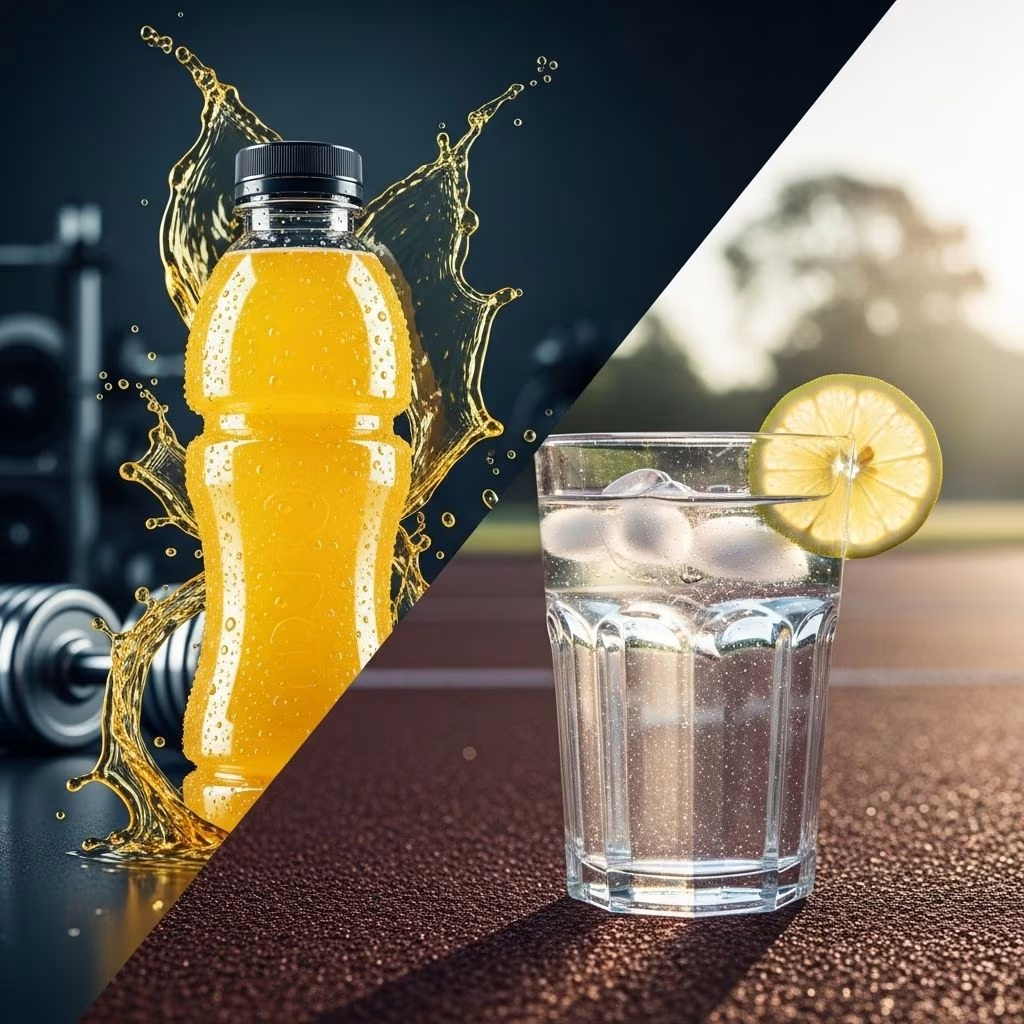
When it comes to staying hydrated during workouts, the choice between sports drinks and water has sparked considerable debate among fitness enthusiasts, athletes, and health professionals. Understanding the science behind hydration and the specific benefits of each option can help you make informed decisions that optimize your exercise performance and recovery.
Understanding Hydration During Exercise
Proper hydration is fundamental to exercise performance and overall health. Your body continuously loses water through various mechanisms including sweating, breathing, and normal metabolic processes. During exercise, these losses accelerate significantly, making fluid replacement crucial for maintaining optimal performance.
Water makes up approximately 60% of your body weight and plays essential roles in temperature regulation, nutrient transport, joint lubrication, and waste removal. When you exercise, especially in warm conditions, your body’s cooling mechanism kicks into high gear, leading to substantial fluid losses through perspiration.
Dehydration of just 2% of body mass can significantly impact your performance by reducing cardiac output, increasing perceived exertion, impairing thermoregulation, and hampering muscle blood flow. This makes the choice of hydration strategy particularly important for anyone engaging in physical activity.
The Benefits of Water for Workouts
Water remains the gold standard for hydration in most exercise scenarios. Its benefits extend far beyond simple fluid replacement, making it the preferred choice for the majority of workout situations.
Superior Absorption Rate
Water has the fastest absorption rate of any beverage option. As a hypotonic solution, water moves quickly through the stomach and small intestine, entering your bloodstream rapidly to begin the hydration process. This quick absorption makes water ideal for immediate hydration needs before, during, and after most workouts.
No Added Calories or Sugars
Unlike sports drinks, water contains no calories, sugars, or artificial additives. This makes it perfect for individuals focused on weight management or those who prefer to keep their nutrition simple and clean. For workouts lasting less than 60 minutes, the additional calories in sports drinks are typically unnecessary and may even be counterproductive.
Cost-Effective and Accessible
Water is readily available, inexpensive, and environmentally friendly. You can refill water bottles multiple times, making it a sustainable choice for regular exercisers. The accessibility of water also means you’re never far from proper hydration.
Optimal for Short-Duration Exercise
For exercise sessions lasting less than one hour, water provides all the hydration benefits you need without any unnecessary additives. Research consistently shows that water is the beverage of choice for hydration before, during, and after physical activity lasting less than 60 minutes.
Sports Drinks: Composition and Types
Sports drinks are specifically formulated beverages designed to replace fluids, electrolytes, and energy lost during prolonged or intense exercise. Understanding their composition helps clarify when they might be beneficial.
Main Components
Sports drinks typically contain three primary ingredients: water, carbohydrates, and electrolytes. The carbohydrates usually come in the form of sugars like glucose, sucrose, and fructose, providing quick energy during extended exercise sessions. Most sports drinks contain 6-8% carbohydrates, with a 6% solution providing approximately 14 grams of carbs per 8 fluid ounces.
The electrolyte content primarily consists of sodium and potassium, though some formulations include additional minerals. Sodium content typically ranges from 35-200 mg per 8 ounces, while potassium levels usually fall between 15-90 mg per serving.
Types of Sports Drinks
Sports drinks are classified into three categories based on their osmolarity compared to body fluids:
Hypotonic Sports Drinks: These contain lower concentrations of particles than body fluids, making them absorb faster than isotonic options. Recent research suggests hypotonic carbohydrate-electrolyte drinks provide the greatest hydration benefit during continuous exercise.
Isotonic Sports Drinks: With particle concentrations similar to body fluids, these drinks offer a balance between hydration and energy delivery. Most commercial sports drinks fall into this category, with carbohydrate concentrations of 6-8%.
Hypertonic Sports Drinks: These contain higher concentrations of particles than body fluids and are primarily used for energy delivery rather than hydration. They’re typically consumed after exercise for recovery purposes.
Fluid Absorption Rates Explained
Understanding how your body processes different beverages is crucial for making informed hydration choices. Fluid absorption rate depends on two primary factors: the time required for fluid to pass through the stomach and the time needed to cross the small intestine wall.
The composition of your beverage significantly influences both factors. Generally, the higher the carbohydrate or sugar content, the slower the absorption rate. This is why isotonic sports drinks, despite being formulated for athletic performance, actually absorb more slowly than plain water.
Recent meta-analysis research examining plasma volume changes during exercise found interesting results regarding different beverage types. The change in plasma volume during exercise varied significantly: hypertonic drinks showed a -7.4% change, hypotonic drinks -6.3%, isotonic drinks -8.7%, and water -7.5%. Notably, athletes using hypotonic sports drinks retained the most hydration in terms of plasma volume in the central circulatory system.
When to Choose Each Option
Choose Water When:
Water should be your primary choice for most exercise scenarios. Specifically, opt for water when engaging in activities lasting less than 60 minutes, during low to moderate intensity workouts, in air-conditioned environments, or when your primary goal is hydration without additional calories.
For pre-exercise hydration, consume 16 ounces of water approximately two hours before intense physical activity. This timing allows for optimal hydration while providing enough time for excess fluid to be eliminated before exercise begins.
Choose Sports Drinks When:
Sports drinks become beneficial during extended, high-intensity exercise lasting longer than one hour. They’re particularly valuable during endurance events, in hot and humid conditions that promote heavy sweating, or when you need both hydration and energy replacement simultaneously.
For prolonged activities, sports drinks providing 30-60 grams of carbohydrates per hour can help maintain energy levels and performance. The sodium content helps promote fluid retention and replaces electrolytes lost through sweat.
Post-Exercise Considerations
After intense, prolonged exercise, your hydration strategy should focus on replacing fluid losses. If you consumed sports drinks during exercise, post-workout rehydration can be accomplished with water. However, 8-16 ounces of a sports drink following an intense, extended workout isn’t unreasonable and may aid in recovery.
Sports Drinks vs Water Comparison
| Factor | Water | Sports Drinks |
|---|---|---|
| Absorption Rate | Fastest (hypotonic) | Moderate to slow (isotonic/hypertonic) |
| Calories | 0 | 50-80 per 8 oz |
| Carbohydrates | 0g | 14-19g per 8 oz |
| Sodium | 0mg | 35-200mg per 8 oz |
| Potassium | 0mg | 15-90mg per 8 oz |
| Cost | Very low | Moderate to high |
| Best for | Exercises <60 minutes | Exercises >60 minutes |
| Primary benefit | Rapid hydration | Hydration + energy |
Expert Recommendations
Health professionals consistently recommend a measured approach to hydration choices. The American College of Sports Medicine and other leading organizations emphasize that water should be the primary beverage for most exercise scenarios.
For the average person engaging in typical gym workouts, recreational activities, or exercise sessions under one hour, water provides optimal hydration without unnecessary additives or calories. The body’s natural electrolyte stores are typically sufficient for these shorter duration activities.
However, for serious athletes, endurance participants, or individuals exercising in extreme conditions, sports drinks can provide valuable benefits. The key is matching your hydration strategy to your specific exercise demands and environmental conditions.
When choosing sports drinks, look for options with appropriate carbohydrate concentrations (6-8%) and adequate sodium content, especially if you’re a heavy sweater or participating in prolonged endurance events. Consider hypotonic formulations for potentially better hydration benefits during continuous exercise.
Frequently Asked Questions (FAQs)
Q: How much water should I drink during exercise?
A: Drink 6-8 ounces of fluid every 15-20 minutes during exercise. Start with 16 ounces about 2 hours before exercising, and continue hydrating based on sweat losses and thirst cues.
Q: Are sports drinks necessary for gym workouts?
A: For typical gym sessions lasting less than an hour, water is sufficient and preferable. Sports drinks are only beneficial for extended, intense exercise exceeding 60 minutes.
Q: Can sports drinks cause weight gain?
A: Yes, sports drinks contain 50-80 calories per 8 ounces. If consumed unnecessarily or in excess, these calories can contribute to weight gain over time.
Q: What’s the difference between sports drinks and energy drinks?
A: Sports drinks focus on hydration and electrolyte replacement with moderate carbohydrate content. Energy drinks contain high caffeine levels and are designed for mental alertness rather than exercise hydration.
Q: How do I know if I need electrolyte replacement?
A: Consider electrolyte replacement if you’re exercising for more than an hour, sweating heavily, exercising in hot conditions, or experiencing muscle cramps during or after exercise.
Q: Are homemade sports drinks as effective as commercial ones?
A: Properly formulated homemade sports drinks can be effective. A simple recipe includes water, a pinch of salt, and a small amount of sugar or honey to replicate commercial formulations.
Q: Should children drink sports drinks during sports activities?
A: Children should primarily drink water during sports activities. Sports drinks are only recommended for young athletes during extended, intense activities lasting over an hour in hot conditions.
The choice between sports drinks and water ultimately depends on your specific exercise demands, duration, intensity, and environmental conditions. For most recreational exercisers and shorter workout sessions, water provides optimal hydration benefits. However, for endurance athletes and prolonged exercise scenarios, sports drinks can offer valuable performance and recovery benefits when used appropriately.
References
- https://www.excellenceinfitness.com/news/sports-drinks-vs-water
- https://www.unitypoint.org/news-and-articles/water-vs-sports-drinks-whats-best-for-our-bodies
- https://www.newcastle-physiotherapy.com.au/n/new-study-finds-some-sports-drinks-better-than-water-but-not-all/
- https://www.healthline.com/nutrition/sports-drinks
- https://pmc.ncbi.nlm.nih.gov/articles/PMC8803723/
- https://www.henryford.com/Blog/2017/10/Sports-Drinks-Vs-Water-Best-Way-Hydrate
- https://www.dps.texas.gov/section/training-operations-tod/proper-hydration-exercise-water-or-sports-drinks
- https://pmc.ncbi.nlm.nih.gov/articles/PMC10346316/


