


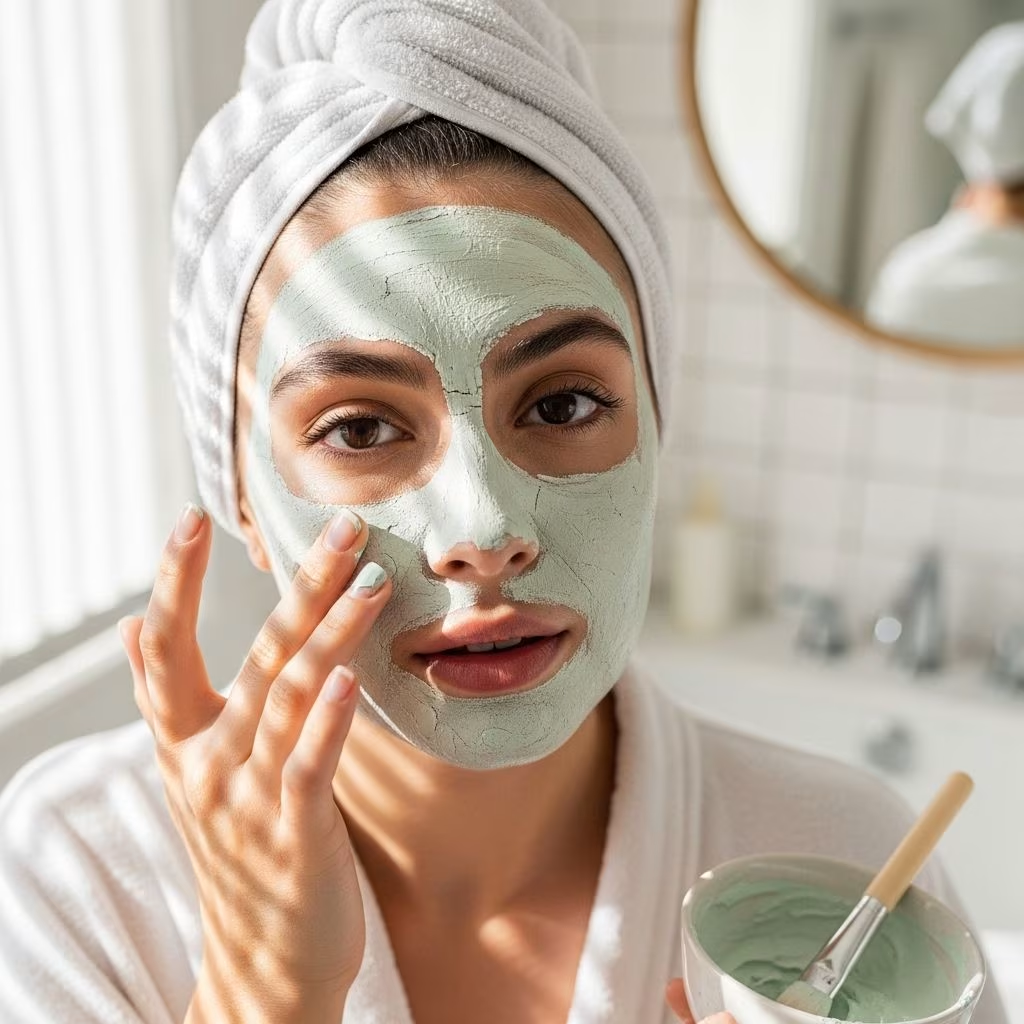
Introduction
Clay masks have become a staple in skincare routines due to their celebrated ability to draw out impurities, absorb excess oils, and refine skin texture. As consumers become more nuanced in their approach to facial masking, one common dilemma arises — should you use clay masks exclusively on your oily, breakout-prone T-zone, or is it better to treat your whole face? This article explores the science, techniques, and tailored approaches behind T-zone spot versus full-face clay mask use, helping you discover what maximizes skin health for different needs and skin types.
How Clay Masks Work
Clay masks harness the natural absorbent, detoxifying, and purifying qualities of clays like bentonite, kaolin, and French green clay. These clays possess a negatively charged ionic structure that binds with impurities and excess oils (which usually have a positive charge), lifting them from pores upon drying and removal.
- Bentonite clay: Best for deep detoxification, especially for oily and acne-prone skin.
- Kaolin clay: Gentler, ideal for sensitive skin and mild exfoliation.
- French green clay: Known for its powerful sebum control and mineral richness.
As you apply and let the mask dry, the clay creates a vacuum effect, pulling impurities and dead skin cells from the surface and pores, leading to improved skin tone, texture, and clarity.
Benefits of Clay Masks
- Unclogs pores: Draws out deep-seated oil, dirt, bacteria, and dead cells.
- Absorbs excess oil: Controls shine and prevents pore blockages that lead to acne.
- Exfoliates gently: Removes dull surface skin for a smoother, brighter complexion.
- Promotes a healthy skin barrier: Cleanses without stripping, supporting the microbiome.
- Refines pore appearance: Minimizes visible pores for even texture.
- Soothes inflammation: Some clays, like kaolin and zinc oxide, calm irritated or sensitive skin.
- Brightens skin tone: Reveals a radiant glow and helps even pigmentation.
Recent clinical studies confirm clay masks’ efficacy in managing acne and oily skin, with demonstrable improvements in hydration and overall skin texture.
T-Zone Spot Application: Targeted Treatment
The T-zone refers to the forehead, nose, and chin — areas that form a “T” shape on the face. These regions are typically more prone to oiliness, enlarged pores, and blackheads due to the density of sebaceous (oil-producing) glands.
- Benefits:
- Targets excess shine and clogged pores in oily areas.
- Prevents over-drying of cheeks and other sensitive zones.
- Ideal for those with combination skin, where cheeks are normal to dry but T-zone is oily.
- More efficient use of product — focus on the problem areas.
- Limitations:
- Doesn’t address issues beyond the T-zone, such as uneven texture or clogged pores on cheeks or jawline.
- May require additional products for full-face exfoliation or hydration.
Spot application can be part of a “multi-masking” routine, where a clay mask is used on the T-zone and a hydrating mask on drier cheek areas.
Full Face Application: Comprehensive Care
Full-face use entails applying the clay mask to clean skin, covering all areas evenly. This method is best for:
- Oily and acne-prone skin types: Delivers uniform cleansing and oil absorption.
- Even exfoliation: Removes surface debris and improves skin texture across the whole face.
- Pre-event skin smoothing: Ensures a consistent glow and minimal pores before special occasions.
- Men and women exposed to urban pollution: Deep facial detox is ideal for environmental buildup.
Full-face application is often recommended for oily, combination, or acne-prone skin but can also benefit normal skin if used briefly and not allowed to overdry.
Comparison Table: T-Zone vs. Full Face Use
| Feature | T-Zone Spot Use | Full Face Use |
|---|---|---|
| Target Area | Forehead, nose, chin | Entire face |
| Ideal Skin Type | Combination skin, mild oiliness | Oily, acne-prone, textured skin |
| Risk of Overdrying | Low (avoids dry cheeks) | Moderate (may dry out sensitive areas) |
| Product Efficiency | Higher, focusing on concern | Lower, uses more product |
| Skin Tone & Texture Benefits | Localized improvement | Even improvement |
| Multi-Masking Compatibility | Easy (mix with hydrating masks) | Possible but less precise |
| Pore Refinement | Targets T-zone pores | Refines pores across face |
Choosing the Right Application for Your Skin
Determining whether to use a clay mask on just your T-zone or your whole face depends on several individual skin characteristics and goals:
- Combination skin (oily T-zone, dry cheeks):
- Spot treat T-zone with clay mask.
- Use hydrating mask or moisturizer on cheeks.
- Oily/acne-prone skin:
- Apply to full face for overall purification and oil absorption.
- Dry or sensitive skin:
- Spot treat areas of concern, or opt for gentler clay types (kaolin).
- Normal skin:
- Either approach works if application is brief (not left to fully harden).
If you have persistently dull, rough, or uneven skin tone, full-face application once a week may provide a needed boost.
Application Tips & Techniques
- Always apply clay mask to thoroughly cleansed skin for maximum impact.
- Mix with hydrating ingredients (e.g., rose water, aloe vera, or honey) for added moisture.
- Apply a thin, even layer; avoid eye area and lips.
- Let mask dry 10-15 minutes — do not over-dry, which may lead to irritation or redness.
- Rinse with lukewarm water; gently pat dry and follow with moisturizer.
- Frequency: Once or twice a week is typical. Adjust based on skin response.
- Consider “multi-masking” — clay on T-zone, hydrating treatment elsewhere.
Expert Insights and Clinical Evidence
- Scientific studies support clay masks for acne and oily skin, showing improvement in skin hydration, barrier function, and reduction in breakouts.
- Dermatologists recommend clay masks for mild to moderate acne management as part of a regular skincare regimen.
- Experts note added ingredients such as zinc oxide and vitamin E can boost soothing and antioxidant effects, making masks gentler and better suited to aging or sensitive skin.
- Clay masks do not disrupt the skin barrier as harsh cleansing agents sometimes do and are less likely to cause irritation if used properly.
Frequently Asked Questions (FAQs)
Q: How often should I use a clay mask?
A: Most experts recommend once or twice per week to avoid irritation and support natural skin balance.
Q: Is it safe to use clay masks on sensitive skin?
A: Yes, select gentler clays like kaolin and avoid leaving the mask on until fully dried.
Q: Can I combine clay masks with other facial masks?
A: Absolutely — multi-masking involves applying clay on oily areas (like the T-zone) and hydrating masks on drier zones to address multiple concerns in one session.
Q: Does using a clay mask cause dryness?
A: Overuse or leaving the mask on too long can strip moisture, particularly from dry skin types. Always follow up with a gentle moisturizer.
Q: Are there differences between various types of clay?
A: Yes, bentonite and green clay are powerful detoxifiers for oily skin; kaolin is best for sensitive or dry skin due to its mildness.
Conclusion
Clay masks deliver transformative skin benefits, from deep pore cleansing and oil control to gentle exfoliation and barrier support. Whether used solely on the T-zone or across the entire face, clay masks can be tailored for your individual skin type and concerns. T-zone application offers targeted oil absorption for combination skin, whereas full-face use enhances overall skin texture and clarity for oily or breakout-prone complexions. Strategic use, attention to skin sensitivity, and leveraging multi-masking techniques allow everyone to maximize results while maintaining balance and health. For lasting skin improvements, adopt a regular regimen, choose the clay type suited to your needs, and avoid excessive use for optimal radiance and resilience.
References
- https://www.shoprootscience.com/blog/clay-masks-skin-benefits
- https://gotoskincare.com/blogs/the-go-to-guide/clay-mask-explainer
- https://www.youtube.com/watch?v=mDTXZIyARXQ
- https://emmediane.com/blogs/skin-tips/3-types-of-facial-masks-that-can-benefit-your-skin
- https://www.cosmetify.com/blog/every-type-face-mask-explained/
- https://pmc.ncbi.nlm.nih.gov/articles/PMC10626287/
- https://www.quebellabeauty.com/our-range/pore-minimizing-t-zone-and-full-facial-mud-mask/


