


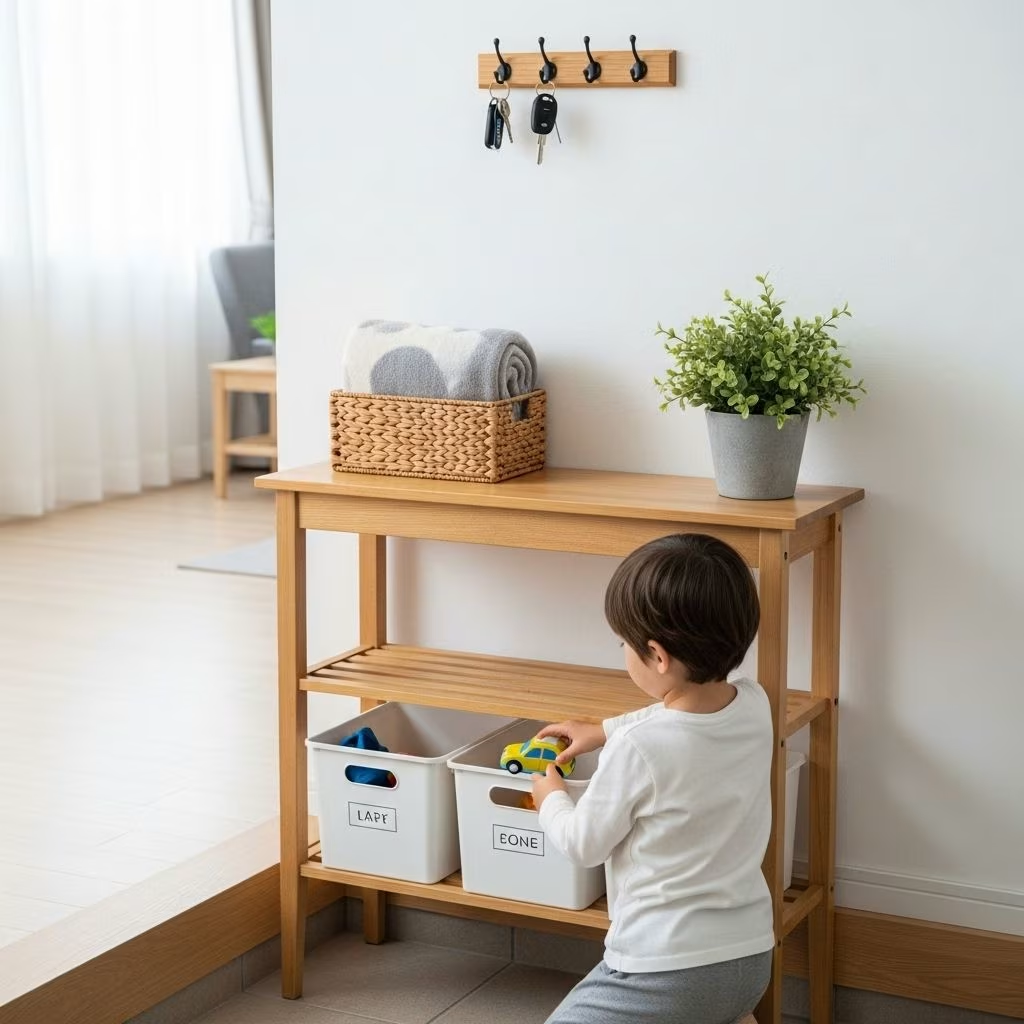
For countless families, the struggle against endless clutter and disorganization can feel overwhelming. Traditional tidying methods often involve marathon cleaning sessions, insurmountable piles, and frustration when messes seem to return as soon as they’ve been conquered. Yet, a simple yet powerful approach known as the One-Touch Rule offers a game-changing solution for building family-friendly tidy habits and maintaining a clutter-free home with minimal effort.
Introduction: What is the One-Touch Rule?
The One-Touch Rule is a deceptively simple home organization principle: when you pick up or use an item, handle it just once by immediately putting it in its designated place rather than setting it aside to “deal with later.” For example, when you bring in the mail, you immediately sort it, toss the junk, and file what matters—no more piles accumulating on the counter. If you remove your jacket, hang it up instead of draping it over a chair. The mantra is: “Don’t put it down, put it away.”
This proactive method prevents small messes from snowballing into major cleaning projects and eliminates decision fatigue by turning tidying into an effortless routine rather than a dreaded chore. By integrating the One-Touch Rule into family life, everyone becomes an active participant in maintaining organized spaces—and the results are transformative.
Core Principles and Benefits of the One-Touch Rule
The key to the One-Touch Rule lies in its immediacy and simplicity. Core principles include:
- Immediate Action: Handle each item only once—deal with it now rather than postponing.
- Designated Spaces: Every item in your home has a defined, easily accessible home to return to.
- Consistency: Family members commit to the rule as a shared value, making tidiness a norm rather than an exception.
- Mindful Consumption: By regularly putting items away, families naturally become more conscious of what they bring into the home and keep.
| Benefit | Description |
|---|---|
| Reduces Clutter | Prevents piles and messes from forming, maintaining tidy surfaces and spaces. |
| Saves Time | Eliminates the need for marathon cleaning sessions—tidying becomes part of daily flow. |
| Reduces Stress | Cuts down on procrastination and decision fatigue by fostering quick, simple choices. |
| Teaches Responsibility | Empowers all family members, even children, to take ownership of their environment. |
| Promotes Harmony | Minimizes household tension over mess and clutter by sharing the workload. |
Why Is the One-Touch Rule So Effective?
The One-Touch Rule disrupts the default habit of procrastinating on small tasks, which is often the culprit behind chronic clutter and chaotic spaces. Instead of accumulating dozens of “to be put away later” items, the habit ensures everything has a place—and gets there right away. This mindset fosters an environment where mess never has a chance to grow out of control.
The Science and Psychology Behind the Rule
Behind the One-Touch Rule lies sound psychology:
- Decision Fatigue: When we avoid making small decisions (where to put the mail, whether to hang up a coat), we “save” the task for later, which drains mental energy and increases stress over time. The One-Touch Rule solves this by turning organization into an automatic response.
- Positive Reinforcement: Each time a family member practices the One-Touch Rule, they are rewarded with the immediate outcome of a tidier space, building motivation to maintain the habit.
- Habit Formation: Immediate action and visible results help cement tidying as a family habit, turning daily decluttering into a shared routine.
Brain science shows that routines minimizing the need for micro-decisions free up willpower for other tasks and eliminate the build-up of anxiety associated with growing messes.
Building a Family Tidy Habits Routine
To reap the full rewards of the One-Touch Rule, it’s crucial to integrate it into your family’s daily rhythm. Here’s how:
Set Clear Expectations
- Explain the One-Touch Rule in simple terms: “When you touch something, either use it or put it away immediately.”
- Discuss as a family why reducing clutter matters—focus on how it helps everyone enjoy a more organized, peaceful home.
- Emphasize that the routine only works when everyone participates—no one person should carry the full burden.
Establish Designated Spaces for Everything
- Make it easy for every family member to know where things live: create labels, bins, cubbies, hooks, or baskets as needed.
- Personalize spaces for each person’s belongings—such as a basket for each child’s shoes or a key hook by the door.
Lead by Example—and Involve Kids Early
- Adults should model the rule consistently—children will notice and imitate the behavior they observe.
- Help younger children practice: prompt them to put toys away after each use before moving on, making it a non-negotiable part of play.
- Celebrate successes—offer praise or small rewards for following through.
Make It Manageable: Start Small
- Pick one room or category (mail, toys, coats) and focus on mastering the rule there for a week.
- Gradually expand as the habit becomes second nature; don’t expect perfection right away.
Consistency Over Perfection
- The One-Touch Rule is most effective when done most of the time, but everyone will have moments of fatigue or forgetfulness.
- Aim for steady progress rather than all-or-nothing perfection—give your family permission to slip up occasionally and simply get back on track.
Regular Family Check-ins
- Hold weekly or biweekly family meetings to celebrate wins, discuss sticking points, and brainstorm improvements.
- Make adjustments to designated spaces or routines as needed to suit growing children and changing needs.
Practical Applications: Room-by-Room Strategies
1. Entryway or Mudroom
- Install hooks or pegs for coats and backpacks at kid-friendly heights.
- Use small baskets or trays for shoes, hats, and keys.
- Reinforce the idea: “The first thing we do when we walk in is put away our things.”
2. Kitchen and Dining Areas
- Process mail and papers at a set time each day; dispose of, file, or handle immediately.
- Put dishes straight into the dishwasher or wash and dry them—avoid leaving stacks next to the sink.
- Designate a drawer or basket for everyday objects (chargers, pens) to prevent junk drawers from overflowing.
3. Living Room
- Encourage everyone to put remote controls, toys, or books back in their dedicated spots after use.
- Use baskets for throw blankets or magazines—require that these items are returned after use.
4. Bedrooms
- Hang up clothes or place in the hamper immediately—no more “floordrobes” or piles on chairs.
- Encourage nightly clean sweeps—each family member resets their nightstand and desktop before bed.
5. Kids’ Playrooms or Study Areas
- Help children organize toys into labeled bins; reinforce the rule that a new activity begins only after the previous one is cleaned up.
- Display special artwork or school projects on a dedicated wall, rotate regularly, and store or photograph finished items to avoid build-up.
Troubleshooting: Overcoming Common Challenges
No habit change happens without hurdles. Here’s how to address the most frequent roadblocks:
- “I’m too tired or busy to put things away immediately.”
Remember, the One-Touch Rule is about reducing overall effort. Invest a few seconds now, and you’ll avoid longer, more dreaded cleaning sessions later. If you’re consistently struggling, assess whether your designated spaces are truly accessible and convenient. - Family resistance or lack of buy-in.
Involve everyone in creating the system and explain how it benefits the whole family. Celebrate small wins and improvements to foster a sense of teamwork, not blame. - Perfectionism or giving up after setbacks.
No family will maintain the rule 100% of the time. Focus on progress, not perfection, and keep returning to the core principle: every little bit makes a difference. - Young children leaving items scattered.
Practice patiently. Use songs, checklists, and visual reminders (like labeling baskets) to guide the learning process. Set realistic expectations for age and ability, but maintain the boundary that items are put away before moving on.
Tips, Tools, and Tricks for Lasting Success
- Label storage areas clearly for all family members, including pictures for pre-readers.
- Use sorting trays, baskets, and cubbies at traffic hotspots (entryways, kitchen counters, kids’ rooms) to make compliance effortless.
- Set reminder cues, such as a gentle evening alarm for a “5-minute tidy,” reinforcing the habit.
- Declutter regularly: Having fewer items reduces how much needs to be managed and makes the One-Touch Rule much easier to maintain.
- Pair with other organization strategies, such as regular purging days or file/scan systems for papers, to keep clutter in check.
- Celebrate together: Mark progress as a family—enjoy a special movie night or treat when maintaining tidy spaces consistently.
Frequently Asked Questions (FAQs)
Q: Is the One-Touch Rule realistic for busy families?
Yes, though it requires adjustment. Start small, focus on high-impact areas (like the kitchen or entryway), and remember that the rule doesn’t require perfection—aim for gradual, steady improvement.
Q: How can I help my partner or kids stick with the One-Touch Rule?
Model the behavior consistently, make storage easy and fun, and involve everyone in brainstorming better routines. Celebrate wins and discuss setbacks openly to foster buy-in.
Q: What do I do with items that don’t have an obvious “home”?
Designate specific containers or assign new homes as needs evolve. If items consistently resist categorization, consider whether they are necessary or could be eliminated.
Q: Can the One-Touch Rule be applied outside the home?
Absolutely. Try it in workplaces, classrooms, digital spaces (emails), and vehicles for similar benefits in reducing clutter and stress.
Q: How do I manage sentimental “clutter,” like kids’ art projects or keepsakes?
Display favorites temporarily, routinely sort and photograph special items, and store only the most meaningful in a memory box. Teach children to participate and make choices together.
Conclusion: Embrace Simplicity and Reap the Rewards
By integrating the One-Touch Rule into your family’s tidy habits routine, you replace the cycle of chaos and catch-up with calm and consistency. Over time, you’ll find that living in an organized, peaceful environment isn’t the result of exhausting effort—it’s the effortless outcome of simple, shared habits executed one touch at a time.
References
- https://justagirlandherblog.com/get-rid-of-clutter-piles/
- https://www.organizedinteriors.com/blog/one-touch-rule-house-clutter-solution/
- https://www.microsoft.com/en-us/microsoft-365-life-hacks/organization/what-is-the-one-touch-rule
- https://ultimateacademy.com/professional-organizing-courses/professional-organizing-blog/the-one-touch-rule-declutter-your-mental-and-physical-space/
- https://www.livingetc.com/advice/one-touch-decluttering-tip
- https://www.homesandgardens.com/life-design/one-touch-tidying-rule


