


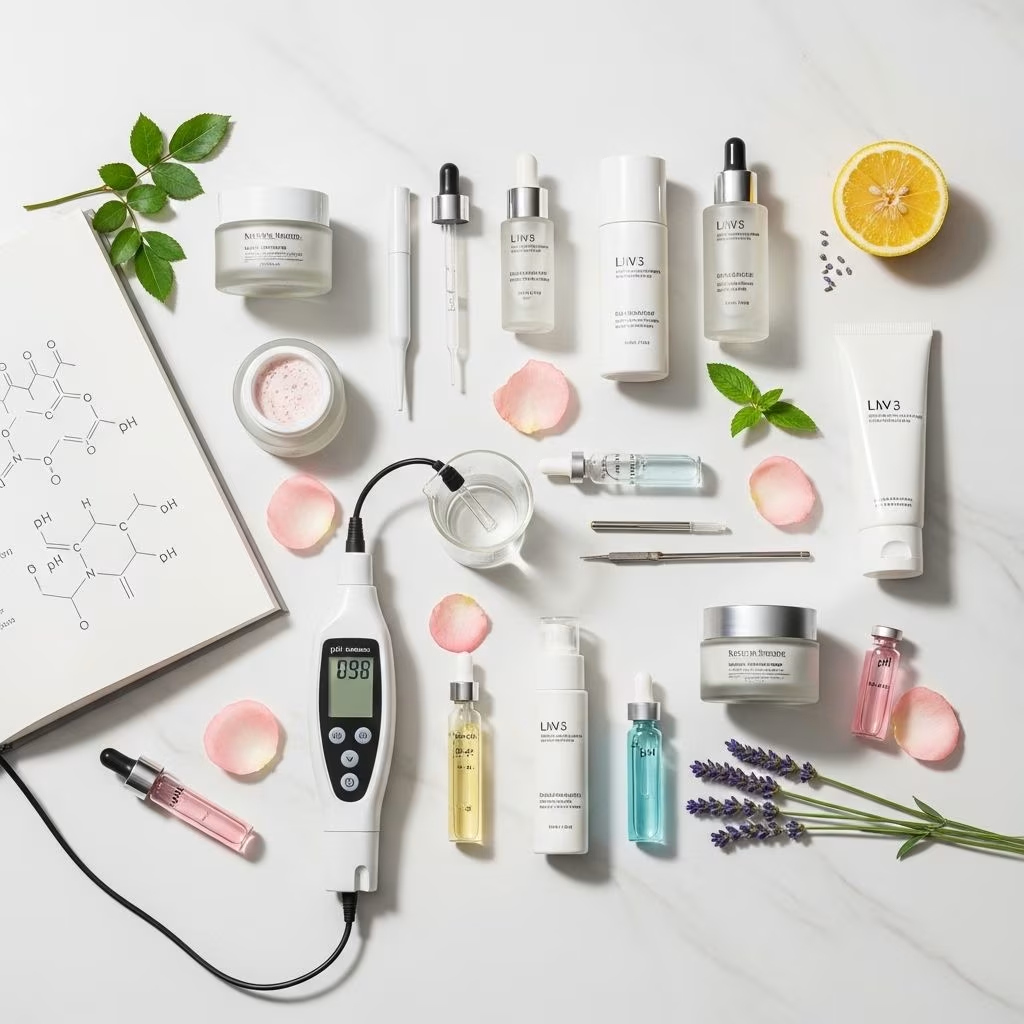
Understanding how the pH of a skincare product influences the efficacy and safety of its active ingredients is fundamental to making informed product choices and achieving optimal results. This article demystifies why pH matters, how it interacts with popular active ingredients—including AHAs, BHAs, and vitamin C—and what this means for your skin.
What is Skin pH?
The surface of human skin has a naturally acidic pH, typically ranging from 4.5 to 5.5. This slightly acidic environment, called the “acid mantle,” helps:
- Inhibit harmful bacterial and fungal growth
- Support the activity of protective enzymes
- Optimize skin barrier function and hydration
Skincare products that are too alkaline (high pH) or acidic (very low pH) can disrupt this balance, leading to irritation and impaired barrier function.
Why pH Matters in Skincare Formulation
The pH of a skincare product influences:
- The activity and penetration of active ingredients
- The chemical stability of molecules sensitive to oxidation or hydrolysis
- Compatibility with other formulation ingredients
- Impact on the skin’s natural defenses
Products formulated with the wrong pH can make expensive actives useless or, worse, potentially irritating for the skin.
pH and Active Ingredient Efficacy
Certain active ingredients require specific pH ranges to function optimally:
- Alpha Hydroxy Acids (AHAs): Need a pH below 4.5 to exfoliate effectively; e.g., glycolic acid acts best at pH 3.5 or lower. A 10% glycolic acid at pH 5 will be nearly inert, but a 5% formula at pH 3.5 delivers superior exfoliation.
- Beta Hydroxy Acids (BHAs): Like salicylic acid, are most bioavailable and effective below pH 4.0.
- Vitamin C (Ascorbic Acid): The pure (L-ascorbic acid) form is optimally absorbed at a pH below 3.5; higher pH greatly reduces penetration and stability.
- Niacinamide: Stable across a range of pH values (usually 5.0–7.0) but is sensitive to acidic environments where conversion to nicotinic acid may occur, increasing irritation.
- Retinoids: Typically require more neutral pH for stability, but their specific esters (like retinol, retinal) vary in sensitivity.
Key insight: pH trumps percentage for actives with pH-dependent bioavailability. More is not always better, and improper pH can render actives ineffective.
Concentration vs. pH: Which Is More Important?
Consumers often focus on the percentage of actives (e.g., 10% glycolic acid), assuming more equals better results. However:
- High concentrations can increase irritation without enhancing benefits if the pH is not optimal.
- At the wrong pH, even high concentrations of AHAs, BHAs, or vitamin C will have minimal effect.
- Formulation sophistication (e.g., delivery systems, stabilizers, synergistic ingredients) often improves efficacy more than just raising the percentage.
Example: A 0.3% retinol serum in a high-tech delivery system can outperform a basic 1% emulsion due to better penetration and reduced irritation.
Formulation Factors Impacting Efficacy
The performance of actives depends not just on concentration and pH, but also:
- Delivery systems (liposomes, encapsulation technologies) enhance penetration and stability.
- Stabilizing agents (ferulic acid for vitamin C) reduce oxidation and degradation.
- Synergistic ingredients: Combining actives or supporting molecules can multiply benefits while minimizing side effects. For example, vitamin C serums that include vitamin E and ferulic acid have increased effectiveness and longevity.
- Preservation and packaging: Sensitive actives like vitamin C degrade quickly when exposed to air or light. Opaque, airless packaging protects potency.
Always check for product integrity: clear or open jars usually reduce stability.
Synergy and Stabilization of Actives
Formulation science emphasizes synergy over maximal single percentages. Examples:
- A 2% salicylic acid with soothing humectants and niacinamide works better, with less irritation, compared to a poorly formulated 4% salicylic acid toner.
- Vitamin C is stabilized and enhanced by ferulic acid and vitamin E.
- Niacinamide outperforms standalone high-percentage formulas when paired with barrier-repairing ceramides, panthenol, or other moisturizers.
Optimized formulation is the “secret sauce”—not just high numbers on the label.
pH and Skin Barrier Function
The skin’s barrier function—its ability to retain moisture and prevent irritation—relies in part on acidic pH. Disruption through overly alkaline or low-pH products (used too often) can cause:
- Increased sensitivity and redness
- Heightened risk of infection
- Longer time to restore natural acidity and protective enzymes
Some serums support quicker pH normalization after cleansing, accelerating recovery and reducing transepidermal water loss (TEWL), which is linked to dry, irritated skin.
Key Actives and Their Optimal pH Ranges
| Active Ingredient | Optimal pH Range | Notes on Stability & Efficacy |
|---|---|---|
| Glycolic Acid (AHA) | 3.0 – 4.0 | Lower pH increases potency; too high = ineffective |
| Lactic Acid (AHA) | 3.0 – 4.5 | Similar profile to glycolic acid |
| Salicylic Acid (BHA) | 3.0 – 4.0 | Below pH 4.0 ensures exfoliation |
| Vitamin C (Ascorbic Acid) | 2.5 – 3.5 | Higher pH = rapid oxidation, less absorption |
| Niacinamide | 5.0 – 7.0 | Stable, versatile; low pH may cause conversion to nicotinic acid |
| Retinol | 5.0 – 6.0 (neutral) | Acidic pH increases instability |
Best Practice Tips for Consumers
- Don’t assume higher percentages deliver better results; look for products that mention “pH-optimized” formulas or cite stability data.
- Layer acids and vitamin C separately from retinol to maximize stability and minimize irritation.
- Introduce active products slowly, ensuring skin can recover between uses, especially if both low-pH and retinoids are in your regimen.
- If unsure about your skin’s tolerance, focus on gentle, pH-balanced cleansers and select actives at or near physiological pH.
- Look for reputable brands that back efficacy claims with clinical studies or third-party substantiation.
Frequently Asked Questions (FAQs)
Q: Why don’t most brands list the pH of their products?
A: Regulations rarely require public pH disclosure. In the EU, technical documents must list pH, but it is not mandatory on the packaging. In Korea, only functional products require it.
Q: Can I use an active ingredient if I have sensitive skin?
A: Yes, but opt for lower concentrations, pH-balanced formulations, or serums with soothing actives paired in the formula. Patch-test all new products.
Q: Is the effectiveness of acids only about percentage?
A: No. Percentage matters, but only within the optimal pH range for the active. Too much may cause irritation with little added benefit if the pH is wrong.
Q: What should I do if I experience irritation?
A: Stop use, switch to gentle, barrier-supporting, pH-balanced products, and consult a dermatologist if reactions persist.
Q: Are there ingredients that work at skin pH?
A: Yes. Peptides, niacinamide, most moisturizers, and hyaluronic acid are effective at skin’s natural pH (4.5–5.5).
Summary and Takeaways
- The pH of a skincare product is as important—often more so—than the percentage of active ingredient.
- Improper pH can render high levels of actives like AHAs, BHAs, and vitamin C ineffective.
- Formulation science (delivery systems, synergy, stabilization) is key to efficacy and safety.
- Skin barrier health relies on an acidic pH and supported by smart product choices.
- Consumers should demand transparency, robust efficacy evidence, and avoid chasing high-percentage marketing claims without considering pH and formulation design.


