


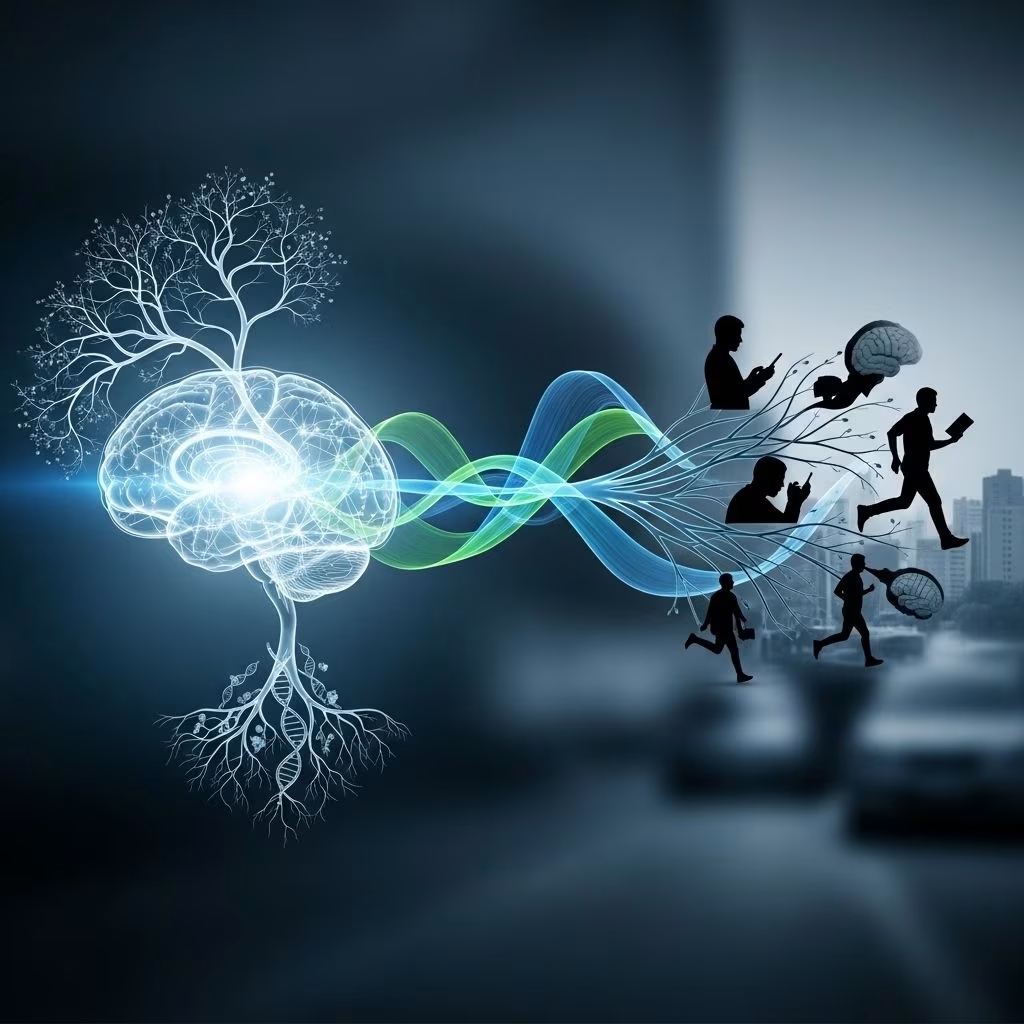
Biopsychology, sometimes referred to as biological psychology, physiological psychology, or behavioral neuroscience, studies the intricate connections between the brain, the nervous system, and behavior. By exploring how biological processes underlie our thoughts, emotions, and actions, biopsychology provides insights into both normal psychological functioning and mental health disorders.
What Is Biopsychology?
Biopsychology is the scientific discipline that investigates how the structure and function of the nervous system relate to mental processes and behavior. It is founded on the recognition that all human and animal behavior is ultimately grounded in biology—from neural communication to hormonal regulation, genetics, and evolutionary influences.
- Alternative Names: Also known as biological psychology, behavioral neuroscience, physiological psychology, psychobiology, and neuropsychology.
- Core Focus: Examines the interplay between brain structure, neurotransmitters, hormones, genes, evolution, and resulting behaviors.
- Bidirectional Influence: Investigates not only how biology shapes behavior, but how behaviors and experiences, in turn, can affect biological processes.
Biopsychology forms a bridge between the fields of psychology and biological sciences, utilizing research and methods from multiple disciplines to understand how mental processes and behaviors are rooted in physiology.
The Origins and Development of Biopsychology
The roots of biopsychology are ancient, with philosophical debates about the mind-body relationship dating back to early thinkers like Aristotle and Descartes. However, modern biopsychology emerged in the late nineteenth century, when advances in physiology and experimental psychology set the stage for a scientific approach to investigating brain-behavior relationships.
- Historical Foundations: Early contributors such as Wilhelm Wundt, Ernst Weber, and Gustav Fechner applied experimental methods to study sensation, perception, and the nervous system, laying groundwork for modern approaches.
- Technological Advances: The development of new tools—including microscopy, brain imaging, and electrophysiology—has enabled detailed study of brain function and its relation to behavior.
- Key Theoretical Shifts: The field moved from speculative philosophy (e.g., dualism and parallelism) toward empirical science, focusing on observable and measurable biological processes.
Core Concepts in Biopsychology
The Brain and Nervous System: Foundations of Behavior
The nervous system, particularly the brain, is central to the study of biopsychology. Biopsychologists investigate how various structures—from individual neurons to entire brain regions—contribute to sensation, movement, emotion, cognition, and more.
- Central Nervous System (CNS): Includes the brain and spinal cord, responsible for processing and integrating information.
- Peripheral Nervous System (PNS): Connects the CNS to limbs and organs, facilitating communication throughout the body.
- Neurotransmitters: Chemical messengers, such as dopamine and serotonin, that transmit signals between nerve cells (neurons) and influence mood, movement, and mental functions.
- Localization of Function: Certain brain regions are specialized for specific psychological processes, such as language (Broca’s area), vision (occipital lobe), or memory (hippocampus).
Genetics, Heredity, and Evolutionary Influences
Beyond the immediate physiological processes, biopsychology also considers how inherited factors and the evolutionary history of the species shape behavior.
- Genetics: Explores how genes affect brain structure, neurotransmitter systems, and susceptibility to mental or behavioral disorders.
- Evolution: Studies how certain behaviors—including mating, feeding, aggression, and social bonding—have evolved to increase survival and reproduction.
Hormones and Endocrine System
Hormones released by the endocrine system, such as adrenaline, cortisol, and estrogen, play crucial roles in regulating mood, stress responses, reproductive behaviors, and more.
Main Areas of Study in Biopsychology
Biopsychologists explore a wide variety of behaviors and mental processes, many of which are summarized in the table below:
| Research Area | Key Questions | Representative Methods |
|---|---|---|
| Sensation & Perception | How do senses detect and interpret environmental stimuli? | Brain imaging, lesion studies, psychophysics |
| Motivated Behavior | What biological factors drive hunger, thirst, sex, and aggression? | Hormone measurement, animal models, pharmacological manipulation |
| Control of Movement | How does the brain generate voluntary and involuntary movements? | Electrophysiology, neuroimaging, clinical case studies |
| Learning and Memory | What changes in brain structure support the storage and retrieval of memories? | Behavioral tasks, brain lesions, molecular imaging |
| Biological Rhythms & Sleep | How do internal clocks and sleep patterns arise? | EEG, hormonal assays, chronobiology experiments |
| Emotion | What are the neural bases of emotions like fear, anger, and joy? | fMRI, brain stimulation, lesion studies |
| Mental Disorders | How do brain and body dysfunctions contribute to psychiatric conditions? | Neuroimaging, genetic analysis, pharmacological trials |
Methods and Research Techniques in Biopsychology
To uncover the biological bases of mental life, biopsychologists employ a diverse toolkit of research methods:
- Brain Imaging (e.g., MRI, fMRI, PET): Allows scientists to visualize brain activity and structure in living subjects.
- Lesion Studies: Examines how damage to specific brain regions affects behavior.
- Electrophysiology (EEG, single neuron recording): Measures electrical activity in the brain to track processing in real time.
- Animal Models: Use of non-human species to study brain-behavior relationships, often through genetic manipulation or environmental interventions.
- Pharmacological Studies: Investigates how drugs and chemicals (including neurotransmitters) alter mood, cognition, or behavior.
- Genetic Analysis: Assesses how genetic variation affects biological and psychological traits.
Major Theories Underlying Biopsychology
Several important philosophical and theoretical perspectives form the basis of biopsychology:
- Materialism (Physicalism): All phenomena of the mind are ultimately reducible to biological processes in the brain and body.
- Determinism: Behaviors and thoughts occur as the result of prior biological, environmental, and genetic factors.
- Localization of Function: Specific areas of the brain are responsible for particular behaviors and mental abilities.
- Neuroplasticity: The brain can reorganize itself by forming new neural connections throughout life, adapting to learning and injury.
- Evolutionary Theory: Many traits and behaviors are the product of evolutionary adaptation.
Popular Topics and Applications in Biopsychology
- Addiction: Examines the neural circuits and genetic factors underlying substance use and dependence.
- Psychological Disorders: Studies the biological foundations of conditions such as depression, schizophrenia, and anxiety.
- Memory and Learning: Explores the mechanisms of brain plasticity that enable the storage and recall of information.
- Developmental Processes: Investigates how genetics and the environment shape the developing brain and behavior from infancy onward.
- Social Behavior: Looks at the impact of hormones and neurotransmitters on attachment, aggression, cooperation, and empathy.
Biopsychology’s findings are relevant across many sectors, from medicine to education, criminal justice, and technology design.
Careers in Biopsychology
The interdisciplinary nature of biopsychology provides diverse career pathways in research, healthcare, education, and applied sectors.
- Neuroscientist: Investigates brain structure, function, and disorders in research or academic settings.
- Neuropsychologist: Studies and assesses cognitive, emotional, and behavioral effects of brain injury or disease.
- Clinical Psychologist: Applies findings from biopsychology to diagnose and treat mental health conditions.
- Pharmacologist: Explores the effects of medications and drugs on the brain and behavior.
- Biomedical Researcher: Conducts laboratory studies on genetics, neurodevelopment, or hormone function.
- Educator or Professor: Teaches biopsychology or related topics at universities or professional schools.
Common Myths and Misconceptions about the Brain
- Myth: “We only use 10% of our brain.” Reality: Neuroimaging and neurological studies
References
- https://socialsci.libretexts.org/Courses/Cosumnes_River_College/PSYC_312:_Biological_Psychology_Fall_’24_(Bahm)/01:_Biopsychology_as_a_Course_of_Study/1.01:_What_is_Biopsychology
- https://www.jneuropsychiatry.org/peer-review/definition-of-biological-psychology-14817.html
- https://openbooks.library.baylor.edu/psychscience/part/pillar-2-biological/
- https://www.britannica.com/science/biological-psychology
- https://www.simplypsychology.org/theories/biological-approach
- https://study.com/academy/lesson/video/what-is-biopsychology-definition-basics.html


