


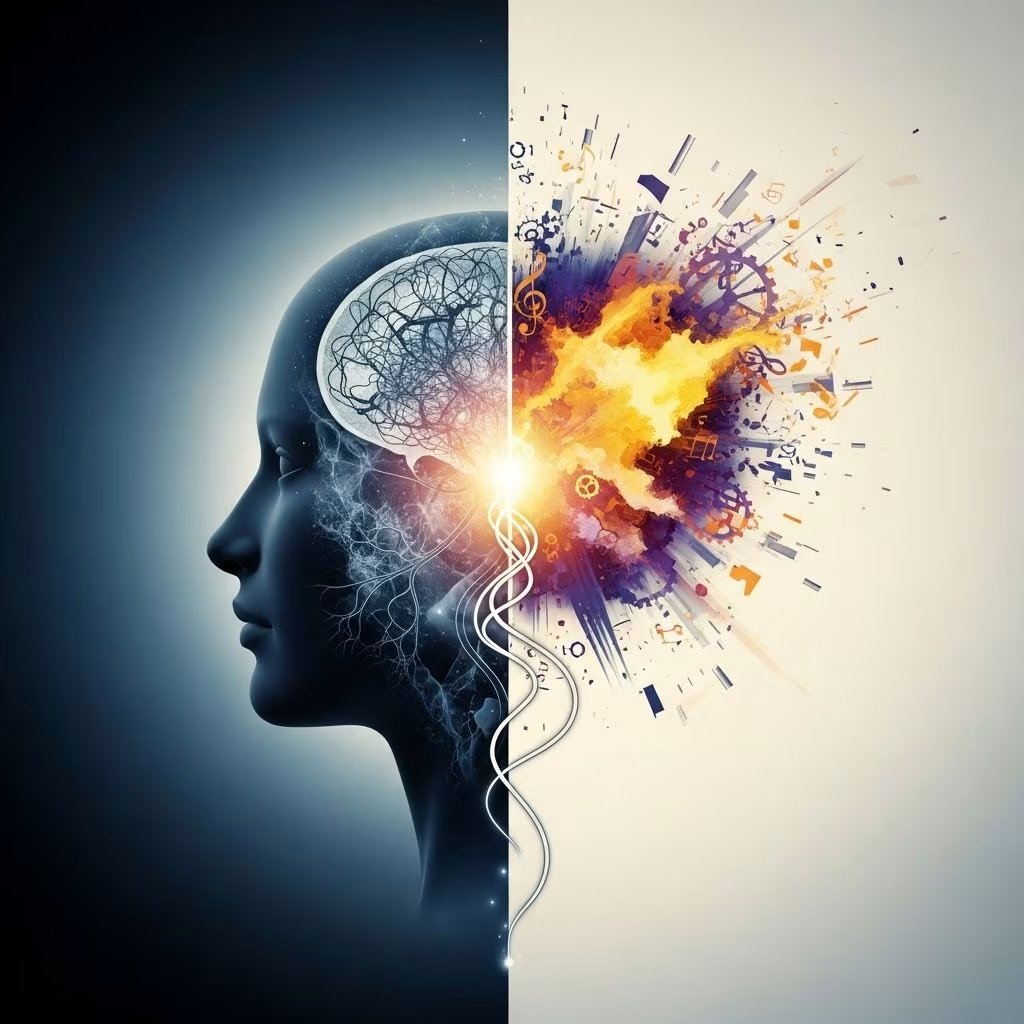
The stereotype of the “tortured artist”—the idea that creative brilliance and mental anguish are inextricably linked—has persisted for centuries. But is there scientific evidence to support the belief that people who are exceptionally creative are more prone to depression? This article examines the origins of this belief, the empirical evidence behind it, and the many ways depression and creativity may intersect in the human experience.
Why Do We Associate Creativity with Depression?
The vision of the melancholic genius is woven into cultural lore. Numerous acclaimed writers, artists, and musicians—like Sylvia Plath, Vincent van Gogh, and Kurt Cobain—have struggled publicly with depression. Stories of such figures suffering for their art fuel the notion that psychological pain might be the price, or even the source, of extraordinary creativity.
- The works of iconic creators often embody powerful emotions, supporting the idea that suffering sharpens artistic sensibilities.
- Historical accounts and memoirs reinforce the stereotype, describing how depression influenced creative output.
- The stereotype persists across genres—from poetry and visual arts to music and film.
But does this link hold up to scientific scrutiny, or is it an oversimplification of complex phenomena?
The Science on Creativity and Depression
Scientific research into the relationship between creativity and depression has produced conflicting findings. While some studies have identified higher rates of mood disorders in creative populations, others suggest that the connection is weaker, or even runs in the opposite direction. Research broadly falls into three categories:
Higher Prevalence of Depression in Creative Populations
- Mood Disorders in Creative Professions: Some studies suggest that writers, artists, and musicians are statistically more likely to be diagnosed with depression and related mood disorders compared to the general population. For example, creative professionals have been reported to experience major depressive disorder eight to ten times more frequently.
- Types of Disorders: The strongest associations occur between creativity and mood disorders involving pronounced “highs and lows,” such as bipolar disorder. Classical clinical depression (major depressive disorder) also shows some association, but not all forms—dysthymia (a milder, persistent depression) does not seem more prevalent among creatives.
Conflicting Evidence and Negative Association
- Trait Creativity and Depression: Some quantitative research challenges the folklore, showing a negative association: higher creativity scores predict lower depressive symptoms in general populations.
- Benefits of Creativity: Engagement in creative activities, as well as creative thinking and problem-solving, may build emotional resilience and help individuals better manage negative emotions, which could reduce depression risk.
The Role of Self-Reflection and Rumination
- People who are drawn to creative pursuits tend to be high in self-reflection. While this can lead to innovative thinking and rich self-expression, self-reflection is also linked to rumination—a risk factor for depression.
- In some studies, self-reflective rumination, rather than creativity itself, emerged as the trait that increases susceptibility to depression while simultaneously encouraging imaginative output.
| Study Focus | Main Finding | Sample |
|---|---|---|
| Trait Creativity & Depression | Negative association; higher creativity linked to lower depression | General population |
| Mood Disorders in Artists | Higher prevalence of major depression & bipolar disorder among creatives | Professional artists, writers |
| Self-Reflection & Rumination | Self-reflection increases both depression risk and creative output | College students & emerging artists |
| Creativity as Coping | Engagement in creative processes mitigates stress & depressive symptoms | Diverse groups |
Why Are the Results So Inconsistent?
Several factors make it difficult to pin down the precise relationship between creativity and depression:
- Definitions Vary: “Creativity” and “depression” are broad constructs measured differently across studies—ranging from lifetime creative achievement to brief assessments of divergent thinking, or from transient mood to long-term psychiatric diagnoses.
- Samples Differ: Studies often focus on specific groups: general population, students, professional artists, or eminent creators, each with unique characteristics.
- Severity and Timing: Some research measures trait depression (lifelong tendency), others focus on state depression (current mood), leading to varied results. Severity matters, too—severe depression can incapacitate creativity, while mild dysphoria might encourage introspection and new perspectives.
Some experts propose that the relationship is curvilinear—a moderate dip in mood (not full-blown depression) may foster creativity, but severe symptoms are usually debilitating. Still, recent research challenges this “inverted U” theory, instead sometimes finding no correlation or a slight negative association.
How Can Depression Affect the Creative Process?
Depression can influence creativity in complex ways, both positive and negative:
- Anhedonia and Fatigue: A hallmark of depression is the loss of interest or pleasure (anhedonia), which can drain energy for creative work and make it hard to concentrate or pursue projects to completion.
- Cognitive Flexibility: While creativity often thrives on cognitive flexibility (the ability to see things in new ways), depression may limit this by reinforcing negative thought patterns or rumination, which can narrow focus to unproductive self-analysis.
- Emotional Depth: Some creators find that periods of sadness or inner turmoil fuel emotionally resonant work, as depression can prompt reflection on deeper themes like mortality, longing, and meaning.
- Catharsis: Artistic expression—writing, painting, music—may serve as a form of catharsis, allowing individuals to process and transform emotional pain into something meaningful.
Still, for many, clinical depression severely inhibits creative functioning, making it difficult to generate ideas or find motivation.
Possible Explanations for the Link
There is no simple explanation for why creativity and depression may sometimes coexist. The following theories are commonly discussed:
1. Personality Traits
- Creative people often score high in openness to experience and emotional sensitivity, which may increase vulnerability to both intense emotions and psychological pain.
- Self-reflection and introspective focus can encourage both imagination and negative rumination.
2. Emotional Regulation and Empathy
- Higher emotional intelligence and empathy—traits found to be more common among creative individuals—might confer greater skill in expressing and processing emotions, including difficult ones.
- Paradoxically, these same traits may increase susceptibility to mood swings or emotional overwhelm.
3. Creative Coping and Resilience
- Some people channel their emotional struggles into creative outlets as a means of understanding, coping, or rising above them.
- Creative activity may serve as a protective factor against mood disorders, providing purpose, social connection, and self-esteem.
The “Tortured Artist” Myth—Helpful or Harmful?
While stories of suffering geniuses capture the imagination, exaggerating the connection between creativity and mental illness can be damaging:
- Romanticizing Illness: Suggesting that mental illness is necessary for creativity downplays the suffering and damage depression can inflict.
- Barriers to Help: Creators who accept the myth may feel they must forego treatment, fearing that treatment could blunt their creative abilities.
- Diminished Agency: Emphasizing inevitable pain undermines the reality that many creative people thrive without depression, or find their greatest inspiration in times of health.
Creativity and Healing: How Creative Activities Support Mental Health
Engaging in creative processes—art, music, dance, writing—has been shown to:
- Improve mood and release emotional tension
- Foster a sense of accomplishment
- Build community and decrease isolation
- Serve as a safe outlet for difficult feelings
Therapeutic approaches such as art therapy, music therapy, and expressive writing are increasingly validated for alleviating symptoms of depression and promoting well-being.
Notable Examples: Creatives Who Struggled with Depression
Throughout history, many highly creative individuals have been open about their battles with depression. Their stories illuminate the wide range of experiences and outcomes:
- Vincent van Gogh: The master painter’s prolific output and tragic life have become emblematic of the connection between creativity and psychological pain. Van Gogh created some of his most iconic works during periods of deep emotional turmoil.
- Sylvia Plath: The poet and author profoundly channeled her experiences of depression into her groundbreaking work.
- Kurt Cobain: The singer and songwriter articulated despair and vulnerability in his lyrics, capturing the struggles of his generation.
It is crucial to acknowledge, however, that for every revered writer or artist who suffered, many others found inspiration in joy, curiosity, and their experience of healing.
Seeking Help: Depression is Treatable
If you or someone you know is struggling with depression, reaching out for help is vital. Contrary to the “tortured artist” stereotype, effective treatment for depression—including therapy, medication, lifestyle changes, and social support—can enhance both well-being and creativity.
- Consult a mental health professional if symptoms of depression—such as persistent sadness, loss of interest, fatigue, or feelings of worthlessness—last more than two weeks.
- Explore supportive resources, including peer communities and creative groups, that foster connection and resilience.
Frequently Asked Questions (FAQs)
Q: Are artists and writers more likely to have depression?
A: Some research suggests that creative professionals experience a higher prevalence of certain mood disorders, including major depression and bipolar disorder, compared to the general population. However, not all studies agree, and the relationship is complex and likely influenced by other factors like personality and self-reflection.
Q: Does depression improve creativity?
A: Severe depression often inhibits creativity by sapping energy and motivation. Mild symptoms or related traits, like self-reflection, may sometimes enhance creative insight, but overall, chronic depression can impair creative output.
Q: Can creative activities help reduce depression?
A: Yes. Engaging in creative activities can boost mood, provide a sense of accomplishment, and serve as a positive coping mechanism. Art and music therapy are supported by research as effective components of mental health care.
Q: Should people with depression avoid treatment to retain creativity?
A: No. Treating depression generally enhances overall functioning, including creativity. The idea that suffering is essential to art is a myth—many people create their best work in times of stability and wellness.
Key Takeaways
- The connection between depression and creativity is nuanced, with research revealing both positive and negative correlations depending on how each is defined and measured.
- Self-reflection and emotional sensitivity, traits common to highly creative individuals, may increase susceptibility to depression but can also foster innovation.
- The “tortured artist” stereotype can be both misleading and harmful, discouraging people from seeking the help that would support both their creative and overall well-being.
- Creative activities serve as powerful tools for healing and resilience, helping many people cope with depression and thrive.
References
- https://online.ucpress.edu/collabra/article/10/1/122515/203663/Relationship-Between-Creativity-and-Depression-The
- https://www.apa.org/monitor/jun05/selfreflection
- https://www.bps.org.uk/research-digest/heres-what-evidence-shows-about-links-between-creativity-and-depression
- https://pmc.ncbi.nlm.nih.gov/articles/PMC8802834/
- https://pmc.ncbi.nlm.nih.gov/articles/PMC3181877/
- https://www.nature.com/articles/s41599-025-05263-3
- https://rr.peercommunityin.org/articles/rec?id=158


