


\n\n
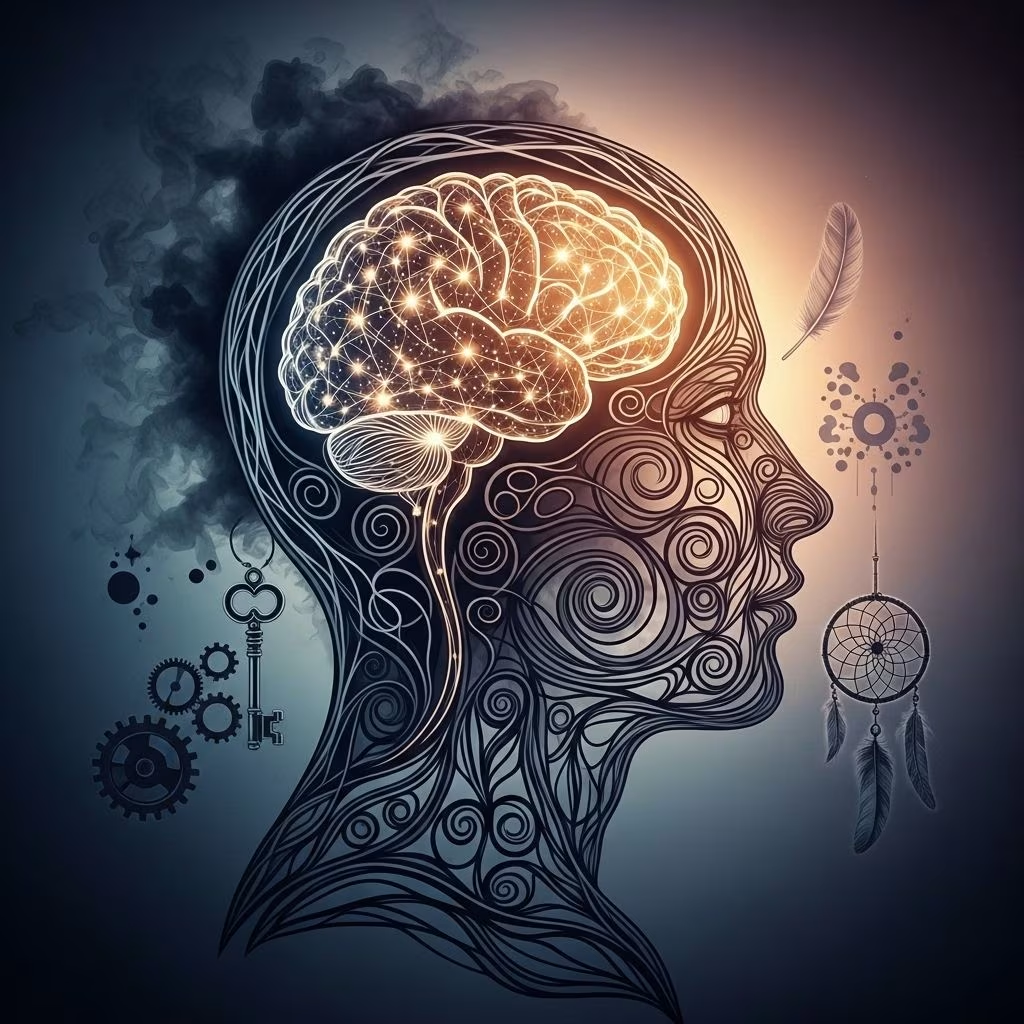
Sigmund Freud’s psychoanalytic theory stands as one of the most influential and debated models in the history of psychology. Introducing concepts that have shaped our understanding of personality, mental life, and therapy, Freud’s work continues to spark discussion and inspire new approaches to understanding human behavior. This article delves into the core elements of Freudian theory, exploring the intricacies of the human psyche and the enduring relevance of Freud’s ideas today.
\n\n
What is Freudian Theory?
\n
Freudian theory, developed by Sigmund Freud in the late 19th and early 20th centuries, offers a framework for understanding human thought, emotion, motivation, and behavior through the lens of unconscious processes. Freud’s work introduced the world to the importance of early childhood, unconscious motivation, and inner conflict, fundamentally altering the way psychologists and the general public view the mind.
\n\n
The Structure of the Mind: Id, Ego, and Superego
\n
One of Freud’s most lasting contributions is his tripartite model of the mind, which divides mental life into three interacting components:
\n
- \n
- Id: The primitive, instinctual part of the mind that operates on the pleasure principle, seeking immediate gratification of basic urges, needs, and desires.
- Ego: The rational, reality-oriented component that mediates between the impulses of the id and the moral constraints of the superego. The ego operates on the reality principle, striving to satisfy the id’s desires in realistic and socially acceptable ways.
- Superego: The internalized moral conscience, representing ideals, societal rules, and aspirations. The superego strives for perfection, judging actions and thoughts, and inducing feelings of pride or guilt.
\n
\n
\n
\n
These elements are not physical structures but conceptual distinctions representing various mental functions. Their interplay shapes our personalities and behaviors, and the tension between them can create inner conflict, anxiety, and ultimately influence psychological well-being.
\n\n
Comparison Table: Id, Ego, Superego
\n
| Aspect | Id | Ego | Superego |
|---|---|---|---|
| Principle | Pleasure | Reality | Moral |
| Function | Instinctual drives, desires | Mediator, decision-maker | Moral oversight, ideals |
| Source | Innate, unconscious | Conscious/unconscious, develops from Id | Learned from parents/society |
| Focus | Immediate gratification | Balancing demands | Strives for perfection |
\n\n
The Levels of Consciousness
\n
Freud dissected the human mind into three distinct levels of awareness:
\n
- \n
- Conscious: Thoughts and perceptions we are currently aware of.
- Preconscious: Information not in present awareness but easily accessible.
- Unconscious: Vast reservoir of feelings, thoughts, memories, and desires beyond conscious awareness, often conflicting or unacceptable, exerting profound influence on behavior.
\n
\n
\n
\n
Freud believed most of our mental life occurs outside conscious awareness, with the unconscious mind holding repressed urges and unresolved conflicts that shape personality and behavior.
\n\n
The Instincts: Eros and Thanatos
\n
Human behavior, Freud suspected, is driven by powerful instincts or drives. He initially focused on two fundamental forces:
\n
- \n
- Eros (Life Instinct): Manifested in sexual urges, creativity, survival, and pleasure-seeking behaviors. Eros governs our instincts toward growth and reproduction.
- Thanatos (Death Instinct): Represents destructive urges, aggression, and the drive toward death and self-destruction. Thanatos was introduced to explain human aggression and the compulsion for risky, self-harming behavior.
\n
\n
\n
Freud proposed that our actions result from the dynamic tension and interplay between these life- and death-driven instincts, much of which is managed unconsciously by the id and mediated by the ego and superego.
\n\n
Stages of Psychosexual Development
\n
Freud’s stage theory of development remains one of the most controversial aspects of his legacy. He proposed that personality develops through a series of five psychosexual stages, each characterized by the erogenous zone that is the primary source of gratification and conflict during that period.
\n\n
Table: Freud’s Stages of Psychosexual Development
\n
| Stage | Age Range | Focus/Erogenous Zone | Key Conflict |
|---|---|---|---|
| Oral | Birth – 1 year | Mouth | Weaning |
| Anal | 1 – 3 years | Anus | Toilet training |
| Phallic | 3 – 6 years | Genitals | Oedipus/Electra complex |
| Latency | 6 – puberty | None (libido dormant) | Social and intellectual skills |
| Genital | Puberty onward | Genitals | Mature sexual interests |
\n\n
Freud argued that unresolved conflicts at any stage may lead to fixations, impacting personality and adult behavior. For example, fixation during the oral stage may lead to oral activities in adulthood, such as smoking or overeating.
\n\n
The Role of Defense Mechanisms
\n
To cope with tensions and conflicts between the id, ego, and superego, Freud proposed that the ego employs a range of defense mechanisms. These unconscious processes help reduce anxiety by distorting or denying reality. Common psychological defenses include:
\n
- \n
- Repression: Forcing distressing thoughts out of conscious awareness.
- Projection: Attributing one’s own unacceptable feelings or impulses to others.
- Denial: Refusing to accept reality or facts.
- Displacement: Redirecting emotions from the original source to a safer substitute target.
- Rationalization: Creating logical explanations to justify unacceptable behavior.
- Regression: Reverting to behaviors typical of an earlier stage of development.
- Sublimation: Channeling unacceptable impulses into productive, socially acceptable activities.
\n
\n
\n
\n
\n
\n
\n
\n
These defenses shield us from psychological pain but may also contribute to maladaptive behaviors if relied on excessively.
\n\n
Psychoanalytic Therapy: Making the Unconscious Conscious
\n
Freud’s theoretical work evolved into psychoanalysis, a form of therapy designed to uncover unconscious conflicts, desires, and memories. The therapist’s role is to facilitate insight, allowing the individual to confront and resolve these unconscious influences, leading to personal growth and symptom relief.
\n
Common psychoanalytic techniques include:
\n
- \n
- Free association: Encouraging the patient to verbalize thoughts without censorship, revealing underlying conflicts.
- Dream analysis: Interpreting the symbolic meaning of dreams to access unconscious material.
- Transference: Identifying the transfer of feelings from significant figures in the patient’s past onto the therapist.
- Parapraxes (Freudian slips): Investigating verbal mistakes and slips of the tongue that may reveal unconscious thoughts.
\n
\n
\n
\n
\n
The goal is catharsis and healing, making what is unconscious conscious so clients can address problems at their root.
\n\n
Applications and Criticisms of Freudian Theory
\n
Freud’s ideas have profoundly impacted the fields of psychology, literature, art, and culture. His work highlighted the importance of early childhood experiences, unconscious motivation, and inner conflict in determining adult behavior and mental health. Concepts such as the Oedipus complex, defense mechanisms, and the talking cure have entered popular understanding.
\n
However, many of Freud’s core assertions— notably the psychosexual stages and sexual basis of all behavior—have come under scrutiny. Critics point to the lack of empirical evidence, overemphasis on sexuality, cultural bias, and determinism. Still, Freud’s innovative approach to exploring the mind laid the groundwork for later developments and remains a foundational influence in psychotherapy.
\n\n
The Influence of Neo-Freudians
\n
Freud’s followers, known as Neo-Freudians, expanded and adjusted his theories, emphasizing broader social, cultural, and interpersonal factors. Notable figures include:
\n
- \n
- Carl Jung: Developed analytical psychology, focusing on collective unconscious and archetypes.
- Alfred Adler: Introduced the concept of the inferiority complex and highlighted the role of social motivation.
- Karen Horney: Challenged Freud’s views on female psychology, stressed cultural and social influences.
- Erik Erikson: Created the psychosocial stage theory, emphasizing lifelong development and society’s role.
\n
\n
\n
\n
\n
Their adaptations paved the way for a more holistic and socially conscious approach to understanding personality.
\n\n
Legacy and Lasting Relevance
\n
Despite its many criticisms, Freud’s psychoanalytic theory has left a permanent mark on psychology and Western culture. Key aspects of his legacy include:
\n
- \n
- The recognition of unconscious mental processes.
- The use of talk therapy and exploration of early life experiences in modern psychotherapy.
- The integration of the concepts of defense mechanisms in clinical, educational, and popular contexts.
- Continuing debate and innovation, ensuring Freud’s work remains a vital reference in discussions of the mind and behavior.
\n
\n
\n
\n
\n\n
Frequently Asked Questions (FAQs)
\n
What is the core idea of Freudian theory?
\n
The core of Freudian theory is that much of human behavior is influenced by unconscious motives and inner psychological conflict, shaped by early childhood experiences.
\n\n
What are the id, ego, and superego?
\n
The id is the instinctual, pleasure-seeking component; the ego mediates real-world demands and inner drives; the superego enforces internalized morals and ideals.
\n\n
How do defense mechanisms work?
\n
Defense mechanisms are unconscious strategies used by the ego to protect individuals from anxiety and conflict by distorting or denying reality.
\n\n
What are some criticisms of Freud’s theories?
\n
Criticisms include a lack of empirical evidence, overemphasis on sexuality, deterministic outlook, gender bias, and limited consideration of cultural and social factors.
\n\n
Does psychoanalysis still influence modern psychology?
\n
Yes. While many of Freud’s theories have been revised or criticized, concepts like the unconscious, defense mechanisms, and the importance of early experience remain influential.
\n\n
Summary Table: Key Elements of Freudian Theory
\n
| Concept | Description |
|---|---|
| Id | Instinctual, unconscious drives operating on pleasure principle |
| Ego | Reality-based mediator balancing id and superego |
| Superego | Moral and ethical standards internalized from society |
| Unconscious Mind | Storage of repressed memories, desires, and impulses |
| Psychosexual Stages | Developmental stages focusing on bodily zones and conflicts |
| Defense Mechanisms | Unconscious tactics to reduce anxiety and conflict |
| Psychoanalysis | Therapeutic technique for uncovering unconscious processes |
\n\n
Freud’s psychoanalytic ideas opened new avenues for understanding the depths of the human mind, emphasizing how much of who we are lies beneath conscious awareness. Even as psychology continues to evolve, Freudian theory remains a pivotal point of reference in debates about the inner workings of personality and mental health.
\n
References
- https://study.com/academy/lesson/freuds-psychoanalytic-theory-on-instincts-motivation-personality-development.html
- https://www.simplypsychology.org/psyche.html
- https://en.wikipedia.org/wiki/Freud’s_psychoanalytic_theories
- https://www.simplypsychology.org/psychoanalysis.html
- https://pmc.ncbi.nlm.nih.gov/articles/PMC10575551/
- https://www.youtube.com/watch?v=lT4wQ02sALE
- https://positivepsychology.com/psychoanalysis/
- https://www.harleytherapy.co.uk/counselling/freuds-main-theories-psychoanalysis.htm


