


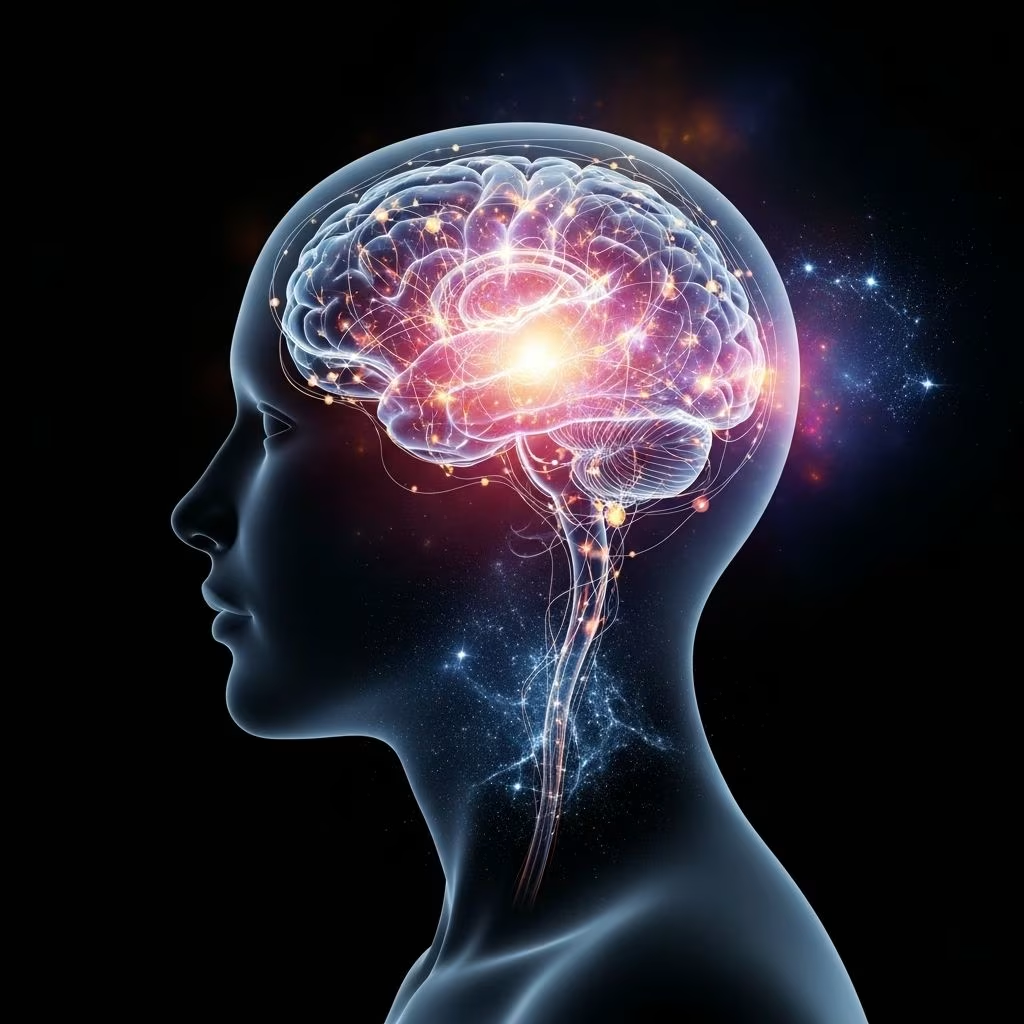
Psychology is the scientific study of the mind and behavior. This vast field examines how people think, act, feel, and interact with the world, offering valuable insights that impact every aspect of human life—from personal growth and relationships to education, work, and mental health care.
What Is Psychology?
At its core, psychology seeks to understand why individuals behave, think, and feel certain ways. The word ‘psychology’ is derived from the Greek terms psyche (mind or soul) and logos (study), reflecting its foundational focus on the mind’s processes and effects on behavior.
Psychologists apply their knowledge across diverse settings, including clinical practice, schools, government agencies, research institutions, and private organizations. The field covers numerous topics such as perception, motivation, intelligence, personality, mental health, development, and the biological bases of behavior.
- Human behavior: How and why people act in specific ways.
- Thought processes: Patterns of perception, reasoning, and memory.
- Emotions and motivation: What drives feelings, desires, and actions.
- Personality: The unique set of traits and patterns shaping an individual.
Why Are Psychology Basics Important?
Understanding psychology basics is essential because it:
- Helps explain and predict human behavior in everyday situations.
- Supports better mental health awareness and intervention.
- Enhances communication and interpersonal relationships.
- Informs educational and organizational policies.
- Enables self-understanding, personal growth, and resilience.
Grasping these fundamental concepts provides a blueprint for approaching more advanced topics and specialized areas within the field.
Core Concepts and Principles in Psychology
Psychology covers a diverse array of core concepts and principles, all working together to explain the complexity of the human experience. Foundational topics include:
- Behavior and learning: How actions are acquired, reinforced, and changed.
- Cognition and memory: The mental activities involved in acquiring, storing, and retrieving information.
- Emotion: The physiological, cognitive, and social processes behind feelings.
- Motivation: The internal and external drivers behind our actions.
- Personality: Patterns of thinking, feeling, and behaving that make each person unique.
- Individual and cultural differences: How personal traits and social backgrounds affect thoughts and behaviors.
Major Psychological Theories
Over the years, psychologists have proposed several major theories to explain the mind and behavior. These include:
| Theory | Key Focus | Main Contributors |
|---|---|---|
| Psychoanalytic | Unconscious motives, early development | Sigmund Freud |
| Behavioral | Observed behavior, conditioning | John B. Watson, B.F. Skinner |
| Cognitive | Mental processes (thinking, memory) | Jean Piaget, Ulric Neisser |
| Humanistic | Personal growth, free will, self-actualization | Carl Rogers, Abraham Maslow |
| Biological | Genetics, brain chemistry, physiology | Various neuroscientists |
| Evolutionary | Adaptation, natural selection | Charles Darwin, Leda Cosmides |
The Biological Basis of Behavior
Understanding how biology influences behavior is a cornerstone of psychology. Biopsychology (or biological psychology) examines the connections between the brain, nervous system, hormones, and genetics in shaping who we are.
- Brain structure and function: Different brain areas control various functions, such as movement, emotions, and memory.
- Neurons and neurotransmitters: Neurons communicate via chemicals such as dopamine, serotonin, and norepinephrine, affecting mood, motivation, and cognition.
- Genetics: Inherited genes contribute to traits, behaviors, and risks for certain mental health conditions.
- Nature vs. nurture: Both genetic inheritance and environmental influences shape behavior, as emerging epigenetic research demonstrates.
New technologies like brain imaging (MRI, fMRI, PET scans) allow scientists to visualize brain activity, deepening our understanding of the biological foundations of the mind. Ethical considerations are critical, especially in research involving humans and animals.
Cognitive Processes: How We Think, Learn, and Remember
Cognitive psychology studies how people process information, perceive their world, recall memories, make decisions, and solve problems. This perspective has fundamentally changed our understanding of mental functions since the mid-20th century.
- Attention: The ability to focus on certain stimuli while filtering out others.
- Perception: The process of organizing and interpreting sensory input from the environment.
- Memory: Systems and processes for encoding, storing, and retrieving information.
- Problem-solving and reasoning: The mental strategies used to find solutions and make judgments.
For example, the Atkinson-Shiffrin model (“multi-store model”) divides memory into sensory memory, short-term memory, and long-term memory, each with distinct functions and storage capacities.
Emotions, Motivation, and Behavior
Emotions are complex reactions involving physiological arousal, cognitive processing, and behavioral expression. They inform how individuals respond to different situations and influence both mental and physical health. Key topics in this area include:
- Emotional intelligence: The ability to identify, understand, and manage emotions in oneself and others.
- Motivation: Internal drives (such as hunger, curiosity) and external rewards that influence the start, direction, and persistence of behavior.
- Biological, cognitive, and social influences on emotion.
Personality and Individual Differences
Personality psychology explores consistent patterns of feeling, thinking, and behaving across time and different situations. Personality theories explain how people differ, develop, and can change.
- Freud’s psychodynamic theory: Unconscious motives and early childhood experiences.
- Trait theories (e.g., Big Five): Focus on broad, stable traits like openness, conscientiousness, extraversion, agreeableness, and neuroticism.
- Humanistic approaches (Rogers, Maslow): Emphasize self-growth, self-actualization, and personal meaning.
Major Branches of Psychology
Psychology is made up of several major branches, each with distinct subject matter and applications. The most influential branches include:
- Behavioral Psychology
- Focuses on observable behaviors, learning, and reinforcement.
- Key concepts: Classical conditioning (Pavlov), operant conditioning (Skinner).
- Emphasizes the influence of environment on behavior, sometimes criticized for neglecting thoughts and emotions.
- Cognitive Psychology
- Focuses on internal mental processes like perception, memory, and decision-making.
- Analogy: Brain as an information-processing system.
- Humanistic Psychology
- Highlights human potential, free will, and the innate drive toward self-actualization.
- Famous for Maslow’s hierarchy of needs and Rogers’ client-centered therapy.
- Clinical Psychology
- Diagnoses and treats mental, emotional, and behavioral disorders.
- Combines research, assessment, and therapy.
- Developmental Psychology
- Studies how people grow and change from infancy through old age.
- Focuses on cognitive, emotional, and social development.
- Social Psychology
- Examines how individuals are influenced by others and by social environments.
- Key topics: conformity, aggression, group dynamics, prejudice.
- Positive Psychology
- Focuses on strengths, happiness, well-being, and flourishing.
- Aims to enhance life satisfaction rather than just treat mental illness.
Applications of Psychology
Psychology’s principles have wide-ranging applications across many domains:
- Mental Health: Diagnosis, treatment, and prevention of psychological disorders.
- Education: Effective teaching strategies, motivation, and learning difficulties.
- Workplace: Employee motivation, productivity, and organizational design.
- Social Policy: Informing public health initiatives and interventions.
- Personal Life: Improving communication, relationships, and stress management.
How Psychologists Conduct Research
Psychological research relies on scientific methods to ensure accuracy and objectivity. Common research methods include:
- Experiments: Controlled studies to test cause-and-effect relationships.
- Observational studies: Recording behavior in natural or laboratory settings.
- Surveys and questionnaires: Gathering self-reported data from participants.
- Case studies: In-depth examination of a single individual or group.
- Longitudinal studies: Tracking changes in individuals over time.
Researchers must consider ethical guidelines, protect participants’ rights, and accurately report results to advance the field responsibly.
Frequently Asked Questions (FAQs)
What is the main focus of psychology?
Psychology focuses on understanding the mind, behavior, and the biological, cognitive, and emotional processes that shape human experiences.
How do psychology basics help in daily life?
Basic psychological principles guide individuals in managing stress, making decisions, communicating better, and understanding themselves and others.
What are the major branches of psychology?
The major branches include behavioral, cognitive, humanistic, clinical, developmental, and social psychology, each with unique perspectives and applications.
Why are genetics and neurotransmitters important in psychology?
Genetics and neurotransmitters influence brain function, mood, and behavior, affecting mental health and patterns of individual differences.
Is psychology only about treating mental illness?
No. While clinical psychology helps treat mental illness, the field also aims to enhance learning, relationships, well-being, and human potential in diverse contexts.
Final Thoughts
Psychology is a dynamic and evolving science that bridges the gap between mind and behavior. By understanding its core principles and perspectives, individuals can apply psychological insights to promote positive change within themselves and society at large. Whether it’s through self-reflection, improving relationships, or supporting well-being, psychology offers practical tools to navigate the complexities of human life.
References
- https://bayareacbtcenter.com/psychology-basics/
- https://londonspd.com/blog/discover-the-basics-of-psychology-mind-unveiled/
- https://www.scribd.com/document/797376815/very-well-mind-psychology
- https://www.northcentralcollege.edu/news/2023/08/04/benefits-studying-psychology
- https://www.snhu.edu/about-us/newsroom/social-sciences/types-of-psychology


