


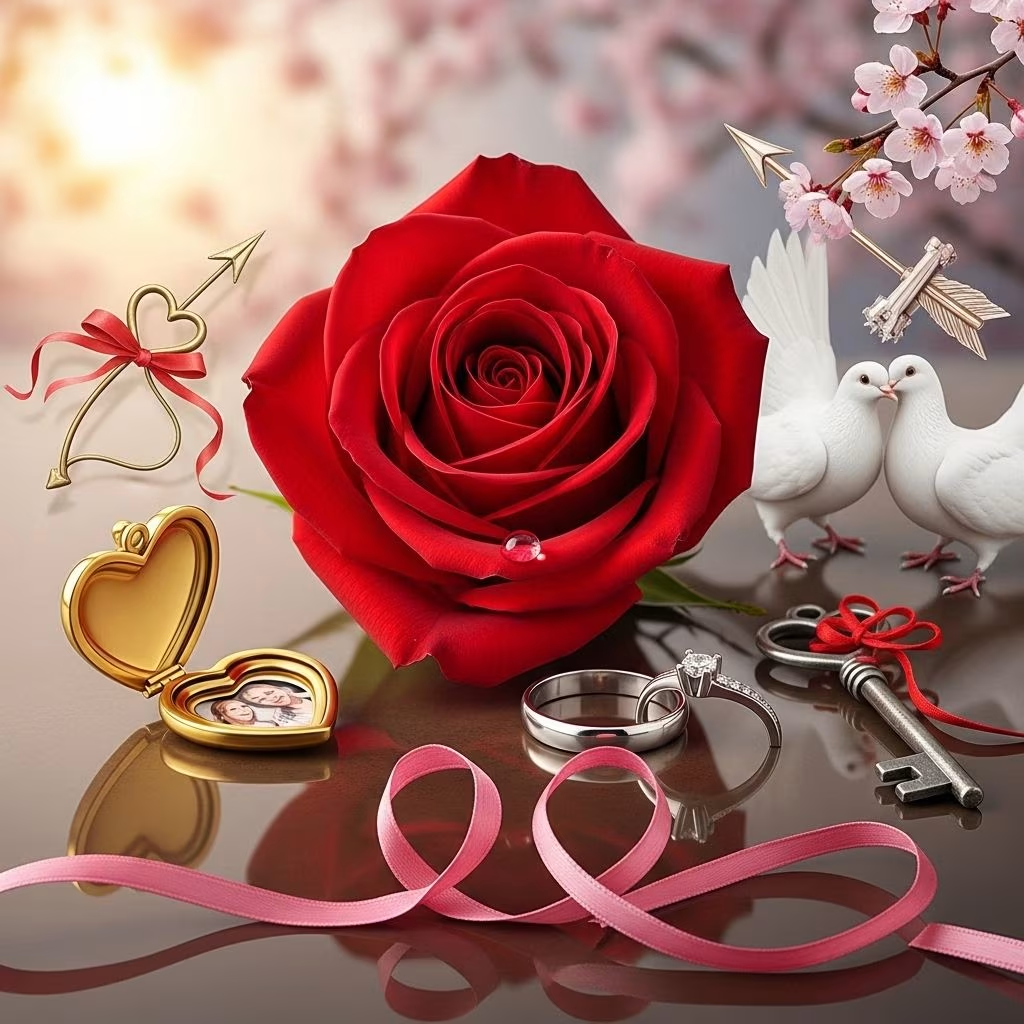
Romantic Symbols of Love: Their Meanings and Origins
Symbols have long been used to convey the complex emotions and connections associated with love. From ancient mythology to modern popular culture, these symbols carry deep meanings and have shaped how people understand and express romantic affection. This article explores iconic, exotic, and modern romantic symbols—their origins, significance, and enduring appeal in relationships around the world.
Why Do We Use Symbols to Represent Love?
Love is a multidimensional experience that can be difficult to capture with words alone. Symbols offer a universal language that transcends speech, bridging cultural and generational gaps to capture the essence of romance.
- Simplification of emotions: Symbols condense complex feelings into simple, recognizable forms.
- Cultural connection: They serve as shorthand for traditions, rituals, and shared histories of romance.
- Personalization: Unique symbols allow couples to define and express their own relationships.
- Memory and ritual: Rituals like giving a red rose or exchanging heart-shaped gifts reinforce bonds at anniversaries, weddings, and Valentine’s Day.
Classic Symbols of Love and Their Meanings
Across centuries and civilizations, certain symbols have come to be closely identified with romantic love. Here’s a look at the most enduring love symbols:
The Heart Shape
Perhaps the most universal symbol of love, the heart has roots going back to antiquity. Although the anatomical human heart looks quite different, the stylized heart shape has come to signify not only romantic love but also deep affection, passion, and commitment.
- Origin: Ancient philosophers linked the heart with the soul, seat of emotions, and even life itself.
- Medieval Europe: The heart-shape gained popularity through art, illuminated manuscripts, and courtly love traditions.
- Modern appeal: Today, heart-shaped jewelry, cards, and emojis are omnipresent gestures of love.
Roses
Roses, especially the red variety, have become synonymous with deep romantic passion.
- Ancient Greece and Rome: Roses were sacred to Aphrodite and Venus, goddesses of love.
- Victorian symbolism: The “language of flowers” gave red roses a specific meaning: “I love you.” Other colors conveyed friendship, innocence, or jealousy.
- Global tradition: Roses are exchanged as tokens of affection on Valentine’s Day, anniversaries, and proposals.
Doves
Doves, with their gentle cooing and lifelong mating habits, represent enduring love and fidelity.
- Classical mythology: Associated with the Roman goddess Venus and Greek Aphrodite.
- Symbolic gestures: Releases of doves at weddings or ceremonies symbolize peace and unity.
- Faithfulness: Doves’ loyalty to a single mate underscores the desire for lifelong companionship.
Cupid
Often depicted as a cherubic archer with wings, Cupid is the Roman god of love whose arrows can make people fall in love uncontrollably.
- Mythological roots: Based on Eros, the Greek god of love.
- Imagery: Romantic art and Valentines often feature Cupid as a playful matchmaker.
- Modern media: Represents the unpredictable and magical power of love.
Ribbons and Knots
Ribbons and knots symbolize the binding ties of love and the unity between romantic partners.
- Handfasting: In Celtic and other wedding rituals, hands are bound with ribbons to symbolize union.
- Chinese knots: Intricate patterns express eternal love, harmony, and luck in relationships.
Exotic and Cross-Cultural Love Symbols
Love is celebrated in every culture, and many symbols are specific to a particular place or tradition while still resonating with people everywhere.
The Claddagh Ring
This symbolic Irish ring displays hands (friendship), a heart (love), and a crown (loyalty).
- Wearing rules: The placement and orientation of the ring can signal whether someone is single, in a relationship, engaged, or married.
- History: Originated in the fishing village of Claddagh near Galway more than 300 years ago.
Infinity Symbol (∞)
A horizontal figure eight, the infinity symbol is often used in jewelry and romantic declarations to represent love without end.
- Eastern influence: May draw from spiritual symbols in Taoism and other belief systems arguing for interconnection and continuity.
- Modern usage: Popular in wedding bands, couple tattoos, and anniversary gifts.
The Red Thread of Fate
An East Asian legend holds that an invisible red thread ties together soulmates, regardless of time, place, or circumstance.
- Folklore: The thread may stretch or tangle but will never break, representing destined love.
- Modern symbolism: Inspires jewelry, art, and literary references about unbreakable bonds.
Love Lock Bridges
Couples in cities around the world attach personalized locks to bridges or gates as a physical symbol of their commitment, then throw away the key.
- Origins: Likely started in Europe in the early 2000s and quickly became an urban love ritual worldwide.
- Controversy: Many cities remove the locks due to structural concerns, but the practice persists as a modern love tradition.
Other Unusual Symbols of Romantic Love
Beyond the classics, here are some more unique symbols that carry messages of passion, devotion, and connection:
- Swans: Known for forming lifelong pairs, swans are often associated with true love, loyalty, and grace.
- Maple Leaves: In East Asian art, maple leaves represent the beauty and fragility of love in autumn, a time of nostalgia and romance.
- Apple: In Greek mythology, an apple offered to the most beautiful goddess sparked the Trojan War—making it an enduring symbol of desire and temptation.
- Shells: Particularly the scallop shell, which is linked to Venus and symbolizes love born from the sea.
The Role of Romantic Symbols in Modern Relationships
Symbols aren’t just relics of the past—they play an active role in how modern couples connect, celebrate milestones, and keep romance alive. Teens and adults alike use emojis, custom jewelry, and creative gestures to send messages of love in the digital age.
- Gift giving: Hearts, roses, and infinity symbols remain top choices for Valentine’s Day, anniversaries, and proposals.
- Social sharing: Couples post selfies with romantic backdrops, lock photos, and share artful depictions of love on social media.
- Personalization: Many design their own symbols—such as couple tattoos or unique jewelry—to represent shared experiences.
- Digital language: Emojis (❤️, 💍, 💌) allow instant, visual communication of affection.
Beyond Symbols: Acts of Love and Modern Expressions
While symbols provide potent shorthand for love, actions still speak loudest. Acts of kindness, physical affection, honest communication, and mutual support are essential to healthy relationships, reinforcing the symbolism in everyday life.
- Affectionate gestures: Holding hands, hugging, and words of affirmation.
- Rituals: Celebrating anniversaries, making special meals, or crafting meaningful letters or gifts.
- Shared challenges: Overcoming life’s ups and downs together as a testament to lasting love.
Symbolism Table: Common Romantic Symbols and Their Meanings
| Symbol | Meaning | Origin/Cultural Context |
|---|---|---|
| Heart | Romantic love, affection | Medieval Europe, Ancient Philosophy |
| Red Rose | Passionate love | Ancient Greece, Victorian Era |
| Dove | Loyalty, lifelong partnership | Roman/Grecian mythology |
| Cupid | Desire, matchmaking | Roman Mythology |
| Claddagh Ring | Friendship, loyalty, love | Irish Tradition |
| Infinity Symbol | Endless love | Global, essence in Taoism |
| Red Thread | Fate, soulmate connection | East Asian Folklore |
| Love Locks | Commitment, lasting bond | Modern urban ritual |
How to Incorporate Romantic Symbols in Your Relationship
There is no singular way to use symbols in love—what matters is the intention and meaning you attach to them. Here are some ideas to deepen romance with symbols:
- Choose a symbol that reflects both your personalities and relationship story.
- Create new traditions, such as exchanging custom jewelry or keeping a journal with recurring motifs.
- Celebrate milestones with gifts that feature meaningful symbols.
- Design your own emoji, artwork, or tokens for a modern twist.
Modern Love Symbols in Digital Culture
Today’s couples blend ancient symbolism with digital shorthand. Emojis and virtual gestures allow instant communication of “I love you,” keeping romance vibrant even across distances.
- Popular emojis: ❤️, 😍, 💑, 💍, 💌, 🕊️, 🔗
- GIFs and memes: Widely used to add humor and personalization to digital affection.
- Virtual gifts: Digital hearts, stickers, and animated icons sent via messaging apps or social media platforms.
Frequently Asked Questions (FAQs)
What is the origin of the heart symbol as a representation of love?
The stylized heart’s use as a symbol of love dates to medieval Europe, where it appeared in paintings, manuscripts, and valentine cards. Earlier associations can also be found in ancient Greek and Roman philosophies linking the heart with emotion and life itself.
Why is the red rose considered a symbol of romance?
The red rose’s link to romance comes from its associations with Aphrodite and Venus—goddesses of love—in ancient myth, as well as the Victorian “language of flowers,” which strictly defined the meanings of different blooms.
How do modern couples use symbols to express love?
Modern couples use symbols through personalized jewelry, tattoos, artwork, as well as digital forms like emojis, GIFs, and social media posts to communicate affection and lasting connection.
Are romantic symbols universal across cultures?
While some symbols like the heart are recognized globally, others—such as the Claddagh ring, the red thread, or unique regional icons—are specific to their cultural contexts but often resonate across borders through shared romantic values.
What is the significance of “love lock” bridges?
Attaching a lock to a bridge and discarding the key has become a contemporary tradition for couples to symbolize an unbreakable commitment. The practice, though sometimes controversial due to practical concerns, remains a powerful gesture of public and enduring love.
Conclusion: The Power and Purpose of Love Symbols
Whether tracing the outline of a heart on a note, handing over a single rose, or sharing a favorite emoji, romantic symbols offer accessible, memorable ways to express love’s complexity. They connect us to history, culture, and one another—reminding us that while love is deeply personal, it is also part of a universal human story.
References
- https://grhas.centraluniteduniversity.de/index.php/jlpcs/article/view/56
- https://doctorsexplain.net/10-strong-signs-of-compatibility-in-relationships-and-why-compatibility-matters-in-love-relationships/
- https://www.scribd.com/document/885993098/www-verywellmind-c-6
- https://www.rockethealth.app/blog/what-is-rebound-in-relationships


