


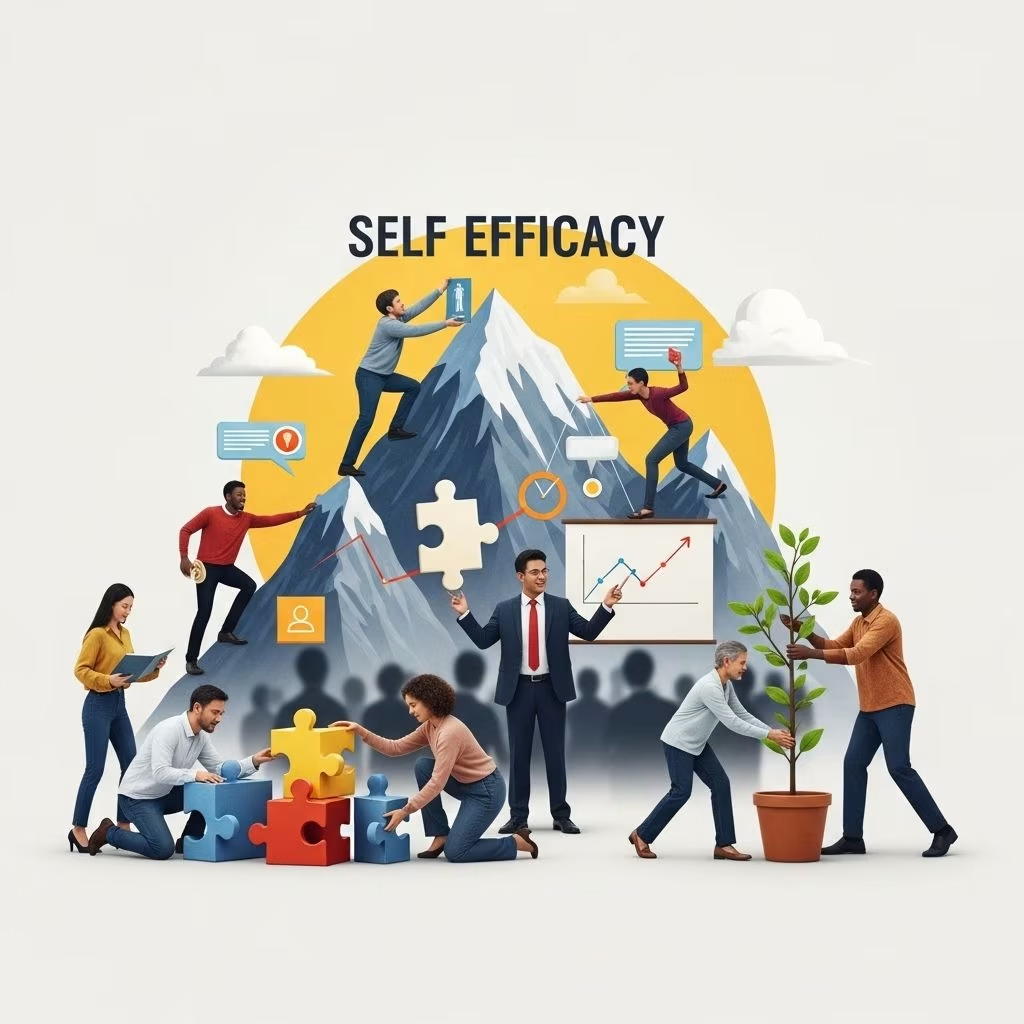
What Is Self-Efficacy?
Self-efficacy is defined as an individual’s belief in their ability to successfully execute behaviors necessary to produce specific performance outcomes. Psychologist Albert Bandura introduced this concept, emphasizing its centrality in motivation, achievement, and personal agency. Unlike self-esteem, which relates to overall self-worth, self-efficacy focuses on confidence in specific capabilities within particular domains such as academic, professional, or social tasks.
Key Features of Self-Efficacy
- Domain-specific: Self-efficacy refers to one’s belief in their ability to perform specific behaviors, not a general sense of worth or value.
- Predicts behavior: High self-efficacy correlates with greater effort, persistence, and resilience in facing challenges.
- Central to motivation: Bandura posited that efficacy beliefs are the foundation for motivation and personal accomplishment.
Origins and Theory: Albert Bandura and Social-Cognitive Theory
Self-efficacy is a key construct in Bandura’s Social-Cognitive Theory, which views human functioning as driven by reciprocal interactions between behavior, personal factors, and environment. Bandura proposed that efficacy beliefs directly influence how people think, feel, motivate themselves, and act.
Bandura’s Definition
According to Bandura: “People’s judgments of their capabilities to organize and execute courses of action required to attain designated types of performances”. Self-efficacy is, therefore, a belief about capability, not always aligned with actual skill.
Self-Efficacy vs. Self-Esteem
| Aspect | Self-Efficacy | Self-Esteem |
|---|---|---|
| Focus | Belief in specific capabilities | General sense of self-worth |
| Measurement | Task- and situation-specific | Global/personality-based |
| Impact | Motivates behavior; predicts goal attainment | Influences mood and satisfaction |
How Self-Efficacy Develops: The Four Sources
Bandura identified four primary sources shaping self-efficacy beliefs:
- Mastery Experiences (Performance Outcomes). Successful task completion is the most powerful self-efficacy builder; repeated success strengthens confidence, while repeated failures undermine it.
- Vicarious Experiences (Modeling). Observing someone similar overcoming a challenge can boost one’s belief in their own ability, especially when the observer identifies with the model.
- Social Persuasion (Verbal Encouragement). Positive feedback or encouragement from trusted others enhances self-efficacy, though credibility of the persuader matters; discouragement can lower it more than encouragement can raise it.
- Physiological and Emotional States. How one interprets signs of stress, arousal, or mood influences self-efficacy. Calm, positive feelings enhance self-efficacy; anxiety, fatigue, or negative arousal undermine it.
Illustrative Examples
- Passing a challenging exam boosts future academic self-efficacy (mastery experience).
- Watching a peer learn a new skill may encourage you to attempt the same (vicarious experience).
- A coach’s constructive feedback can fuel belief in one’s athletic capability (social persuasion).
- Interpreting pre-performance nerves as excitement rather than fear maintains confidence (emotional state).
How Self-Efficacy Influences Thought, Motivation, and Behavior
Self-efficacy beliefs influence human functioning in several ways:
- Activity Choices: People pursue tasks they feel capable of and avoid those they doubt.
- Effort and Persistence: High self-efficacy increases sustained effort and persistence during setbacks; low self-efficacy leads to avoidance and quick surrender.
- Resilience: Individuals with strong efficacy persevere through challenges, treating failures as learning opportunities instead of permanent defeat.
- Goal Setting: Self-efficacy guides the selection of goals—higher belief in capability yields more challenging ambitions.
- Health Behaviors: Explains why people choose or avoid health-related actions (e.g., quitting smoking, exercising) rather than merely predicting who will act.
Factors That Influence Self-Efficacy
Self-efficacy is dynamic, shaped by:
- Personal Experiences: Frequent successes build efficacy; impactful failures may diminish it.
- Modeling by Others: Successes and failures of peers or role models affect one’s own beliefs.
- Feedback and Social Influence: Family, mentors, teachers, colleagues can sway efficacy through encouragement, criticism, or realistic appraisal.
- Interpretation of Internal Signals: Physiological reactions (e.g., heart rate, excitement), emotional cues, and stress responses may support or challenge self-efficacy.
Examples of Self-Efficacy in Everyday Life
- Academic Self-Efficacy: Believing one can master a subject or assignment fuels engagement and achievement.
- Workplace Self-Efficacy: Confidence in handling work tasks motivates employees to pursue success, adapt to change, and take initiative.
- Parenting Self-Efficacy: Parents who trust their ability to manage parenting challenges tend to employ positive strategies and maintain resilience.
- Health Behaviors: Self-efficacy supports sticking to exercise routines, nutrition plans, or other health interventions—even when progress is slow or obstacles arise.
- Social Situations: High self-efficacy may help in public speaking, meeting new people, or group settings, viewing nerves as surmountable.
Strategies to Improve Self-Efficacy
- Set Realistic Goals: Start with attainable objectives, celebrating small successes to build mastery.
- Observe Effective Models: Seek mentors or role models similar to oneself, noting strategies they use to overcome difficulties.
- Accept Constructive Feedback: Learn to use feedback for growth, separating criticism from self-worth.
- Reframe Thoughts: Practice interpreting physiological signs and setbacks positively; view challenges as learning opportunities.
- Reduce Stress: Use relaxation, mindfulness, or stress management techniques to minimize negative emotional states before performing tasks.
- Practice Persistence: Persist despite hurdles; treat setbacks as temporary and specific, not personal failings.
Self-Efficacy Scales and Measurement
Researchers assess self-efficacy through structured scales that gauge belief in handling specific situations (e.g., academic, social, management tasks). These validated assessments help tailor interventions to bolster efficacy in domains needing support.
Applications of Self-Efficacy Theory
- Education: Enhancing students’ efficacy improves motivation, achievement, and mindset toward learning.
- Health Promotion: Interventions targeting efficacy beliefs encourage healthy lifestyle changes (e.g., exercise, quitting smoking, medication adherence).
- Therapy and Counseling: Therapists work on increasing clients’ self-efficacy for coping skills, exposure exercises, or behavior change.
- Workplace Development: Leadership and team training often incorporates strategies to develop efficacy in managing tasks and overcoming workplace stress.
Common Challenges and Misconceptions
- Overestimating or underestimating abilities: Research suggests modest overestimation may help endure adversity, but major misalignment between belief and actual skill could backfire.
- Confusing self-efficacy with self-esteem: They address different psychological processes and should be measured, supported, and fostered distinctively.
- Assuming social persuasion always works: Encouragement only enhances self-efficacy if perceived as credible and aligned with realistic capability.
Frequently Asked Questions (FAQs) About Self-Efficacy
Q: How does self-efficacy affect motivation?
A: High self-efficacy increases motivation and persistence. Individuals with strong efficacy beliefs tackle challenging tasks, persist longer during setbacks, and recover from failures more quickly.
Q: Can self-efficacy be improved in adults?
A: Yes. Adults can increase self-efficacy through mastery experiences, observing effective role models, accepting social encouragement, and reframing negative emotions as manageable signals.
Q: Is self-efficacy important for children and students?
A: Absolutely. Developing self-efficacy in childhood shapes academic engagement, goal setting, and resilience. Teachers and parents play vital roles in cultivating these beliefs.
Q: How is self-efficacy different from self-confidence?
A: Self-confidence is a general belief in one’s overall ability or success. Self-efficacy is more specific to beliefs regarding particular acts or challenges.
Q: What happens when self-efficacy is low?
A: Individuals with low self-efficacy often avoid challenging tasks, exert less effort, and give up quickly when facing setbacks. This can lead to missed opportunities and hinder personal growth.
Key Takeaways
- Self-efficacy is domain-specific and drives motivation, persistence, and achievement.
- Developed through mastery experiences, modeling, social persuasion, and emotional states.
- Improving self-efficacy requires small successes, realistic goals, positive modeling, and cognitive reframing.
- Central to well-being: Self-efficacy supports resilience, healthy habits, and success at work, school, and in relationships.
References
- https://www.simplypsychology.org/self-efficacy.html
- https://pmc.ncbi.nlm.nih.gov/articles/PMC3540350/
- https://pmc.ncbi.nlm.nih.gov/articles/PMC4326627/
- https://en.wikipedia.org/wiki/Self-efficacy
- https://positivepsychology.com/self-efficacy/
- https://nobaproject.com/modules/self-efficacy
- https://www.droracle.ai/articles/149291/what-is-self-efficacy-theory
- https://fiveable.me/key-terms/intro-psychology/self-efficacy


