


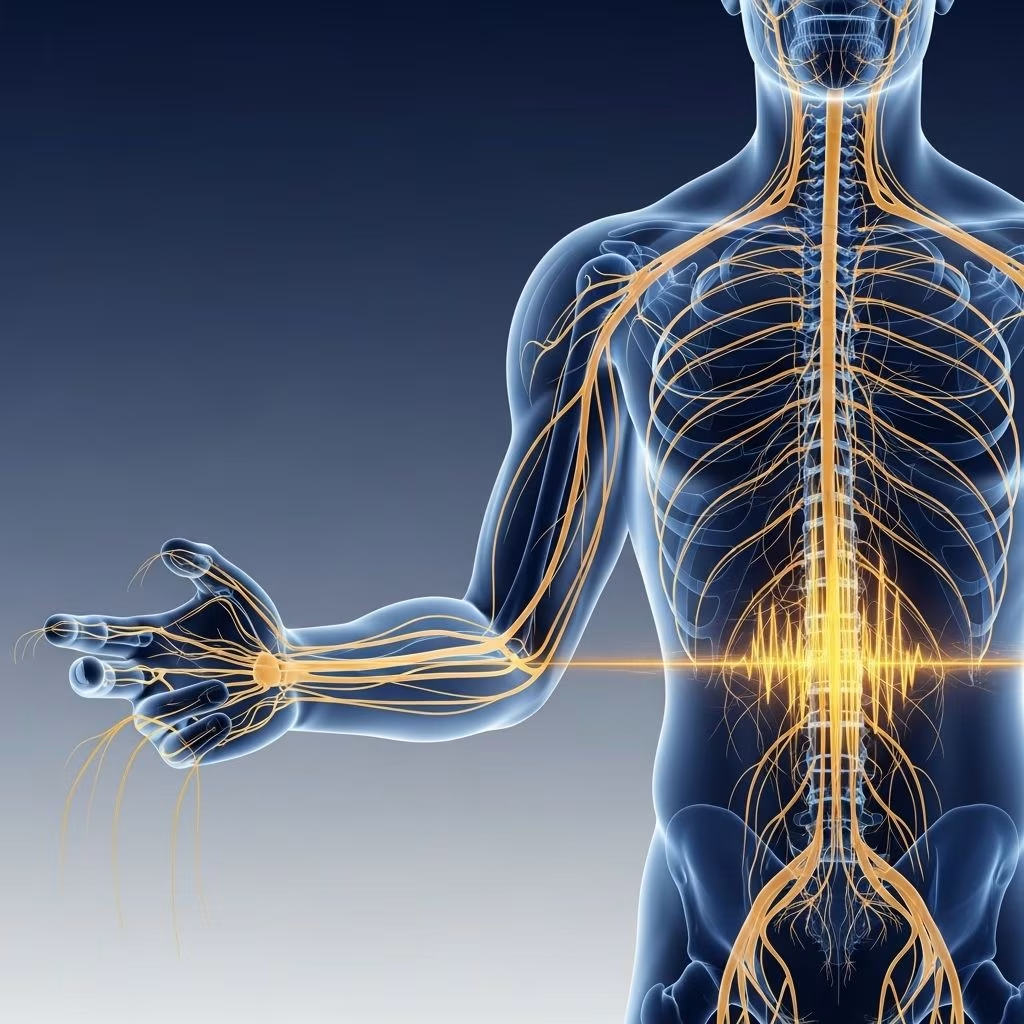
What Is the Somatic Nervous System?
The somatic nervous system (SNS) is a critical subdivision of the peripheral nervous system that plays a key role in controlling voluntary movements and processing external sensory input. Unlike the autonomic nervous system, which governs involuntary functions like heartbeat or digestion, the somatic nervous system lets you consciously interact with and respond to your environment through actions such as walking, speaking, and picking up objects.
The SNS forms a communication bridge between your central nervous system (brain and spinal cord) and the rest of your body, allowing you to sense and respond to the world around you.
This system is directly involved in the following:
- Initiating voluntary muscle movements
- Relaying sensory signals (touch, pain, temperature) from the body to the brain
- Integrating responses to environmental changes
- Executing reflex actions for rapid protective responses
Key Features of the Somatic Nervous System
- Voluntary Control: The SNS enables you to perform actions you choose to do consciously, like lifting your arm or writing.
- Processing Sensory Input: Specialized neurons carry information from senses such as touch, temperature, pain, sight, sound, and taste to your brain.
- Motor Output: It transmits commands from the brain to skeletal muscles, facilitating movement.
- Reflex Arcs: It can trigger simple, fast responses to stimuli without requiring conscious thought.
How the Somatic Nervous System Works
The somatic nervous system operates through a well-coordinated sequence of events that allow for both sensory perception and voluntary movement. The main pathway involves both sensory (afferent) neurons and motor (efferent) neurons.
| Step | Description | Example |
|---|---|---|
| 1. Detecting Changes | Sensory receptors in your skin, eyes, ears, etc., notice external stimuli (heat, light, texture). | Touching a hot surface |
| 2. Creating Signals | Sensory neurons generate electrical impulses sent through peripheral nerves toward the spinal cord. | Nerve signal travels upon stimulus |
| 3. Brain Processing | The brain interprets signals and decides how to respond. | Feeling pain or deciding to move |
| 4. Sending Response | Motor neurons carry the brain’s instructions down the spinal cord toward skeletal muscles. | Brain sends signal to hand muscles to move away |
| 5. Muscle Activation | Muscles contract in response, resulting in voluntary action. | Pulling your hand away from the hot surface |
Key Components of the Somatic Nervous System
- Sensory (Afferent) Neurons: These transmit sensory information from peripheral receptors (skin, muscles, joints) to the central nervous system.
- Motor (Efferent) Neurons: These carry movement commands from the central nervous system to skeletal muscles.
- Cranial Nerves: Twelve pairs vital for both sensing and movement in the head, neck, and tongue.
- Spinal Nerves: Thirty-one pairs relay information between your body and spinal cord, controlling limbs and trunk movements.
- Ganglia: Clusters of neuron cell bodies located outside the central nervous system.
- Nuclei: Groups of neuron cell bodies within the central nervous system that share similar functions.
- Glial Cells: Support and protect neurons while assisting in signal transmission.
Somatic vs. Autonomic Nervous System
| Feature | Somatic Nervous System (SNS) | Autonomic Nervous System (ANS) |
|---|---|---|
| Control | Voluntary (conscious decisions) | Involuntary (automatic functions) |
| Target Muscles | Skeletal muscles | Cardiac and smooth muscles |
| Key Functions | Movement, external sensing | Regulating heartbeat, digestion, breathing |
| Neurotransmitter Role | Acetylcholine (excitatory) | Acetylcholine (inhibitory and excitatory), noradrenaline |
Functional Anatomy: Nerves and Neurotransmitters
The SNS functions through an intricate network of nerves, synapses, and chemical signals. Below are some of its essential anatomical and biochemical elements:
- Primary Motor Cortex: Located in the precentral gyrus of the brain, initiates motor signals.
- Corticospinal Tract: Pathway carrying signals from brain to spinal cord.
- Neuromuscular Junction (NMJ): The site where motor neurons communicate directly with muscle fibers to cause contraction.
- Neurotransmitters: Particularly acetylcholine, which stimulates muscle contraction by binding to nicotinic receptors on muscle cells.
- Glutamate: Released by upper motor neurons, stimulates lower motor neurons within the spinal cord.
Somatic Reflex Arcs: Involuntary Muscle Responses
While most actions governed by the somatic nervous system are voluntary, it also handles some rapid, automatic responses known as reflex arcs.
A reflex arc is a shortcut neural pathway that allows for quick action without the need for conscious thought. Sensory neurons send a signal directly to the spinal cord, triggering an immediate motor response. This is essential for minimizing potential harm from dangerous stimuli.
- Knee-Jerk (Patellar) Reflex: A sudden tap below your kneecap causes your leg to kick out automatically.
- Blink Reflex: Eyes automatically close if something suddenly approaches the face.
- Withdrawal Reflex: Instantly pulling your hand away from a hot object before feeling the pain.
Clinical Relevance: Disorders and Damage to the SNS
Disorders impacting the somatic nervous system can lead to significant functional impairment. Some causes and effects of damage include:
- Motor Neuron Disease (MND): Progressive death of motor neurons, leading to muscle wasting and weakness.
- Peripheral Neuropathy: Numbness, tingling, or nerve pain due to damaged peripheral nerves.
- Trauma or Compression: Physical injury or pressure on nerves causing loss of motor control or sensation.
- Healthy Lifestyle: Proper nutrition, exercise, and protective habits can reduce risk for nerve damage.
Examples of Somatic Nervous System Function
- Walking to a destination by consciously moving your legs.
- Typing on a keyboard by coordinating your fingers.
- Catching a ball by interpreting visual cues and triggering arm muscles.
- Responding to pain or temperature changes, such as adjusting your grip when something feels too hot.
Somatic Nervous System: Sensory Modalities
The SNS handles several sensory modalities, sending information about one’s environment for interpretation and action. These sensations include:
- Touch: Pressure, vibration, and texture
- Pain: Both acute and chronic forms
- Temperature: Sensation of heat and cold
- Body Position: Known as proprioception, keeping track of limb position
- Taste and Sound: Though primarily mediated by cranial nerves, SNS carries some sensory information from these modalities
Somatic Nervous System: Fast Facts
- The SNS is essential for daily interaction with the environment.
- Contains both cranial and spinal nerves for broad body coverage.
- Includes reflex arcs that bypass the brain for ultra-fast protective responses.
- Uses acetylcholine as its primary neurotransmitter for muscle activation.
Frequently Asked Questions (FAQs)
What is the difference between the somatic and autonomic nervous systems?
The somatic nervous system controls voluntary, conscious actions using skeletal muscles, while the autonomic nervous system governs involuntary bodily functions like digestion and cardiac rhythm.
How does the somatic nervous system help us move?
It sends signals from the brain through motor neurons to skeletal muscles, causing them to contract and enabling you to perform physical actions.
What is a reflex arc?
A reflex arc is a direct neural pathway that allows your body to react quickly to certain stimuli (such as pain or danger) by activating muscles before you are consciously aware of the stimulus.
Can damage to the somatic nervous system be treated?
Treatment depends on the cause. Some damage, such as physical trauma, may recover with medical intervention, while degenerative diseases require long-term management and rehabilitation.
Why is acetylcholine important for the somatic nervous system?
Acetylcholine acts as a key neurotransmitter that stimulates muscle contraction by binding to muscle cell receptors at the neuromuscular junction.
References
- https://www.simplypsychology.org/somatic-nervous-system.html
- https://en.wikipedia.org/wiki/Somatic_nervous_system
- https://qbi.uq.edu.au/brain/brain-anatomy/peripheral-nervous-system/somatic-nervous-system
- https://my.clevelandclinic.org/health/body/23291-somatic-nervous-system
- https://www.osmosis.org/learn/Introduction_to_the_somatic_and_autonomic_nervous_systems
- https://my.clevelandclinic.org/health/body/21202-nervous-system
- https://aklectures.com/lecture/nervous-system/somatic-nervous-system


