The Origins of the Bull Terrier
The Bull Terrier, a breed renowned for its distinctive appearance and robust personality, has a fascinating history that spans over a century. Developed primarily by James Hinks, an Irish-born shoemaker’s son, this breed was molded into a distinct entity in Birmingham, England. The journey of the Bull Terrier began in the early 19th century, when the need for a versatile dog capable of both hunting and fighting arose.
Early Development
Initially, the “bull and terrier” breeds were developed by crossing the Old English Bulldog with Old English Terriers. This combination aimed to merge the tenacity of the Bulldog with the speed and agility of terriers, creating a formidable companion for hunting and blood sports. However, these early breeds lacked a standardized form, as breeding focused on performance rather than appearance.
James Hinks and the Modern Bull Terrier
James Hinks played a pivotal role in shaping the modern Bull Terrier. In the mid-19th century, Hinks began breeding “bull and terriers” with English White Terriers, aiming to create a cleaner, more elegant dog. His efforts led to the development of the first modern Bull Terriers, which were bred for their white coats and distinctive heads.
The Evolution of the Breed
Over time, the Bull Terrier underwent significant changes. Hinks introduced breeds like the Dalmatian and Spanish Pointer to enhance elegance and agility, while the Borzoi and Rough Collie were used to reduce the stop in the skull, creating the breed’s hallmark egg-shaped face.
Recognition and Standardization
The Bull Terrier was officially recognized by the American Kennel Club (AKC) in 1885. The first breed standard was adopted in 1915, with amendments in 1926 and 1936. The breed underwent further refinement, with a separate standard for colored Bull Terriers being introduced in 1949.
Bull Terrier Varieties
There are two main varieties of Bull Terriers: the white and the colored. Historically, the white variety was more popular, but the AKC recognized colored Bull Terriers as a separate entity in the mid-20th century. Despite this recognition, the white and colored varieties remain distinct in the U.S., with the English Kennel Club judging them together.
Modern-Day Characteristics
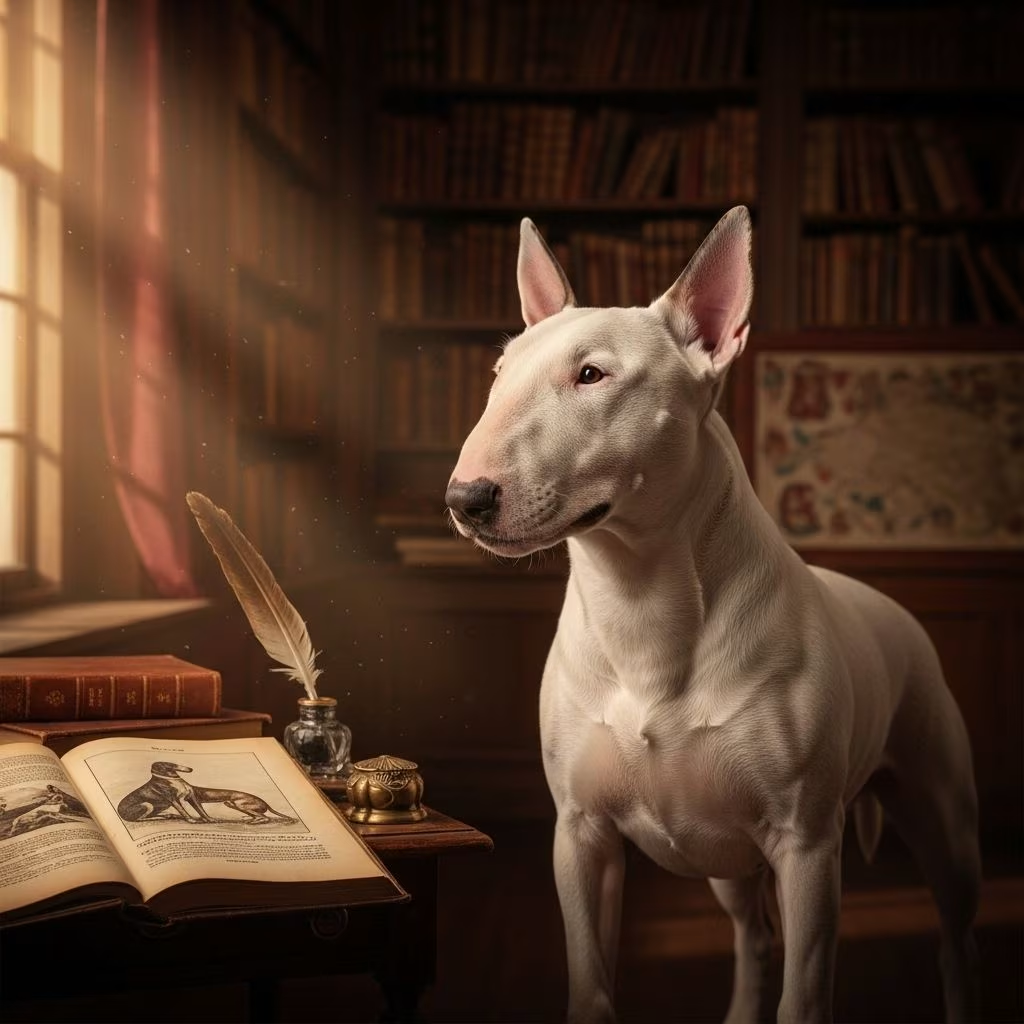
Today, the Bull Terrier is known for its muscular build, egg-shaped head, and triangular eyes. The breed is celebrated for its affectionate yet strong-willed personality, making it a beloved companion for many families.
Miniature Bull Terrier: A Smaller Variant
The Miniature Bull Terrier is a scaled-down version of the Bull Terrier, developed in the mid-19th century. This smaller variant retains the larger breed’s personality and ratter instincts but is more suited to living in confined spaces. The Miniature Bull Terrier was recognized as a separate breed by the English Kennel Club in 1939 and by the AKC in 1991.
Frequently Asked Questions (FAQs)
Q: What is the origin of the Bull Terrier?
A: The Bull Terrier originated by crossing the Old English Bulldog with Old English Terriers in the early 19th century, later refined by James Hinks.
Q: What are the main characteristics of the Bull Terrier?
A: The breed is known for its muscular build, egg-shaped head, triangular eyes, and strong yet affectionate personality.
Q: Are there different varieties of Bull Terriers?
A: Yes, there are two main varieties: the white and the colored. While they are distinct in the U.S., the English Kennel Club judges them together.
Q: How has the Miniature Bull Terrier evolved?
A: The Miniature Bull Terrier was developed in the mid-19th century as a smaller version of the Bull Terrier. It retains the larger breed’s personality and is recognized as a separate breed by the AKC since 1991.
Q: What kind of care does a Bull Terrier need?
A: Bull Terriers require regular exercise, training, and grooming. They are known for their strong will and need consistent discipline.
References
- https://www.akc.org/expert-advice/dog-breeds/bull-terrier-history/
- https://www.akc.org/dog-breeds/bull-terrier/
- https://www.akc.org/expert-advice/dog-breeds/miniature-bull-terrier-history/
- https://www.akc.org/about/archive/guide-collections/btca-collection/
- https://www.akc.org/expert-advice/lifestyle/bull-terrier-fun-facts/
- https://en.wikipedia.org/wiki/Bull_Terrier
- https://bullardsbullterriers.com/index.php/library/bull-terrier-history
- https://www.akc.org/expert-advice/dog-breeds/breed-history/page/15/