


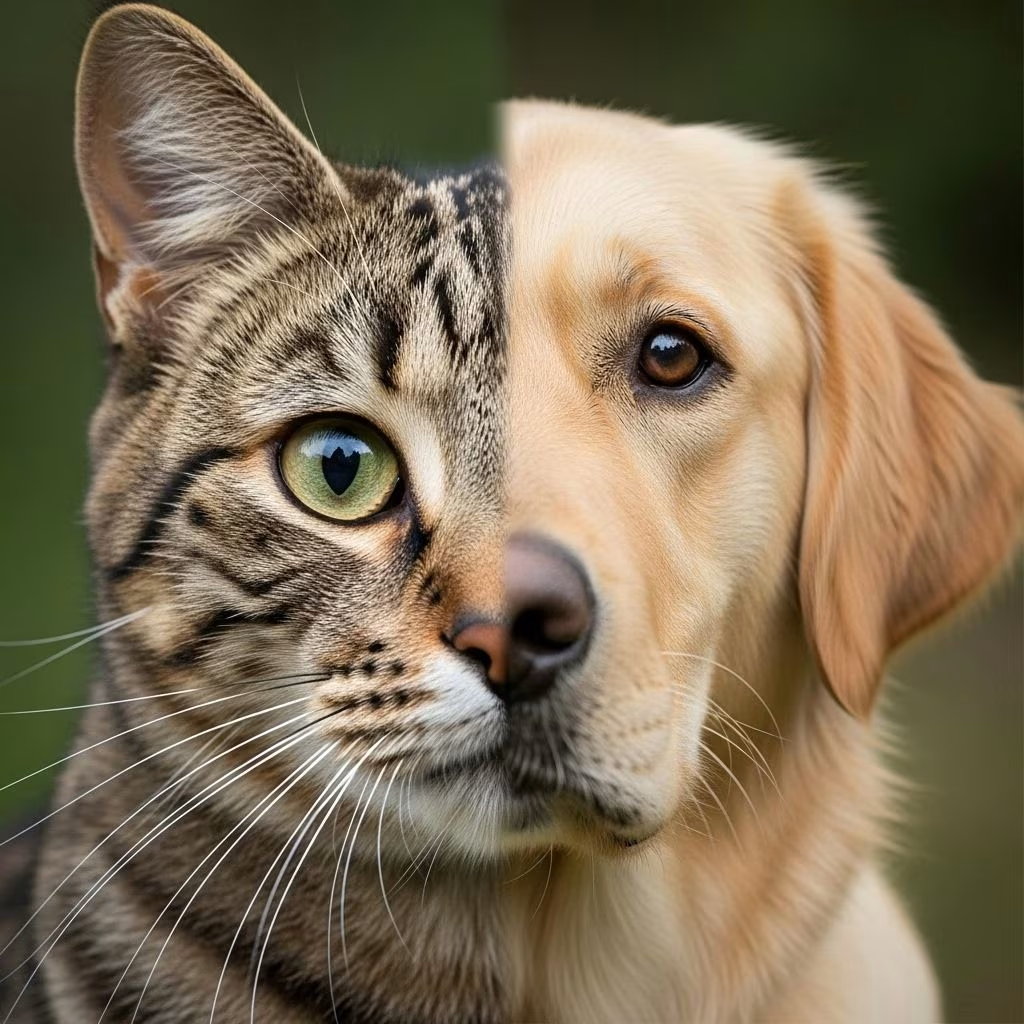
The question of whether cats and dogs can mate has intrigued pet owners and animal enthusiasts for generations. While these two beloved companion animals often share our homes and sometimes form close bonds, the biological reality of interspecies reproduction between them is quite different from what some might imagine. The simple answer is no—cats and dogs cannot successfully mate and produce offspring together, and the reasons behind this impossibility are rooted in fundamental biology, genetics, and evolutionary history.
Understanding why cats and dogs cannot reproduce together requires examining the vast differences that separate these two species. From their genetic makeup to their reproductive anatomy and mating behaviors, cats and dogs are fundamentally incompatible when it comes to creating offspring. This article explores the scientific facts behind this biological impossibility and explains why even the most determined attempts at cross-species breeding would be unsuccessful.
The Fundamental Genetic Barriers
The primary reason cats and dogs cannot mate successfully lies in their genetic incompatibility. These two species belong to entirely different families within the animal kingdom, representing evolutionary paths that diverged millions of years ago. Dogs belong to the family Canidae, which includes wolves, foxes, and other canine species, while cats are members of the family Felidae, encompassing domestic cats, lions, tigers, and other feline species.
The evolutionary split between these two families occurred approximately 40 to 50 million years ago, creating vast genetic differences that make reproduction impossible. Over these millions of years, each family developed distinct genetic codes, reproductive systems, and physiological characteristics that are unique to their respective lineages. This extensive period of separate evolution has created insurmountable barriers to any form of genetic combination.
Chromosome count represents one of the most significant obstacles to cat-dog reproduction. Chromosomes are structures within cells that carry genetic information, and for successful reproduction to occur, the chromosome numbers between two species must be compatible or at least similar enough to allow for genetic recombination. Dogs possess 78 chromosomes, organized into 39 pairs, while cats have only 38 chromosomes, arranged in 19 pairs. This dramatic difference in chromosome number makes it impossible for their genetic material to combine in any meaningful way.
When considering successful hybrid animals that do exist in nature, we can see that chromosome compatibility plays a crucial role. Mules, for example, result from breeding a horse (64 chromosomes) with a donkey (62 chromosomes). While these animals have different chromosome counts, they are close enough and share sufficient genetic similarity to produce viable offspring. Similarly, ligers—the offspring of lions and tigers—are possible because both parent species belong to the same genus (Panthera) and have compatible chromosome numbers.
Understanding Reproductive Anatomy Differences
Beyond genetic incompatibility, cats and dogs have vastly different reproductive anatomies that would prevent successful mating even if genetic barriers did not exist. These anatomical differences evolved over millions of years to suit each species’ specific reproductive strategies and environmental adaptations.
Female cats, known as queens, are induced ovulators, which means they do not release eggs spontaneously during a regular cycle like many other mammals. Instead, the physical act of mating itself triggers ovulation. This reproductive strategy requires specific stimulation that only occurs during mating with a male cat. Male cats possess a unique anatomical feature—penile barbs or spines—that provide the necessary stimulation to trigger ovulation in female cats during breeding. This physical characteristic is absent in male dogs, making it impossible for them to trigger the ovulation process in female cats.
Dogs, conversely, are spontaneous ovulators with reproductive cycles that function very differently from cats. Female dogs experience regular estrous cycles during which they ovulate without requiring the physical act of mating to trigger egg release. Their reproductive anatomy is designed to accommodate the mating behaviors and physical characteristics of male dogs, which differ substantially from those of male cats.
The size and structure of reproductive organs also vary significantly between these species. The physical mechanics of mating are species-specific, with each animal’s anatomy perfectly adapted to mate with members of its own species. Even if a dog and cat were to attempt mating, the anatomical differences would prevent successful copulation and fertilization.
Behavioral and Hormonal Incompatibility
Mating in the animal kingdom involves complex behavioral rituals and hormonal signals that are highly species-specific. Cats and dogs have evolved entirely different approaches to courtship and reproduction, making it virtually impossible for them to recognize or respond to each other’s mating signals.
Communication during mating relies on pheromones, body language, and vocalizations that are unique to each species. When a female cat is in heat, she exhibits specific behaviors and releases pheromones that attract male cats. These signals are biologically programmed to appeal to members of her own species and would not trigger reproductive interest in a male dog. Similarly, a female dog in heat produces pheromones and exhibits behaviors designed to attract male dogs, which would not register as mating signals to a male cat.
The courtship rituals themselves are dramatically different. Cats engage in specific pre-mating behaviors including vocalization patterns, rolling, and particular body postures that signal receptivity. Dogs have their own distinct courtship behaviors that differ substantially from feline patterns. Without the ability to understand and respond to each other’s mating cues, dogs and cats would not naturally attempt to breed with one another.
Timing also presents a significant barrier. Female cats typically go into heat multiple times throughout the breeding season, with each heat cycle lasting several days. Dogs, depending on their breed and individual characteristics, generally experience heat cycles approximately twice per year. These mismatched reproductive cycles further reduce any theoretical possibility of successful mating.
Why Hybridization Works in Some Species But Not Others
Understanding why some animals can produce hybrid offspring while cats and dogs cannot helps clarify the specific requirements for successful cross-species breeding. Hybridization in the animal kingdom occurs when two closely related species that share recent common ancestry mate and produce offspring.
Successful hybrid animals share several key characteristics. First, they typically belong to the same genus or very closely related genera within the same family. Second, they have similar chromosome counts that allow for genetic recombination, even if the resulting offspring may be sterile. Third, they possess compatible reproductive anatomies and behaviors that allow for successful mating.
Examples of successful hybrids demonstrate these principles in action. Within the Felidae family, domestic cats can sometimes breed with closely related wild cats to produce hybrids such as Savannah cats (domestic cat crossed with a serval) and Bengal cats (domestic cat crossed with an Asian leopard cat). These crosses work because the parent species are genetically similar and share compatible chromosome arrangements.
Similarly, within the Canidae family, domestic dogs can breed with wolves to produce wolf-dog hybrids. This is possible because dogs and wolves are so closely related that many scientists consider domestic dogs a subspecies of gray wolves rather than a completely separate species. Their genetic compatibility allows for successful reproduction.
Big cat hybrids like ligers (lion and tiger) and tigons (tiger and lion) represent another example of successful hybridization between closely related species within the same genus. While these hybrids often experience health problems and are typically sterile, they can be produced because the parent species share sufficient genetic similarity.
The key difference with cats and dogs is the extensive evolutionary distance separating them. The 40-plus million years of separate evolution have created genetic differences far too substantial to allow for any form of hybrid offspring. They are not just different species within the same genus—they belong to completely different families with fundamentally incompatible genetic systems.
What About Mounting Behavior?
Pet owners sometimes observe dogs mounting cats or attempting what appears to be mating behavior. This observation can create confusion about whether cats and dogs can actually mate. However, mounting behavior in dogs serves multiple purposes beyond reproduction and does not indicate actual mating capability.
Dogs mount other animals, objects, and even humans for various reasons unrelated to sexual reproduction. Mounting can be a display of dominance, a response to excitement or stress, a form of play, or simply a learned behavior that has been inadvertently reinforced. When a dog mounts a cat, it is engaging in behavioral expression rather than attempting genuine reproduction.
For cats, such interactions are typically unwelcome and stressful. Cats do not recognize mounting by dogs as appropriate social behavior and may respond with fear, aggression, or attempts to escape. An overzealous dog that repeatedly mounts a cat can cause significant stress to the feline and potentially result in physical injury due to the size and strength difference between the species.
If mounting behavior becomes problematic in a multi-pet household, it should be addressed through training and behavior modification. Working with a professional dog trainer or animal behaviorist can help redirect this behavior and create a more harmonious living environment for both pets. The behavior itself, however, has no potential to result in reproduction or hybrid offspring.
The Science Behind Successful Reproduction
To fully understand why cats and dogs cannot mate, it helps to examine what successful reproduction requires at the cellular and molecular level. Reproduction between two animals involves the fusion of genetic material from both parents to create a new organism with a complete set of chromosomes.
When animals of the same species mate, sperm from the male carries half of the genetic information (haploid chromosomes) and combines with an egg from the female that carries the other half. This fusion creates a complete set of chromosomes (diploid) that can develop into a viable offspring. For this process to work, the chromosomes from both parents must be compatible—they need to pair up correctly and contain similar genetic instructions that can work together to guide development.
Even if a dog’s sperm were to somehow reach a cat’s egg, the vast genetic differences would prevent proper fertilization and development. The chromosome numbers would not match, the genetic codes would not align, and the cellular machinery required for embryonic development would not function. The resulting combination would not produce a viable embryo capable of development.
This incompatibility exists at every level of biological organization, from the molecular structure of DNA to the complex developmental processes required to create a living organism. The genetic distance between cats and dogs is simply too great to overcome, regardless of any external intervention or artificial manipulation.
Comparing Reproductive Characteristics
A detailed comparison of reproductive characteristics between cats and dogs further illustrates their fundamental incompatibility:
| Characteristic | Cats | Dogs |
|---|---|---|
| Chromosome Pairs | 19 (38 total chromosomes) | 39 (78 total chromosomes) |
| Ovulation Type | Induced (triggered by mating) | Spontaneous (regular cycles) |
| Male Anatomy | Penile barbs present | No penile barbs |
| Heat Cycle Frequency | Multiple times per breeding season | Typically twice per year |
| Gestation Period | 58-67 days | 58-68 days |
| Sexual Maturity | 5-12 months | 6-24 months (varies by breed) |
While cats and dogs share similar gestation periods by coincidence, virtually every other aspect of their reproductive biology differs significantly. These differences evolved independently over millions of years and reflect adaptations to different ecological niches and survival strategies.
Living Together Harmoniously
While cats and dogs cannot reproduce together, they can certainly coexist peacefully and even form strong bonds within the same household. Many families successfully keep both species as pets, and with proper introduction and management, dogs and cats can become companions or at least tolerate each other’s presence.
Successful cohabitation depends on understanding the behavioral differences between these species and respecting their unique communication styles and social needs. Dogs are generally more social and hierarchical in their interactions, while cats tend to be more solitary and territorial. Recognizing these differences helps pet owners create an environment where both species can thrive.
Proper introductions, providing separate resources (food, water, resting areas), and supervising interactions during the adjustment period can help ensure peaceful coexistence. Some dogs and cats develop genuine friendships, playing together, grooming each other, and seeking out each other’s company. These social bonds, while meaningful, remain entirely separate from reproductive compatibility.
Frequently Asked Questions
Q: Can a male dog get a female cat pregnant?
A: No, it is biologically impossible for a male dog to impregnate a female cat. The genetic differences, including incompatible chromosome numbers (dogs have 78 chromosomes while cats have 38), make reproduction impossible. Additionally, their reproductive anatomies and hormonal systems are not compatible, preventing any possibility of successful fertilization or embryo development.
Q: Why does my dog try to mount my cat if they can’t mate?
A: Mounting behavior in dogs serves multiple purposes beyond reproduction, including displaying dominance, responding to excitement or stress, engaging in play, or expressing learned behavior. When a dog mounts a cat, it is not attempting genuine reproduction but rather engaging in behavioral expression that may need redirection through training if it causes stress to the cat.
Q: Are there any cat-dog hybrid animals?
A: No, there are no cat-dog hybrids in existence. Despite occasional internet rumors or manipulated images, no legitimate cat-dog hybrid has ever been documented. The genetic distance between these species, separated by over 40 million years of evolution, makes hybridization completely impossible. Any claims of cat-dog hybrids are either misidentifications of other animals or deliberate hoaxes.
Q: How are cats and dogs different genetically?
A: Cats and dogs belong to different families (Felidae and Canidae respectively) and have vastly different genetic makeups. Dogs possess 78 chromosomes arranged in 39 pairs, while cats have 38 chromosomes in 19 pairs. Beyond chromosome differences, their DNA sequences, genetic codes, and evolutionary histories are fundamentally incompatible, making any form of genetic combination impossible.
Q: Can cats and dogs understand each other’s mating signals?
A: No, cats and dogs cannot understand or respond to each other’s mating signals. Each species uses specific pheromones, body language, vocalizations, and behaviors to communicate reproductive readiness, and these signals are species-specific. A cat in heat produces signals designed to attract male cats, which would not register as mating cues to a dog, and vice versa.
Q: What animals can successfully create hybrid offspring?
A: Successful hybrid offspring occur between closely related species within the same genus or family, such as horses and donkeys producing mules, lions and tigers creating ligers, or wolves and dogs producing wolf-dog hybrids. These crosses work because the parent species share recent common ancestry, similar chromosome counts, and compatible reproductive systems—characteristics that cats and dogs do not share.
Conclusion
The biological impossibility of cats and dogs mating and producing offspring is firmly established by science. The extensive genetic differences, incompatible chromosome numbers, distinct reproductive anatomies, and divergent mating behaviors create insurmountable barriers to any form of reproduction between these two species. The 40-plus million years of separate evolution have resulted in animals that, while both beloved as companion pets, are fundamentally incompatible when it comes to creating hybrid offspring.
Understanding these biological facts helps pet owners appreciate the unique characteristics of each species and dispel persistent myths about cat-dog hybrids. While mounting behavior may occasionally occur and create confusion, it has no potential to result in reproduction. Instead, cat and dog owners can focus on creating harmonious multi-pet households where both species can coexist peacefully and form meaningful social bonds—even if those bonds cannot extend to reproduction.
The science behind species boundaries reminds us of the remarkable diversity of life on Earth and the complex evolutionary processes that have shaped each species into its current form. Cats and dogs may share our homes and our hearts, but when it comes to genetics and reproduction, they remain forever separate species with their own unique biological identities.
References
- https://www.catster.com/cat-health-care/can-cats-and-dogs-mate/
- https://basepaws.com/blog/can-a-dog-get-a-cat-pregnant
- https://articles.hepper.com/can-cats-and-dogs-mate/
- https://www.youtube.com/watch?v=CeWpRUV_LTQ
- http://www.macroevolution.net/cat-dog-hybrids.html
- https://pmc.ncbi.nlm.nih.gov/articles/PMC10812227/
- https://taildom.com/can-cats-and-dogs-mate/
- https://fotp.com/learn/dog-lifestyle/can-dogs-and-cats-communicate-with-each-other


